
Revelation 14:20 is about the ultimate judgement and destruction of the wicked, symbolized by the winepress of God’s wrath overflowing with blood up to the horses’ bridles for a distance of 1,600 stadia.
20 And the winepress was trodden outside the city, and blood flowed from the winepress, as high as a horse’s bridle, for 1,600 stadia.
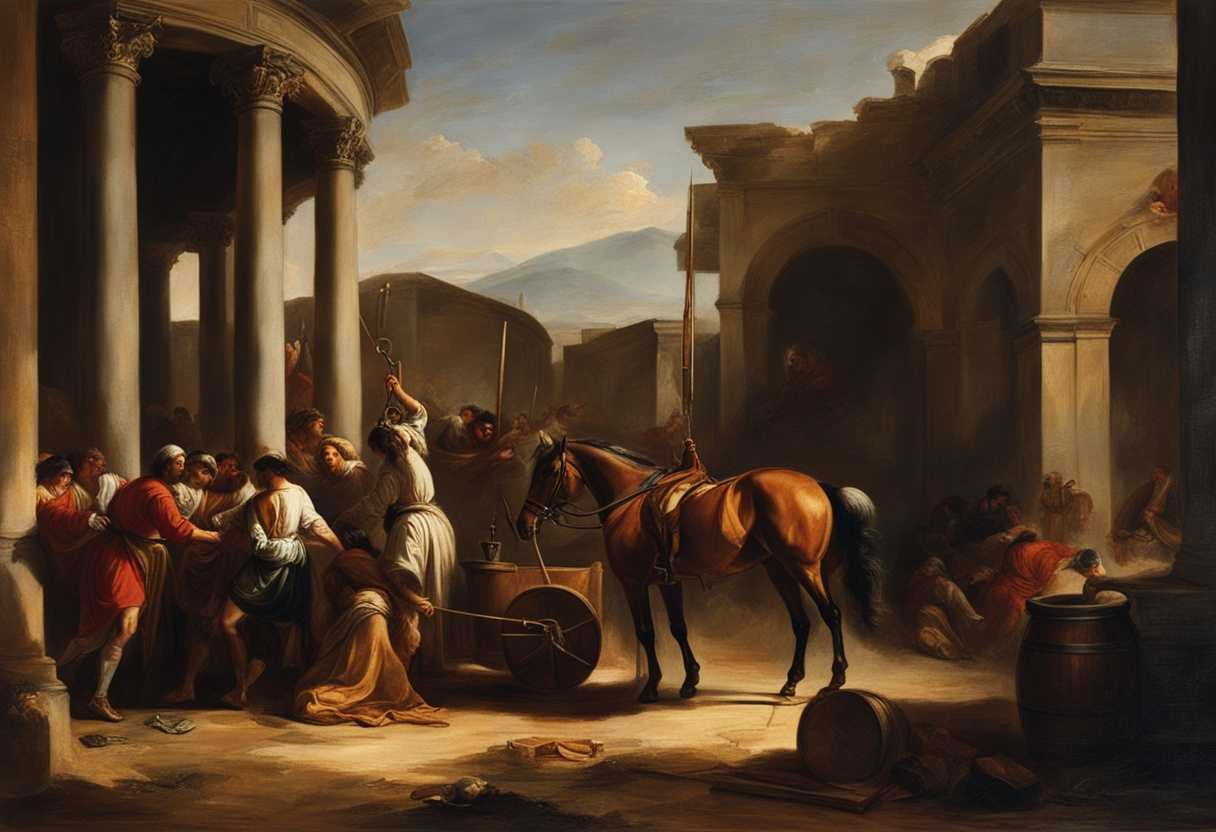
Setting the Scene for Revelation 14:20
In Revelation chapter 14, the scene is set in a vast vineyard where the grapes are ripe and ready for harvest. The vineyard is bathed in golden sunlight, with rows upon rows of lush grapevines stretching out as far as the eye can see. The air is filled with the sweet scent of grapes, and the sound of workers diligently tending to the vines can be heard in the distance.
Among the workers in the vineyard are angels, sent by God to gather the ripe grapes for the final harvest. These angels are majestic beings, with wings that shimmer in the sunlight and faces that radiate with divine light. They move swiftly and purposefully through the vineyard, carefully selecting the ripest grapes and placing them into golden baskets.
As the angels work, a figure stands at the center of the vineyard, overseeing the harvest. This figure is none other than the Lamb of God, Jesus Christ, who has come to gather the faithful and bring them into the kingdom of heaven. His presence fills the vineyard with a sense of peace and reverence, as the angels carry out his divine will. And in the end, the grapes are gathered and thrown into the great winepress of God’s wrath, where they are trampled until blood flows out, symbolizing the final judgment of the wicked.
What is Revelation 14:20 about?
This verse paints a vivid picture of the consequences of the wickedness and disobedience towards God. It symbolizes the severity and extent of the punishment that the wicked will face. The imagery of blood flowing as high as horses’ bridles conveys the scale and intensity of the devastation that will be brought upon those who have strayed from the path of righteousness. It serves as a stark reminder of the ultimate justice that will be meted out by God to those who have chosen to live a life contrary to His teachings.
The verse also highlights the contrast between the consequences faced by the wicked and the rewards that await the righteous. It emphasizes the importance of following God’s commandments and staying true to His teachings in order to avoid facing His judgment and wrath. This powerful imagery serves as a warning to all individuals to reflect on their actions and choices, reminding them that every decision made on Earth will have consequences in the eyes of God. Individuals should strive towards a life of virtue and goodness to avoid the destructive consequences that await the wicked, as this verse ultimately serves as a call to righteousness and obedience to God. It prompts us to consider the importance of our spiritual journey and the implications of our choices in the grand scheme of divine justice.
Understanding what Revelation 14:20 really means
Revelation 14:20, nestled within the apocalyptic vision granted to John, paints a vivid picture of divine judgment through the metaphor of a winepress. This imagery is not unique to this verse; other biblical passages like Isaiah 63:3 and Joel 3:13 also employ the winepress as a symbol of God’s judgment. The consistency of this metaphor across different texts underscores the gravity and universality of divine retribution. In Revelation 19:15, the image of God treading the winepress further reinforces the theme of divine wrath and justice.
For contemporary readers, Revelation 14:20 serves as a poignant reminder of accountability and the unwavering justice of God. In a world where injustice often seems rampant, this verse offers solace to believers, assuring them that ultimately, divine justice will prevail. It underscores the importance of living in accordance with God’s will, knowing that there will come a time of ultimate reckoning.
To illustrate the concept further, consider the analogy of a meticulous farmer tending to his vineyard, carefully selecting ripe grapes for harvest. Similarly, God is depicted as the ultimate harvester, discerning and executing perfect judgment. This imagery helps us grasp the meticulous nature of God’s judgment and the precision with which He separates the righteous from the wicked.
The phrase “The winepress was trodden outside the city” signifies the separation of the righteous and the wicked, emphasizing the distinct destinies awaiting each group. The description of blood flowing from the winepress, reaching as high as horses’ bridles, vividly conveys the severity and totality of God’s judgment. This intense imagery underscores the magnitude of divine retribution and the seriousness of living in accordance with God’s will.
Furthermore, the mention of “1,600 stadia” (approximately 180 miles) in the verse highlights the extensive scope of God’s judgment. This measurement symbolizes the comprehensive and far-reaching nature of divine justice, indicating that no wrongdoing will go unnoticed or unpunished. Understanding these details helps us grasp the gravity of divine judgment and reinforces the call to righteousness and obedience to God’s commands.
In conclusion, Revelation 14:20, though intense in its imagery, serves as a powerful call to righteousness and a reminder of God’s ultimate authority and justice. It prompts us to reflect on our actions and align our lives with God’s expectations, knowing that in the end, divine justice will prevail.
Are we living a life worthy of harvest?
The verse emphasizes the concept of reaping what we sow and living a life that reflects that truth. It reminds us that our actions and choices shape the quality of our lives and ultimately determine our “harvest.” Living a life worthy of harvest means being intentional about our choices, actions, and decisions, knowing that they have consequences and will ultimately bear fruit.
The verse also speaks to the importance of being mindful of our deeds and ensuring that we are cultivating a life that is aligned with our values and beliefs. It serves as a reminder to constantly strive to live in a way that brings about a positive and fruitful outcome, both for ourselves and for others. It encourages us to reflect on our actions and consider whether we are sowing seeds of goodness, kindness, and love, or if we are sowing seeds of negativity, selfishness, and harm. The verse ultimately prompts us to consider the legacy we are leaving behind and whether we are sowing seeds that will produce a bountiful harvest of goodness, righteousness, and joy, or if we are sowing seeds that will result in destruction and turmoil. It challenges us to live purposefully and intentionally, with an awareness of the impact our choices have not only on our present circumstances but on our eternal destiny as well.
Application
Embrace the fiery message of Revelation 14:20 like a warrior facing a battle. Let it ignite a passion within you to walk in God’s ways with unwavering faith. Just as you are diligent in your work and devoted to your family, be steadfast in your commitment to God. Are you ready to stand firm in righteousness and let your faith shine brightly in this world of shadows?

Reverend Michael Johnson is an experienced Church Minister with a profound expertise in spirituality and guidance. With a serene presence and a compassionate heart, he has faithfully served his congregation for over 20 years, leading them on a spiritual journey towards inner peace and enlightenment. Reverend Johnson’s extensive knowledge of religious philosophies and profound understanding of human nature have made him a trusted confidant and mentor to many, as he seamlessly weaves his profound wisdom into life teachings. Reverend Johnson’s calming demeanor and empathetic nature continue to uplift and heal souls, nurturing a sense of unity and tranquility within his community.