
Revelation 16:17-21 is about the final outpouring of God’s wrath upon the earth before the ultimate defeat of evil and the establishment of God’s kingdom.
17 The seventh angel poured out his bowl into the air, and a loud voice came out of the temple, from the throne, saying, “It is done!”
18 And there were flashes of lightning, rumblings, peals of thunder, and a great earthquake such as there had never been since man was on the earth, so great was that earthquake.
19 The great city was split into three parts, and the cities of the nations fell, and God remembered Babylon the great, to make her drain the cup of the wine of the fury of his wrath.
20 And every island fled away, and no mountains were to be found.
21 And great hailstones, about one hundred pounds each, fell from heaven on people; and they cursed God for the plague of the hail, because the plague was so severe.
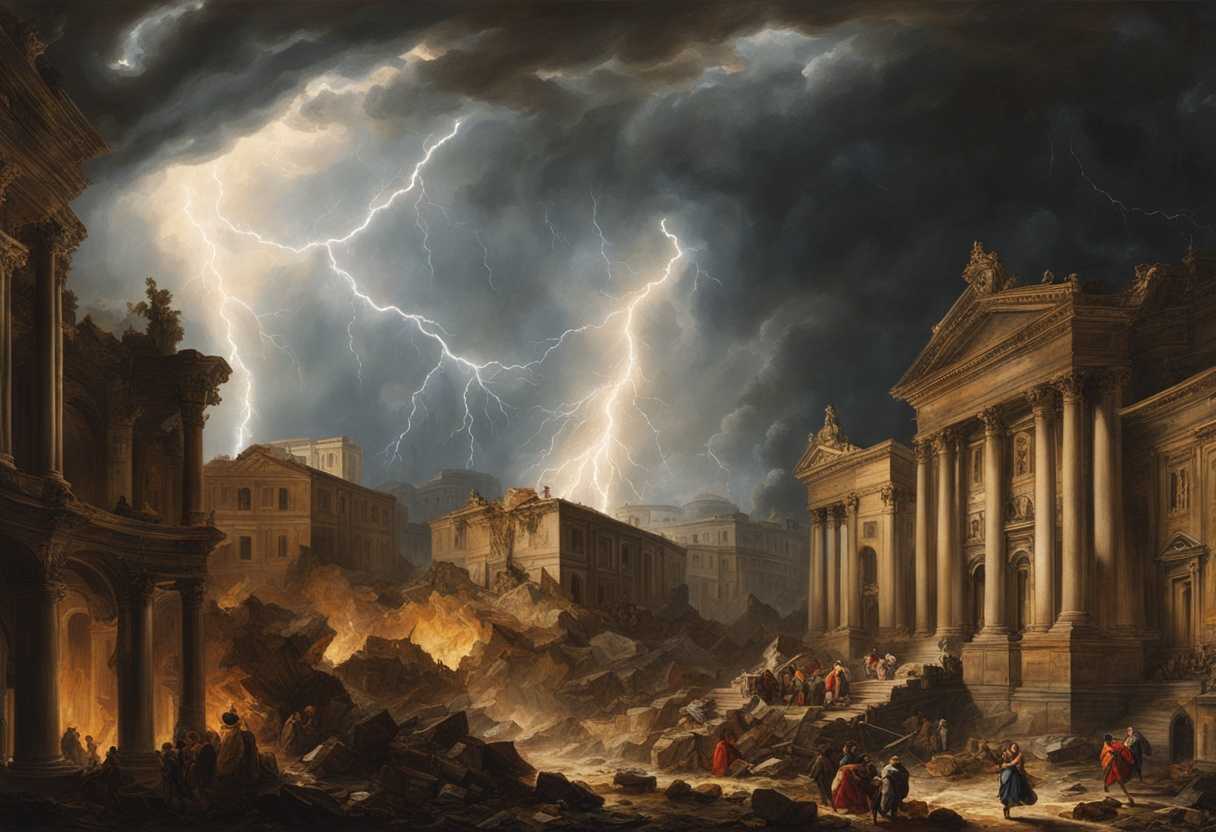
Setting the Scene for Revelation 16:17-21
The scene in Revelation 16:17-21 takes place during the pouring out of the seventh bowl of God’s wrath upon the earth. The setting is intense and dramatic, with the pouring out of the bowl causing flashes of lightning, rumblings, peals of thunder, and a severe earthquake unlike any before. The great city of Babylon is split into three parts, and the cities of the nations fall. Great hailstones, each weighing about a talent, rain down from the sky upon the people.
In this scene, we see the culmination of God’s judgment upon the earth for its rebellion and sin. The individuals present are those who have rejected God and followed the ways of the world, leading to their ultimate destruction. The chaos and devastation surrounding them serve as a stark reminder of the consequences of turning away from God and living in disobedience. The imagery is vivid and powerful, underscoring the finality and severity of God’s judgment as the end times unfold.
The individuals in this scene are faced with the full force of God’s wrath, a sobering reminder of the consequences of living a life apart from Him. The setting is apocalyptic, with the earth itself convulsing under the weight of God’s judgment. As the hailstones fall and the cities crumble, those present are left to reckon with the consequences of their choices. It is a moment of reckoning, a final opportunity for repentance before the ultimate fulfillment of God’s plan for redemption and restoration.
What is Revelation 16:17-21 about?
This verse highlights the profound consequence of turning away from God’s call to repentance. Despite the looming threat of God’s final judgment and the imminent destruction it may bring, there are those who stubbornly refuse to acknowledge their wrongdoing and repent. It serves as a stark reminder of the human tendency to resist change and cling to sinful ways, even when faced with dire consequences. We reflect on this verse, prompting us to consider our own response to God’s call for repentance. Are there areas in our lives where we may be turning away from God’s will? Are we open to acknowledging our mistakes and seeking forgiveness, or are we allowing pride and stubbornness to stand in the way of reconciliation with our Creator? The verse reminds us of the importance of humility, self-reflection, and a willingness to change our ways in order to align ourselves with God’s will and avoid the destructive consequences of persisting in sin.
Understanding what Revelation 16:17-21 really means
The book of Revelation, a prophetic vision given to the Apostle John, unveils the end times and the triumph of God over evil. In Revelation 16:17-21, we witness the pouring out of the seventh bowl of God’s wrath, unleashing cataclysmic events on Earth. The declaration, “It is done!” signifies the completion of God’s judgment, echoing Jesus’ words on the cross, emphasizing the fulfillment of God’s redemptive plan. A loud voice from the throne symbolizes divine authority and the finality of God’s judgment, while natural phenomena like lightning, thunder, and earthquakes depict the power and severity of His judgment.
The imagery of the great city splitting into three parts likely alludes to the fall of Babylon, representing the collapse of human systems opposed to God. The vanishing islands and mountains symbolize the Earth’s transformation in preparation for God’s kingdom, aligning with Isaiah’s prophecy. The massive hailstones, reminiscent of the seventh plague in Egypt, underscore the intensity of God’s judgment. Related passages in Isaiah, Matthew, and 2 Peter further illuminate the cosmic disturbances and divine renewal depicted in Revelation.
Revelation 16:17-21 underscores God’s sovereignty over history and His impending judgment, urging repentance and alignment with His will. In a world marred by chaos and injustice, this passage offers believers assurance that God will establish His righteous rule. It serves as a poignant call to repentance, emphasizing the urgency of turning away from sin and seeking God’s mercy. For believers, it instills hope that amidst present trials, God’s kingdom will ultimately prevail.
Consider a small town warned of an impending flood: some prepare, while others dismiss the warnings. When the flood arrives, the prepared are saved, while the heedless face devastation. Similarly, Revelation 16:17-21 serves as a divine warning, urging us to ready our hearts and lives for God’s kingdom. This passage resonates as a powerful reminder of God’s authority, prompting us to live purposefully, aligning our lives with His will, and eagerly anticipating the fulfillment of His promises.
How do we respond to God’s judgment and wrath?
We are called to recognize His sovereignty and righteous judgment in response to God’s judgment and wrath as described in Revelation 16:17-21. This passage highlights the ultimate power and authority of God over all creation, demonstrating His control over natural disasters as a form of punishment. Thus, our response should be one of humility, acknowledging God’s supremacy and submitting to His will.
Furthermore, in light of God’s judgment and wrath, we are urged to seek repentance and turn our hearts back to Him. Through confession of sin and a genuine desire to turn away from all forms of disobedience, we can find forgiveness and restoration in God’s grace. Rather than resisting or rebelling against His judgment, we are called to humbly seek His mercy and guidance, trusting in His ultimate plan for redemption and salvation. We should ultimately respond to God’s judgment and wrath with a sincere reverence for His holiness and a deep commitment to living in accordance with His will. We can experience the transformative power of His grace and find hope in the midst of tribulation by acknowledging His justice and seeking His mercy. Therefore, let us approach God with contrite hearts, ready to receive His love and forgiveness as we navigate the challenges of life in a fallen world.
Application
Reflect on the power of our Creator and embrace His authority. Let us not stand idle in our faith, but actively strive to live according to God’s will, sharing His love and truth with everyone. Are you prepared to fully commit to following God and spreading His message of salvation?

Reverend Michael Johnson is an experienced Church Minister with a profound expertise in spirituality and guidance. With a serene presence and a compassionate heart, he has faithfully served his congregation for over 20 years, leading them on a spiritual journey towards inner peace and enlightenment. Reverend Johnson’s extensive knowledge of religious philosophies and profound understanding of human nature have made him a trusted confidant and mentor to many, as he seamlessly weaves his profound wisdom into life teachings. Reverend Johnson’s calming demeanor and empathetic nature continue to uplift and heal souls, nurturing a sense of unity and tranquility within his community.