
Revelation 16:4-6 is about divine judgment, emphasizing the pouring out of bowls of God’s wrath upon the earth, specifically targeting those who have rejected His truth and thereby illustrating the consequences of sin and rebellion against God.
4 The third angel poured out his bowl into the rivers and the springs of water, and they became blood.
5 “And I heard the angel in charge of the waters say, ‘Just are you, O Holy One, who is and who was, for you brought these judgments.’”
6 “For they have shed the blood of saints and prophets, and you have given them blood to drink. It is what they deserve!”
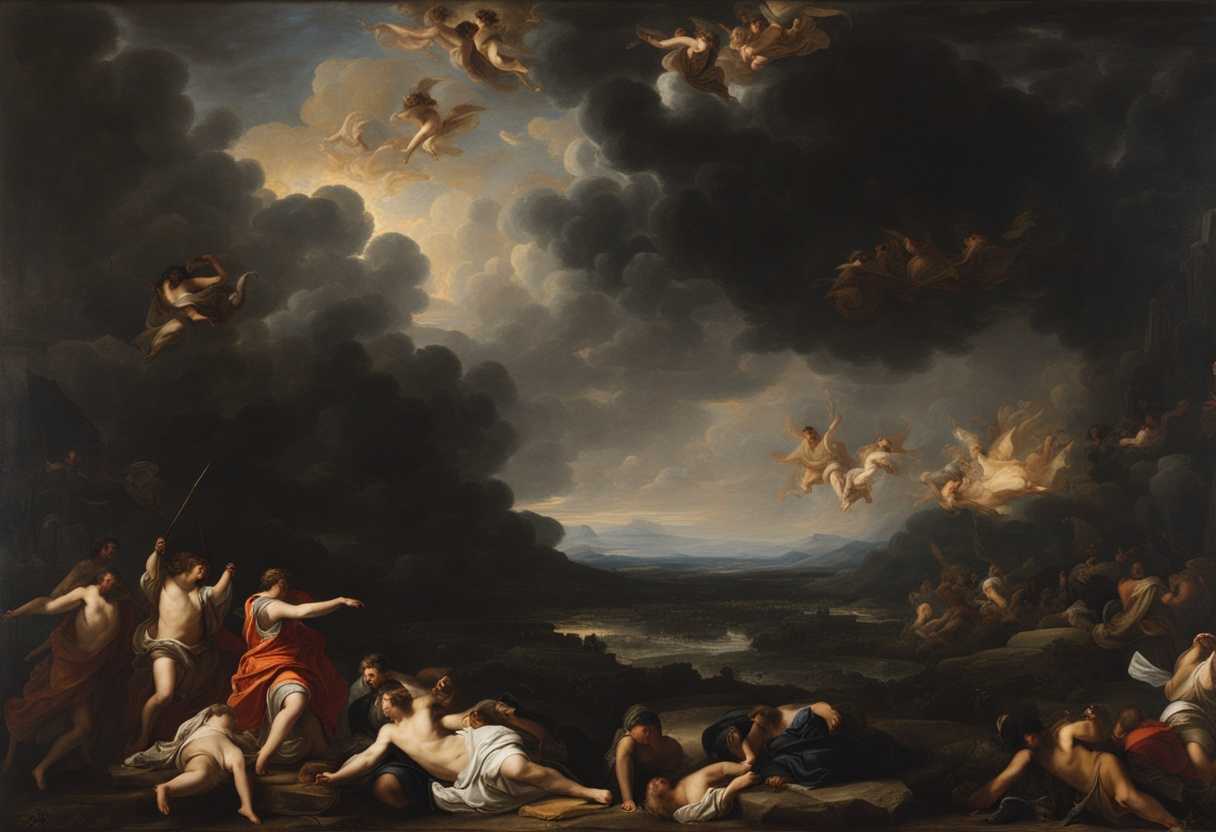
Setting the Scene for Revelation 16:4-6
In a time of great tribulation, the scene unfolds in a desolate landscape, marked by the aftermath of divine judgment. The air is thick with an acrid stench, a result of the plagues that have been unleashed upon the earth. Rivers and springs, once sources of life and sustenance, have turned to blood, a stark reminder of the consequences of humanity’s rebellion against God. The sun hangs low in the sky, casting an eerie red hue over the land, as if nature itself mourns the devastation wrought by the sins of mankind. The cries of the suffering echo through the barren valleys, a haunting symphony of despair that reverberates in the hearts of those who remain.
In this grim tableau, we find the angelic beings tasked with delivering God’s judgments. They are fierce and resolute, their countenances reflecting the gravity of their mission. Among them is one of the seven angels, a figure of authority and power, who has been entrusted with the responsibility of pouring out the third bowl of wrath. This angel, radiant yet fearsome, stands poised to unleash the next wave of calamity upon the earth. Surrounding him are the remnants of humanity, a mix of those who have turned their backs on God and those who, despite their suffering, cling to the hope of redemption. Among them are the kings and rulers, who once wielded power and influence, now reduced to mere shadows of their former selves, grappling with the consequences of their choices.
As the angel raises the bowl, the atmosphere crackles with tension. The ground trembles beneath the weight of impending judgment, and the heavens seem to hold their breath. The scene is a stark reminder of the divine justice that has been long awaited, as the angel’s proclamation rings out, echoing through the desolation. The waters, once a symbol of life, now serve as a testament to the bloodshed and injustice that have marked human history. The cries of the martyrs, those who have suffered for their faith, resonate in the background, a poignant reminder of the cost of discipleship. In this moment, the stage is set for the culmination of God’s plan, as the earth stands on the precipice of transformation, awaiting the final act of divine intervention.
What is Revelation 16:4-6 about?
This verse speaks to a profound concept of divine justice and judgment that is often difficult to comprehend in our modern context. When we think about plagues, what comes to mind? Is it merely a punishment, or could it also be a reflection of the natural consequences of turning away from a relationship with the Creator? This verse indicates a deeper narrative of accountability. The plagues serve to illustrate in some theological frameworks how the rejection of God leads to a breakdown in the order and moral fabric of existence. Could it be that the calamities which come upon those who reject God are not just arbitrary acts of wrath but a call to awareness and repentance? We must consider what it means for us personally as we grapple with the weight of divine justice. Are we also rejecting the deeper truths that call us to a faithful and responsible way of living? Divine judgment can be seen as a corrective measure, urging us to reflect on our choices and their consequences. This perspective invites us to consider the mercy that exists amid judgment. After all, is it not in the recognition of our wrongdoing that we often find the path to redemption? We may discover a pathway to deeper understanding and renewed commitment to living in alignment with sacred principles by acknowledging the presence of divine justice.
So, how do we reconcile our lives with this notion of divine justice and the potential for consequences? It may seem daunting, but it invites us into a richer relationship with our own convictions and actions. Are we open to learning from the trials that we perceive around us? What wisdom might we glean from the experiences of hardship? We can foster a sense of growth and awareness that ultimately leads us closer to the ideals we seek to uphold by embracing the lessons inherent in the concept of divine judgment.
Understanding what Revelation 16:4-6 really means
Revelation 16:4-6 presents a vivid portrayal of divine judgment, encapsulating the essence of God’s response to human sinfulness. This passage is part of a larger narrative in Revelation that reveals the ultimate victory of God over evil. As we delve into these verses, we must recognize the gravity of the context: the pouring out of the bowls signifies not just punishment, but a profound statement about God’s justice in a world rife with injustice.
At the heart of this passage is the theme of divine justice. The imagery of blood and judgment serves as a stark reminder that God is not indifferent to the suffering caused by human actions. When we read, “They have shed the blood of saints and prophets,” we are confronted with the reality that violence against God’s people is met with serious consequences. This phrase compels us to consider the weight of our actions and the impact they have on others. Are we, in our daily lives, contributing to a culture of violence or injustice?
The principle of retribution is also evident in the metaphor, “You have given them blood to drink.” This powerful image illustrates the biblical truth that we reap what we sow. It challenges us to reflect on our own lives: are we sowing seeds of kindness and justice, or are we perpetuating cycles of harm? The connection to Galatians 6:7 reinforces this idea, reminding us that God’s moral order is inescapable.
Moreover, the declaration, “Just are You, O Holy One,” affirms God’s righteousness. It is crucial to understand that God’s judgments are not arbitrary; they stem from His perfect nature. This raises an important question for us: do we view God’s justice as fair? In a world where we often see injustice go unpunished, it can be easy to doubt. Yet, this passage reassures us that God’s timing is perfect, and His judgments are rooted in holiness.
In today’s context, these verses resonate deeply. We live in a world filled with corruption and moral decay, where many feel powerless against injustice. The assurance of divine judgment can serve as a beacon of hope for those who feel oppressed. Consider a community suffering under a corrupt leader; the promise of God’s justice can empower individuals to stand firm in their faith, knowing that God sees their plight and will act in His time.
As we reflect on Revelation 16:4-6, we are called to examine our own actions and the state of our world. Are we advocates for justice, or do we turn a blind eye to the suffering around us? This passage encourages us to trust in God’s ultimate plan for justice and to remain steadfast in our faith. In doing so, we align ourselves with God’s purposes, confident that He will bring about righteousness in His perfect timing.
How do our actions align with divine justice?
Our actions align with divine justice through the principle of accountability for the choices we make. The verse underscores the idea that actions have consequences, especially in the context of moral and ethical behavior. When individuals make decisions that lead to harm or injustice, they are seen as responsible for those outcomes. This connects to the concept of divine justice, which asserts that a higher moral order exists that holds people accountable for their deeds, ultimately ensuring that justice prevails.
The emphasis on retribution also highlights the idea that there is a balance in the universe, where good is rewarded and evil is punished. This serves as a reminder for individuals to reflect on their actions and their impact on others. The consequences of actions can manifest in various ways, reflecting the notion that the moral fabric of the world is woven with the threads of our choices. Acting with integrity and compassion not only aligns us with divine justice but also fosters a just and harmonious society.
Furthermore, the relationship between human actions and divine judgment suggests a call to self-examination and repentance. It encourages individuals to recognize their misdeeds and seek to rectify them, thus aligning themselves more closely with a righteous path. This process is essential for growth and moral development, and it affirms that while divine justice is unwavering, there is always an opportunity for redemption and transformation for those willing to acknowledge their shortcomings and strive for righteousness.
Application
Think of your life like a workplace; what projects need your attention and dedication? Revelation 16:4-6 challenges us to take a hard look at our work ethic in faith and the impact we have on those around us. It’s time to roll up your sleeves and tackle those areas in your life that need change—like tending to your family, your relationships, and even your inner self. Don’t let procrastination hold you back from the transformation waiting for you. Are you ready to answer the call for change and bring light to a world craving hope?

Reverend Michael Johnson is an experienced Church Minister with a profound expertise in spirituality and guidance. With a serene presence and a compassionate heart, he has faithfully served his congregation for over 20 years, leading them on a spiritual journey towards inner peace and enlightenment. Reverend Johnson’s extensive knowledge of religious philosophies and profound understanding of human nature have made him a trusted confidant and mentor to many, as he seamlessly weaves his profound wisdom into life teachings. Reverend Johnson’s calming demeanor and empathetic nature continue to uplift and heal souls, nurturing a sense of unity and tranquility within his community.