
Revelation 17:12-14 is about the ten kings who will align with the beast to wage war against the Lamb, symbolizing the ultimate clash between evil powers and divine authority.
12 And the ten horns that you saw are ten kings who have not yet received royal power, but they are to receive authority as kings for one hour, together with the beast.
13 These are of one mind, and they hand over their power and authority to the beast.
14 They will make war on the Lamb, and the Lamb will conquer them, for he is Lord of lords and King of kings, and those with him are called and chosen and faithful.”
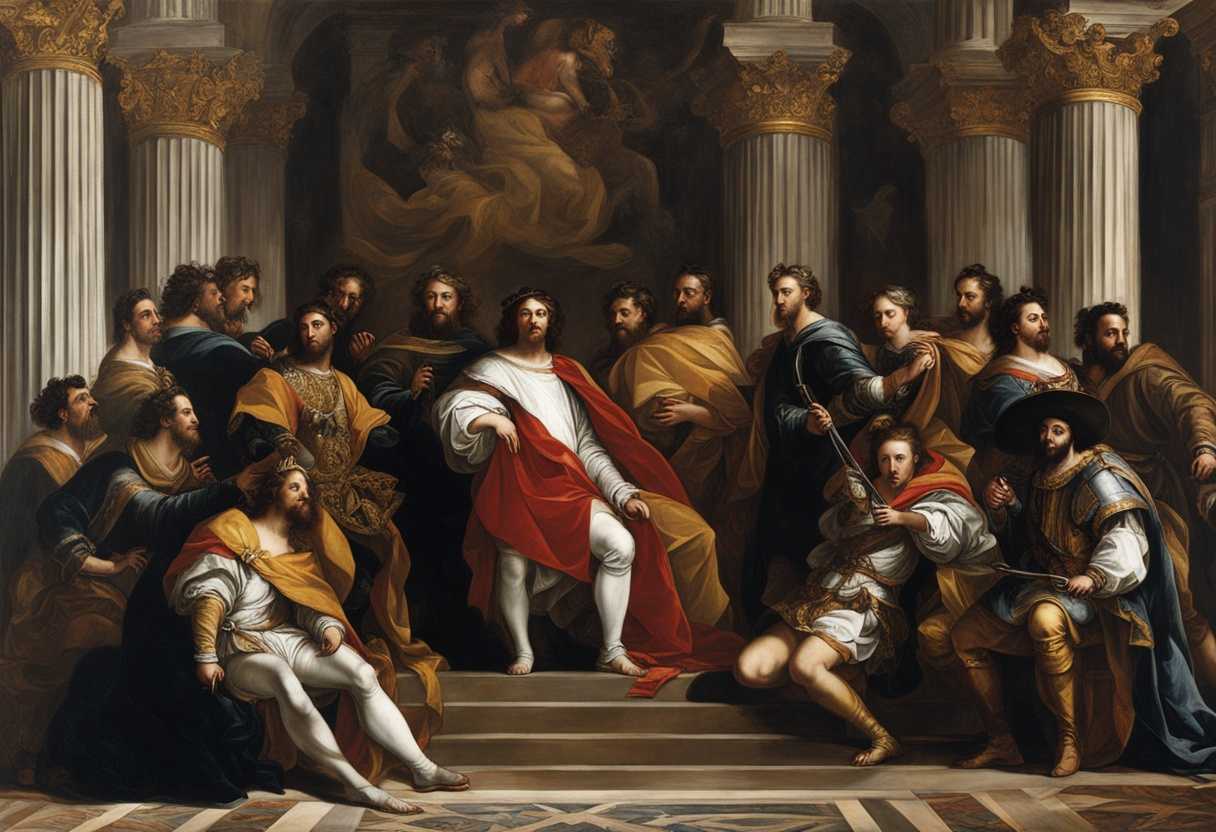
Setting the Scene for Revelation 17:12-14
In the book of Revelation, we find a powerful and symbolic scene unfolding before our eyes. The setting is a vast and magnificent throne room, filled with an air of anticipation and tension. Gathered around the throne are the mighty rulers of the earth, each adorned in regal attire and exuding an aura of authority. These rulers have come together in a rare display of unity, drawn by a common purpose that transcends their individual ambitions.
Among them stands the Lamb, a figure of unparalleled purity and strength, radiating a divine light that illuminates the entire room. His presence commands reverence and awe from all those present, even the most powerful of earthly rulers. As the Lamb speaks, his words carry a weight that shakes the very foundations of the throne room, revealing a plan that will shape the course of history.
In this momentous gathering, the stage is set for a cosmic battle between good and evil, with the fate of the world hanging in the balance. The rulers of the earth, guided by their own agendas and desires, are unwittingly playing a part in a grander scheme orchestrated by forces beyond their comprehension. As the Lamb prepares to lead his faithful followers into battle, the outcome remains uncertain, but the promise of ultimate victory shines brightly in the eyes of those who stand by his side.
What is Revelation 17:12-14 about?
The mention of ten kings aligning with the beast to wage war against God in Revelation 17:12-14 serves as a vivid depiction of the ultimate battle between good and evil, light and darkness. This imagery is symbolic of the eternal struggle between righteousness and sin, with the number ten often representing completion or fullness in biblical numerology. The alliance of these ten kings with the beast, a symbol of evil and chaos, highlights the deceptive nature of the enemy and the temptations that can lead individuals astray from God’s path.
The verses urge us to reflect on the allegiances and choices we make in our lives. Do we align ourselves with worldly powers and desires that go against God’s will, or do we steadfastly stand on the side of righteousness and truth? It prompts us to examine our own hearts and actions, ensuring that we are not swayed by the allure of power, fame, or material wealth that may lead us away from our faith. The passage ultimately serves as a reminder of the importance of remaining faithful to God, even in the face of adversity and opposition.
Understanding what Revelation 17:12-14 really means
Revelation 17:12-14, nestled within the vivid imagery of Apostle John’s apocalyptic vision, delves into the intricate tapestry of worldly powers and the triumphant reign of the Lamb, Jesus Christ. The symbolic language employed in this passage may pose a challenge in interpretation, yet it unveils profound truths about spiritual warfare and the unwavering sovereignty of God. Drawing parallels with Old Testament prophecies like Daniel 7:24, which foretells the emergence of ten kings, Revelation 17:12 echoes this imagery, providing a broader biblical context for understanding the rise and fall of these powers. This interconnectedness of prophecies across Scripture underscores the cohesive narrative of God’s divine plan unfolding through the ages.
In Revelation 17:14, the victorious return of Christ, as depicted in Revelation 19:11-16, resonates with the ultimate triumph proclaimed in this passage. The alignment with Philippians 2:9-11 further solidifies the message of Jesus’ supreme authority and victory. These cross-references illuminate the interconnectedness of biblical themes, reinforcing the overarching narrative of Christ’s ultimate reign over all powers and principalities. In a world marked by shifting political landscapes and societal unrest, the enduring message of Revelation 17:12-14 offers a beacon of hope and assurance to believers navigating turbulent times.
Consider a small community facing oppression from a formidable regime, yet clinging to their faith with unwavering conviction in the triumph of justice and righteousness. This anecdote mirrors the resilience and hope instilled by Revelation 17:12-14, inspiring believers to stand firm in the face of adversity, trusting in the ultimate victory of Christ. The symbolic phrases within the passage, such as “ten kings who have not yet received a kingdom,” underscore the transient nature of earthly authority, contrasting it with the eternal sovereignty of Christ. The imagery of fleeting power and inevitable conflict between worldly forces and the Lamb serves as a poignant reminder of the spiritual battle in which believers are engaged.
As the declaration resounds that “the Lamb will overcome them,” believers are reassured of Christ’s definitive victory over all opposition. The proclamation of Jesus as “Lord of lords and King of kings” underscores His unrivaled authority over every realm, urging believers to acknowledge and submit to His supreme sovereignty. The description of those standing with Christ as “called, chosen, and faithful” emphasizes the significance of unwavering faith and the assurance of being handpicked by God. Revelation 17:12-14 encapsulates a message of unwavering hope and assurance, reminding believers that amidst the ebb and flow of earthly powers, the ultimate triumph belongs to Jesus Christ. In a world fraught with uncertainties, this passage beckons believers to anchor their faith in the unchanging sovereignty of God, finding solace in His eternal victory.
How can we discern the true from the false?
The verses mentioned show a depiction of a great cosmic battle between good and evil, light and darkness. Through this symbolic language, the passage conveys the idea that there will be false prophets and leaders who will arise to deceive many. These deceivers will gather together to fight against the Lamb, who represents Jesus Christ and ultimate truth. Despite their deceptive ways and seemingly powerful alliance, the Lamb will ultimately overcome them because He is the true King of kings and Lord of lords.
To discern the true from the false in this context, we must look for the fruit of their actions and teachings. False prophets and leaders may appear impressive and powerful on the surface, but their intentions and impact will ultimately be harmful and deceptive. On the other hand, the true message of Christ and His followers will bear the fruits of love, peace, and righteousness. We can distinguish between what is true and what is false in the spiritual realm by examining the alignment of teachings and actions with the values exemplified by Jesus. Those who stand with the Lamb will ultimately prevail over deception and evil.
Application
Embrace the call to stand firm like a sturdy oak in the storm of challenges, rooted in your belief. Let the flames of faith burn brightly within you, illuminating the path for others. Your mission is to be a beacon of hope in a world filled with darkness. Are you ready to shine your light and guide others towards the promise of salvation in Christ?

Reverend Michael Johnson is an experienced Church Minister with a profound expertise in spirituality and guidance. With a serene presence and a compassionate heart, he has faithfully served his congregation for over 20 years, leading them on a spiritual journey towards inner peace and enlightenment. Reverend Johnson’s extensive knowledge of religious philosophies and profound understanding of human nature have made him a trusted confidant and mentor to many, as he seamlessly weaves his profound wisdom into life teachings. Reverend Johnson’s calming demeanor and empathetic nature continue to uplift and heal souls, nurturing a sense of unity and tranquility within his community.