
Revelation 18:1-24 is about the dramatic fall of Babylon, symbolizing the collapse of a corrupt and oppressive system, representing the worldly powers that oppose God, and serves as a warning of divine judgment against immorality, idolatry, and greed, ultimately calling on believers to separate themselves from such influences.
1 After this I saw another angel coming down from heaven, having great authority, and the earth was made bright with his glory.
2 And he called out with a mighty voice, “Fallen, fallen is Babylon the great! She has become a dwelling place for demons, a haunt for every unclean spirit, a haunt for every unclean bird, a haunt for every unclean and detestable beast.
3 For all nations have drunk the wine of the passion of her sexual immorality, and the kings of the earth have committed immorality with her, and the merchants of the earth have grown rich from the power of her luxurious living.”
4 Then I heard another voice from heaven saying, “Come out of her, my people, lest you take part in her sins, lest you share in her plagues;”
5 for her sins are heaped high as heaven, and God has remembered her iniquities.
6 Pay her back as she herself has paid back others, and repay her double for her deeds; mix a double portion for her in the cup she mixed.
7 As she glorified herself and lived in luxury, so give her a like measure of torment and mourning, since in her heart she says, ‘I sit as a queen, I am no widow, and mourning I shall never see.’
8 For this reason her plagues will come in a single day, death and mourning and famine, and she will be burned up with fire; for mighty is the Lord God who has judged her.”
9 And the kings of the earth, who committed sexual immorality and lived in luxury with her, will weep and wail over her when they see the smoke of her burning.
10 They will stand far off, in fear of her torment, and say, “Alas! Alas! You great city, you mighty city, Babylon! For in a single hour your judgment has come.”
11 And the merchants of the earth weep and mourn for her, since no one buys their cargo anymore,
12 cargo of gold, silver, jewels, pearls, fine linen, purple cloth, silk, scarlet cloth, all kinds of scented wood, all kinds of articles of ivory, all kinds of articles of costly wood, bronze, iron and marble,
13 cinnamon, spice, incense, myrrh, frankincense, wine, oil, fine flour, wheat, cattle and sheep, horses and chariots, and slaves, that is, human souls.
14 The fruit for which your soul longed
has gone from you,
and all your delicacies and your splendors
are lost to you,
never to be found again!
15 The merchants of these wares, who gained wealth from her, will stand far off, in fear of her torment, weeping and mourning aloud,
16 “Alas, alas, for the great city that was clothed in fine linen, in purple and scarlet, adorned with gold, with jewels, and with pearls!”
17 for in a single hour all this wealth has been laid waste.” And all shipmasters and seafaring men, sailors and all whose trade is on the sea, stood far off
18 and cried out as they saw the smoke of her burning, “What city was like the great city?”
19 And they threw dust on their heads as they wept and mourned, crying out, “Alas, alas, for the great city where all who had ships at sea grew rich by her wealth! For in a single hour she has been laid waste.
20 Rejoice over her, O heaven, and you saints and apostles and prophets, for God has given judgment for you against her!
21 Then a mighty angel took up a stone like a great millstone and threw it into the sea, saying, “So will Babylon the great city be thrown down with violence, and will be found no more;
22 And the sound of harpists and musicians, of flute players and trumpeters, will be heard in you no more, and a craftsman of any craft will be found in you no more, and the sound of the mill will be heard in you no more,
23 and the light of a lamp will shine in you no more, and the voice of bridegroom and bride will be heard in you no more, for your merchants were the great ones of the earth, and all nations were deceived by your sorcery.
24 And in her was found the blood of prophets and of saints, and of all who have been slain on earth.”
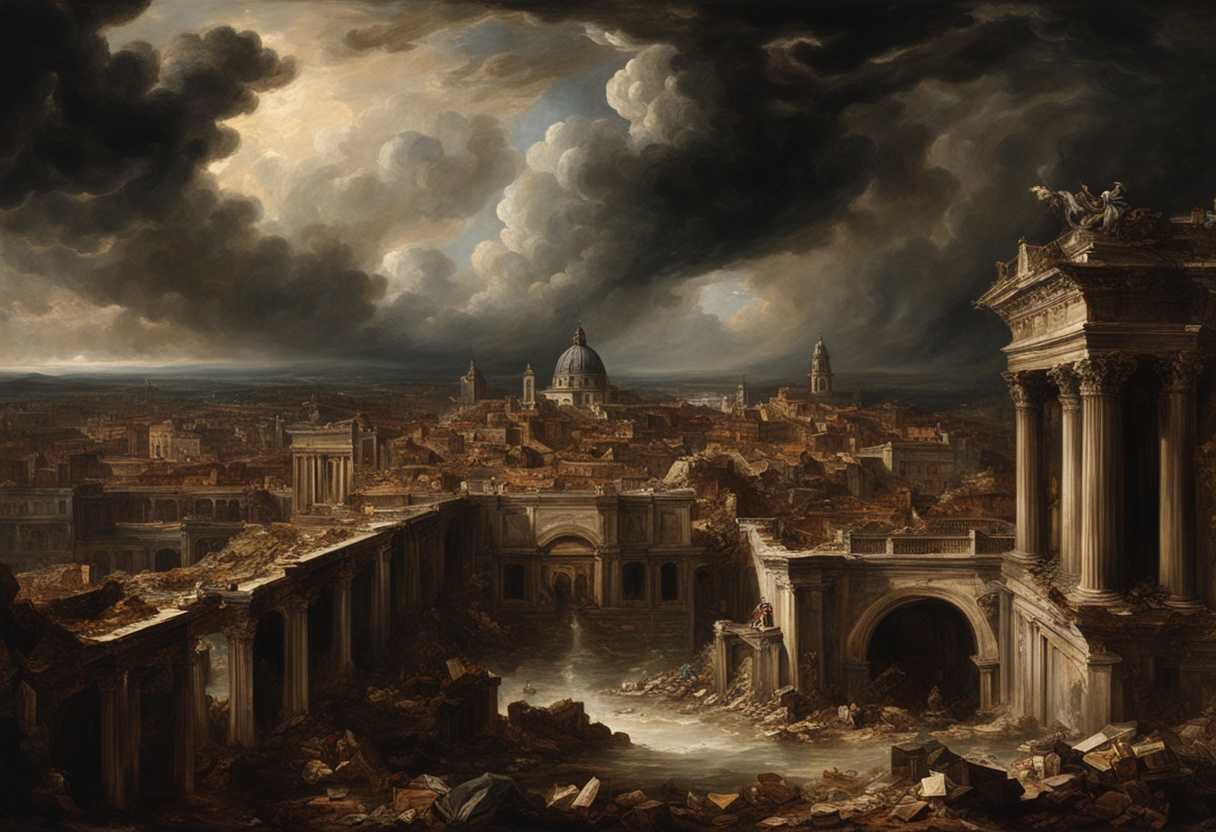
Setting the Scene for Revelation 18:1-24
In a vision that unfolds in the heart of a desolate landscape, the scene is set against the backdrop of a once-magnificent city, now reduced to ruins. The air is thick with the acrid scent of smoke and ash, remnants of a great and powerful empire that has fallen from grace. This city, often referred to as Babylon, symbolizes the epitome of human pride and rebellion against divine authority. The streets, once bustling with merchants and revelers, now lie silent, echoing only the whispers of judgment. The sky is darkened, as if mourning the demise of a civilization that had thrived on excess, greed, and immorality.
In the midst of this devastation, a mighty angel descends from heaven, radiating with the glory of God. His presence commands attention, and the earth trembles beneath his feet. He proclaims the fall of Babylon with a voice that reverberates through the heavens and the earth, declaring that the city has become a dwelling place for demons and a haunt for every unclean spirit. Surrounding him are the remnants of the faithful, those who have witnessed the rise and fall of this great city. Among them are the prophets and saints, who have long awaited this moment of divine retribution. Their hearts are filled with a mixture of sorrow and relief, as they recognize the fulfillment of God’s promise to bring justice to the oppressed and to judge the wicked.
As the angel continues to proclaim the fate of Babylon, the scene shifts to the merchants and kings of the earth, who stand at a distance, mourning the loss of their once-prosperous trade. They lament the destruction of their wealth and the end of their indulgent lifestyles, realizing that their fortunes were built on the backs of the oppressed and the exploitation of the vulnerable. The cries of despair echo through the air, mingling with the sounds of the angel’s proclamation. The once-vibrant city, now a shadow of its former self, serves as a stark reminder of the consequences of turning away from God. The faithful watch with hope, knowing that this judgment is not the end, but rather the beginning of a new era where righteousness will reign, and the glory of God will fill the earth.
What is Revelation 18:1-24 about?
Revelation 18 presents a vivid and sobering picture of the fall of Babylon, serving as a metaphor for moral and spiritual corruption within society. We might ask ourselves as we explore this passage: What does Babylon represent in our lives today? This “great city” symbolizes systems and institutions steeped in greed, immorality, and rebellion against God. The vivid descriptions of its destruction serve as both a warning and an invitation. They remind us of the temporal nature of worldly powers and the ultimate justice of God that is promised to prevail. How often do we find ourselves entangled in the allure of such systems, perhaps inadvertently investing our time and emotions in endeavors that stand in stark contrast to our values? Revelation 18 calls upon God’s people to separate themselves from the corruption represented by Babylon. The exhortation to “come out of her” is a powerful one, prompting reflection on how our choices and alliances might contradict our faith. Doesn’t it challenge us to examine our own lives critically? Are there areas where we might unknowingly conform to societal norms that conflict with our beliefs? The imagery of mourning over Babylon’s demise also indicates the human tendency to cling to what is familiar, even if it is destructive. But here lies the heart of the message: God’s judgment is not simply punitive; it is a necessary cleansing. The fall of Babylon is not an end in itself but a call to rise above and embrace a life that reflects God’s righteousness and justice. We are urged to seek a higher path, one aligned with divine truth and purpose, as we navigate our own “Babylon.”
Understanding what Revelation 18:1-24 really means
Revelation 18 presents a vivid portrayal of the fall of Babylon, a symbol of the ultimate judgment against corrupt systems that stand in opposition to God’s kingdom. This chapter serves not only as a warning but also as a call to repentance for those who find themselves ensnared by worldly desires. As we delve into this passage, we are invited to reflect on the implications of our choices and the systems we engage with daily.
To fully appreciate the significance of Babylon’s fall, we must consider its historical context. Babylon was not merely a city; it represented a powerful empire characterized by immorality, idolatry, and economic exploitation. This broader understanding helps us grasp the weight of its downfall. The imagery of Babylon’s destruction resonates with the idea that no earthly power can withstand God’s judgment. How does this understanding challenge our perception of worldly success and stability?
Key themes emerge from this passage, particularly the concepts of judgment and justice. Revelation 18 reassures believers that God will ultimately triumph over evil, emphasizing His commitment to addressing sin and corruption. The call to “come out of her” serves as a poignant reminder for believers to separate themselves from worldly influences that lead them away from God. In what ways might we be inadvertently supporting systems that contradict our faith?
Several related biblical passages enhance our understanding of this theme. Isaiah 47 echoes the fall of Babylon, highlighting the consequences of pride and rebellion against God. Similarly, 2 Corinthians 6:17 encourages believers to distance themselves from unclean things, reinforcing the call to holiness. James 4:4 warns that friendship with the world equates to enmity with God. These verses collectively urge us to evaluate our relationships with the world around us.
In today’s context, Revelation 18 resonates deeply amid rampant materialism, corruption, and moral decay. It challenges us to assess our lives and the systems we support. Consider the story of a young professional who, in their quest for success, compromises their values. They cut corners and engage in unethical practices, only to realize that the fleeting gains come at a significant cost to their integrity. This narrative mirrors the warning in Revelation 18, prompting us to reassess our priorities and align them with God’s will.
Several meaningful phrases within the passage warrant our attention. The declaration, “Fallen, fallen is Babylon the great!” signifies the totality of its downfall, reminding us that no system, regardless of its power, is beyond God’s authority. The lament of the merchants who “weep and mourn for her” illustrates the deep economic ties between worldly systems and our lives, cautioning us against placing our hope in material wealth. Finally, the call, “Come out of her, my people,” serves as both a warning and an invitation, urging believers to distance themselves from corruption and remember their true citizenship in heaven.
In conclusion, Revelation 18 serves as a powerful reminder of the transient nature of worldly systems and the eternal significance of our choices. As we navigate our lives, let us heed the call to remain faithful, seek God’s kingdom first, and be vigilant against the allure of Babylon in our hearts and communities. How can we actively engage in this pursuit, ensuring that our lives reflect the values of God’s kingdom rather than the fleeting allure of worldly success?
How do we discern true faith from falsehood?
Discerning true faith from falsehood involves a careful examination of one’s values and actions, comparing them to the principles of righteousness and justice. Authentic faith is demonstrated through a commitment to moral integrity and the pursuit of a life that reflects the teachings of love, compassion, and humility. When individuals embody these qualities, their beliefs are more likely to withstand the trials and tribulations of worldly influences that can lead to corruption or distraction. False faith often prioritizes self-interest, greed, or the pursuit of material possessions, leading to a disconnect from genuine spiritual truths.
Additionally, a critical aspect of discerning true faith is the examination of the community and environment that individuals surround themselves with. True faith fosters a sense of connection and responsibility towards others, promoting collective well-being and support. Communities that uplift and encourage the practice of authentic virtues typically serve as reflections of a deeper, unified belief system. Conversely, when faith is exploited for control or manipulation, it often reveals underlying motives that contradict the essence of true spiritual teachings. One can ultimately assess true faith through the fruits it produces in one’s life and the lives of those around them. Genuine beliefs should lead to positive transformations, personal growth, and a sense of hope and purpose. When actions align with core values that emphasize unity, kindness, and justice, it indicates a true adherence to faith. It raises questions about the integrity and authenticity of that belief if actions bred from faith lead to division, fear, or selfish pursuits. Thus, constant reflection, community accountability, and alignment with moral virtues serve as essential tools in discerning the nature of one’s faith.
Application
Imagine your life as a bustling workplace where distractions and chaos can easily pull you off track. Just like a family that needs your attention, your faith deserves focus too. It’s time to step back and assess what’s truly important—are the things you prioritize building you up or pulling you down? Take a moment to think about cutting out the noise and shining brightly in your own space. How can you take one simple action today to bring more light into your life and the lives of others?

Reverend Michael Johnson is an experienced Church Minister with a profound expertise in spirituality and guidance. With a serene presence and a compassionate heart, he has faithfully served his congregation for over 20 years, leading them on a spiritual journey towards inner peace and enlightenment. Reverend Johnson’s extensive knowledge of religious philosophies and profound understanding of human nature have made him a trusted confidant and mentor to many, as he seamlessly weaves his profound wisdom into life teachings. Reverend Johnson’s calming demeanor and empathetic nature continue to uplift and heal souls, nurturing a sense of unity and tranquility within his community.