
Revelation 18:10-20 is about the lamentation and the swift downfall of Babylon the Great, symbolizing the ultimate judgment and destruction of corrupt worldly systems and practices, emphasizing the separation between the faithful and the sinful, and provoking a call for rejoicing among the righteous for God’s justice.
10 They will stand far off, in fear of her torment, and say, “Alas! Alas! You great city, you mighty city, Babylon! For in a single hour your judgment has come.”
11 And the merchants of the earth weep and mourn for her, since no one buys their cargo anymore,
12 cargo of gold, silver, jewels, pearls, fine linen, purple cloth, silk, scarlet cloth, all kinds of scented wood, all kinds of articles of ivory, all kinds of articles of costly wood, bronze, iron and marble,
13 cinnamon, spice, incense, myrrh, frankincense, wine, oil, fine flour, wheat, cattle and sheep, horses and chariots, and slaves, that is, human souls.
14 The fruit for which your soul longed
has gone from you,
and all your delicacies and your splendors
are lost to you,
never to be found again!
15 The merchants of these wares, who gained wealth from her, will stand far off, in fear of her torment, weeping and mourning aloud,
16 “Alas, alas, for the great city that was clothed in fine linen, in purple and scarlet, adorned with gold, with jewels, and with pearls!”
17 for in a single hour all this wealth has been laid waste.” And all shipmasters and seafaring men, sailors and all whose trade is on the sea, stood far off
18 and cried out as they saw the smoke of her burning, “What city was like the great city?”
19 And they threw dust on their heads as they wept and mourned, crying out, “Alas, alas, for the great city where all who had ships at sea grew rich by her wealth! For in a single hour she has been laid waste.
20 Rejoice over her, O heaven, and you saints and apostles and prophets, for God has given judgment for you against her!
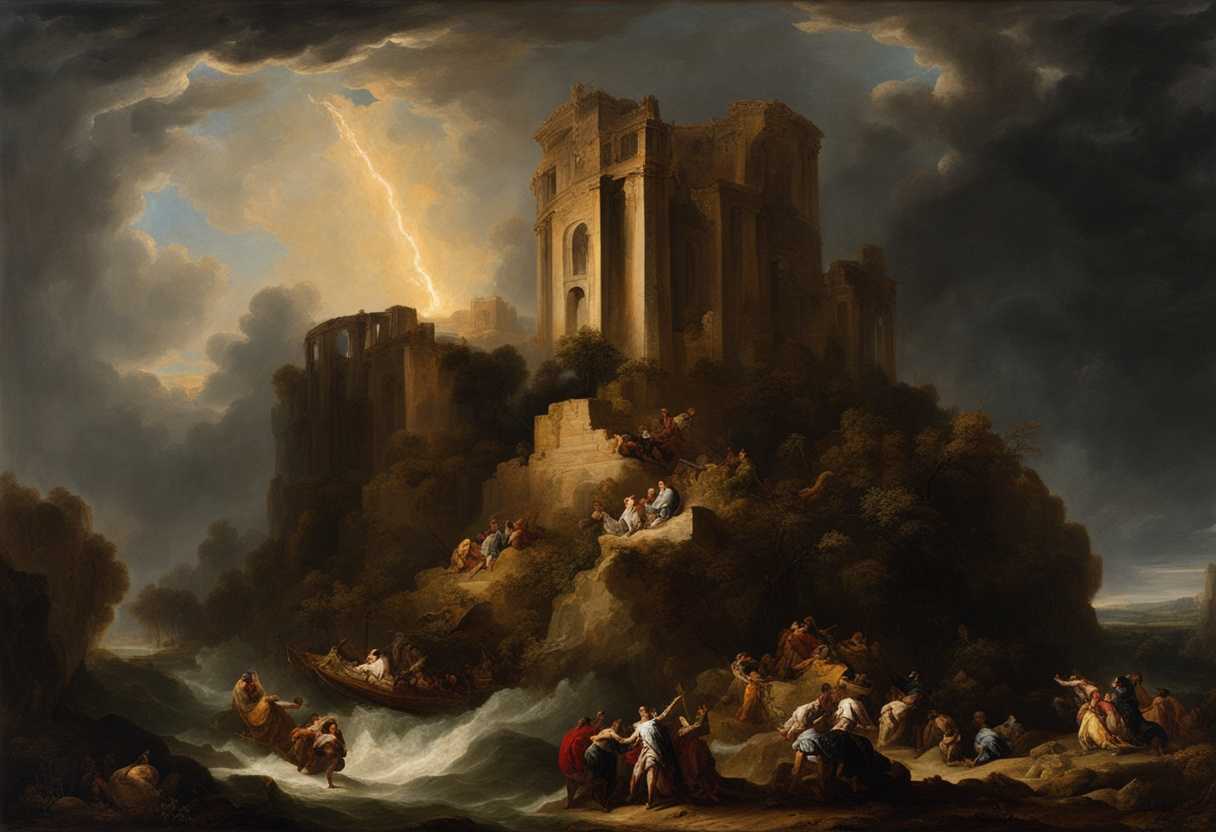
Setting the Scene for Revelation 18:10-20
In a vision that unfolds in the heart of a desolate city, the air is thick with the acrid scent of smoke and despair. The once-bustling streets of Babylon, now reduced to ruins, echo with the cries of the merchants who have lost everything. Among them stands a group of wealthy traders, their faces etched with disbelief and sorrow. They had come from distant lands, drawn by the allure of Babylon’s opulence and the promise of prosperity. Now, they gather in a makeshift assembly, their fine garments tattered and their voices trembling as they lament the fall of the great city. The towering structures that once symbolized power and wealth now lie in smoldering heaps, a stark reminder of the fleeting nature of human ambition.
As the merchants gaze upon the devastation, they recall the days when Babylon was a beacon of commerce and culture, a place where gold and silver flowed freely, and the clamor of trade filled the air. They remember the vibrant marketplaces, the exotic goods from every corner of the earth, and the intoxicating revelry that accompanied their success. But now, as they stand amidst the ruins, they are haunted by the realization that their fortunes have vanished in an instant. The cries of despair echo around them, mingling with the distant sounds of wailing and mourning. The merchants, once proud and confident, are now reduced to mere shadows of their former selves, grappling with the weight of their loss.
In the midst of this chaos, a voice rises above the din, proclaiming the finality of Babylon’s judgment. The merchants, filled with a sense of foreboding, listen intently as the voice speaks of the city’s sins and the divine retribution that has befallen it. They are reminded of the excesses and indulgences that characterized their lives, the greed that drove them to exploit the vulnerable, and the idolatry that led them astray. As the vision unfolds, they are struck by the stark contrast between their former glory and the desolation that surrounds them. The scene is a powerful reminder of the consequences of turning away from righteousness, and the merchants are left to ponder the fate of a world that has placed its trust in material wealth rather than in the eternal.
What is Revelation 18:10-20 about?
This passage speaks profoundly about the concept of divine justice and the ultimate judgment that awaits corrupt systems, using Babylon as a powerful symbol. Can we take a moment to reflect on what Babylon represents? Historically, it was a city associated with decadence, idolatry, and oppression; its fall signifies not just the end of a physical empire but the demise of the moral and ethical decay it embodied. When we consider the implications of this imagery, we can see a deeper message at play: that no matter how entrenched or powerful an unjust system may seem, there is hope that righteousness will ultimately prevail. Isn’t it fascinating to think about how this concept resonates even today in our own societies? The passage encourages us to rejoice in God’s justice. But why would rejoicing be significant in the context of judgment? It is precisely because judgment is tied to the idea of balance and restoration. When corrupt entities fall, it paves the way for renewal and the restoration of what is just and right. Can we find solace in the fact that the struggles we observe in the world are not in vain? The call to rejoice amidst the chaos serves as a reminder that even when we face overwhelming odds, there is a divine plan at work, one that promises to bring about a new order where values like fairness, integrity, and compassion can thrive. I invite you to contemplate how these themes relate to your own beliefs and experiences as we unpack them together. How can we embody this hope for justice in our daily lives?
Understanding what Revelation 18:10-20 really means
Revelation 18:10-20 presents a vivid portrayal of the fall of Babylon, a powerful symbol of the corrupt systems that stand in opposition to God. This chapter serves as a stark reminder of the ultimate judgment that awaits those who indulge in worldly pursuits. As we delve into this passage, we are invited to reflect on the implications of our choices and the influences that shape our lives. How often do we consider the weight of our actions in the grand narrative of God’s justice?
One of the key themes in this passage is judgment and accountability. The text emphasizes that no one escapes the consequences of their actions. It is a sobering thought that God sees all, and He will hold individuals and nations accountable for their choices. This raises an important question: Are we living in a way that reflects our commitment to God, or are we allowing the distractions of the world to lead us astray? The urgency of this message cannot be overstated, as it calls us to examine our lives and the paths we are choosing.
The call to “come out of her” resonates deeply in today’s context. It signifies the need for believers to separate themselves from worldly influences that can lead them away from God. In a society rife with consumerism, materialism, and moral relativism, the modern “Babylon” is all around us. We must ask ourselves: What are the influences in our lives that draw us away from our spiritual commitments? This passage challenges us to take a stand and prioritize our relationship with God over the fleeting pleasures of the world.
Consider the anecdote of a young professional consumed by their career. In their pursuit of success, they neglect relationships and compromise their values, only to find themselves feeling empty and unfulfilled. This mirrors the message of Revelation 18, where the allure of Babylon ultimately leads to destruction and despair. It serves as a cautionary tale for all of us. Are we prioritizing our spiritual well-being, or are we allowing the demands of our careers and societal expectations to dictate our choices?
The phrases within this passage carry profound meaning. The lamentation of “Alas, alas, that great city” reflects the tragic consequences of turning away from God. It serves as a reminder that the fall of Babylon is not just a historical event but a warning for us today. Similarly, the declaration that “in one hour your judgment has come” highlights the suddenness of God’s judgment. This prompts us to consider how we are using our time on earth. Are we living with a sense of urgency, aware that our actions have eternal implications?
Finally, the call to “Rejoice over her, O heaven” signifies the triumph of God’s justice. While the world may seem to prosper in sin, this passage reassures us that God’s ultimate victory is assured. As believers, we are called to celebrate His righteousness and to find hope in the promise of His justice. In a world that often feels chaotic and unjust, how can we cultivate a spirit of rejoicing in God’s sovereignty?
In conclusion, Revelation 18:10-20 serves as a profound warning and encouragement for believers today. It challenges us to reflect on our lives, to separate ourselves from the influences of a corrupt world, and to find hope in the promise of God’s justice. As we navigate our daily lives, may we strive to align our values with God’s Word, ensuring that we are not swept away by the allure of modern-day Babylon. Let us take this message to heart and commit ourselves to living in a way that honors God and reflects His truth.
What does true joy mean in our lives today?
True joy in our lives today is often found in the contrast between worldly pursuits and a deeper sense of purpose and connection to something greater. The passage highlights the transient nature of material possessions and the ultimate emptiness of earthly achievements. We must recognize that fleeting moments of happiness derived from superficial gains cannot compare to the enduring satisfaction that comes from living in alignment with our values and the well-being of others as we navigate through life. True joy roots itself in community, resilience, and hope for a better future. It emerges when we cultivate relationships built on compassion and understanding. Our collective spirit and solidarity uplift us in times of distress, while the world may seem to crumble around us. The joy that arises from shared experiences and mutual support is far more profound and lasting than any momentary success, reminding us that our happiness is intertwined with the welfare of those around us.
Lastly, true joy often involves a recognition of our contributions to the world and a commitment to living with intention. When we embrace our responsibilities and seek to make a positive impact, we find fulfillment that transcends personal gain. This deeper understanding of joy encourages us to focus not just on what we can accumulate for ourselves, but on the legacy we leave behind and the love we share with others. In this sense, people celebrate joy as not just a personal experience but a collective celebration of life, resilience, and hope.
Application
Imagine your life like a bustling office or a warm family gathering—full of energy but sometimes overshadowed by distractions. Just as you’d prioritize what truly matters in your work and relationships, ask yourself if your values align with what enriches your spirit or if they mirror the chaos of a fallen city. It’s time to cut through the noise and focus on what brings you closer to purpose and fulfillment. Just as a team rallies together to achieve a goal, will you step up and commit to living out your faith boldly, leaving behind the distractions that pull you away from God’s glory?

Reverend Michael Johnson is an experienced Church Minister with a profound expertise in spirituality and guidance. With a serene presence and a compassionate heart, he has faithfully served his congregation for over 20 years, leading them on a spiritual journey towards inner peace and enlightenment. Reverend Johnson’s extensive knowledge of religious philosophies and profound understanding of human nature have made him a trusted confidant and mentor to many, as he seamlessly weaves his profound wisdom into life teachings. Reverend Johnson’s calming demeanor and empathetic nature continue to uplift and heal souls, nurturing a sense of unity and tranquility within his community.