
Revelation 18:11-19 is about the lamentation of merchants and the destruction of Babylon, symbolizing the fall of a corrupt and luxurious civilization, which reflects the ultimate judgment against those who prioritize material wealth and moral depravity over spiritual fidelity.
11 And the merchants of the earth weep and mourn for her, since no one buys their cargo anymore,
12 cargo of gold, silver, jewels, pearls, fine linen, purple cloth, silk, scarlet cloth, all kinds of scented wood, all kinds of articles of ivory, all kinds of articles of costly wood, bronze, iron and marble,
13 cinnamon, spice, incense, myrrh, frankincense, wine, oil, fine flour, wheat, cattle and sheep, horses and chariots, and slaves, that is, human souls.
14 The fruit for which your soul longed
has gone from you,
and all your delicacies and your splendors
are lost to you,
never to be found again!
15 The merchants of these wares, who gained wealth from her, will stand far off, in fear of her torment, weeping and mourning aloud,
16 “Alas, alas, for the great city that was clothed in fine linen, in purple and scarlet, adorned with gold, with jewels, and with pearls!”
17 for in a single hour all this wealth has been laid waste.” And all shipmasters and seafaring men, sailors and all whose trade is on the sea, stood far off
18 and cried out as they saw the smoke of her burning, “What city was like the great city?”
19 And they threw dust on their heads as they wept and mourned, crying out, “Alas, alas, for the great city where all who had ships at sea grew rich by her wealth! For in a single hour she has been laid waste.
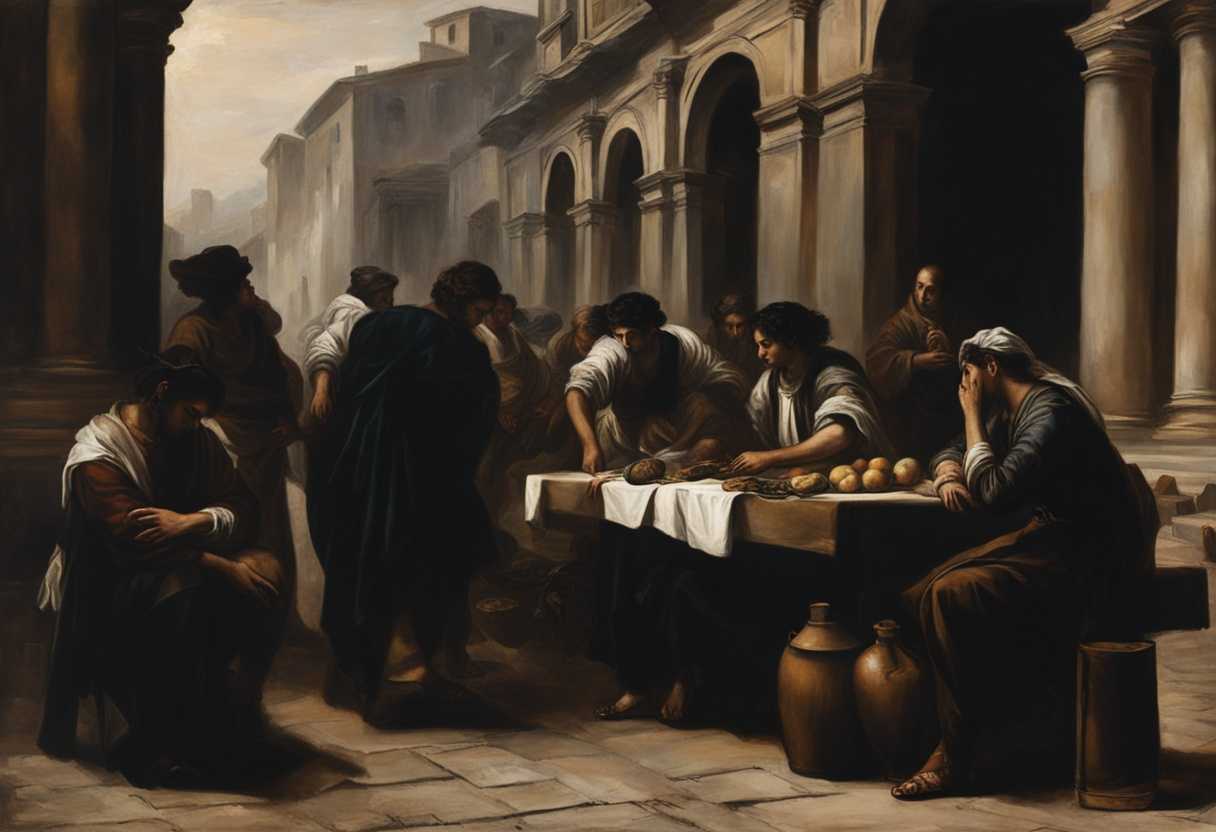
Setting the Scene for Revelation 18:11-19
In a grand and bustling city, the air is thick with the scent of commerce and the sounds of lively trade. Merchants from distant lands have gathered in the heart of this metropolis, a place known for its opulence and excess. The streets are lined with towering structures adorned with gold and precious stones, reflecting the wealth that has poured into this city, often referred to as Babylon. The atmosphere is electric, filled with the chatter of traders and the clinking of coins, as they barter and negotiate for goods that range from fine silks to exotic spices. Yet, beneath this veneer of prosperity lies a deep undercurrent of moral decay and spiritual corruption, a reality that many of the inhabitants choose to ignore.
Among the throngs of people, a group of merchants stands out, their faces etched with concern and disbelief. They are seasoned traders who have made their fortunes in this city, but today, they are witnesses to a catastrophic event. As they gaze upon the horizon, they see smoke rising from the ruins of what was once a thriving marketplace. The destruction is swift and complete, a divine judgment that has befallen the city they once revered. The merchants, including figures like the wealthy trader Demetrius and the shrewd businesswoman Lydia, lament the loss of their livelihoods, crying out in despair as they realize that their source of wealth and status has been obliterated in an instant. Their cries echo through the streets, mingling with the sounds of chaos and confusion.
Surrounding them, the once-bustling city is now a scene of desolation. The vibrant colors of the marketplace have faded into a dull gray, and the laughter of children has been replaced by the wails of the grieving. The merchants, dressed in their finest garments, now find themselves stripped of their pride and dignity, standing amidst the ashes of their dreams. They watch helplessly as the remnants of their trade—cargo ships laden with goods, stalls filled with luxurious items—are consumed by the flames. The sky, once a brilliant blue, is now shrouded in a thick haze of smoke, casting a shadow over the city that was once a beacon of wealth and power. In this moment of reckoning, the merchants come to understand the futility of their pursuits, realizing that the very things they cherished have led to their downfall, as the city they adored crumbles before their eyes.
What is Revelation 18:11-19 about?
We examine not merely the demise of Babylon, but the broader implications of what it represents as we delve into this poignant verse. Babylon, in this context, symbolizes the grandiose yet deeply flawed systems of the world—those structures that elevate greed, power, and corruption above integrity and justice. When the passage describes mourning over Babylon’s fall, it compels us to consider: how often have we invested our hopes in worldly systems that ultimately disappoint? The lamentation reflects the struggle many of us experience as we grapple with the loss of comfort and familiarity, even when it is tied to systems that do not serve a just purpose. We are invited to reflect on the idea of what we prioritize in our own lives in mourning for Babylon. Are we too attached to ephemeral pleasures and material success? This verse serves as a cautionary tale, urging us to examine the foundations upon which we build our lives and societies. It raises critical questions about our values and priorities—what truly sustains us? The passage encourages us to confront the fragility of our worldly ambitions by presenting the fall of a once-mighty city. Might we find a glimmer of hope in recognizing that, as these systems ultimately crumble, we have the chance to seek something far more enduring—peace, justice, and community? The mourning over Babylon’s destruction in this light is not just a tale of loss, but rather a call to action for personal and collective reflection. It emphasizes the potential for renewal and transformation in the aftermath of collapse. So I invite you to consider: as the world shifts and systems fail, what can emerge anew? What does it mean for us to rise from the ashes and build a society that is truly reflective of our highest ideals? With the fall of Babylon, we may need to confront the ruins of our misplaced trust, but we also stand on the precipice of recreating a world rooted in hope and integrity.
Understanding what Revelation 18:11-19 really means
Revelation 18:11-19 presents a poignant lamentation over the fall of Babylon, a powerful symbol of worldly systems and materialism. This passage starkly reminds us of the transient nature of earthly wealth and power. As we delve into this text, we are invited to reflect on what truly holds value in our lives and the consequences of placing our trust in the temporal.
The Book of Revelation, attributed to John, is a prophetic text that addresses the struggles of early Christians facing persecution. The imagery of Babylon transcends a mere city; it represents a broader system of corruption and idolatry that stands in opposition to God. Understanding this context enriches our interpretation of the lamentation, as it highlights the collective moral failures of societies that prioritize material gain over spiritual integrity.
Key phrases in this passage warrant our attention. When we read, “The merchants of the earth weep and mourn,” we see the deep sorrow of those who have anchored their identities in material wealth. Their lament signifies not just a financial loss but a profound existential crisis. The phrase “No one buys their cargoes anymore” underscores the finality of judgment, illustrating the collapse of a system that has long prioritized profit over spiritual values. The term “the great city” encapsulates the idea of a powerful society that has turned away from God, serving as a cautionary tale about the consequences of collective moral failure.
This theme resonates with other biblical passages. Matthew 6:19-21 emphasizes the importance of storing treasures in heaven rather than on earth, reinforcing Revelation’s message about the futility of earthly riches. Similarly, 1 John 2:15-17 warns against loving the world and its desires, echoing the call to prioritize spiritual wealth. James 5:1-6 further speaks to the miseries of the rich, highlighting the moral implications of wealth accumulation at the expense of others. Together, these texts create a cohesive narrative about the dangers of materialism.
In today’s society, where consumerism and material success often dominate our values, this passage serves as a wake-up call. Many individuals find their identity and worth in possessions rather than in their relationship with Christ. The lamentation over Babylon can be seen in the struggles of those facing financial crises, the emptiness of wealth, and the fleeting nature of fame and success. It prompts us to ask ourselves: Are we investing in what truly matters?
Consider the story of a successful businessperson who achieves their dream of wealth and status. Upon reaching the pinnacle of their career, they realize that their relationships have suffered, their health has declined, and their sense of purpose is lost. This individual may reflect on the emptiness of their pursuits, echoing the lament of the merchants in Revelation. Such realizations can lead to transformative journeys back to faith and community, emphasizing that true fulfillment comes from spiritual richness rather than material gain.
In conclusion, Revelation 18:11-19 serves as a powerful reminder of the impermanence of worldly success and the importance of aligning our values with God’s kingdom. As we navigate our lives, may we seek to invest in what truly matters—relationships, faith, and acts of love—rather than the fleeting treasures of this world. Let us reflect on our priorities and consider how we can cultivate a life that honors God above all else.
What do I value most in my life?
What I value most in life revolves around the recognition of the transient nature of material wealth and the importance of integrity and purpose. The passage emphasizes the grief and loss experienced when worldly riches fade away, illustrating how fleeting and ultimately meaningless such treasures can be. This perspective reminds me to prioritize relationships, personal growth, and meaningful contributions over the pursuit of financial success and lavish living.
Additionally, the passage speaks to the consequences of a life centered around indulgence and excess. It highlights the sorrow of those who find their identity and worth in these ephemeral gains. This reinforces my belief in the significance of living a life of authenticity and accountability, where actions align with core values and create a lasting impact on others. It encourages me to seek fulfillment through passion, service, and community involvement rather than through possessions.
Lastly, the stark contrast between physical riches and spiritual wealth reinforces the importance of nurturing inner virtues. I strive to cultivate qualities like compassion, wisdom, and resilience that endure beyond material loss. I find greater motivation to focus on what truly matters—building a legacy of love, kindness, and positive influence in the lives of those around me as I recognize the inherent emptiness in chasing after worldly accolades.
Application
Picture your life as a busy workplace, filled with deadlines and temptations that distract you from what truly matters. Just as a family needs strong values, your spirit craves focus on what lasts—love, purpose, and faith. Don’t let fleeting profits blind you to the wealth that comes from living a meaningful life. Take a moment to assess your choices: Are you chasing after distractions that will leave you empty, or are you building a future filled with lasting joy and fulfillment? It’s time to choose what truly matters. What will you decide today?

Reverend Michael Johnson is an experienced Church Minister with a profound expertise in spirituality and guidance. With a serene presence and a compassionate heart, he has faithfully served his congregation for over 20 years, leading them on a spiritual journey towards inner peace and enlightenment. Reverend Johnson’s extensive knowledge of religious philosophies and profound understanding of human nature have made him a trusted confidant and mentor to many, as he seamlessly weaves his profound wisdom into life teachings. Reverend Johnson’s calming demeanor and empathetic nature continue to uplift and heal souls, nurturing a sense of unity and tranquility within his community.