
Revelation 1:17-20 is about John encountering the resurrected Christ, who holds the keys to death and Hades, symbolizing Christ’s power over death and the afterlife, and instructing John to write down the visions he will receive, representing the divine authority and guidance given to share the revelations of God.
17 When I saw him, I fell at his feet as though dead. But he laid his right hand on me, saying, “Fear not, I am the first and the last,
18 and the living one. I died, and behold I am alive forevermore, and I have the keys of Death and Hades.
19 Write therefore the things that you have seen, those that are and those that are to take place after this.
20 As for the mystery of the seven stars that you saw in my right hand, and the seven golden lampstands, the seven stars are the angels of the seven churches, and the seven lampstands are the seven churches.
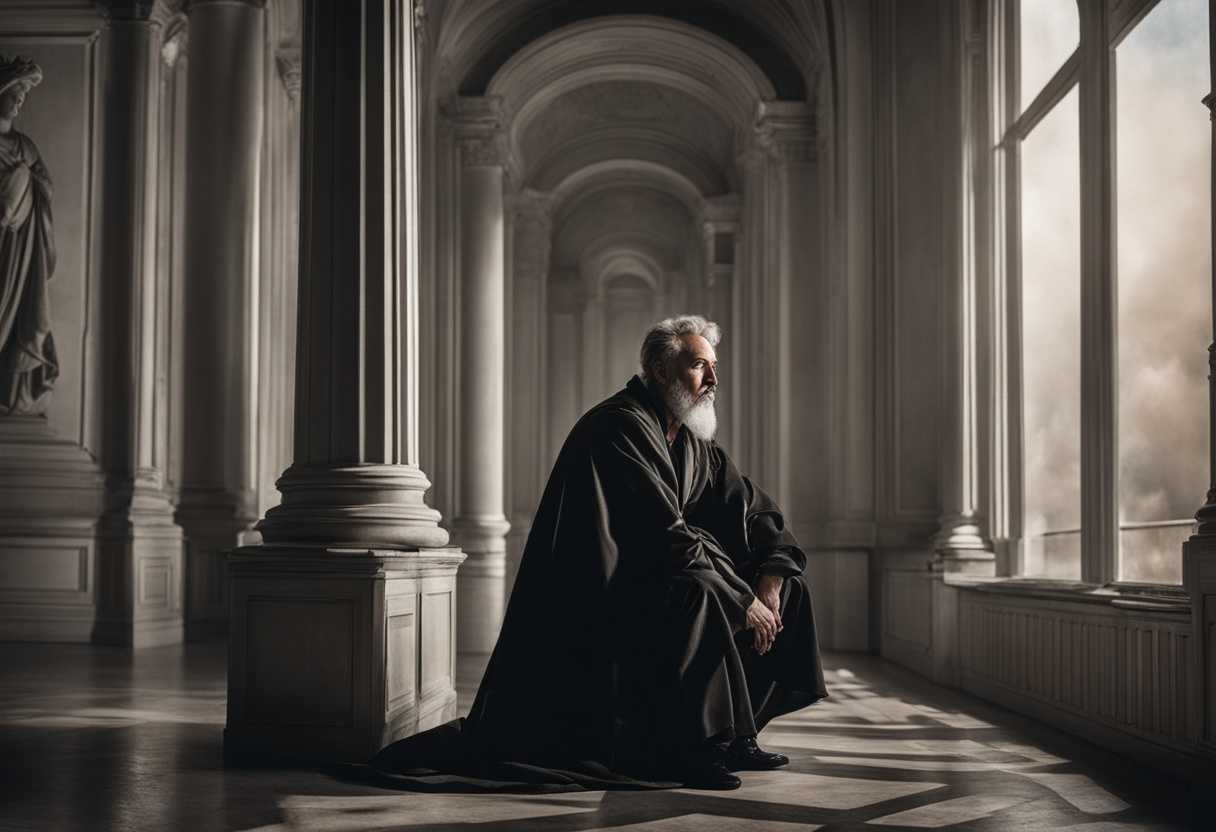
Setting the Scene for Revelation 1:17-20
In Revelation chapter 1, we find the scene set on the island of Patmos, where the apostle John is exiled for preaching the word of God. It is a rocky and desolate island in the Aegean Sea, where John is secluded and alone. One day, as John is in prayer and meditation, he suddenly hears a loud voice behind him. Turning around, he sees a figure shining like the sun, with eyes like flames of fire and a voice like rushing waters. It is the resurrected Jesus Christ standing before him.
Overwhelmed by the sight, John falls to his knees in awe and fear. Jesus reaches out and touches him, saying, “Do not be afraid. I am the First and the Last. I am the Living One; I was dead, and now look, I am alive for ever and ever!” Jesus then instructs John to write down everything he sees and hears, including the visions of the future that will be revealed to him. John obeys, taking in the majestic presence of the glorified Christ and the powerful message he is about to receive.
As John writes down the words of Jesus, he sees seven golden lampstands and the Son of Man standing among them, holding seven stars in his right hand. Jesus explains that the lampstands represent the seven churches, and the stars are the angels of those churches. He commissions John to send letters to each of the seven churches, conveying messages of encouragement, warning, and exhortation. The scene is one of divine revelation and authority, as Jesus Christ reveals himself as the Alpha and the Omega, the Beginning and the End, to his faithful servant John on the island of Patmos.
What is Revelation 1:17-20 about?
Jesus is demonstrating His power over death by resurrecting a young girl in this verse. This miracle showcases His authority not only over physical life and death but also over spiritual life. It emphasizes the importance of faith and reminds us that nothing is impossible for God. It serves as a powerful illustration of Jesus’s ability to bring new life, both physically and spiritually, and to defeat death itself.
Reflecting on this verse, we can see how Jesus’s actions here are not only a display of His power but also a profound message of hope for all believers. It reminds us that through Him, we can overcome even the most daunting challenges and that He is always with us, bringing life and victory in every situation. It prompts us to trust in His authority and to rely on His power to transform our lives and bring us closer to Him. Jesus’s act of raising the young girl from death speaks volumes about His divine power and serves as a compelling testimony to His mastery over all things, including death itself.
Understanding what Revelation 1:17-20 really means
The Book of Revelation, penned by the Apostle John during his exile on the island of Patmos, unveils profound visions of the glorified Christ and imparts messages to the seven churches. In Revelation 1:17-20, John encounters the majestic Christ, who declares, “I am the First and the Last.” This statement encapsulates Christ’s eternal nature and His sovereignty over all time, echoing the words of God in Isaiah 44:6. Furthermore, when Christ proclaims, “I was dead, and now look, I am alive for ever and ever!” He affirms His triumph over death through resurrection, a pivotal truth underpinning the Christian faith. The assertion that Christ holds “the keys of death and Hades” underscores His authority over life and the afterlife, assuring believers of His power to save and protect.
Drawing connections to related biblical passages enriches our understanding of Christ’s declarations in Revelation. Isaiah 44:6 emphasizes God’s exclusive claim as the first and the last, reinforcing Christ’s eternal nature. John 11:25-26 portrays Jesus as the resurrection and the life, offering believers the promise of eternal existence through faith in Him. In Matthew 16:19, Christ’s bestowal of the keys of the kingdom of heaven signifies His authority to bind and loose, reflecting His ultimate power over life and death.
The relevance of these truths to contemporary individuals is profound. In a world fraught with uncertainty and fear, the assurance that Christ is eternal and holds dominion over life and death provides profound comfort. The hope engendered by Jesus’ resurrection extends beyond the grave, inspiring believers to live purposefully and faithfully. Understanding that Christ wields the keys to death and Hades instills confidence in His ultimate control and protection over our lives.
Consider a scenario where someone grapples with the anguish of losing a loved one. The knowledge that Jesus is “alive for ever and ever” and possesses “the keys of death and Hades” can offer profound solace. This assurance transforms grief into a journey of faith, illuminating the hope of a future reunion in eternity. Such hope can catalyze a profound shift, guiding individuals from despair to a steadfast reliance on Christ’s promises.
In conclusion, the passage in Revelation 1:17-20 illuminates Christ’s eternal nature, His victory over death, and His authority over the afterlife. Embracing these truths can provide solace and hope, especially in challenging seasons. I encourage you to reflect on your faith and relationship with Christ, drawing strength from His enduring promises. May the eternal truths revealed in this passage anchor your soul in the unchanging character of our resurrected Lord.
What does it mean to have spiritual discernment?
Having spiritual discernment means having the ability to understand and interpret spiritual truths with clarity and insight. Jesus appears to John in Revelation 1:17-20, holding the keys of death and Hades, and instructs him to write down what he sees. Through spiritual discernment, John is able to comprehend and record the visions he receives, revealing the message of God to the churches.
Spiritual discernment goes beyond mere intellectual understanding; it involves a deep connection with God and a sensitivity to His message. It allows individuals to see beyond the surface and perceive the deeper spiritual realities at play. One can recognize the workings of the Holy Spirit, distinguish between truth and falsehood, and discern the will of God in various situations by having spiritual discernment. Believers who seek spiritual discernment are better equipped to navigate the complexities of life with wisdom and clarity. They can discern God’s voice amidst the noise of the world and align themselves with His purposes by tuning into the guidance of the Holy Spirit and honing their spiritual senses. This gift enables believers to walk in step with God, discerning His will and following His guidance in their lives.
Application
Embrace the astonishing might of the risen Christ in Revelation 1:17-20. Let go of fear and bask in His everlasting splendor. Focus on Jesus as the Alpha and Omega, the one who masters death and Hades. Are you ready to submit to His supremacy and follow Him with unwavering respect and obedience?

Reverend Michael Johnson is an experienced Church Minister with a profound expertise in spirituality and guidance. With a serene presence and a compassionate heart, he has faithfully served his congregation for over 20 years, leading them on a spiritual journey towards inner peace and enlightenment. Reverend Johnson’s extensive knowledge of religious philosophies and profound understanding of human nature have made him a trusted confidant and mentor to many, as he seamlessly weaves his profound wisdom into life teachings. Reverend Johnson’s calming demeanor and empathetic nature continue to uplift and heal souls, nurturing a sense of unity and tranquility within his community.