
Revelation 20:1-15 is about the ultimate triumph of good over evil, the final judgment by God, the defeat of Satan, and the establishment of a new heaven and earth marked by justice and righteousness.
1 Then I saw an angel coming down from heaven, holding in his hand the key to the bottomless pit and a great chain.
2 And he seized the dragon, that ancient serpent, who is the devil and Satan, and bound him for a thousand years,
3 and threw him into the pit, and shut it and sealed it over him, so that he might not deceive the nations any longer, until the thousand years were ended. After that he must be released for a little while.
4 Then I saw thrones, and seated on them were those to whom the authority to judge was committed. Also I saw the souls of those who had been beheaded for the testimony of Jesus and for the word of God, and those who had not worshiped the beast or its image and had not received its mark on their foreheads or their hands. They came to life and reigned with Christ for a thousand years.
5 The rest of the dead did not come to life until the thousand years were ended. This is the first resurrection.
6 Blessed and holy is the one who shares in the first resurrection! Over such the second death has no power, but they will be priests of God and of Christ, and they will reign with him for a thousand years.
7 And when the thousand years are ended, Satan will be released from his prison
8 and will come out to deceive the nations that are at the four corners of the earth, Gog and Magog, to gather them for battle; their number is like the sand of the sea.
9 And they marched up over the broad plain of the earth and surrounded the camp of the saints and the beloved city, but fire came down from heaven and consumed them.
10 and the devil who had deceived them was thrown into the lake of fire and sulfur where the beast and the false prophet were, and they will be tormented day and night forever and ever.
Then I saw a great white throne and him who was seated on it. From his presence earth and sky fled away, and no place was found for them.
12 And I saw the dead, great and small, standing before the throne, and books were opened. Then another book was opened, which is the book of life. And the dead were judged by what was written in the books, according to what they had done.
13 And the sea gave up the dead who were in it, Death and Hades gave up the dead who were in them, and they were judged, each one of them, according to what they had done.
14 Then Death and Hades were thrown into the lake of fire. This is the second death, the lake of fire.
15 And if anyone’s name was not found written in the book of life, he was thrown into the lake of fire.
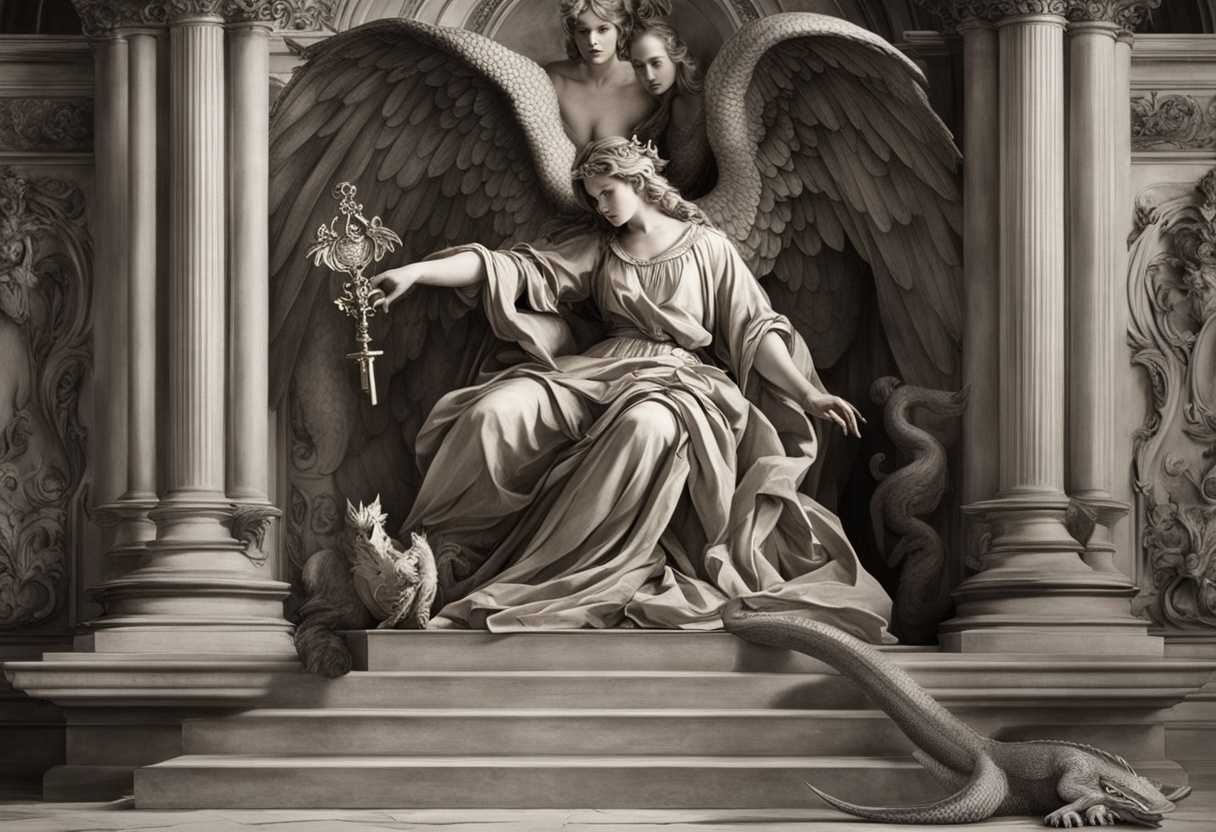
Setting the Scene for Revelation 20:1-15
The scene in Revelation chapter 20 opens with a powerful and awe-inspiring image. John, the author of the book of Revelation, finds himself standing on a vast and desolate plain. The air is thick with anticipation and a sense of finality. As he looks around, he sees a mighty angel descending from heaven, holding a key and a chain in his hand. The angel approaches a fearsome figure, the dragon, also known as the ancient serpent, who is Satan.
In this dramatic moment, John witnesses the angel binding Satan with the chain and casting him into the bottomless pit, where he is sealed for a thousand years. Alongside the angel and John, there are also other heavenly beings present, their radiance and power adding to the intensity of the scene. The surroundings are both magnificent and terrifying, as the cosmic battle between good and evil unfolds before John’s eyes.
As the chapter progresses, John sees thrones being set up, and those who had been martyred for their faith standing before God. The scene is filled with a sense of justice and redemption, as the faithful are rewarded and the wicked are judged. The imagery in Revelation chapter 20 is vivid and symbolic, conveying the ultimate triumph of God’s kingdom over the forces of darkness.
What is Revelation 20:1-15 about?
Dear reader, this verse from the Book of Revelation holds immense significance in Christian theology as it portrays the ultimate triumph of good over evil and the final judgment of all beings. It signifies the culmination of God’s plan for the world, where justice is served, and evil is vanquished forever. Delve into the meaning of this verse as you ponder on the everlasting battle between good and evil, the cosmic struggle that has been ongoing since the beginning of time. Reflect on the symbolism of Satan’s defeat, representing the ultimate victory of righteousness and the ultimate authority of God. Contemplate the idea of divine justice and how every being will be held accountable for their actions in the final judgment.
Let this verse serve as a reminder of the importance of living a righteous life, guided by moral principles and faith, so that when the final judgment comes, we may stand on the side of goodness and light. Embrace the message of hope and redemption it brings, knowing that in the end, God’s mercy and justice will prevail.
Understanding what Revelation 20:1-15 really means
In Revelation 20:1-15, we encounter a vivid depiction of significant events: the binding of Satan, the thousand-year reign of Christ, the final defeat of Satan, and the ultimate judgment. This passage is crucial to grasp as Revelation is a book filled with prophecy and symbolism, demanding careful interpretation to unveil its profound meanings.
The imagery of an angel descending from heaven with the key to the bottomless pit and a great chain signifies divine authority and power over evil. The act of seizing the dragon, identified as the devil and Satan, and binding him for a thousand years symbolizes the temporary restraint of evil in the world. Those who come to life and reign with Christ during this period represent the victory and reign of the faithful alongside Christ, while the distinction between the first resurrection of the righteous and the final resurrection is made clear.
The scene where the books are opened, and the dead are judged according to their deeds underscores the themes of accountability and divine justice. The sobering reality that those whose names are not found in the book of life face being cast into the lake of fire highlights the ultimate consequence of rejecting God’s grace and salvation.
Connecting Revelation 20 with other biblical passages such as 1 Thessalonians 4:16-17, Matthew 25:31-46, and Daniel 7:9-10 enhances our understanding of the resurrection, final judgment, and divine justice depicted in this chapter. These parallels emphasize the consistency of God’s message throughout Scripture.
The relevance of Revelation 20:1-15 to contemporary believers lies in its message of hope, accountability, and encouragement to persevere. The assurance that evil will not triumph eternally, the reminder of the eternal consequences of our actions, and the motivation to remain steadfast in faith are all vital takeaways for Christians today.
Consider a courtroom where justice prevails after years of corruption. The relief and joy felt by victims upon hearing a fair verdict mirror the final judgment described in Revelation 20. Just as justice brings closure and comfort to the oppressed, believers find solace in the promise of God’s ultimate justice and restoration.
In conclusion, Revelation 20:1-15 presents a compelling vision of God’s triumph over evil and the establishment of His righteous kingdom. It urges us to live with hope, accountability, and perseverance, trusting in God’s unwavering justice and boundless mercy.
How can we prepare for the final judgment?
We can prepare for the final judgment by living a life in accordance with the teachings of God and His commandments. It is important to have faith in God, follow His guidance, and strive to do good deeds. We can hope for mercy and grace during the final judgment by seeking forgiveness for our sins, repenting for any wrongful actions, and striving to lead a righteous life.
Additionally, we can prepare for the final judgment by constantly working on improving ourselves and our relationship with God. This includes engaging in acts of worship, such as praying, fasting, and reading religious scriptures. Seeking knowledge about our faith and actively participating in religious communities can also help us stay connected to our spiritual beliefs and values. We can strengthen our faith and be better prepared for the final judgment by nurturing a strong connection with God and consistently seeking His guidance and forgiveness. The final judgment ultimately serves as a reminder of the consequences of our actions and choices in this world. We can strive to lead a life that is deserving of His mercy and favor in the final judgment by staying mindful of our deeds and intentions, staying true to our beliefs, and seeking God’s forgiveness and guidance.
Application
As we journey through the passage of Revelation 20:1-15, let’s embrace the concept of ultimate accountability for our choices. Every action we take molds our path, guiding us toward a meaningful existence. Let’s illuminate our existence with purpose, radiating goodness in all we do. Holding ourselves to a higher standard, let’s spread kindness and compassion as a beacon of hope in a world yearning for light. Are you ready to embrace this vital message and shape your life with intention today?

Reverend Michael Johnson is an experienced Church Minister with a profound expertise in spirituality and guidance. With a serene presence and a compassionate heart, he has faithfully served his congregation for over 20 years, leading them on a spiritual journey towards inner peace and enlightenment. Reverend Johnson’s extensive knowledge of religious philosophies and profound understanding of human nature have made him a trusted confidant and mentor to many, as he seamlessly weaves his profound wisdom into life teachings. Reverend Johnson’s calming demeanor and empathetic nature continue to uplift and heal souls, nurturing a sense of unity and tranquility within his community.