
Revelation 20:1-3, 7-10 is about the ultimate defeat of evil, illustrating the final judgment and the binding of Satan, emphasizing the hope and victory of God’s kingdom over the forces of darkness.
1 Then I saw an angel coming down from heaven, holding in his hand the key to the bottomless pit and a great chain.
2 And he seized the dragon, that ancient serpent, who is the devil and Satan, and bound him for a thousand years,
3 and threw him into the pit, and shut it and sealed it over him, so that he might not deceive the nations any longer, until the thousand years were ended. After that he must be released for a little while.
7 And when the thousand years are ended, Satan will be released from his prison
8 and will come out to deceive the nations that are at the four corners of the earth, Gog and Magog, to gather them for battle; their number is like the sand of the sea.
9 And they marched up over the broad plain of the earth and surrounded the camp of the saints and the beloved city, but fire came down from heaven and consumed them.
10 and the devil who had deceived them was thrown into the lake of fire and sulfur where the beast and the false prophet were, and they will be tormented day and night forever and ever.
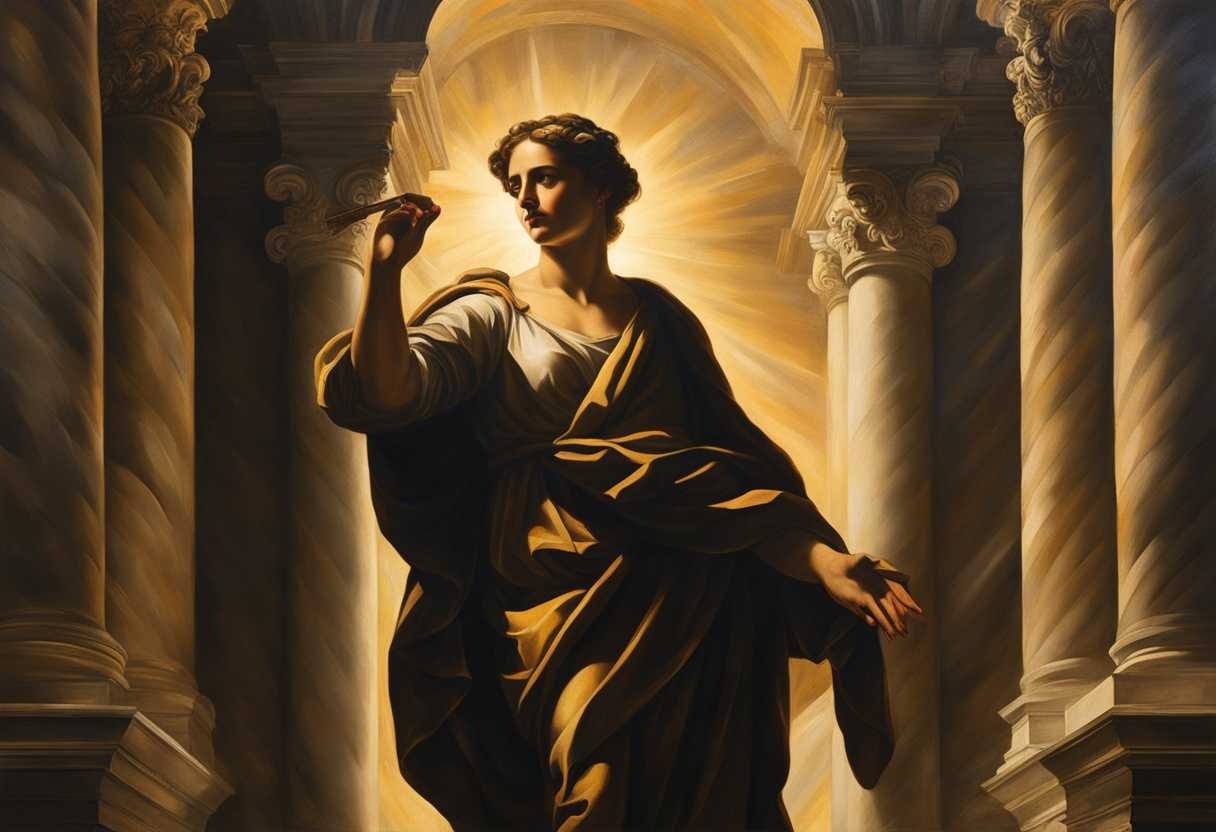
Setting the Scene for Revelation 20:1-3, 7-10
In a moment of profound cosmic significance, the scene unfolds in a realm beyond human comprehension, where the final chapters of existence are being written. The air is thick with anticipation as an angel descends from the heavens, clothed in radiant light, holding the key to the Abyss and a great chain. This angel, a divine messenger, has been tasked with a monumental duty: to bind the ancient serpent, the devil, and cast him into the Abyss, sealing it for a thousand years. The surroundings are a stark contrast to the chaos that has characterized the world; a serene yet powerful stillness envelops the atmosphere, as if all of creation holds its breath in reverence of the moment. The angel’s presence signifies the beginning of a new era, one where peace and righteousness will reign, free from the influence of evil.
As the angel binds the devil, the scene shifts to a vision of the faithful, those who have endured trials and tribulations throughout their earthly lives. They stand in a place of glory, having been resurrected to reign with Christ during this thousand-year period of peace. Among them are figures like John, the beloved disciple, who has witnessed the unfolding of these prophetic events, and the martyrs who have laid down their lives for their faith. Their faces shine with hope and joy, reflecting the promise of eternal life and the fulfillment of God’s plan. The landscape around them is transformed; lush greenery and vibrant colors symbolize the restoration of creation, a stark contrast to the desolation that once marked the earth. This is a time of celebration, where the faithful are rewarded for their perseverance, and the presence of God is palpable.
However, as the thousand years draw to a close, the scene shifts once more, revealing a new challenge. The devil, released from his prison, gathers the nations for one final rebellion against the divine order. The atmosphere grows tense as the forces of evil, led by the deceiver, prepare to wage war against the saints and the beloved city. The faithful, now fortified by their experiences and the promises of God, stand resolute, ready to confront this last attempt at chaos. The surroundings darken as the forces of evil gather, but the light of the faithful shines brighter, a testament to their unwavering faith. In this climactic moment, the ultimate battle between good and evil is set to unfold, culminating in the final judgment where the devil is cast into the lake of fire, forever silenced. The scene encapsulates the eternal struggle between light and darkness, a reminder of the hope that prevails for those who remain steadfast in their faith.
What is Revelation 20:1-3, 7-10 about?
The verse you’re referencing speaks to a critical concept in Christian eschatology—essentially, the study of the end times and the final destiny of humanity. The imagery of Satan being bound for a thousand years evokes a sense of temporary restraint. But why is this significant? It suggests a period where evil is curtailed, allowing for a time of peace, righteousness, and perhaps an opportunity for humanity to flourish spiritually. Can you imagine a world where the struggles of temptation and sin are momentarily lifted? This notion invites us to reflect on the nature of good and evil and to examine our own choices within the moral scope of our daily lives.
After this thousand-year period, the release of Satan presents a profound turning point. It raises questions about why a benevolent God would allow evil to resurface. Isn’t it intriguing to consider that the very act of free will, which allows us to choose love, goodness, and faith, is also what enables the potential for rebellion and chaos? The final judgment that follows this release is often interpreted as a reaffirmation of divine justice—those who have chosen to walk in obedience versus those who have strayed. This concept can feel heavy, even daunting. Yet, isn’t it also an invitation to examine our own beliefs and actions? It challenges us to ponder not only the grand narrative of good versus evil but also our individual roles within that story. What choices are you making today that align with your values and beliefs? This verse ultimately asks us to consider the long-term consequences of our lives.
Understanding what Revelation 20:1-3, 7-10 really means
Revelation 20:1-3, 7-10 presents a powerful vision of the binding of Satan, the reign of Christ, and the final judgment. This passage is not merely a narrative; it is a profound declaration of God’s ultimate victory over evil. As we delve into these verses, we uncover layers of symbolism and eschatological significance that speak to the heart of the Christian faith.
To fully appreciate this passage, we must consider its historical context. Written by John during a time of intense persecution for early Christians, the Book of Revelation serves as both a warning and a source of hope. The imagery of a bound Satan and a reigning Christ was particularly poignant for those facing trials, reminding them that their struggles were not in vain and that God’s justice would ultimately prevail.
One of the key themes in this passage is the victory over evil. The binding of Satan signifies a limitation on evil’s influence during Christ’s reign. This theme resonates throughout Scripture, echoing the assurance found in Romans 16:20, where believers are promised that God will soon crush Satan under their feet. This victory is not just a future hope; it is a present reality that empowers us to live boldly in faith.
Another significant theme is hope and restoration. Revelation 21:1 speaks of a new heaven and a new earth, a promise that extends from the victory declared in Revelation 20. This assurance of restoration is vital for believers today, especially in a world rife with chaos and moral decline. It invites us to reflect on our own lives and the hope we carry, even amidst trials.
As we explore relevant biblical cross-references, we find connections that deepen our understanding. Isaiah 14:12-15 describes the fall of Lucifer, paralleling the defeat of Satan in Revelation. Similarly, Matthew 25:41 speaks of eternal punishment for the devil and his angels, reinforcing the finality of judgment. These verses remind us that the battle against evil is ongoing, as highlighted in 1 Peter 5:8, which calls believers to remain vigilant.
In our contemporary context, the message of Revelation 20 resonates deeply. It reassures us that despite the chaos and injustice we witness, God is sovereign and will ultimately triumph over evil. Consider a community that comes together after a natural disaster, supporting one another and rebuilding. This mirrors our Christian journey; while we face trials, we are called to unite in faith, trusting in God’s promise of restoration.
The phrases within this passage carry significant weight. The “angel coming down from heaven” symbolizes divine authority and intervention, reminding us that God is actively involved in our lives. When we read about the angel “laying hold of the dragon,” we see a vivid representation of the defeat of evil forces, assuring us that evil is not all-powerful. Finally, the “lake of fire” serves as a sobering reminder of the consequences of rejecting God’s grace, emphasizing the seriousness of our choices.
In conclusion, Revelation 20:1-3, 7-10 encapsulates the hope of victory over evil and the promise of God’s ultimate justice. As we navigate our lives today, let us hold fast to the assurance that God is in control and that His plans for us are good. This passage encourages us to remain steadfast in faith, knowing that our struggles are temporary and that the victory is assured. How can we apply this hope in our daily lives? What steps can we take to support one another in faith as we await the fulfillment of God’s promises?
How do we resist evil in our daily lives?
Resisting evil in our daily lives requires a conscious commitment to align ourselves with good, often through intentional choices and actions. This involves recognizing the various forms of negativity that can infiltrate our thoughts and behaviors, such as selfishness, deceit, or anger. We can create an environment that naturally counters these negative impulses by cultivating positive habits and surrounding ourselves with uplifting influences. Engaging in acts of kindness, practicing forgiveness, and striving for honesty are all ways to foster a lifestyle that stands against evil. Vigilance is key to resisting evil. This means being aware of the influences around us and understanding how subtle temptations can lead us astray. It requires a proactive approach to spiritual well-being, such as dedicating time to reflection, prayer, or meditation, which can strengthen our resolve against harmful thoughts and behaviors. Regularly reassessing our values and the choices we make helps maintain a focus on what is good, allowing us to push back against any dark influences that may seek to ensnare us.
Finally, unity with others in the pursuit of goodness can significantly bolster our resistance to evil. Connecting with a community that shares similar values can provide support and encouragement, reinforcing our commitments to live righteously. Together, we can hold each other accountable and create a collective strength that can withstand external pressures and temptations. We not only resist evil individually, but we also contribute to a larger movement toward positivity and hope in the world around us.
Application
Imagine your workplace filled with opportunity and teamwork, where every moment counts towards something greater. Just like we prepare for important deadlines, we must also be ready for Christ’s return. This is our chance to shine a light in the lives of our loved ones, spreading the hope that transforms hearts. Don’t hold back—take action and share this good news with those around you. Are you prepared to be the spark that ignites change before the opportunity slips away?

Reverend Michael Johnson is an experienced Church Minister with a profound expertise in spirituality and guidance. With a serene presence and a compassionate heart, he has faithfully served his congregation for over 20 years, leading them on a spiritual journey towards inner peace and enlightenment. Reverend Johnson’s extensive knowledge of religious philosophies and profound understanding of human nature have made him a trusted confidant and mentor to many, as he seamlessly weaves his profound wisdom into life teachings. Reverend Johnson’s calming demeanor and empathetic nature continue to uplift and heal souls, nurturing a sense of unity and tranquility within his community.