
Revelation 20:14 is about the final judgment where death and Hades are thrown into the lake of fire, symbolizing the annihilation of all evil and the victory of God’s righteousness.
14 Then Death and Hades were thrown into the lake of fire. This is the second death, the lake of fire.
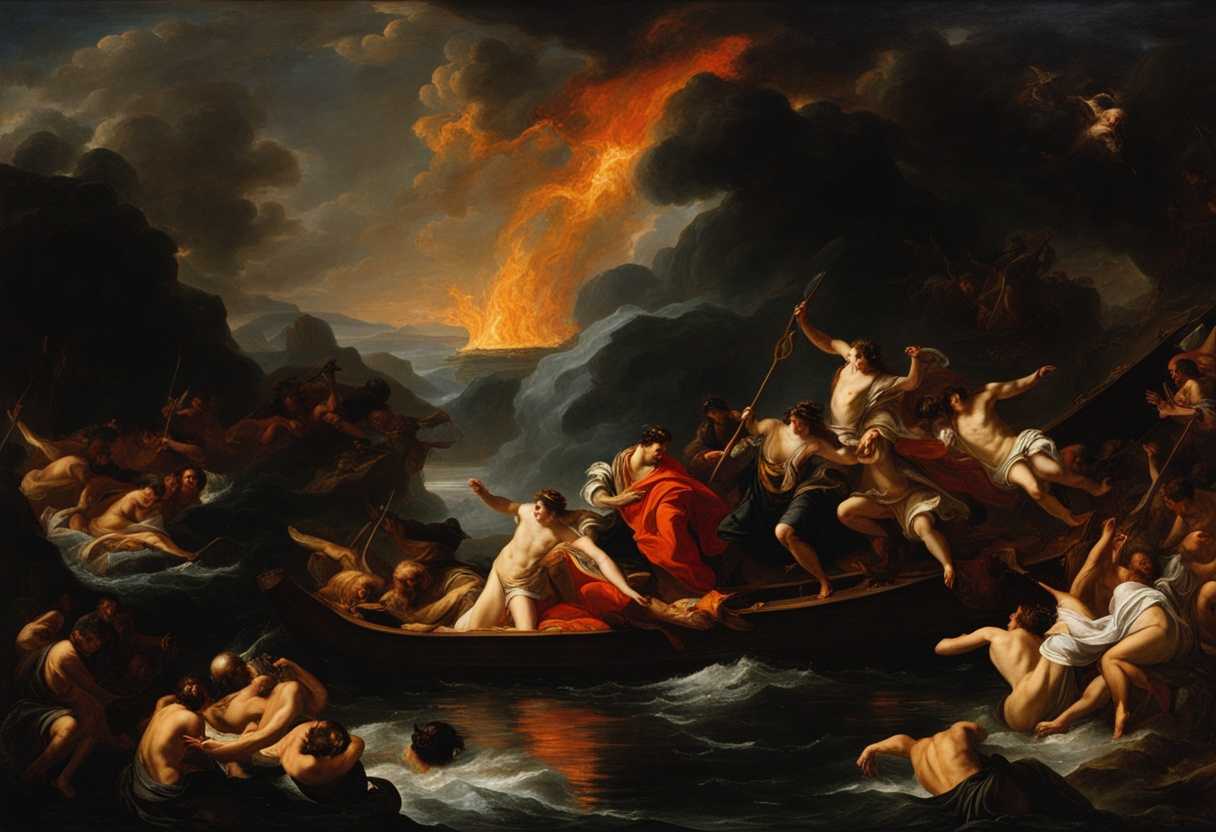
Setting the Scene for Revelation 20:14
In Revelation chapter 20, the scene is set in a vast and awe-inspiring location, where a great white throne is set up. Surrounding the throne are countless individuals from all walks of life, standing before the Almighty God for judgment. The atmosphere is charged with a sense of solemnity and reverence, as everyone present knows that this moment is of utmost importance.
Among those gathered are the righteous souls who have been resurrected to reign with Christ for a thousand years, as well as the rest of the dead who have come back to life for judgment. The names of the individuals are not specifically mentioned, but it is a diverse assembly representing people from every nation and era. They have come to this momentous occasion through the unfolding of God’s divine plan for the culmination of history and the final judgment of all humanity.
As the scene unfolds, the books are opened, including the Book of Life, where the deeds of each person are recorded. The fate of each individual is determined based on their actions and their acceptance or rejection of God’s grace. This moment in Revelation 20:14 captures the gravity of the final judgment, where those whose names are not found in the Book of Life are cast into the lake of fire, which is the second death.
What is Revelation 20:14 about?
This verse from the Book of Revelation is a powerful and symbolic image. It signifies the ultimate defeat of death and the final victory of good over evil. Death and Hades, representing mortality and the realm of the dead, are cast into the lake of fire, which symbolizes a place of eternal punishment and destruction. This event marks the end of all suffering and the beginning of a new, sinless existence in the presence of God.
It prompts reflection on the nature of death and the afterlife, as well as the concept of judgment and divine justice. Think about the implications of this verse: if Death itself is no more, what does that mean for our human understanding of mortality? What does it mean for the concept of salvation and redemption? The imagery used here invites us to consider the consequences of our actions and choices, and to contemplate the eternal significance of our faith and beliefs.
The verse serves as a reminder of the end-times and the final reckoning, urging us to live with purpose and righteousness. It offers hope and assurance to those who have faith, knowing that ultimately, evil will be vanquished, and God’s justice will prevail. Let us strive to lead lives aligned with the will of God as we ponder on the imagery of casting Death and Hades into the lake of fire, knowing that in the end, victory over all darkness and suffering will prevail.
Understanding what Revelation 20:14 really means
Revelation 20:14, nestled within the vivid imagery of the Apostle John’s apocalyptic vision, paints a picture of the culmination of all things. In this verse, we witness the dramatic scene where “Death and Hades were thrown into the lake of fire.” These symbolic entities represent the finality of physical death and the realm of the departed, being cast into the lake of fire, which symbolizes eternal punishment and the ultimate defeat of all that stands opposed to God.
The significance of “Death and Hades” being cast into the lake of fire lies in their representation of the consequences of sin and the separation from God. Death, as the cessation of physical life and the result of sin, and Hades, often understood as the abode of the dead, are vanquished in this final act of judgment. The imagery of the lake of fire underscores the eternal nature of this punishment, emphasizing the irrevocable separation from God for those who reject Him.
Drawing parallels with other biblical passages, such as 1 Corinthians 15:26 and Matthew 25:41, we see a consistent theme of the defeat of death and the reality of eternal consequences for those who reject God. These passages reinforce the idea that death is not merely a natural process but an enemy to be conquered, and that there exists a place of eternal separation for those who choose to rebel against God.
In our contemporary context, Revelation 20:14 offers profound implications for believers today. It serves as a beacon of hope, assuring us that death and suffering are not the final chapters of our story. Instead, it points towards a future where all forms of evil and death will be eradicated, and God’s justice will reign supreme. This verse also reminds us of our accountability before God, urging us to live in alignment with His will and purpose.
To illustrate the impact of this verse, envision a courtroom where justice is finally served after years of waiting. The guilty are held accountable, and the innocent find vindication. This imagery mirrors the assurance we find in Revelation 20:14, knowing that ultimate justice will prevail, and all wrongs will be made right in the end.
On a personal level, Revelation 20:14 prompts reflection on God’s sovereignty and justice. It encourages a shift in perspective towards living with eternity in mind, recognizing the weight of our choices and the assurance that God’s righteousness will ultimately triumph. This verse serves as a poignant reminder of the overarching narrative of God’s redemptive plan and the ultimate victory over death and evil.
In conclusion, Revelation 20:14 stands as a powerful testament to the victory of God over all forms of darkness and evil. It offers hope, assurance, and a clarion call to live in righteousness, knowing that God’s justice will ultimately prevail. As we contemplate the implications of this verse, may we find solace in the promise of God’s ultimate triumph and the assurance that His purposes will be fulfilled in the grand tapestry of human history.
What is our final destination after death?
According to Revelation 20:14, our final destination after death is described as the “lake of fire.” This is a symbolic depiction of eternal separation from God, representing the ultimate consequence for those who have rejected a relationship with Him. The imagery of the lake of fire is used to convey the severity of the judgment that awaits those who have chosen to live apart from God. The lake of fire signifies a place of eternal punishment and suffering for those who have not accepted God’s grace and salvation in this verse. It serves as a stark reminder of the consequences of unbelief and disobedience, emphasizing the importance of making choices that align with God’s will and accepting His gift of salvation through Jesus Christ. Revelation 20:14 ultimately points to a final destination where there is no more opportunity for repentance or redemption, highlighting the urgency of seeking a relationship with God while we have the chance.
Application
Embrace the power of God’s victory over darkness. Let His sovereignty and justice guide your path. Align your actions with His will and purpose. Live out your faith boldly, shining His light in a world that needs it more than ever. How will you choose to stand on the side of righteousness and spread His love?

Reverend Michael Johnson is an experienced Church Minister with a profound expertise in spirituality and guidance. With a serene presence and a compassionate heart, he has faithfully served his congregation for over 20 years, leading them on a spiritual journey towards inner peace and enlightenment. Reverend Johnson’s extensive knowledge of religious philosophies and profound understanding of human nature have made him a trusted confidant and mentor to many, as he seamlessly weaves his profound wisdom into life teachings. Reverend Johnson’s calming demeanor and empathetic nature continue to uplift and heal souls, nurturing a sense of unity and tranquility within his community.