
Revelation 5:5-6 is about the Lion of the tribe of Judah, who is worthy to open the scroll and reveal its contents, ultimately being represented as a slaughtered lamb with seven horns and seven eyes, symbolizing Jesus Christ’s sacrificial death and divine omniscience and omnipotence.
5 And one of the elders said to me, “Weep no more; behold, the Lion of the tribe of Judah, the Root of David, has conquered, so that he can open the scroll and its seven seals.”
6 And between the throne and the four living creatures and among the elders I saw a Lamb standing, as though it had been slain, with seven horns and with seven eyes, which are the seven spirits of God sent out into all the earth.
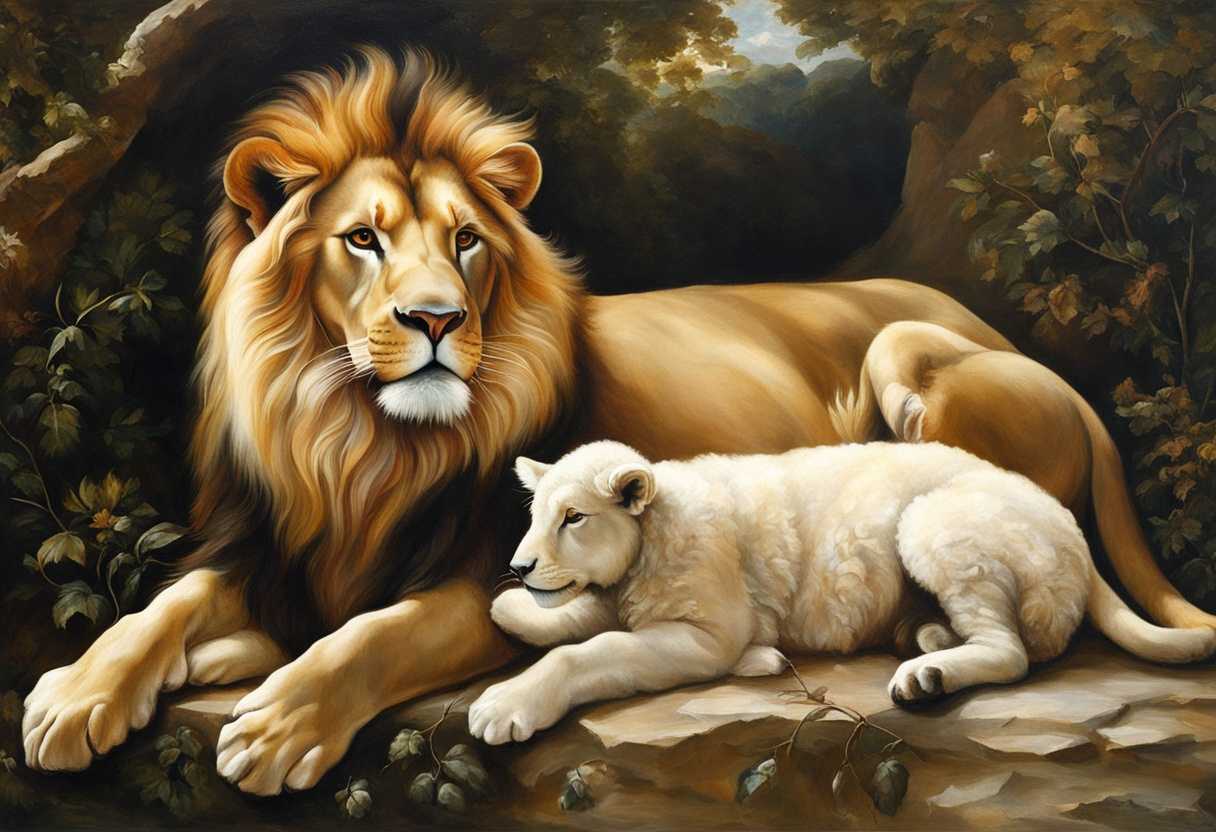
Setting the Scene for Revelation 5:5-6
In Revelation chapter 5, we find ourselves in the throne room of God in heaven. The scene is majestic and awe-inspiring, with a great multitude of angels, elders, and living creatures gathered around the throne. The atmosphere is filled with reverence and worship as everyone is focused on the central figure of the scene – the Almighty God seated on His throne.
Among the beings present in the throne room is a mighty angel who proclaims with a loud voice, asking who is worthy to open the scroll and break its seals. The tension in the room is palpable as no one is found worthy to open the scroll. However, one of the elders reassures John that there is One who is worthy – the Lion of the tribe of Judah, the Root of David. In a dramatic moment, a Lamb appears, looking as if it had been slain, yet standing triumphantly. This Lamb, symbolizing Jesus Christ, approaches the throne to take the scroll, causing everyone in the room to fall down in worship and adoration.
The imagery in Revelation 5:5-6 paints a vivid picture of the heavenly throne room, filled with heavenly beings and the presence of God. The scene captures the anticipation and eventual triumph of Jesus Christ as the only one worthy to fulfill God’s plan of redemption. The setting is one of divine glory, power, and worship, showcasing the central role of Jesus in the unfolding of God’s ultimate purposes for humanity.
What is Revelation 5:5-6 about?
The phrase “Jesus, the Lion of Judah, is the only one worthy to open the scroll” in this verse from the Bible carries significant theological and symbolic meaning. The title “Lion of Judah” refers to Jesus Christ as a conquering and powerful figure, symbolizing his strength, authority, and sovereignty. Jesus, identified as the Lion of Judah, portrays the ultimate ruler who fulfills the prophecies of the Old Testament and establishes his rightful place as the King of kings.
The imagery of opening the scroll highlights Jesus’s unique role as the only one capable of revealing and executing God’s divine plan for redemption and salvation. It emphasizes his divine nature, his authority over all creation, and his pivotal role in bringing about the fulfillment of God’s purpose. Jesus, the only one found worthy to open the scroll, is depicted as the central figure in the drama of human history, the key to understanding God’s will, and the ultimate source of hope and salvation for humanity.
Reflecting on this verse prompts us to consider the unparalleled power, authority, and sovereignty of Jesus Christ as the Lion of Judah. It challenges us to acknowledge and submit to his lordship in our lives, recognizing his unique role as the only one who can bring true meaning, purpose, and fulfillment. Let Jesus, the Lion of Judah, inspire us to entrust our lives to Him, as He alone holds the key to unlocking God’s eternal plan and bringing about redemption, restoration, and reconciliation as we meditate on this profound truth.
Understanding what Revelation 5:5-6 really means
In the Book of Revelation, penned by John during his exile on the island of Patmos, we are presented with a prophetic vision that delves into the end times and the ultimate triumph of Christ. Revelation 5 unfolds a scene where a scroll sealed with seven seals appears, perplexing both heavenly beings and earthly inhabitants as no one is found worthy to open it, leading John to tears. However, amidst this uncertainty, a revelation unfolds, unveiling the One who is deserving to break the seals and reveal the contents within.
“The Lion of the tribe of Judah, the Root of David, has triumphed,” a powerful declaration that encapsulates the essence of Jesus Christ. This phrase symbolizes His authority as the Lion and His rightful lineage from David, emphasizing both His strength and victory. Furthermore, the imagery of “A Lamb, looking as if it had been slain,” portrays Jesus as the sacrificial Lamb, underscoring His redemptive role and the enduring impact of His sacrifice on humanity.
Drawing parallels from related biblical passages enriches our understanding of Revelation 5:5-6. Genesis 49:9-10 foretells of a ruler from Judah’s line, prefiguring Jesus as the Lion of Judah. Isaiah 11:1-10 prophesies the coming Messiah from Jesse’s lineage, mirroring the Root of David imagery. John 1:29 reinforces the sacrificial aspect, with John the Baptist identifying Jesus as the Lamb of God who takes away the sins of the world.
In today’s tumultuous world, the depiction of Jesus as the conquering Lion and the sacrificial Lamb offers believers hope and assurance of victory over prevailing evil. This dual nature of Christ calls for reverence and gratitude in worship, reminding us of His sacrifice and triumph. Just as John found solace in his vision, contemporary believers can derive comfort from the assurance that Jesus reigns supreme and has already secured triumph over all adversities.
Consider a scenario where an individual grapples with overwhelming challenges, feeling despondent and defeated. Attending a service where Jesus as the Lion and the Lamb is expounded upon, they are reminded of His unparalleled victory and sacrificial love. This realization instills peace and renewed strength, empowering them to confront their obstacles with newfound faith and resilience.
Revelation 5:5-6 serves as a poignant portrayal of Jesus’ dual identity as the victorious King and the sacrificial Savior. It beckons believers to place their trust in His triumph, engage in wholehearted worship, and seek solace in His eternal sovereignty.
How does Jesus’ victory over death impact me personally?
Jesus’ victory over death personally impacts me by offering hope and assurance of eternal life. Knowing that Jesus has conquered death assures me that through Him, I can also overcome any challenges, trials, or fears that I may face in this life. This victory gives me a sense of peace and security, knowing that ultimate victory is already secured through Jesus. Jesus’ victory over death serves as a reminder of His power and authority over all things. It emphasizes His divine nature and the fact that He is worthy of all honor, glory, and praise. This knowledge not only encourages me to trust in Him completely but also to live a life that honors and glorifies Him in all that I do. It motivates me to seek a deeper relationship with Him, knowing that He is the source of true victory and life.
Application
Embrace the power of the Lion of Judah, victorious and mighty. Accept the Lamb, symbolizing purity and sacrifice. Let us walk with the conviction of the Lion and the tenderness of the Lamb in all we do, sharing love and grace. Will you join this journey of strength and compassion today?

Reverend Michael Johnson is an experienced Church Minister with a profound expertise in spirituality and guidance. With a serene presence and a compassionate heart, he has faithfully served his congregation for over 20 years, leading them on a spiritual journey towards inner peace and enlightenment. Reverend Johnson’s extensive knowledge of religious philosophies and profound understanding of human nature have made him a trusted confidant and mentor to many, as he seamlessly weaves his profound wisdom into life teachings. Reverend Johnson’s calming demeanor and empathetic nature continue to uplift and heal souls, nurturing a sense of unity and tranquility within his community.