
Revelation 6:3-8 is about the opening of the second seal, signifying the red horseman of war who brings violence and conflict upon the earth, symbolizing the escalating chaos and suffering that will unfold in the end times.
3 When he opened the second seal, I heard the second living creature say, “Come!”
4 And out came another horse, bright red. Its rider was permitted to take peace from the earth, so that people should slay one another, and he was given a great sword.
5 When he opened the third seal, I heard the third living creature say, “Come!” And I looked, and behold, a black horse! And its rider had a pair of scales in his hand.
6 And I heard what seemed to be a voice in the midst of the four living creatures, saying, “A quart of wheat for a denarius, and three quarts of barley for a denarius, and do not harm the oil and wine!”
7 When he opened the fourth seal, I heard the voice of the fourth living creature say, “Come!”
8 And I looked, and behold, a pale horse! And its rider’s name was Death, and Hades followed him. And they were given authority over a fourth of the earth, to kill with sword and with famine and with pestilence and by wild beasts of the earth.
Setting the Scene for Revelation 6:3-8
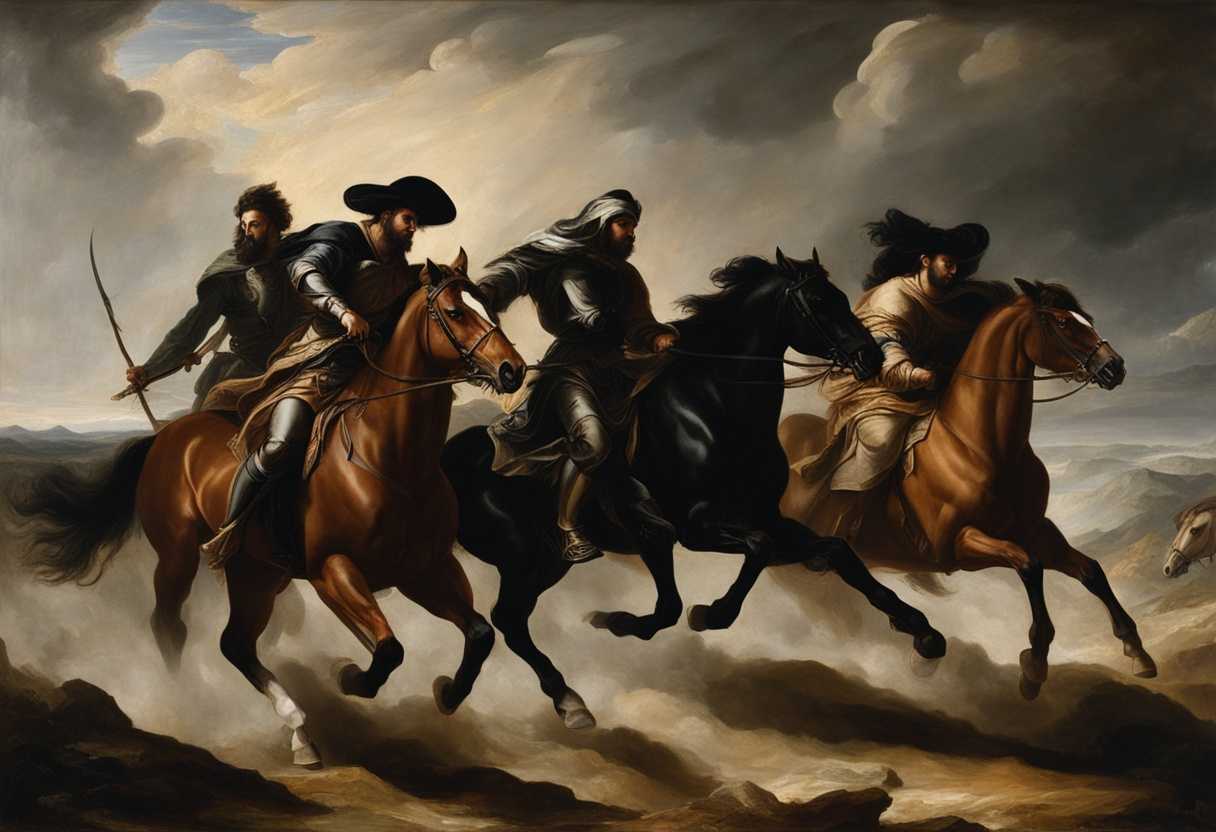
In Revelation chapter 6, the scene opens with the Lamb of God, Jesus Christ, breaking the second seal of the scroll that was in the right hand of God on the throne. As the seal is broken, a fiery red horse appears, and its rider is given a great sword. This rider is granted the power to take peace from the earth, causing people to kill one another. Following this, the third seal is broken, revealing a black horse whose rider holds a pair of scales. This rider represents scarcity and famine, as a voice from among the four living creatures declares the high prices of wheat and barley, indicating a time of economic hardship.
The setting is a heavenly scene, with the Lamb of God at the center, surrounded by the four living creatures and the twenty-four elders. The atmosphere is tense as each seal is broken, unveiling a new aspect of the tribulations that will come upon the earth. The heavenly beings are witnessing these events unfold, knowing that they are part of God’s divine plan for the end times. The colors and imagery used in this scene evoke a sense of impending doom and judgment, as the riders on the horses symbolize war, violence, and scarcity that will ravage the earth in the days to come.
What is Revelation 6:3-8 about?
The opening of the seals in this verse symbolizes the unfolding of events that will bring about massive devastation and suffering. The emergence of war, famine, and death signifies the harsh realities of the human experience: conflict, scarcity, and mortality. The imagery of these seals being broken one after the other suggests a cascading series of calamities that will impact humanity at large. It prompts us to reflect on the cyclical nature of these struggles and the inevitability of facing challenges in life. We invite you to contemplate the complexities of human existence as we delve into the interpretation of this verse. The unveiling of these seals serves as a reminder of the fragility of our world and the unpredictable nature of our journeys. It prompts us to ponder the consequences of our actions and the interconnectedness of our lives. The apocalyptic imagery evokes a sense of urgency and calls us to reflect on our roles in creating a more just and compassionate world. This verse encourages us to seek understanding and empathy in times of turmoil and uncertainty. It challenges us to confront the harsh realities of our world while also inspiring us to strive for resilience and solidarity. Let us ponder on the significance of opening these seals and consider the profound lessons they hold for us as we navigate the complexities of our shared human experience.
Understanding what Revelation 6:3-8 really means
In the Book of Revelation, penned by John during his exile on the island of Patmos, we delve into a prophetic vision concerning the end times. Within this apocalyptic narrative, we encounter the vivid imagery of the Four Horsemen of the Apocalypse, each representing a different aspect of the impending cataclysmic events. As the second, third, and fourth seals are opened, we are introduced to three of these ominous figures, each bearing a significant message for humanity.
The opening of the second seal unveils the Red Horse, symbolizing war and bloodshed. The rider on this fiery red steed is granted the power to strip peace from the earth, ushering in a period of turmoil where people turn against one another with a great sword in hand. This imagery serves as a stark reminder of the destructive nature of conflict and the urgent need for peace in a world plagued by violence and discord. Reflecting on this, we are prompted to consider the importance of pursuing harmony and reconciliation amidst the chaos of our times.
Moving on to the third seal, we encounter the Black Horse, embodying the specter of famine and economic hardship. The rider holds a pair of scales, symbolizing the scarcity of resources and the necessity of careful rationing. This depiction serves as a poignant reminder of the stark realities faced by many in our world today, grappling with food insecurity and economic instability. It calls us to extend compassion and support to those in need, recognizing the interconnectedness of our global community.
The unveiling of the fourth seal reveals the Pale Horse, ridden by Death himself, with Hades trailing in his wake. This chilling image represents the inevitability of mortality and the grave consequences of widespread death. As we confront the fragility of life in the face of pandemics and natural disasters, this verse serves as a somber call to reflect on our spiritual preparedness and the transient nature of our existence.
In contemplating these profound verses, we are reminded of the enduring relevance of the themes they convey. Just as communities rally together in the face of calamity, finding strength and hope in unity and faith, we too can draw solace from the promises of God and the support of our spiritual family during times of crisis. The symbolic language used in Revelation invites us to delve deeper into the profound truths it conveys, urging us to reflect on our actions and attitudes in light of the impending challenges.
As we ponder phrases like “Take peace from the earth,” “A pair of scales in his hand,” and “Death, and Hades followed with him,” we are prompted to consider the gravity of these symbolic representations and their implications for our lives. These vivid images serve as poignant reminders of the need for introspection, compassion, and spiritual readiness in the face of uncertainty and upheaval.
In conclusion, as we navigate the complexities of our world today, let us heed the call to seek peace, support those in need, and fortify our spiritual foundations for the trials ahead. Despite the ominous imagery portrayed in Revelation, it ultimately points to God’s sovereignty and the promise of redemption for those who remain steadfast in their faith. Let us take heart in this assurance and strive to embody the virtues of love, compassion, and resilience as we journey through the tumultuous seas of life.
What will stand when confronted with death and destruction?
Certain enduring truths and qualities will stand the test of time in the face of death and destruction. These verses in Revelation speak about the various events that unfold during challenging times, including wars, famines, and plagues. Despite the chaos and suffering described, the verse also alludes to a sense of divine justice and order that ultimately prevails.
When confronted with death and destruction, it is important to remember the resilience of the human spirit and the power of faith and hope. These qualities can provide strength and guidance in the midst of turmoil. Individuals can navigate through difficult times with a sense of purpose and unwavering resolve by holding onto core values and beliefs. The message conveyed in these verses ultimately shows perseverance and trust in a higher power that can outlast any form of destruction or chaos. It serves as a reminder that even in the darkest moments, there is a glimmer of light and hope that can sustain us through the most challenging of circumstances.
Application
Reflect on the Four Horsemen of the Apocalypse: conquest, war, famine, and death. Consider life’s uncertainties and the need for spiritual readiness. Dive into faith, repentance, and righteousness amidst adversity. How will you navigate this revelation in your journey?

Reverend Michael Johnson is an experienced Church Minister with a profound expertise in spirituality and guidance. With a serene presence and a compassionate heart, he has faithfully served his congregation for over 20 years, leading them on a spiritual journey towards inner peace and enlightenment. Reverend Johnson’s extensive knowledge of religious philosophies and profound understanding of human nature have made him a trusted confidant and mentor to many, as he seamlessly weaves his profound wisdom into life teachings. Reverend Johnson’s calming demeanor and empathetic nature continue to uplift and heal souls, nurturing a sense of unity and tranquility within his community.