
Romans 14:12-13 is about recognizing our individual accountability before God and avoiding judgment of others, focusing instead on fostering peace and building one another up in faith.
12 So then each of us will give an account of himself to God.
13 Therefore let us not pass judgment on one another any longer, but rather decide never to put a stumbling block or hindrance in the way of a brother.
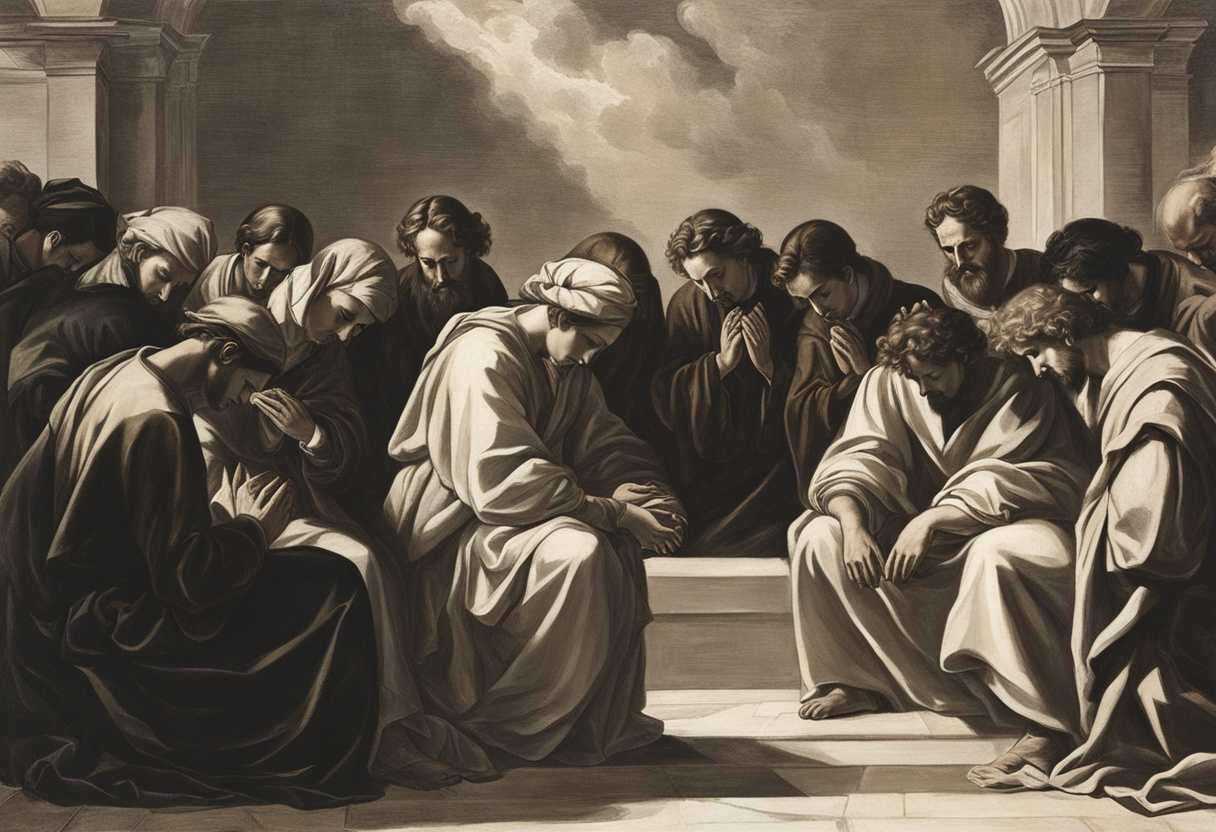
Setting the Scene for Romans 14:12-13
In Romans chapter 14, the scene is set in a bustling marketplace in the ancient city of Rome. The marketplace is filled with merchants selling their goods, the aroma of various foods wafting through the air, and the sound of chatter and bartering all around. Among the crowd are a diverse group of people – Roman citizens, travelers from distant lands, and even some early Christians who have gathered for a bible study.
The group of early Christians, including Paul and some of his followers, have come together in the marketplace to discuss matters of faith and how to live out their beliefs in a society that often challenges their convictions. As they sit in a circle, surrounded by crates of fruits and vegetables, they engage in a lively discussion about the importance of not passing judgment on one another. Paul emphasizes the need for mutual respect and understanding, urging them to focus on their own actions and not to criticize or look down upon those who may have different beliefs or practices.
As the sun begins to set over the bustling marketplace, the group of early Christians continues their discussion, reflecting on the words of Paul and seeking to apply them to their own lives. The scene is one of camaraderie and spiritual growth, as they strive to support and uplift one another in their shared journey of faith.
What is Romans 14:12-13 about?
This verse emphasizes the individual responsibility we have towards God and each other. It serves as a reminder that ultimately, we are accountable for our actions and how we treat others. It encourages us to focus on building one another up rather than passing judgment. Instead of critiquing or condemning, we are called to support and uplift those around us. Consider how your words and actions impact others. Are you providing encouragement and support, or are you tearing others down? Show grace and kindness rather than judgment, remembering that we all have our own journey and struggles. We create a more positive and supportive community where individuals can thrive and grow in their faith by focusing on building each other up. Keep in mind the importance of accountability to God and the power of building each other up as you navigate relationships and interactions with others. Let your words and actions reflect love, empathy, and kindness, recognizing that we all have our own shortcomings and challenges. Instead of being quick to judge, strive to be a source of encouragement and support, lifting others up in both good times and bad. You are guided by the principles of faith and love by contributing to a community of compassion and understanding.
Understanding what Romans 14:12-13 really means
Romans 14:12-13, penned by the Apostle Paul, serves as a poignant reminder of the individual responsibility each believer holds before God and the imperative to cultivate unity and understanding within the Christian community. The passage succinctly encapsulates the essence of personal accountability and the detrimental effects of passing judgment on others. “Each of us will give an account of ourselves to God” underscores the direct answerability each person has to God, emphasizing that our deeds and thoughts are ultimately answerable to the divine, not to human scrutiny. This declaration serves as a sobering call to self-reflection and conscientious living.
Paul’s exhortation to “stop passing judgment on one another” resonates with timeless wisdom, urging believers to relinquish critical attitudes and embrace a spirit of grace and empathy. By admonishing against the divisive practice of judgment, Paul advocates for a community characterized by mutual respect and understanding, where the role of judge is reserved solely for God. The directive to “make up your mind not to put any stumbling block or obstacle in the way of a brother or sister” underscores the significance of fostering an environment of support and encouragement within the body of believers. It underscores the importance of actions that uplift and edify rather than hinder or discourage fellow travelers on the spiritual path.
Drawing parallels with related biblical passages such as Matthew 7:1-2 and Galatians 6:1-2 further illuminates the overarching theme of personal accountability and communal support present in Romans 14:12-13. These passages reinforce the principle of refraining from judgment, advocating for gentle restoration and mutual care within the Christian community. In a contemporary context marked by pervasive judgment and criticism, particularly amplified through social media platforms, the relevance of Paul’s message reverberates powerfully. It challenges individuals to uphold a standard of personal accountability and extend grace towards others, fostering an environment of understanding and compassion.
Consider envisioning a community where individuals are quick to point out flaws versus one where personal growth and mutual support are prioritized. The former breeds fear and defensiveness, while the latter cultivates a culture of safety and encouragement. Analogously, in a workplace setting, a manager’s approach to criticism can significantly impact morale and productivity. A leader who practices accountability and offers constructive guidance fosters a positive work environment, contrasting starkly with one characterized by constant criticism and negativity.
In conclusion, Romans 14:12-13 beckons believers to embrace a life marked by personal accountability and communal upliftment. By refraining from judgment, embodying grace, and being mindful of our actions, we contribute to the creation of a community reflective of Christ’s love and compassion. Let us strive to be individuals who build up rather than tear down, cognizant that we are all on a shared journey and ultimately accountable to God.
How can I avoid judging others in spiritual matters?
To avoid judging others in spiritual matters, it is important to remember that each person will ultimately stand before God to give an account of themselves. This realization can help us focus on our own actions and intentions rather than critiquing or condemning others. Additionally, considering that we all have different perspectives, experiences, and understanding of spiritual matters can also help us refrain from passing judgment. Embracing humility and recognizing that none of us have complete knowledge or authority over others’ spiritual journeys can lead to more compassionate and understanding interactions.
Instead of jumping to conclusions or making assumptions about someone else’s beliefs or practices, it is beneficial to engage in open and respectful dialogue. We can foster mutual respect and create a space for learning and growth, both for ourselves and for others, by seeking to understand where the other person is coming from and listening with empathy. We can approach spiritual matters with a spirit of love, kindness, and a genuine interest in building bridges rather than erecting barriers through judgment.
Application
Let’s embody the spirit of Romans 14:12-13 in our daily interactions, taking accountability for our deeds. May we support and not hinder our fellow beings in this journey of life. How can you contribute to fostering unity and love among your fellow humans today? Let’s be the architects of empathy and understanding in this diverse world. How will you forge these connections where judgment ceases to exist?

Reverend Michael Johnson is an experienced Church Minister with a profound expertise in spirituality and guidance. With a serene presence and a compassionate heart, he has faithfully served his congregation for over 20 years, leading them on a spiritual journey towards inner peace and enlightenment. Reverend Johnson’s extensive knowledge of religious philosophies and profound understanding of human nature have made him a trusted confidant and mentor to many, as he seamlessly weaves his profound wisdom into life teachings. Reverend Johnson’s calming demeanor and empathetic nature continue to uplift and heal souls, nurturing a sense of unity and tranquility within his community.