
Romans 1:21-24 is about the consequences of denying and rejecting the truth of God, leading to a descent into idolatry, immorality, and degradation.
21 For although they knew God, they did not honor him as God or give thanks to him, but they became futile in their thinking, and their foolish hearts were darkened.
22 Claiming to be wise, they became fools,
23 and exchanged the glory of the immortal God for images resembling mortal man and birds and animals and creeping things.
24 Therefore God gave them up in the lusts of their hearts to impurity, to the dishonoring of their bodies among themselves,
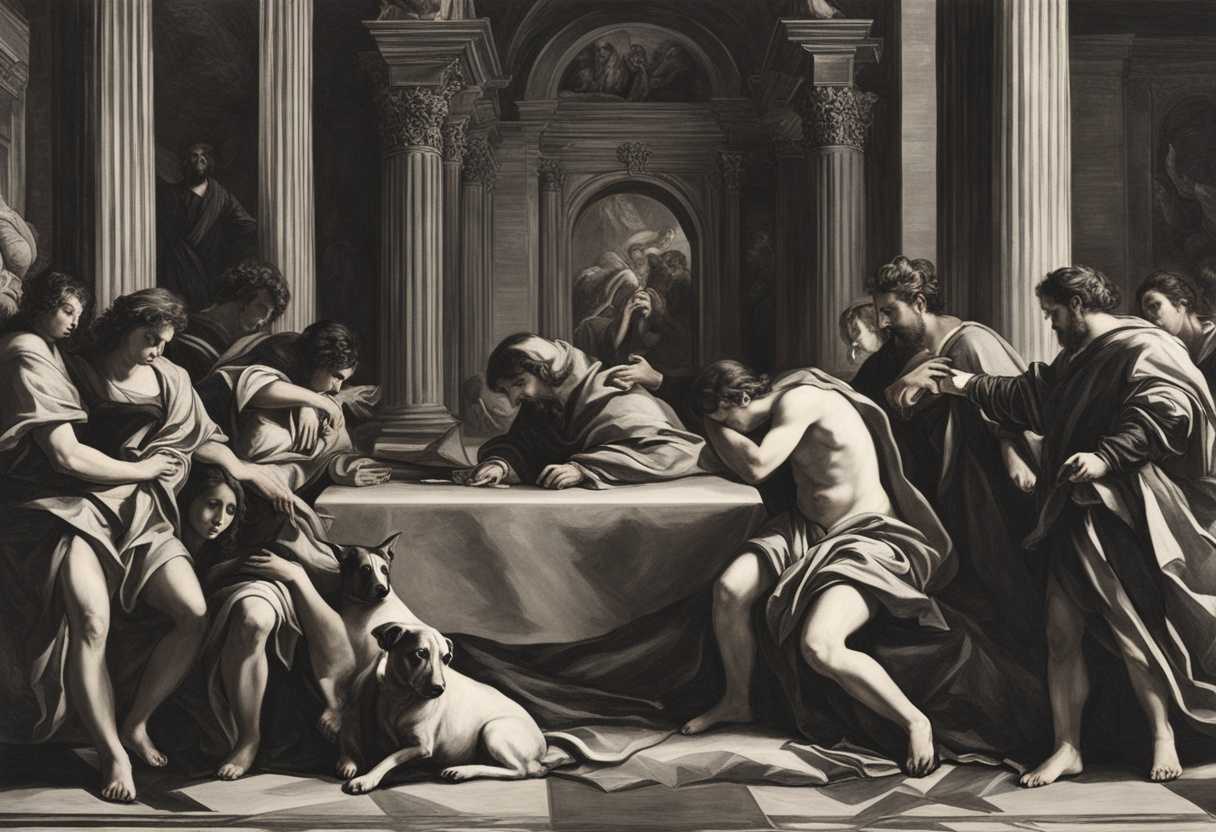
Setting the Scene for Romans 1:21-24
In the bustling city of Rome, a group of prominent citizens gathers in a lavish banquet hall adorned with intricate marble columns and golden chandeliers. Among them are wealthy merchants, influential politicians, and respected scholars. They have come together for a grand feast to celebrate their prosperity and success in the eyes of society.
As the guests indulge in decadent dishes and fine wines, their conversation turns to matters of philosophy and religion. Despite their intelligence and education, they have chosen to ignore the truth about God that is evident in the world around them. Instead of acknowledging and worshiping the Creator, they have become consumed by their own desires and ambitions, leading them down a path of spiritual darkness and moral decay.
In their arrogance and pride, they have exchanged the glory of the immortal God for images made to look like mortal humans, birds, animals, and reptiles. Their hearts have been hardened, and they have turned away from the light of truth, choosing to worship created things rather than the Creator Himself. As they revel in their worldly pleasures, they remain blind to the divine presence that surrounds them, ultimately leading to their own downfall and separation from God.
What is Romans 1:21-24 about?
This verse highlights a common theme throughout religious texts about the consequences of turning away from God and embracing symbols or figures of worship that are not aligned with the divine. It tells a cautionary tale of how prioritizing materialistic idols over spiritual connections can lead to a deterioration of values, morals, and beliefs. Individuals who forsake God may lose their way and find themselves in a state of spiritual darkness and moral decay.
Have you ever felt the temptation to prioritize worldly desires over spiritual growth? What idols do you unknowingly worship in your life that may be hindering your connection to something greater than yourself? Reflecting on this verse can serve as a reminder to realign your priorities, seek spiritual enlightenment, and steer away from the path of moral decay that comes with turning away from God. It encourages us to evaluate our choices and ensure that we are not letting materialistic desires overshadow our spiritual well-being.
Understanding what Romans 1:21-24 really means
Romans 1:21-24, a passage from Paul’s letter to the Romans, delves into the repercussions of humanity’s rejection of God. Paul elucidates the downward spiral that unfolds when individuals choose to distance themselves from their Creator. The verse begins by highlighting the paradox of individuals who, despite knowing God, fail to acknowledge His sovereignty and express gratitude towards Him. This willful ignorance and ingratitude pave the way for a decline in spiritual discernment and moral clarity, as their thoughts become futile, and their hearts are shrouded in darkness.
The imagery of exchanging the glory of the immortal God for earthly idols underscores the peril of idolatry. People forsake the worship of the Creator in favor of created beings and objects, leading to a distortion of truth and a misalignment of priorities. Consequently, God, in His judgment, allows them to pursue their sinful desires, relinquishing them to the consequences of their choices. This divine response serves as a sobering reminder of the gravity of turning away from God and the subsequent spiritual and moral decay that ensues.
Drawing parallels from related biblical passages such as Exodus 32:1-6, Psalm 14:1, and Ephesians 4:18, we witness a consistent narrative of the perils of spiritual blindness and separation from God. These passages echo the themes of idolatry, foolishness of heart, and the consequences of turning away from the divine light. In today’s context, the relevance of these teachings remains palpable as many individuals continue to prioritize worldly pursuits over their relationship with God, leading to societal issues marked by moral erosion and existential voids.
Consider the narrative of an individual who, lured by the promises of success and wealth, drifts away from their faith only to find themselves grappling with a profound sense of emptiness. It is in returning to a posture of gratitude and glorification of God that they rediscover true contentment and purpose. This anecdote serves as a poignant reminder of the transformative power of aligning one’s heart and mind with the divine, transcending the fleeting allure of worldly idols.
As we reflect on the implications of Romans 1:21-24 in our lives, it prompts us to examine our priorities and discern where we may be inadvertently placing idols above our relationship with God. Cultivating a spirit of gratitude and reverence towards the Creator can serve as a catalyst for inner transformation, leading to a life characterized by fulfillment and alignment with divine purpose. Let us heed the lessons embedded in this passage, encouraging one another to steer clear of the pitfalls of idolatry and spiritual blindness, and instead, seek a life that honors and glorifies God in all aspects.
What are the consequences of rejecting God’s truth?
Rejecting God’s truth leads to a futile and darkened understanding. When one refuses to acknowledge God or give thanks to Him, their hearts become hardened. This hardening of the heart results in foolish and misguided thoughts, leading to a downward spiral of unrighteousness and immorality. Rejecting God’s truth ultimately paves the way for idolatry—a turning away from the one true God to worship created things instead.
Furthermore, rejecting God’s truth has consequences that extend beyond one’s individual thoughts and actions. It affects society as a whole, resulting in moral decay and a breakdown of values. When people reject God and His truth, they are given over to their sinful desires, leading to sinful practices that not only harm themselves but also impact those around them. This rejection of God’s truth ultimately separates individuals from the source of true light and life, plunging them into further darkness and spiritual emptiness.
Application
Let’s take a moment to reflect on Romans 1:21-24. It’s a reminder to stay true to our faith amidst the distractions of the modern world. Don’t let worldly desires overshadow your love for God. Let’s recalibrate our priorities and realign ourselves with His purpose. Will you choose to prioritize your faith above all else and strengthen your spiritual connection today?

Reverend Michael Johnson is an experienced Church Minister with a profound expertise in spirituality and guidance. With a serene presence and a compassionate heart, he has faithfully served his congregation for over 20 years, leading them on a spiritual journey towards inner peace and enlightenment. Reverend Johnson’s extensive knowledge of religious philosophies and profound understanding of human nature have made him a trusted confidant and mentor to many, as he seamlessly weaves his profound wisdom into life teachings. Reverend Johnson’s calming demeanor and empathetic nature continue to uplift and heal souls, nurturing a sense of unity and tranquility within his community.