
Romans 1:22-32 is about the consequences of rejecting God’s truth and turning to idolatry, resulting in a downward spiral of immorality and sinful behavior, leading to a society that is devoid of righteousness and filled with all manner of wickedness.
22 Claiming to be wise, they became fools,
23 and exchanged the glory of the immortal God for images resembling mortal man and birds and animals and creeping things.
24 Therefore God gave them up in the lusts of their hearts to impurity, to the dishonoring of their bodies among themselves,
25 because they exchanged the truth about God for a lie and worshiped and served the creature rather than the Creator, who is blessed forever! Amen.
26 For this reason God gave them up to dishonorable passions. For their women exchanged natural relations for those that are contrary to nature;
27 and the men likewise gave up natural relations with women and were consumed with passion for one another, men committing shameless acts with men and receiving in themselves the due penalty for their error.
28 And since they did not see fit to acknowledge God, God gave them up to a debased mind to do what ought not to be done.
29 They were filled with all manner of unrighteousness, evil, covetousness, malice. They are full of envy, murder, strife, deceit, maliciousness. They are gossips,
30 slanderers, haters of God, insolent, haughty, boastful, inventors of evil, disobedient to parents,
31 foolish, faithless, heartless, ruthless.
32 Though they know God’s righteous decree that those who practice such things deserve to die, they not only do them but give approval to those who practice them.
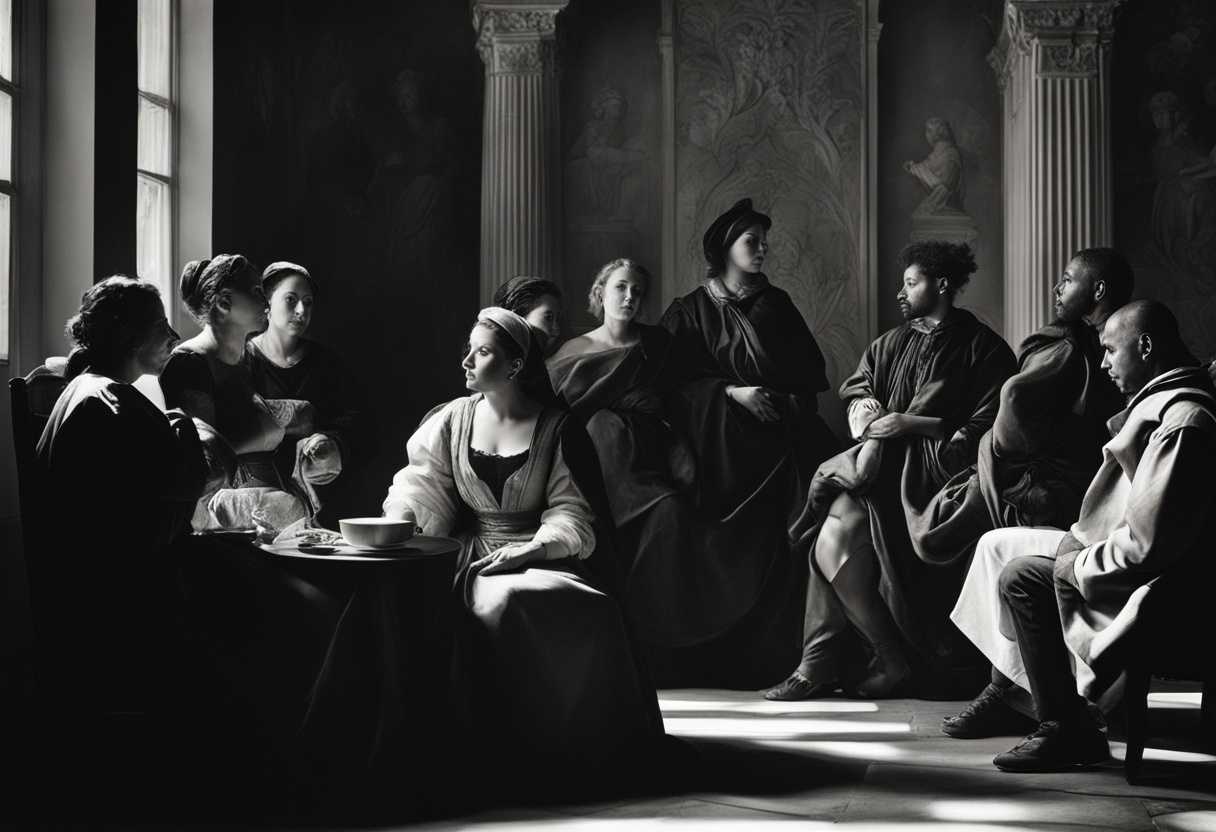
Setting the Scene for Romans 1:22-32
In Romans chapter 1, the scene is set in a bustling marketplace in the ancient city of Rome. The air is filled with the sounds of merchants haggling, the smell of various spices and foods, and the sight of people from all walks of life going about their daily business. Among the crowd are a group of philosophers, scholars, and religious leaders engaged in deep discussions about the nature of God and the world around them.
As the conversation unfolds, the scholars begin to debate the existence of God and the importance of acknowledging His presence in their lives. Some of them, in their arrogance and pride, start to dismiss the idea of a higher power and instead focus on their own wisdom and intellect. They become consumed by their own desires and passions, leading them down a path of moral decay and spiritual blindness.
In this scene, we see the tragic consequences of turning away from God and embracing a life of sin and rebellion. The once wise and learned individuals are now lost in their own foolishness, exchanging the truth of God for lies and indulging in all kinds of wickedness. It serves as a powerful reminder of the dangers of pride and the importance of humbly seeking God’s guidance and wisdom in all aspects of our lives.
What is Romans 1:22-32 about?
Paul is emphasizing the importance of turning away from idolatry, immorality, and sinfulness in this verse. He is calling for a transformation in the mindset and behavior of individuals, urging them to repent for their wrongdoings and seek righteousness in God. Paul is highlighting the destructive nature of idolatry and sin by condemning these acts, which can lead individuals away from their relationship with God and into a path of spiritual destruction.
Think about the implications of idolatry, immorality, and sin in your own life. How do these actions distance you from God and His love? Reflect on the importance of repentance and seeking righteousness in God’s eyes. Paul’s words serve as a reminder for us to constantly evaluate our actions and strive for a life that is in alignment with God’s teachings. Let us take this verse as a call to action, examining our hearts, seeking forgiveness for our sins, and walking in the path of righteousness guided by God’s love and grace.
Understanding what Romans 1:22-32 really means
In Romans 1:22-32, the Apostle Paul addresses the consequences of turning away from God, highlighting the moral decline that follows such a rejection. The passage begins with the striking statement, “Claiming to be wise, they became fools,” underscoring the irony of human pride and self-reliance leading to foolishness. This notion echoes the wisdom of Proverbs 1:7, which asserts that true knowledge begins with the fear of the Lord, while those who reject wisdom and instruction are deemed foolish.
Furthermore, Paul discusses how individuals in their rebellion against God exchanged the glory of the immortal God for images, delving into the concept of idolatry as a fundamental rejection of the divine. This aligns with the commandment against idolatry in Exodus 20:3-4, emphasizing the severity of turning away from the one true God. The passage also touches on the idea that God gave them up to dishonorable passions, allowing people to pursue their sinful desires as a form of judgment, as seen in Psalm 81:12.
Moreover, the text outlines the moral and social decay that ensues when individuals forsake God, becoming full of envy, murder, strife, deceit, and malice. This depiction of the consequences of turning away from God resonates with the list of works of the flesh in Galatians 5:19-21, illustrating the destructive nature of sin. These themes of pride, idolatry, and moral decline remain relevant in contemporary society, serving as a cautionary tale about the perils of rejecting God and the ensuing moral decay.
To illustrate the enduring relevance of this passage, consider the story of an individual who strayed from their faith, only to experience a profound moral decline. However, upon returning to God, they found redemption and restoration, showcasing the transformative power of God’s grace. This anecdote underscores the importance of remaining steadfast in one’s faith and seeking forgiveness and renewal through a relationship with God.
In conclusion, Romans 1:22-32 serves as a poignant reminder of the dangers of pride, idolatry, and moral decline when one turns away from God. It prompts readers to reflect on their own lives and choices, urging them to seek wisdom from God and avoid the pitfalls of sin. Let us heed this warning, recommitting ourselves to our faith, and may we find strength and guidance in God as we navigate the challenges of life.
What is the consequence of rejecting God’s truth?
The consequence of rejecting God’s truth, as outlined in the passage from Romans, is described as a downward spiral away from God. It begins with a refusal to acknowledge and glorify God for who He is, which leads to futile thinking and darkened hearts. This denial of God’s truth ultimately results in idolatry, immorality, and depraved behavior.
Those who reject God’s truth exchange the glory of the immortal God for idols and worship created things instead of the Creator. God gives them over to their sinful desires, leading to impurity, dishonorable passions, and a debased mind. The consequences of rejecting God’s truth are not only spiritual but also impact one’s moral compass and behavior, ultimately leading to a departure from God’s design for humanity and His intended purpose for our lives.
Application
Reflect on your actions and thoughts. Are you living in a way that honors God? Take a moment to repent of any wrongdoing. Let this passage guide you towards righteousness. Will you make the choice to live a life that pleases God?

Reverend Michael Johnson is an experienced Church Minister with a profound expertise in spirituality and guidance. With a serene presence and a compassionate heart, he has faithfully served his congregation for over 20 years, leading them on a spiritual journey towards inner peace and enlightenment. Reverend Johnson’s extensive knowledge of religious philosophies and profound understanding of human nature have made him a trusted confidant and mentor to many, as he seamlessly weaves his profound wisdom into life teachings. Reverend Johnson’s calming demeanor and empathetic nature continue to uplift and heal souls, nurturing a sense of unity and tranquility within his community.