
Romans 5:8-10 is about the incredible love of God demonstrated through Christ’s sacrifice for sinners while they were still in a state of sin, reconciling them to God and providing salvation through his death and resurrection.
8 but God shows his love for us in that while we were still sinners, Christ died for us.
9 Since, therefore, we have now been justified by his blood, much more shall we be saved by him from the wrath of God.
10 For if while we were enemies we were reconciled to God by the death of his Son, much more, now that we are reconciled, shall we be saved by his life.
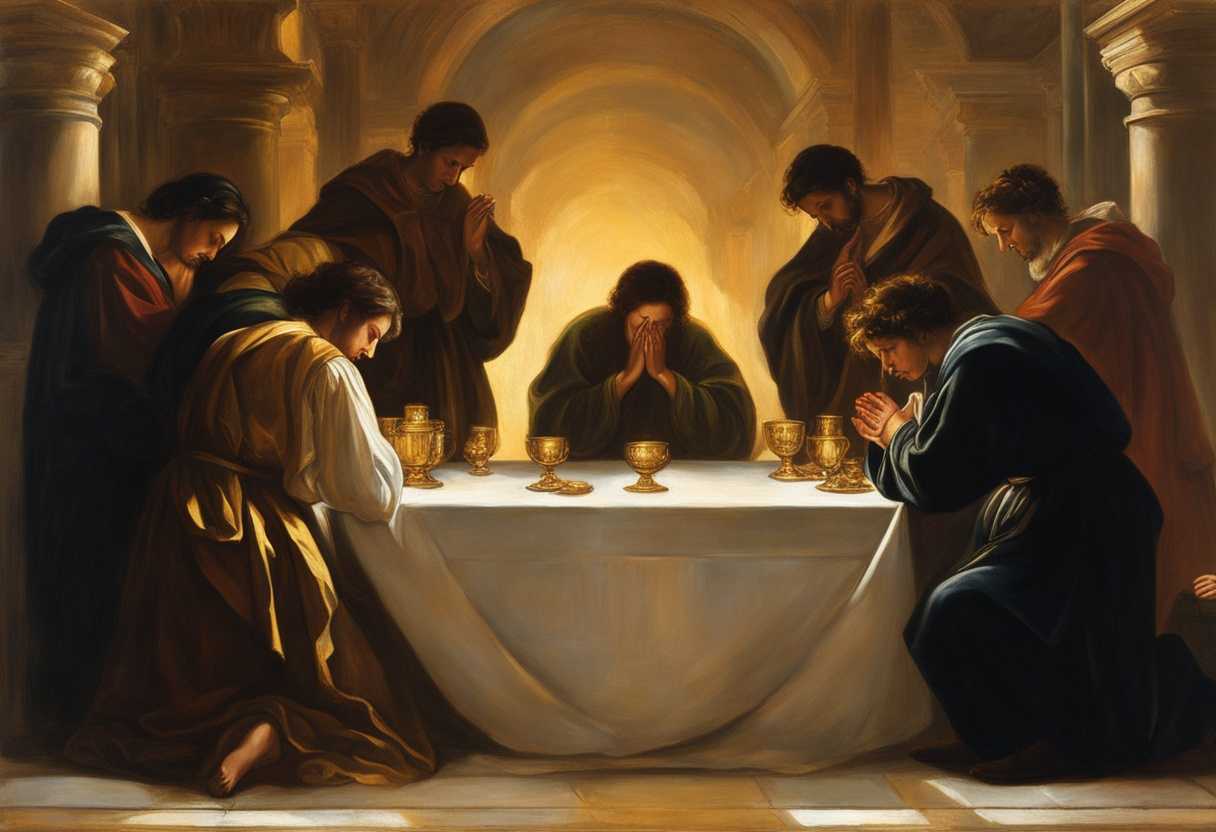
Setting the Scene for Romans 5:8-10
In Romans chapter 5, the apostle Paul sets the scene by describing a powerful and profound moment in human history. Picture a vast and desolate landscape, symbolizing the separation between humanity and God due to sin. In the midst of this desolation, we see the figures of Adam and Eve, representing all of humanity, burdened by the weight of their disobedience and the consequences of their actions.
As the scene unfolds, we witness the entrance of Jesus Christ, the Son of God, who comes to bridge the gap between God and humanity. His sacrifice on the cross becomes the focal point of this momentous event, as he willingly lays down his life to atone for the sins of the world. The scene is filled with a sense of awe and wonder as the magnitude of God’s love and grace is revealed in this act of redemption.
Surrounding this central moment are countless individuals from all walks of life, representing the entirety of humanity. Each person is invited to partake in the reconciliation offered through Christ’s sacrifice, as Paul eloquently states in Romans 5:8-10. The scene is a powerful reminder of the depth of God’s love and the extent to which he is willing to go to restore his relationship with his creation.
What is Romans 5:8-10 about?
This powerful verse from the Bible, John 3:16, encapsulates the essence of God’s love and sacrifice for humanity. It speaks of God’s unconditional love for each and every one of us, so much so that He sent His Son, Jesus Christ, to die on the cross to save us from our sins. This act of selfless love and redemption is a testament to the depth of God’s care and compassion for His children. Have you ever considered the enormity of God’s sacrifice in reflecting on this verse? The Creator of the universe willingly gave up His only Son so that we may have eternal life. It is a love that surpasses all understanding and transcends our human comprehension. This verse serves as a reminder of the incredible grace and mercy that God bestows upon us, undeserving sinners. It prompts us to ponder the magnitude of this love and to respond with gratitude and humble reverence. Let us meditate on John 3:16 with awe and thanksgiving for God’s immense love for us. It is a love that knows no bounds and reaches to the depths of our souls. May we strive to live our lives in a way that honors this sacrificial love, sharing it with others and embodying the grace and compassion that God has shown us through His Son, Jesus Christ.
Understanding what Romans 5:8-10 really means
In the book of Romans, specifically in verses 5:8-10, the Apostle Paul delves into the profound concept of God’s love and justification by faith. These verses are nestled within a larger discourse on the transformative power of God’s love and the redemption offered through Christ’s sacrifice. Paul’s words serve as a poignant reminder of the active nature of God’s love, not merely confined to words but demonstrated through Christ’s ultimate act of selflessness on the cross.
The phrase “While we were still sinners, Christ died for us” encapsulates the essence of God’s unconditional love and grace. Despite our shortcomings and failures, God’s love remains unwavering, reaching out to us in our brokenness. Through Christ’s sacrifice, we witness the depth of God’s love, a love that knows no bounds and extends to all, regardless of their past.
Paul further expounds on the concept of justification, highlighting the significance of being made right with God through Christ’s blood. Justification by faith underscores the foundational belief in Christianity that our relationship with God is restored not by our own merit but through the redemptive work of Christ on the cross. This act of justification paves the way for reconciliation, bridging the gap between humanity and God.
Drawing parallels with other biblical passages such as John 3:16, Ephesians 2:4-5, and 1 John 4:10, we see a consistent theme of God’s sacrificial love, mercy, and grace woven throughout Scripture. These verses serve as a tapestry of God’s love story for humanity, showcasing His relentless pursuit of reconciliation and restoration.
The message of God’s unconditional love and grace remains as relevant today as it was in Paul’s time. In a world where many struggle with feelings of unworthiness and inadequacy, these verses offer a beacon of hope and assurance. They remind us that we are deeply loved and valued by God, regardless of our past mistakes or present circumstances.
Consider the story of an individual who, burdened by guilt and shame, encountered the transformative power of God’s love as described in Romans 5:8-10. Through a profound realization of God’s unconditional love, this person found healing, purpose, and a renewed sense of identity. Their life was forever changed by the profound truth that they were loved beyond measure by a God who willingly gave everything for their redemption.
In conclusion, Romans 5:8-10 encapsulates the essence of God’s active, unconditional, and transformative love. As we reflect on these truths, may we be inspired to embrace the depth of God’s love in our own lives and relationships. Let us dwell in the assurance that we are cherished, forgiven, and redeemed by a God whose love knows no bounds.
How can we show love to those who are enemies?
We can show love to our enemies by recognizing that while we were still sinners, Christ died for us. This means that love is not dependent on the other person’s actions or behavior towards us. We can reflect God’s love by showing kindness and compassion to those who may be considered our enemies, just as God demonstrated His love for us through Christ’s sacrifice. We can also reconcile with our enemies through the offering of forgiveness and grace, as the verse implies. We reflect the love of God by choosing to forgive and seek reconciliation with those who have wronged us. This act of forgiveness can break down walls of hostility and pave the way for healing and restoration in relationships that were once broken.
Furthermore, we can pray for our enemies and ask God to work in their lives, to soften their hearts, and to bring about transformation. We imitate the love that God has shown us and obey His command to love our neighbors as ourselves by showing love and compassion towards our enemies.
Application
Embrace the love and sacrifice shown to you by God through Jesus Christ. Let this love guide your actions and interactions with others, spreading kindness and forgiveness like a beacon of grace in the modern world. Reflect God’s love in your work and family, creating a ripple effect of positivity and compassion. How can you shine God’s love brightly today?

Reverend Michael Johnson is an experienced Church Minister with a profound expertise in spirituality and guidance. With a serene presence and a compassionate heart, he has faithfully served his congregation for over 20 years, leading them on a spiritual journey towards inner peace and enlightenment. Reverend Johnson’s extensive knowledge of religious philosophies and profound understanding of human nature have made him a trusted confidant and mentor to many, as he seamlessly weaves his profound wisdom into life teachings. Reverend Johnson’s calming demeanor and empathetic nature continue to uplift and heal souls, nurturing a sense of unity and tranquility within his community.