
Romans 6:3-4 is about the symbolic act of being buried with Christ through baptism, signifying death to sin and being raised to new life in Christ.
3 Do you not know that all of us who have been baptized into Christ Jesus were baptized into his death?
4 We were buried therefore with him by baptism into death, in order that, just as Christ was raised from the dead by the glory of the Father, we too might walk in newness of life.
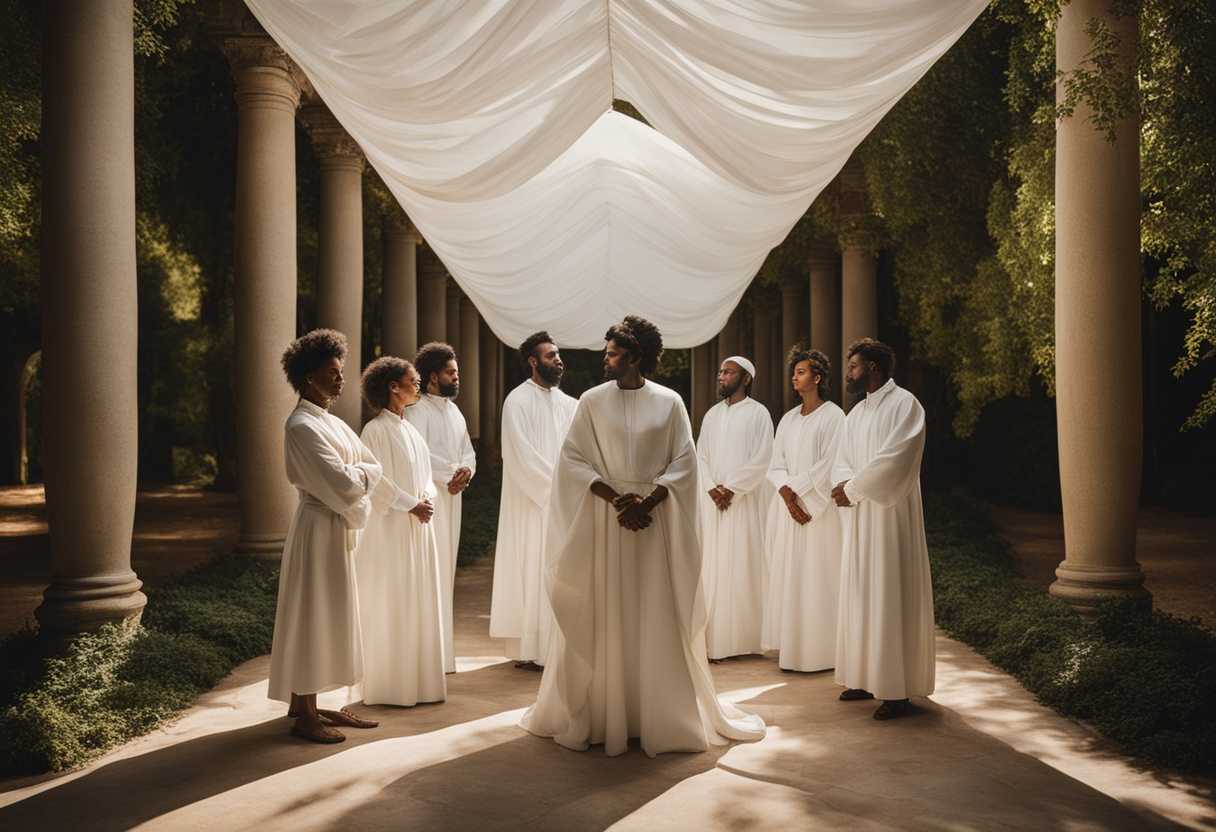
Setting the Scene for Romans 6:3-4
The scene in Romans 6:3-4 takes place during a baptism ceremony in the early Christian church. The setting is a serene riverbank where a group of believers has gathered to witness and participate in the sacrament of baptism. The water is calm and glistens in the sunlight, reflecting the joy and anticipation of the moment. The atmosphere is filled with a sense of reverence and celebration as those present prepare to publicly declare their faith and commitment to Christ.
Among the individuals gathered at the riverbank are new converts to Christianity, eager to symbolize their spiritual rebirth through baptism. They have come to this sacred place after hearing the teachings of the apostles and being convicted by the Holy Spirit. Also present are seasoned believers, including church leaders and mentors, who are there to support and guide the new believers in their journey of faith. As they stand on the riverbank, the believers are united in their shared belief in the death and resurrection of Jesus Christ, symbolized by the act of immersion in the water.
As the baptism ceremony begins, the minister invokes the words of Romans 6:3-4, emphasizing the profound significance of the moment. The believers are reminded that through baptism, they are united with Christ in His death and resurrection, and that they are being buried with Him in the watery grave only to rise to a new life in Him. The scene is filled with a sense of awe and wonder as each individual is immersed in the water, symbolizing their old self dying and their new self being raised to walk in newness of life. The riverbank echoes with the sounds of prayers, hymns, and joyful shouts as the believers emerge from the water, cleansed and renewed in their faith.
What is Romans 6:3-4 about?
When we talk about baptism, we’re not just talking about getting wet. It’s a powerful symbol of our decision to leave our old way of living, filled with sin and separation from God, and embrace a new life in Christ. We symbolically die to our old self and rise up again, cleansed and renewed, in a relationship with Jesus as we physically go under the water. It’s a public declaration of our faith and a step of obedience in following Him.
Have you ever thought about what it means to be “buried” with Christ through baptism? It signifies that our past is behind us, and we are now identified with Christ in His death and resurrection. It’s like a fresh start, a new beginning where we are no longer bound by our sins and failures but are given a chance to live in freedom and grace. So, every time you see someone being baptized, remember the profound spiritual truth being acted out – the old has gone, the new has come.
Understanding what Romans 6:3-4 really means
In the book of Romans, the Apostle Paul delves into the profound significance of baptism and the believer’s union with Christ in His death and resurrection. In Romans 6:3-4, Paul uses powerful imagery to convey the spiritual truths encapsulated in the act of baptism. When he speaks of being “baptized into Christ Jesus,” he is highlighting the believer’s identification with Christ, a concept echoed in Galatians 3:27, where those baptized into Christ are said to have clothed themselves with Him. This imagery underscores the intimate connection believers have with Christ through baptism, symbolizing a union that goes beyond mere ritual.
Furthermore, Paul’s mention of being “baptized into his death” emphasizes the believer’s participation in the death of Christ. This phrase signifies that in baptism, the old self is crucified with Christ, as seen in Colossians 2:12, where believers are said to have been buried with Him in baptism, being raised with Him through faith. The symbolism of burial in baptism, as mentioned in 1 Peter 3:21, signifies the end of the old life of sin, paving the way for a new life in Christ. This act of burial represents a profound spiritual truth – the death of the old self and the birth of a new creation in Christ.
“Just as Christ was raised from the dead,” Paul declares, pointing to the transformative power of the resurrection and its promise of new life for believers. This resurrection power, as highlighted in 1 Corinthians 15:20-22, brings hope and assurance that just as Christ conquered death, believers too will be made alive in Him. The phrase “we too may live a new life” underscores the transformative impact of Christ’s resurrection in the believer’s daily walk. This new life, as described in 2 Corinthians 5:17, signifies a complete renewal and a departure from the old ways, ushering in a fresh start in Christ.
In today’s world, where many seek renewal and transformation, these verses offer a message of hope and a pathway to a new beginning. Understanding one’s identity in Christ and embracing the power of living a resurrected life can bring about profound changes in individuals. Consider the story of someone who, upon grasping the significance of baptism and new life in Christ, experienced a radical transformation. This newfound understanding brought a renewed sense of purpose, joy, and freedom from past burdens, illustrating the life-changing impact of being united with Christ in His death and resurrection.
As we reflect on the truths presented in Romans 6:3-4, let us ponder our own lives and the transformative power of being united with Christ in His death and resurrection. May we embrace the reality of our new life in Him, allowing His resurrection power to work in and through us. Whether through baptism or a renewed commitment to living in Christ, let us seek to walk in the fullness of the new life He offers, experiencing the freedom and joy that come from being united with Him.
How can we die to sin and rise with Christ?
We can die to sin and rise with Christ by being baptized into His death. Through baptism, we are united with Christ in His death, symbolizing the end of our old sinful nature. We too are raised to walk in the newness of life just as Christ was raised from the dead by the glory of the Father.
Baptism signifies a spiritual rebirth, where we are not only cleansed of our sins but also empowered to live a victorious Christian life. We leave behind our old self and are raised with Him in newness of life by participating in Christ’s death through baptism, being transformed and empowered by His grace and the Holy Spirit to live in accordance with His will.
Therefore, to die to sin and rise with Christ is both a symbolic act through baptism and a continual process in our daily walk with Him. It involves turning away from sin and embracing the new life that Christ offers, striving to live in obedience to His Word and being empowered by His Spirit to live a life that is pleasing to God.
Application
Let the words of Romans 6:3-4 ignite a fire within you. Just as you are baptized and rise anew, allow this moment to shape your path. Embrace the strength that comes from walking hand in hand with Christ. Will you now step into this journey of faith with courage and determination?

Reverend Michael Johnson is an experienced Church Minister with a profound expertise in spirituality and guidance. With a serene presence and a compassionate heart, he has faithfully served his congregation for over 20 years, leading them on a spiritual journey towards inner peace and enlightenment. Reverend Johnson’s extensive knowledge of religious philosophies and profound understanding of human nature have made him a trusted confidant and mentor to many, as he seamlessly weaves his profound wisdom into life teachings. Reverend Johnson’s calming demeanor and empathetic nature continue to uplift and heal souls, nurturing a sense of unity and tranquility within his community.