
Ruth 2:1-2 is about Ruth, a Moabite woman who demonstrates humility, diligence, and loyalty by gleaning in the fields of Boaz, a relative of her deceased husband, in order to provide for herself and her mother-in-law Naomi.
1 Now Naomi had a relative of her husband’s, a worthy man of the clan of Elimelech, whose name was Boaz.
2 And Ruth the Moabite said to Naomi, “Let me go to the field and glean among the ears of grain after him in whose sight I shall find favor.” And she said to her, “Go, my daughter.”
Setting the Scene for Ruth 2:1-2
In Ruth chapter 2, we find Ruth, a Moabite woman, who has recently arrived in Bethlehem with her mother-in-law, Naomi. They have returned to Bethlehem from Moab after the death of Ruth’s husband, Mahlon, and Naomi’s husband, Elimelech. Ruth is determined to support herself and Naomi, so she goes to glean in the fields to gather leftover grain after the harvesters.
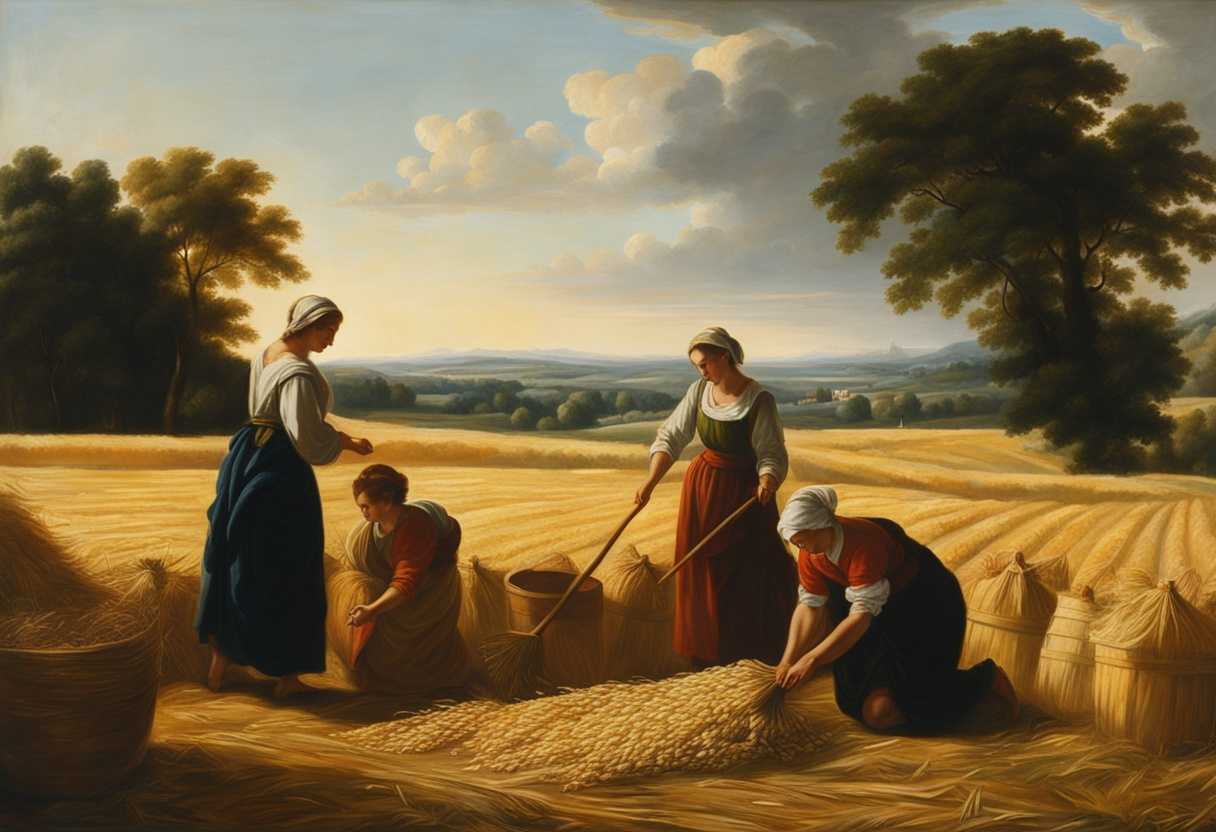
The scene is set in the barley fields of Boaz, a wealthy and kind landowner who is a relative of Naomi’s late husband. As Ruth goes out to glean, she happens to come to the part of the field belonging to Boaz. Boaz arrives at the field and greets his workers, noticing Ruth in the field. He inquires about her and learns of her loyalty and dedication to Naomi. Boaz then instructs his workers to leave extra grain for Ruth to gather, ensuring her safety and provision.
The setting is picturesque, with golden barley fields stretching out under the bright sun. The workers are busy harvesting, their laughter and chatter filling the air. Ruth, a foreigner in a new land, is humbly gleaning behind the workers, her determination and faith guiding her steps. Boaz, a respected and generous man, is overseeing the work, his presence bringing a sense of security and hope to Ruth and Naomi. This encounter sets the stage for a beautiful story of love, redemption, and provision that unfolds throughout the book of Ruth.
What is Ruth 2:1-2 about?
Ruth’s story in this verse exemplifies the theme of hard work, perseverance, and divine favor. Despite facing challenges and uncertainties after the loss of her husband, Ruth demonstrates resilience by going out to glean in the fields to provide for both herself and her mother-in-law, Naomi. Through her determination and faithfulness, Ruth not only finds favor with Boaz but also with God, who ultimately orchestrates events in her favor.
Have you ever found yourself in a difficult situation, unsure of how to move forward? Ruth’s story reminds us of the importance of taking initiative and trusting in divine providence. Just like Ruth, we can persevere through challenging circumstances by putting in the effort and trusting that our hard work will not go unnoticed. We too can experience favor and blessings in unexpected ways as we align our actions with faith and determination, just as Ruth did in Boaz’s field.
Understanding what Ruth 2:1-2 really means
The Book of Ruth is a captivating narrative of loyalty, love, and redemption, with Ruth 2:1-2 introducing us to Boaz, a pivotal character in Ruth’s journey and God’s unfolding plan for her life. This passage lays the groundwork for the providence of God and the kindness that will be extended to Ruth, a Moabite widow, in her time of need. Ruth, along with her mother-in-law Naomi, finds themselves in a vulnerable position upon returning to Bethlehem after the deaths of their husbands, relying on the goodwill of others for their sustenance. Boaz emerges as a relative of Naomi’s late husband, a man of wealth and influence, setting the stage for potential acts of redemption.
Boaz is described as a man of standing from the clan of Elimelek, highlighting his wealth, reputation, and social status. His connection to Elimelek’s lineage is crucial as it hints at his potential role as a kinsman-redeemer for Ruth and Naomi. Ruth’s proactive decision to glean in the fields, seeking favor in the eyes of the landowners, showcases her resilience and willingness to toil diligently despite her challenging circumstances. The act of gleaning, a provision in the Law of Moses (Leviticus 19:9-10), underscores God’s care for the marginalized by ensuring that the poor and foreigners are provided for in times of scarcity.
Drawing parallels from related biblical passages such as Leviticus 19:9-10 and Deuteronomy 24:19-22, we see a consistent theme of God’s concern for justice and provision for the vulnerable echoed in the narrative of Ruth and Boaz. The timeless message of God’s provision and the significance of kindness and generosity resonate strongly in today’s world, where economic hardships and social challenges abound. The principles of caring for the less fortunate and extending kindness to strangers remain as relevant and essential today as they were in ancient times.
In contemporary settings, we witness modern-day examples of gleaning through community initiatives like food banks and charitable organizations, mirroring the spirit of generosity and care exemplified in Ruth’s story. Consider a community garden project where volunteers cultivate produce shared with local food banks, embodying the ethos of gleaning and communal support. Personal anecdotes further illustrate the impact of unexpected acts of kindness, strengthening faith and fostering a sense of community among individuals facing adversity.
Ruth 2:1-2 serves as a poignant reminder of God’s provision through the benevolence of others and the significance of taking initiative in challenging circumstances. It calls us to emulate the virtues of Boaz by demonstrating generosity and compassion, and to embody the courage and determination exhibited by Ruth. This passage prompts reflection on how we can actively support and uplift those in need, embodying the love and care that God extends to all His children.
How can we show kindness to strangers in need?
To show kindness to strangers in need, we can follow the example of Boaz in the book of Ruth. Boaz noticed Ruth, a foreigner gathering leftover grain in his fields, and he took the initiative to inquire about her background and offer her protection and provisions. We can emulate Boaz by being observant of those around us who may be in need, taking the time to understand their situation, and providing assistance and support in whatever way we can.
Additionally, we can show kindness to strangers by welcoming them into our communities and treating them with respect and compassion. We can create a safe and inclusive environment for newcomers and those who may feel marginalized, just as Boaz ensured that Ruth was taken care of and not mistreated in his fields. We can make a difference in the lives of strangers in need and demonstrate the values of kindness and generosity emphasized in the book of Ruth by extending a helping hand and showing empathy.
Application
Just like Ruth tirelessly worked in the fields of Boaz, let’s embrace dedication and perseverance in all aspects of our lives. Let us channel her unwavering faith and trust in God’s plan, even in the face of difficulties. Are you ready to take a leap of faith and confidently rely on divine guidance, like Ruth did in uncertain times?

Reverend Michael Johnson is an experienced Church Minister with a profound expertise in spirituality and guidance. With a serene presence and a compassionate heart, he has faithfully served his congregation for over 20 years, leading them on a spiritual journey towards inner peace and enlightenment. Reverend Johnson’s extensive knowledge of religious philosophies and profound understanding of human nature have made him a trusted confidant and mentor to many, as he seamlessly weaves his profound wisdom into life teachings. Reverend Johnson’s calming demeanor and empathetic nature continue to uplift and heal souls, nurturing a sense of unity and tranquility within his community.