
Ruth 2:8-9 is about Boaz showing kindness and protection to Ruth, a stranger in his fields, symbolizing God’s provision and care for the vulnerable.
8 Then Boaz said to Ruth, “Now, listen, my daughter, do not go to glean in another field or leave this one, but keep close to my young women.
9 Let your eyes be on the field that they are reaping, and go after them. Have I not charged the young men not to touch you? And when you are thirsty, go to the vessels and drink what the young men have drawn.”
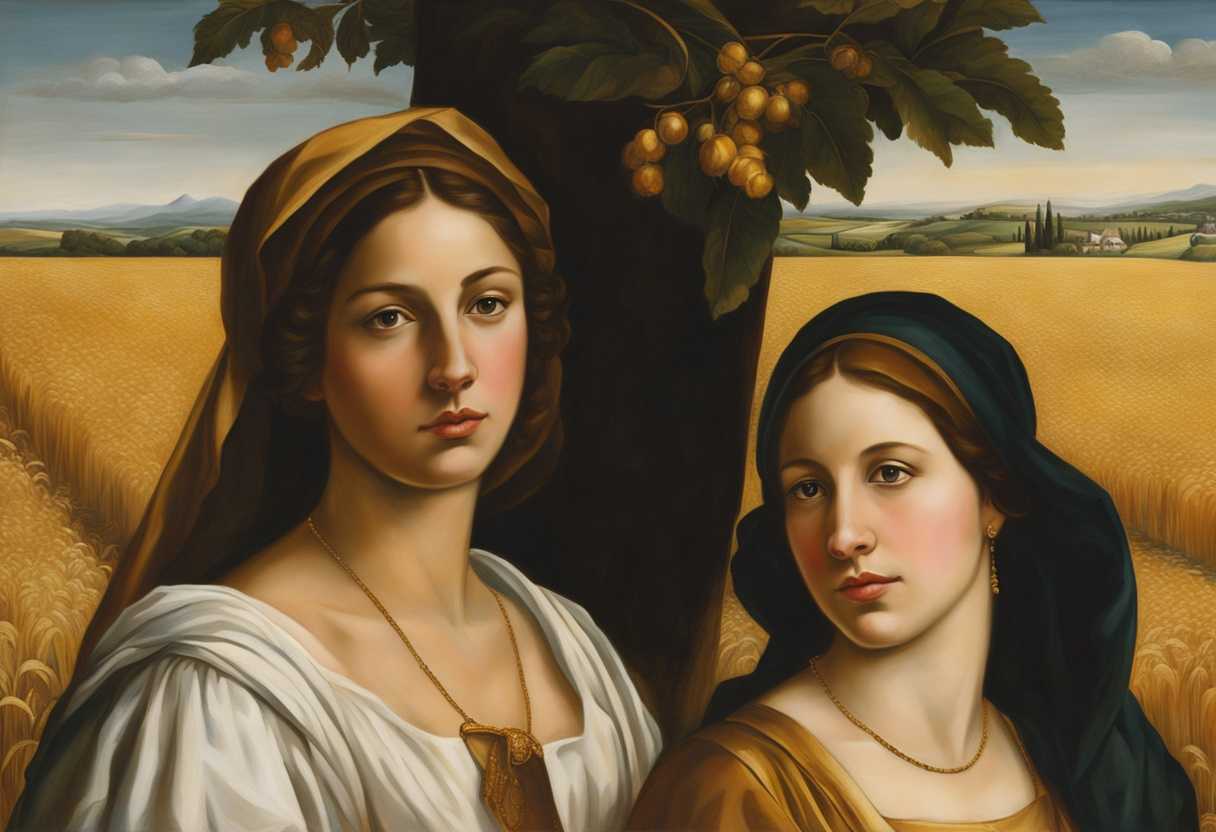
Setting the Scene for Ruth 2:8-9
In Ruth chapter 2, we find Ruth, a Moabite woman, gleaning in the fields of Boaz, a wealthy landowner and relative of her deceased husband’s family. Ruth had accompanied her mother-in-law, Naomi, back to Bethlehem after the death of their husbands. They were both in a difficult situation, as widows without any male relatives to provide for them. Ruth took it upon herself to go to the fields to gather leftover grain after the harvesters, in hopes of finding favor and provision.
As Ruth was gleaning in the fields, Boaz arrived to oversee his workers. He noticed Ruth and inquired about her, learning that she was the Moabite woman who had been loyal to Naomi and had come to seek refuge under the wings of the God of Israel. Boaz showed kindness and generosity towards Ruth, instructing his workers to leave extra grain for her to gather and even inviting her to share a meal with them.
The scene is set in the golden fields of Bethlehem, with the sun shining down on the workers as they diligently harvest the crops. Ruth, a foreigner in a new land, is humbly working to provide for herself and Naomi. Boaz, a respected and compassionate landowner, enters the scene and his eyes are drawn to Ruth, recognizing her faithfulness and dedication. The interaction between Ruth and Boaz in this moment sets the stage for a beautiful love story and a demonstration of God’s provision and care for His people.
What is Ruth 2:8-9 about?
Boaz portrays a beautiful example of kindness and compassion towards Ruth, a foreigner in the land in this verse. Boaz not only shows empathy but also practices generosity and inclusivity by allowing Ruth to glean in his fields. Despite Ruth’s status as an outsider, Boaz extends a helping hand and creates a safe space for her to gather food and sustain herself. This act of kindness not only benefits Ruth but also reflects the values of empathy and hospitality upheld by Boaz.
Imagine the significance of this act in a society where foreigners were often marginalized and overlooked. Think about the courage it took for Ruth to step into unfamiliar territory and rely on the kindness of others for survival. Boaz’s gesture of allowing Ruth to glean in his fields goes beyond mere charity; it symbolizes acceptance, respect, and humanity. It challenges us to reflect on our own prejudices and biases towards those who may be different from us and inspires us to embrace diversity and extend a helping hand to those in need. Let us learn from Boaz’s example and strive to be compassionate and inclusive towards everyone we encounter, regardless of their background or circumstances.
Understanding what Ruth 2:8-9 really means
Ruth 2:8-9 unfolds a poignant narrative within the larger context of Ruth’s unwavering loyalty to her mother-in-law, Naomi, as they journey to Bethlehem. Boaz, a relative of Naomi, emerges as a pivotal figure in this tale, showcasing compassion and care towards Ruth as she gleans in his fields.
Boaz’s tender address to Ruth as “my daughter” in verse 8 encapsulates a sense of familial warmth and protection, setting the tone for his subsequent actions. By instructing Ruth not to glean in another field, Boaz not only ensures her physical safety but also extends a gesture of provision and security in an unfamiliar environment. His directive for Ruth to stay close to his young women underscores a desire to integrate her into his community, offering companionship and safeguarding her well-being.
Moreover, Boaz’s explicit command to his young men not to touch Ruth exemplifies his commitment to upholding her dignity and safety. This act of protection resonates with broader biblical principles, such as those outlined in Leviticus 19:9-10, emphasizing care for the poor and the foreigner. Boaz’s actions mirror the exhortation in Proverbs 31:8-9 to advocate for the vulnerable, showcasing a tangible embodiment of justice and compassion.
The narrative in Ruth 2:8-9 transcends its historical setting, carrying profound implications for contemporary audiences. In a world marked by vulnerability and marginalization, Boaz’s example serves as a beacon of how individuals can extend kindness and support to one another. The themes of community and mutual care embedded in this passage resonate deeply in today’s society, where fostering a sense of belonging and solidarity is increasingly vital.
To illustrate the enduring relevance of Boaz’s actions, consider a modern-day scenario where a compassionate gesture towards a newcomer transforms their experience and enriches the entire community. Just as Boaz’s benevolence towards Ruth catalyzed a ripple effect of goodwill, acts of kindness and protection in our daily interactions can sow seeds of positive change and unity.
In conclusion, Ruth 2:8-9 encapsulates timeless values of kindness, protection, and community, inviting readers to reflect on their own capacity to emulate Boaz’s example. By embodying principles of compassion and solidarity in our interactions, we can contribute to a more empathetic and supportive world for all individuals, echoing the transformative impact of Boaz’s actions towards Ruth.
How can we show kindness to strangers in need?
One way we can show kindness to strangers in need is by actively seeking out opportunities to help them, just as Boaz did for Ruth. We can take the time to notice those who may be struggling or in difficult circumstances and offer a helping hand without waiting to be asked. This proactive approach can make a significant difference in someone’s life and demonstrate genuine care and concern for their well-being.
Additionally, we can show kindness to strangers in need by going above and beyond what is expected. Boaz not only allowed Ruth to glean in his fields but also instructed his workers to intentionally leave extra grain for her to collect. Similarly, we can extend generosity and compassion beyond the basic requirements to truly make a positive impact on the lives of those who are struggling. We can show love and kindness in a tangible and meaningful way by providing more than what is necessary or expected. Showing kindness to strangers in need ultimately reflects our character and values as individuals. We can cultivate a spirit of empathy, generosity, and compassion towards others, especially those who may be marginalized or facing challenges, by following the example set by Boaz in the Bible. Through our actions and attitudes, we can make a difference in the lives of those around us and fulfill the call to love our neighbors as ourselves.
Application
Let us embody Boaz’s kindness and compassion in our own lives. Extend a hand of generosity and provision to those around you, just as Boaz did for Ruth. Embrace the opportunity to be a beacon of love and support in your community today. Will you rise up to the challenge and make a difference in someone’s life?

Reverend Michael Johnson is an experienced Church Minister with a profound expertise in spirituality and guidance. With a serene presence and a compassionate heart, he has faithfully served his congregation for over 20 years, leading them on a spiritual journey towards inner peace and enlightenment. Reverend Johnson’s extensive knowledge of religious philosophies and profound understanding of human nature have made him a trusted confidant and mentor to many, as he seamlessly weaves his profound wisdom into life teachings. Reverend Johnson’s calming demeanor and empathetic nature continue to uplift and heal souls, nurturing a sense of unity and tranquility within his community.