
Ruth 2:9 is about Boaz showing kindness and favor to Ruth, a foreigner and widow, symbolizing how God’s grace and provision extend to all, regardless of background or circumstances.
9 Let your eyes be on the field that they are reaping, and go after them. Have I not charged the young men not to touch you? And when you are thirsty, go to the vessels and drink what the young men have drawn.”
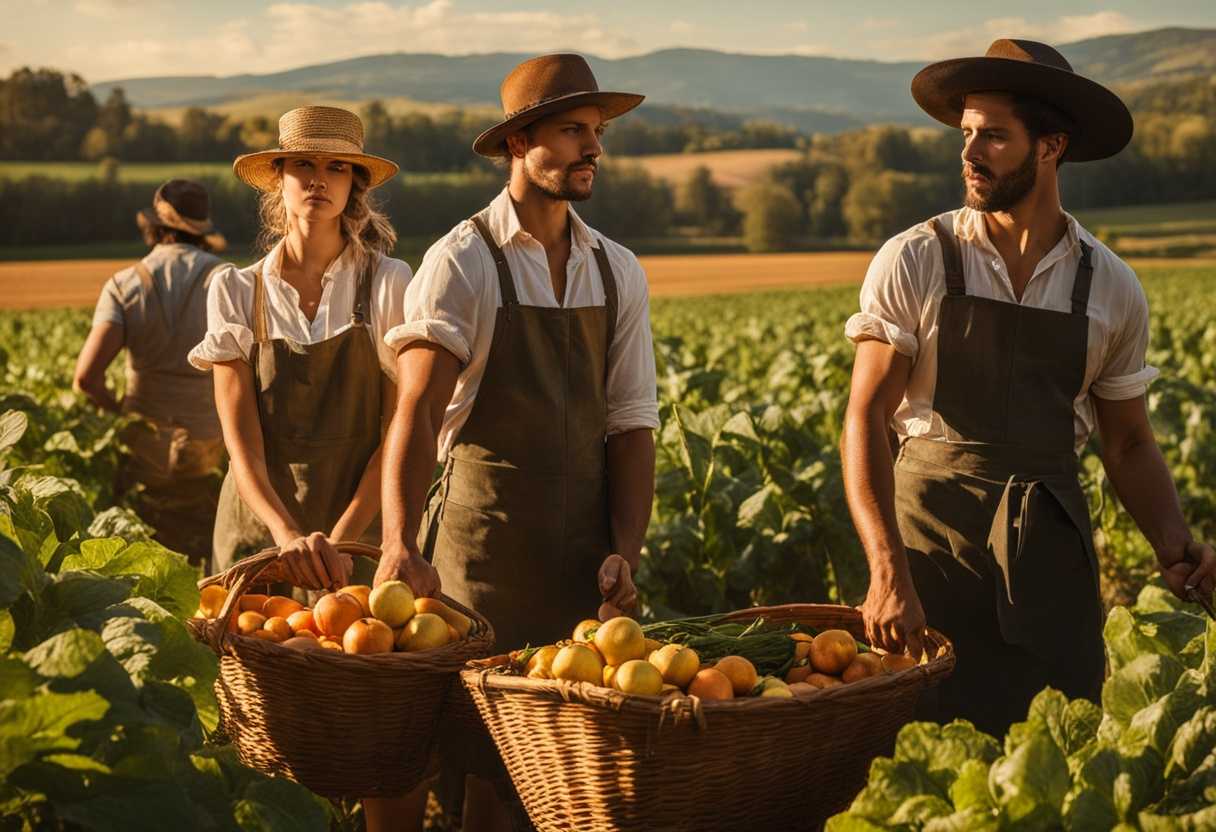
Setting the Scene for Ruth 2:9
In Ruth chapter 2, we find Ruth, a Moabite woman, gleaning in the fields of Boaz, a wealthy landowner and relative of her deceased husband’s family. Ruth had accompanied her mother-in-law, Naomi, back to Bethlehem after the death of their husbands. They were both in a difficult situation, as widows without any male relatives to provide for them. Ruth took it upon herself to go to the fields to gather leftover grain after the harvesters, in hopes of finding favor and provision.
On this particular day, Ruth found herself in the field of Boaz, who had heard of her loyalty and kindness towards Naomi. Boaz arrived at the field and greeted his workers, noticing Ruth among them. He inquired about her and was informed of her dedication to Naomi and her hard work in the fields. Boaz then approached Ruth, offering her protection, provision, and even instructing his workers to leave extra grain for her to gather. The scene is one of kindness, generosity, and a budding relationship between Ruth and Boaz, setting the stage for the beautiful love story and redemption that unfolds in the following chapters of the book of Ruth. The setting is a vast field, golden with harvested grain, under the warm sun of Bethlehem, with Ruth and Boaz at the center of a providential encounter.
What is Ruth 2:9 about?
This verse speaks to the importance of showing kindness and hospitality to others, regardless of their background or nationality. Boaz’s compassionate actions towards Ruth, a foreigner, emphasize the value of inclusivity and empathy. Boaz chooses to extend care and support to Ruth, exemplifying the true spirit of kindness and acceptance in a society where foreigners were often marginalized or mistreated.
Have you ever felt like an outsider or a foreigner in a certain situation? How did it feel to be shown kindness and acceptance during those times? Just like Boaz, we are called to embrace those who may be different from us and offer them refuge under the loving care of God’s wings. This verse challenges us to reflect on our own attitudes towards those who may be considered outsiders in our communities and to consider how we can demonstrate kindness and compassion to all, just as Boaz did for Ruth.
Understanding what Ruth 2:9 really means
The Book of Ruth unfolds against the backdrop of a tumultuous period in Israel’s history, the time of the Judges. In this narrative, we encounter Ruth, a Moabite widow who chooses to remain with her Israelite mother-in-law, Naomi, as they journey to Bethlehem. Ruth 2:9 captures a poignant moment as Ruth finds herself gleaning in the fields of Boaz, a kinsman of Naomi’s late husband.
Boaz’s words to Ruth, “Watch the field where the men are harvesting, and follow along after the women,” reveal his genuine concern for her well-being. He not only offers guidance but also extends protection, instructing the workers not to harm her. This act of safeguarding a vulnerable outsider speaks volumes about Boaz’s character and his commitment to kindness and hospitality.
Furthermore, Boaz’s directive for Ruth to quench her thirst from the water jars filled by the men showcases his generosity and thoughtfulness. In a simple gesture, he ensures that Ruth’s basic needs are met, embodying the principles of hospitality and care for the less fortunate.
The biblical context of Ruth 2:9 finds resonance in other passages such as Leviticus 19:9-10, which commands leaving gleanings for the poor, and Deuteronomy 10:18-19, emphasizing love for the foreigner. Boaz’s actions align with these teachings, reflecting God’s heart for the marginalized and underscoring the importance of extending compassion and respect to all.
Today, Boaz’s example serves as a timeless reminder of the values of kindness, protection, and generosity. In a world where vulnerability is pervasive, his actions prompt us to consider how we can offer support and care to those in need, fostering a community marked by empathy and solidarity.
Imagine a scenario where a newcomer to a community, much like Ruth, feels adrift and uncertain. In this narrative, a compassionate individual steps forward, mirroring Boaz’s actions by providing guidance, protection, and hospitality. This simple act not only nurtures a sense of belonging for the newcomer but also enriches the fabric of the entire community through shared humanity and mutual support.
In conclusion, Ruth 2:9 encapsulates a profound message about the transformative power of compassion and generosity. It beckons us to emulate Boaz’s example by extending care and consideration to those around us, embodying God’s love in tangible ways and fostering a culture of inclusivity and dignity for all.
How can we show kindness to strangers in need?
We can show kindness to strangers in need by being attentive and considerate towards them, just as Boaz was to Ruth in the verse. This can involve actively seeking out opportunities to help those who are in difficult circumstances, whether it be through offering food, shelter, or assistance in any way possible. We can show strangers that they are not alone and that there are people who care about their well-being by taking the time to notice and acknowledge their struggles.
Additionally, we can show kindness to strangers by treating them with respect and dignity, regardless of their background or circumstances. Just like Boaz showed Ruth kindness by inviting her to glean in his fields without fear of being mistreated, we can also extend a hand of friendship and compassion to those we encounter who are in need. We not only help alleviate their immediate difficulties but also help restore their sense of worth and value as individuals deserving of love and care. We can make a significant impact on the lives of strangers in need by embodying the spirit of generosity and compassion exemplified in the verse. Whether through small acts of kindness or more significant gestures of support, our willingness to reach out and help those who are less fortunate can bring hope and comfort to those who may be feeling lost or alone.
Application
Just as Boaz showed kindness to Ruth, let’s reach out and help those in our modern-day fields of work and family. Emulate his generosity by offering a helping hand to those in need around us. Let’s sow seeds of compassion and uplift those in our community who could benefit from our support. Shall we choose kindness and make a difference in someone’s life today?

Reverend Michael Johnson is an experienced Church Minister with a profound expertise in spirituality and guidance. With a serene presence and a compassionate heart, he has faithfully served his congregation for over 20 years, leading them on a spiritual journey towards inner peace and enlightenment. Reverend Johnson’s extensive knowledge of religious philosophies and profound understanding of human nature have made him a trusted confidant and mentor to many, as he seamlessly weaves his profound wisdom into life teachings. Reverend Johnson’s calming demeanor and empathetic nature continue to uplift and heal souls, nurturing a sense of unity and tranquility within his community.