
Ruth 4:17 is about the joy and blessing that comes from the restoration and redemption of Naomi through the birth of her grandson Obed, foreshadowing the future fulfillment of God’s promises through the lineage of King David and ultimately the birth of Jesus Christ.
17 And the women of the neighborhood gave him a name, saying, “A son has been born to Naomi.” They named him Obed. He was the father of Jesse, the father of David.
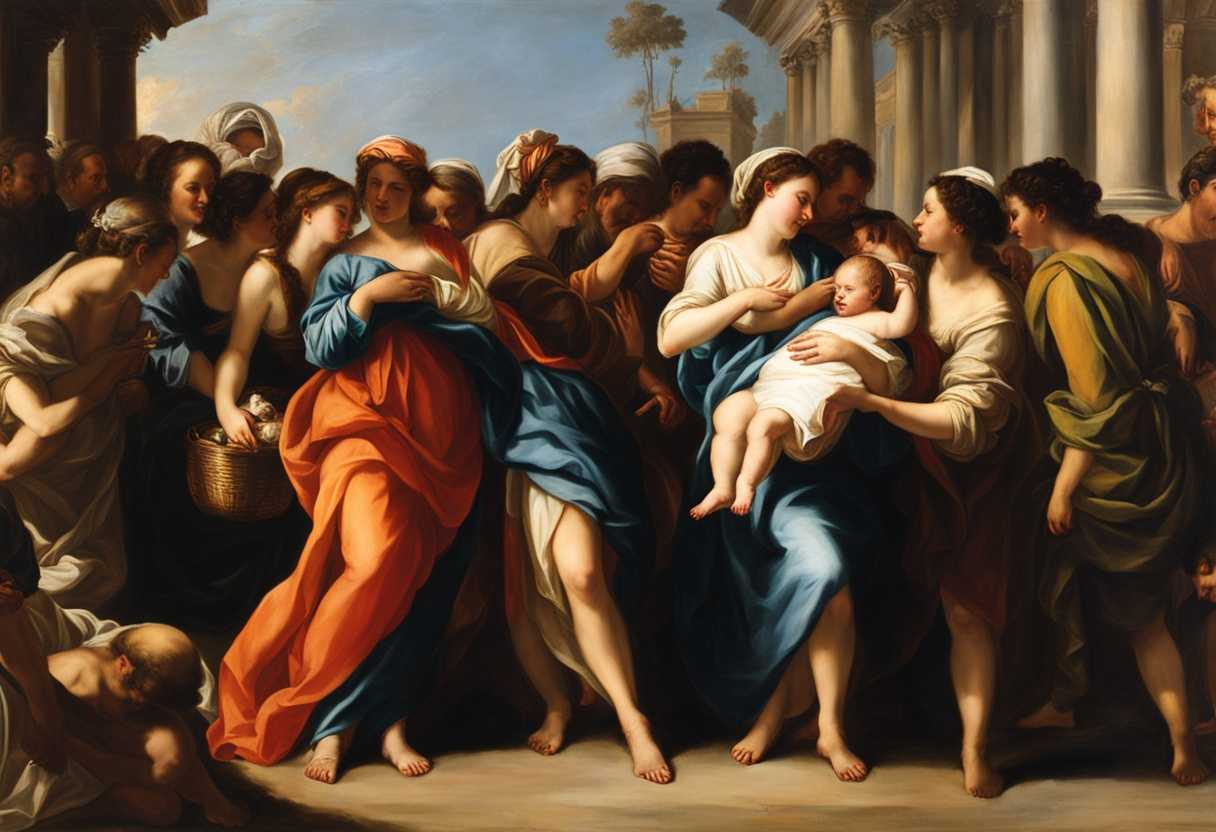
Setting the Scene for Ruth 4:17
The scene in Ruth chapter 4 is set in the town of Bethlehem, a small and bustling village in ancient Israel. Boaz, a wealthy and kind landowner, plays a central role in this scene. He had shown kindness to Ruth, a Moabite widow, by allowing her to glean in his fields and providing her with protection and provision. Ruth, a loyal and devoted daughter-in-law, had returned with her mother-in-law Naomi to Bethlehem after the death of her husband.
In this particular moment, Boaz is gathered at the town gate, a common meeting place where legal matters and business transactions were conducted. Along with Boaz are the elders of the town, who served as witnesses and arbitrators in important matters. Boaz is finalizing the redemption of Naomi’s land and marrying Ruth, in accordance with the Levirate law. The scene is filled with anticipation and joy as the townspeople witness the union of Boaz and Ruth, a union that would bring blessings not only to the couple but also to Naomi, whose family line would be preserved through the birth of their son Obed.
What is Ruth 4:17 about?
This verse captures a poignant moment in the story of Ruth, where she transitions into motherhood, a role that is often seen as a blessing from God in many religious traditions. Ruth not only experiences the joy and responsibility of raising a child but also embodies the continuation of life and the perpetuation of her family’s legacy by becoming a mother. This transformation symbolizes growth, love, and the fulfillment of a profound human experience that is deeply intertwined with spirituality and divine providence.
Let’s reflect on the significance of this verse. How does the idea of motherhood as a blessing from God resonate with you? What emotions and thoughts does this evoke within you? As we delve into Ruth’s journey into motherhood, we can contemplate the beauty and sacredness, recognizing the inherent connection between the gift of life and the divine presence in our lives. We can also cherish and honor the nurturing and transformative power of motherhood in our own lives and in the world around us, just as we celebrate Ruth’s motherhood as a blessing.
Understanding what Ruth 4:17 really means
In Ruth 4:17, we witness a significant moment in the Book of Ruth, where the birth of Obed, the son of Ruth and Boaz, is celebrated by the community. This verse serves as a poignant reminder of God’s providence and the continuation of a lineage that would eventually lead to King David and, ultimately, Jesus Christ.
The exclamation of “Naomi has a son!” by the women living there is more than just a statement of fact. It symbolizes communal joy and the recognition of Naomi’s restored fortunes. Despite Ruth being the biological mother, the community acknowledges Naomi’s role, signifying the restoration of her family line. This act highlights the importance of community support and the shared celebration of blessings.
The naming of the child as Obed holds deep significance. Obed, meaning “servant” or “worshiper,” reflects the community’s hope and faith in God’s continued blessings and the child’s future role in God’s divine plan. It underscores the belief in God’s sovereignty and the importance of serving Him faithfully.
Drawing parallels with other biblical passages, such as the birth of Isaac to Sarah and Abraham in Genesis 21:1-7, and the birth of Samuel to Hannah in 1 Samuel 1:20, we see a recurring theme of God’s faithfulness in providing children in seemingly impossible situations. These stories emphasize the significance of children in God’s redemptive plan and His response to faithful prayers.
The relevance of Ruth 4:17 to people today is profound. It offers a message of restoration and hope, reminding us that God can bring new beginnings even in the midst of despair. The communal celebration in the verse also highlights the importance of supportive relationships and the value of sharing both joys and burdens within a community.
Imagine a modern-day couple struggling with infertility, finding solace and support in their church community, and eventually experiencing the joy of adoption. Their story mirrors the communal celebration in Ruth 4:17, showcasing how God’s blessings can manifest through various means and the encouragement found in supportive relationships.
In conclusion, Ruth 4:17 stands as a testament to God’s faithfulness, the significance of community, and the unfolding of His divine plan. It prompts us to trust in God’s timing, seek support from our communities, and hold onto hope for restoration and new beginnings. Just as Obed’s birth brought joy and restoration to Naomi, may we also find comfort in the knowledge that God works all things for good for those who love Him.
How can we show kindness and loyalty to others?
Showing kindness and loyalty to others can be demonstrated by being there for them in times of need, supporting them through challenges, and standing by them in both good and difficult times. This involves being empathetic and compassionate, actively listening to their concerns, and offering a helping hand whenever possible. We exemplify true kindness and loyalty by consistently showing up for others and prioritizing their well-being.
Furthermore, expressing kindness and loyalty can also be displayed through acts of selflessness and generosity. Whether it’s giving our time, resources, or emotional support, extending a helping hand without expecting anything in return is a powerful way to strengthen relationships and demonstrate our commitment to others. We can cultivate a sense of security and assurance in our relationships by being dependable, reliable, and trustworthy, fostering bonds built on mutual respect and loyalty. Embodying kindness and loyalty involves being a pillar of support, an unwavering companion, and a source of encouragement for those around us. We can enrich our relationships and create a sense of unity and interconnectedness that transcends mere acquaintanceship by prioritizing the well-being and happiness of others. By practicing these virtues consistently, we not only benefit those we care about but also contribute to a more compassionate and harmonious community.
Application
Just like Ruth’s unwavering loyalty to Naomi, let’s embrace faithfulness and obedience in our daily lives. Let’s strive to walk in alignment with God’s teachings, trusting His plans for us. Will you wholeheartedly commit to serving God and let His divine plans shape your life?

Reverend Michael Johnson is an experienced Church Minister with a profound expertise in spirituality and guidance. With a serene presence and a compassionate heart, he has faithfully served his congregation for over 20 years, leading them on a spiritual journey towards inner peace and enlightenment. Reverend Johnson’s extensive knowledge of religious philosophies and profound understanding of human nature have made him a trusted confidant and mentor to many, as he seamlessly weaves his profound wisdom into life teachings. Reverend Johnson’s calming demeanor and empathetic nature continue to uplift and heal souls, nurturing a sense of unity and tranquility within his community.