
Titus 2:2-3 is about teaching older men and women to live a life of wisdom, self-control, and good deeds, in order to be role models and mentors to the younger generation.
2 Older men are to be sober-minded, dignified, self-controlled, sound in faith, in love, and in steadfastness.
3 Older women likewise are to be reverent in behavior, not slanderers or slaves to much wine. They are to teach what is good,
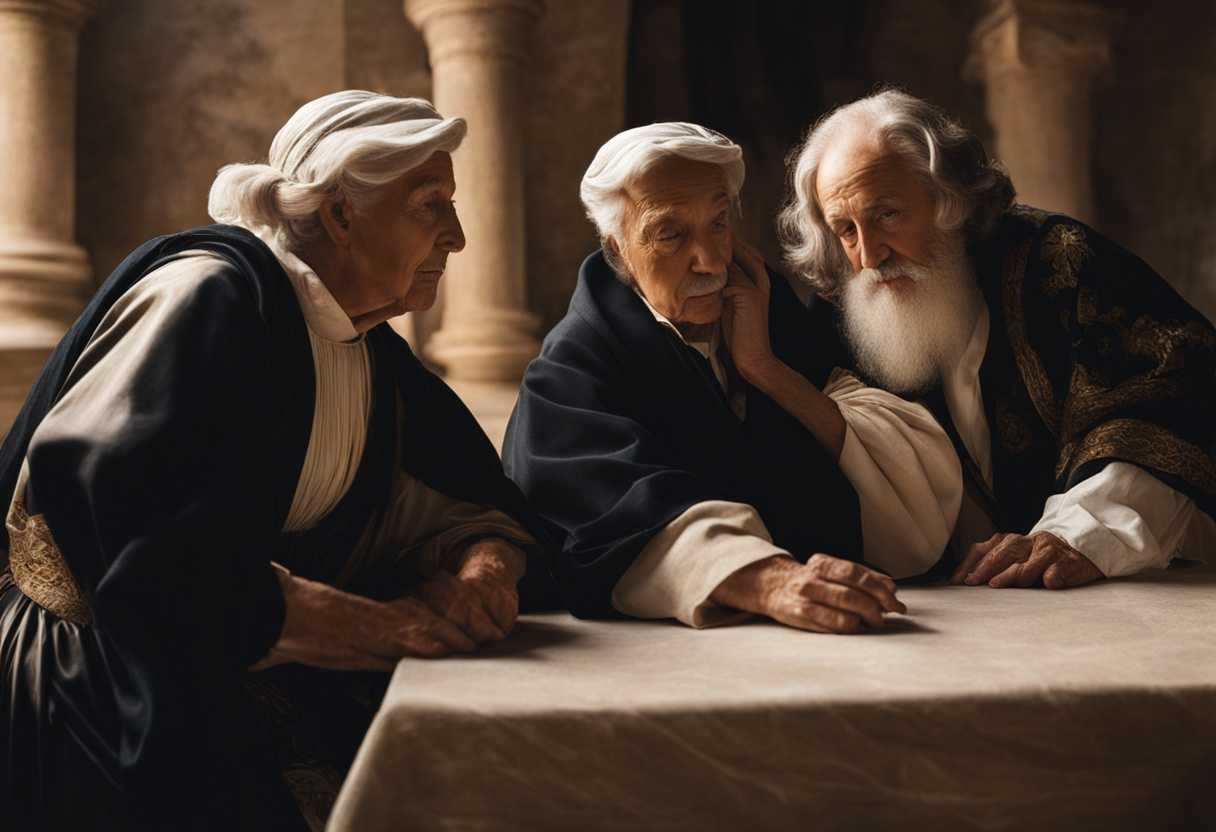
Setting the Scene for Titus 2:2-3
In Titus chapter 2, we find the apostle Paul writing to Titus, a young pastor he had left in Crete to set things in order in the churches there. The scene unfolds in a small, dimly lit room within a modest house in Crete. Titus is seated at a simple wooden table, surrounded by a diverse group of individuals from the congregation. Among them are older men, some weathered by years of hard work at sea or in the fields, and others with a distinguished air about them from a life of leadership and wisdom.
Also present are older women, their faces lined with the marks of time and experience, yet their eyes still bright with a spark of vitality. These individuals have gathered to listen attentively as Titus imparts Paul’s instructions on living a godly life. The room is filled with the scent of olive oil lamps burning low, casting flickering shadows on the walls adorned with simple tapestries. The atmosphere is one of reverence and earnestness as Titus speaks with authority and gentleness, guiding his flock in the ways of righteousness and sound doctrine. The older men and women nod in agreement, recognizing the importance of passing on their faith and wisdom to the younger generations, as outlined in Titus 2:2-3.
What is Titus 2:2-3 about?
This verse from Titus 2:2 highlights the importance of character qualities that older men should embody. The term “temperate” refers to being moderate and restrained in behavior, avoiding excesses and extremes. This trait emphasizes the need for balance and self-discipline in all aspects of life. Older men can set a positive example for others to follow by being temperate. Earning admiration and honor through one’s actions and words implies being “worthy of respect.” Older men are encouraged to conduct themselves in a manner that garners respect from those around them. This entails living a life of integrity, honesty, and humility. Older men can positively influence younger generations and contribute to the betterment of their communities by embodying these qualities.
Lastly, the notion of being “self-controlled” underscores the importance of managing one’s impulses and emotions. It involves having the ability to exercise restraint and make wise choices, even in challenging circumstances. Older men can navigate life’s complexities with composure and grace by practicing self-control. This verse serves as a reminder for older men to strive for excellence in their character and conduct, reflecting the values of wisdom, maturity, and virtue.
Understanding what Titus 2:2-3 really means
Titus 2:2-3 is part of Paul’s letter to Titus, providing guidance on how different groups within the church should conduct themselves. These verses specifically address older men and women, emphasizing the importance of their roles in the community. When Paul instructs that “older men are to be temperate, dignified, sensible, sound in faith, in love, in perseverance,” he sets a high standard for their behavior. Temperance encourages moderation and self-control, while dignity calls for a life of respectability and honor. Being sensible highlights the importance of wisdom and good judgment, and being sound in faith, love, and perseverance stresses the need for a strong, unwavering faith, genuine love, and steadfast endurance.
Similarly, when Paul mentions that “older women likewise are to be reverent in their behavior, not malicious gossips nor enslaved to much wine, teaching what is good,” he outlines expectations for their conduct. Being reverent in behavior encourages a life of holiness and respect, while avoiding malicious gossip warns against spreading harmful rumors. Advising against overindulgence in alcohol and emphasizing teaching what is good highlights the role of older women as mentors and role models. These qualities are not just suggestions but essential for fostering a healthy and thriving community.
In related Bible passages, we see a consistent theme of honoring and respecting the elderly. In 1 Timothy 5:1-2, Paul advises Timothy on how to treat older men and women with respect, reinforcing the idea of honor and dignity. Proverbs 16:31 highlights the value of wisdom and experience, stating that “gray hair is a crown of glory; it is gained in a righteous life.” Additionally, 1 Peter 5:5 encourages younger people to submit to their elders, recognizing the importance of their guidance and wisdom.
The relevance of these verses to people today is profound. In a world that often prioritizes youth and novelty, this passage calls us to honor and learn from those who have lived longer and experienced more. The principles of self-control, respect, and mentorship are timeless and crucial for healthy community dynamics. Imagine a community where an older woman, respected for her wisdom and kindness, mentors younger women. Her influence helps shape the younger generation, fostering a sense of continuity and shared values, mirroring the biblical call for older men and women to lead by example.
In conclusion, Titus 2:2-3 offers timeless advice that is as relevant today as it was in the early church. By embodying these virtues, older men and women can significantly impact their communities, fostering environments of respect, wisdom, and mutual support. Let us reflect on these teachings and consider how we can honor and learn from the wisdom of our elders, creating communities that value and uphold these essential virtues.
How can older men and women model godliness effectively?
Older men and women can model godliness effectively by living a life of self-control, wise teaching, and sound faith. They provide a positive example for others to follow by demonstrating these qualities in their daily lives. Older men are called to be temperate, dignified, and self-controlled, while older women are encouraged to be reverent in behavior, not slanderers, and not addicted to much wine. These characteristics showcase a life devoted to God and can inspire those around them to also pursue a godly lifestyle. Older men and women can model godliness by investing in the next generation. They can help guide and mentor younger individuals in their own journey of faith by sharing their wisdom, experiences, and faith. Through their teachings and actions, older men and women can leave a lasting impact on those around them, encouraging others to live in a manner that is pleasing to God. They can influence others to grow in their relationship with God and walk in godliness by fulfilling this role as spiritual leaders and examples.
Application
Let’s paint our lives with the colors of self-control, dignity, and unwavering faith, creating a masterpiece that inspires everyone we meet. Are you willing to rise to the challenge and shine brightly as a beacon of goodness in a world that desperately needs it?

Reverend Michael Johnson is an experienced Church Minister with a profound expertise in spirituality and guidance. With a serene presence and a compassionate heart, he has faithfully served his congregation for over 20 years, leading them on a spiritual journey towards inner peace and enlightenment. Reverend Johnson’s extensive knowledge of religious philosophies and profound understanding of human nature have made him a trusted confidant and mentor to many, as he seamlessly weaves his profound wisdom into life teachings. Reverend Johnson’s calming demeanor and empathetic nature continue to uplift and heal souls, nurturing a sense of unity and tranquility within his community.