
Zechariah 11:10-11 is about the rejection of God’s covenant by the people of Israel leading to a broken relationship between the shepherd (God) and the flock (Israel), symbolizing the consequences of disobedience and lack of faithfulness.
10 And I took my staff Favor, and I broke it, annulling the covenant that I had made with all the peoples.
11 So it was annulled on that day, and the sheep traders, who were watching me, knew that it was the word of the Lord.
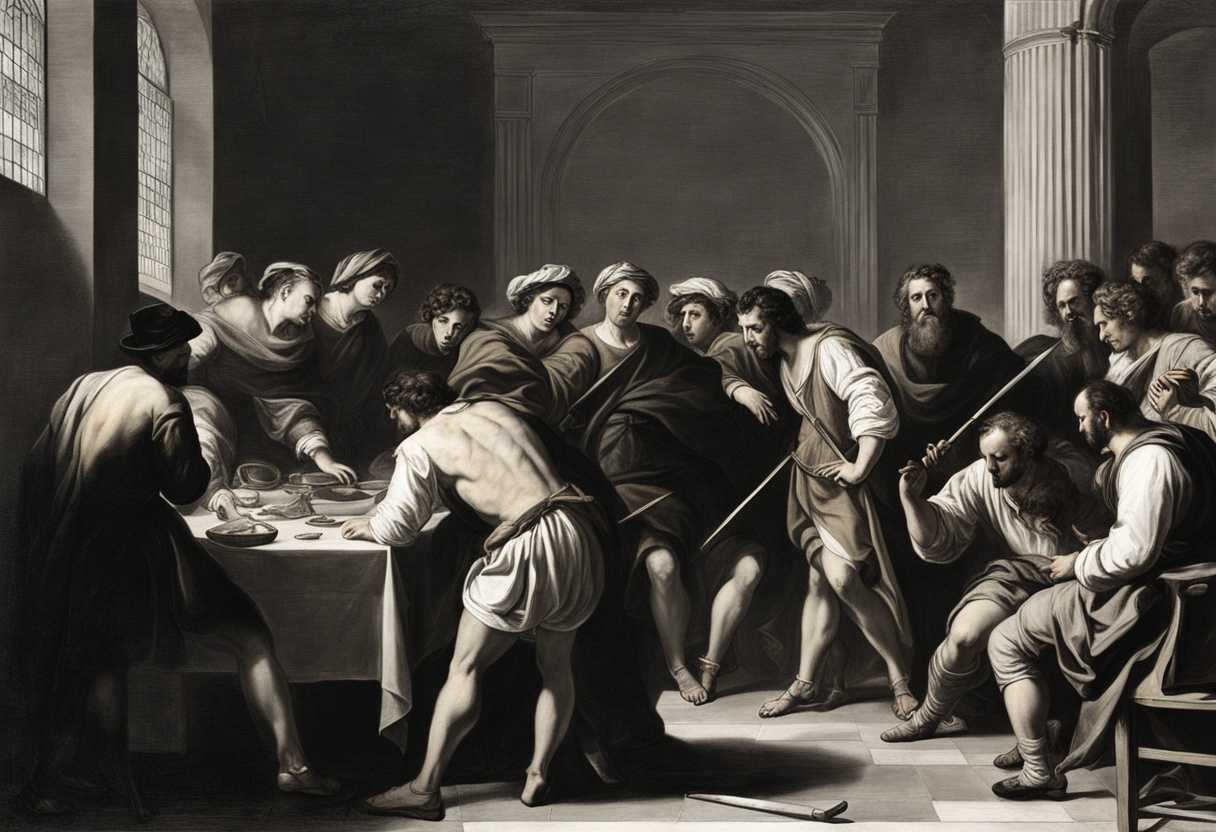
Setting the Scene for Zechariah 11:10-11
In Zechariah 11:10-11, the scene is set in a bustling marketplace in ancient Jerusalem. The marketplace is filled with vendors selling their wares, the sound of bargaining and haggling filling the air. People from all walks of life are present, going about their daily business.
Among the crowd is Zechariah, the prophet, who is delivering a message from the Lord. He is surrounded by a group of curious onlookers who have gathered to hear what he has to say. Zechariah’s presence commands attention, his voice ringing out above the noise of the marketplace as he speaks of the impending judgment that will come upon the people of Israel.
As Zechariah continues to prophesy, his words are met with a mixture of disbelief and fear from those listening. Some scoff at his warnings, while others are struck with a sense of foreboding. The atmosphere in the marketplace is tense as Zechariah’s message sinks in, the weight of his words hanging heavy in the air.
What is Zechariah 11:10-11 about?
A powerful message emphasizing the breaking of the covenant symbolized by the two staffs, Beauty and Bands, confronts us when we delve into Zechariah 11:10-11. These staffs represent God’s favor and unity with His people. However, in this passage, we see a stark contrast as the covenant is broken, indicating a shift in the relationship between God and His people.
God’s focus on the poor and oppressed in this verse serves as a reminder of the importance of justice and mercy in all aspects of our lives. It challenges us to reflect on how we treat those who are marginalized in society. Are we upholding our own covenants with God by showing compassion and support to those in need? This verse prompts us to examine our actions and reminds us of the consequences when we neglect the vulnerable among us. We should ask ourselves as we reflect on this verse: Are we actively seeking to stand with the poor and oppressed, as God calls us to do? How can we better advocate for justice and fairness in our communities? Zechariah 11:10-11 serves as a call to action, urging us to be mindful of our responsibilities towards those who are less fortunate and to ensure that we are living out God’s covenant of love and grace in our daily lives.
Understanding what Zechariah 11:10-11 really means
Zechariah 11:10-11 presents a poignant scene where the prophet, in a symbolic act, breaks the staff called “Favor,” representing the end of God’s covenant with the nations. This action signifies a period of judgment and separation, reflecting the consequences of turning away from God’s grace and protection. The context of this passage is crucial, as it is part of a larger prophetic narrative where Zechariah vividly portrays God’s relationship with Israel, emphasizing the importance of faithfulness and obedience.
In parallel with Zechariah’s message, other biblical passages shed light on the theme of covenant and restoration. Jeremiah 31:31-34 speaks of a new covenant God will establish with Israel and Judah, contrasting the broken covenant in Zechariah. Matthew 26:28 highlights Jesus’ role in offering a new covenant through His blood, providing a path to reconciliation and grace. Ezekiel 34:23-24 prophesies about the Good Shepherd, pointing to Jesus as the one who restores the broken relationship between God and His people.
The relevance of Zechariah 11:10-11 to contemporary audiences is profound. In a world where many feel disconnected or abandoned, this passage serves as a reminder of the importance of maintaining a relationship with God. It also offers hope through Christ, who brings restoration and renewal to those who seek Him. The breaking of the staff “Favor” serves as a cautionary tale of the consequences of straying from God’s covenant but also as a beacon of hope for reconciliation through Jesus Christ.
To illustrate the significance of this passage, consider a community that turns away from a benevolent leader, leading to hardship and separation. However, the leader’s son steps in, offering a way to rebuild the relationship and find redemption. This narrative mirrors the message of Zechariah and the promise of restoration through Christ found in the New Testament.
The phrases in Zechariah 11:10-11, such as “I took my staff Favor and broke it,” vividly depict the end of God’s protective relationship with the nations. The phrase “It was annulled on that day” emphasizes the abrupt termination of the covenant, highlighting the seriousness of the people’s actions. “So the afflicted of the flock who were watching me knew it was the word of the Lord” underscores the importance of attentiveness and discernment in recognizing God’s messages and responding faithfully.
By contemplating the depth of Zechariah 11:10-11 and its implications, we can grasp the gravity of turning away from God and the profound hope offered through Jesus Christ. This passage challenges us to reflect on our relationship with God, reminding us of the consequences of disobedience but also pointing us towards the restorative grace found in Christ.
Are we ignoring the guidance of our shepherd?
God, who is guiding and leading His people, represents the shepherd in this passage. The flock may symbolize the people of God who are meant to follow and obey His commands. The shepherd’s staff and care for the sheep represent God’s guidance, protection, and provision for His people. Therefore, ignoring the shepherd’s guidance would mean disregarding God’s divine direction and care for His people. The flock may become vulnerable to dangers and stray away from the intended path by choosing to ignore the shepherd’s guidance. God offers his guidance and protection to those who choose to follow Him, leading and protecting them just as a shepherd does with a flock. To ignore His guidance would be to dismiss His loving care and provision, which ultimately leads to a sense of spiritual neglect and loss of direction.
It is crucial for believers to remain attentive to the voice and guidance of their shepherd, trusting in His wisdom and care. Ignoring the shepherd’s guidance can lead to spiritual wandering and distancing oneself from the safety and security found in following God’s will. Believers can experience the peace, protection, and provision that come from following the shepherd’s lead by staying true to His guidance.
Application
Take a moment to think about how you may be neglecting your spiritual growth, much like sheep forgotten by their shepherds. It’s time to reevaluate your priorities and make sure you’re not straying from the path of grace and righteousness. Will you listen to this call and actively work on nurturing your faith and strengthening your relationship with God?

Reverend Michael Johnson is an experienced Church Minister with a profound expertise in spirituality and guidance. With a serene presence and a compassionate heart, he has faithfully served his congregation for over 20 years, leading them on a spiritual journey towards inner peace and enlightenment. Reverend Johnson’s extensive knowledge of religious philosophies and profound understanding of human nature have made him a trusted confidant and mentor to many, as he seamlessly weaves his profound wisdom into life teachings. Reverend Johnson’s calming demeanor and empathetic nature continue to uplift and heal souls, nurturing a sense of unity and tranquility within his community.