
1 And I lifted my eyes and saw, and behold, a man with a measuring line in his hand!
2 Then I said, “Where are you going?” And he said to me, “To measure Jerusalem, to see what is its width and what is its length.”
3 And behold, the angel who talked with me came forward, and another angel came forward to meet him,
4 And said to him, “Run, speak to that young man, saying, ‘Jerusalem shall be inhabited as villages without walls, because of the multitude of people and livestock in it.
5 And I will be to her a wall of fire all around, declares the Lord, and I will be the glory in her midst.
6 Up! Up! Flee from the land of the north, declares the Lord. For I have spread you abroad as the four winds of the heavens, declares the Lord.
7 Up! Escape to Zion, you who dwell with the daughter of Babylon.
8 For thus said the Lord of hosts, after his glory sent me to the nations who plundered you, for he who touches you touches the apple of his eye:
9 “For behold, I will shake my hand over them, and they shall become plunder for those who served them. Then you will know that the Lord of hosts has sent me.
10 Sing and rejoice, O daughter of Zion, for behold, I come and I will dwell in your midst, declares the Lord.
11 And many nations shall join themselves to the Lord in that day, and shall be my people. And I will dwell in your midst, and you shall know that the Lord of hosts has sent me to you.
12 And the Lord will inherit Judah as his portion in the holy land, and will again choose Jerusalem.
13 Be silent, all flesh, before the Lord, for he has roused himself from his holy dwelling.
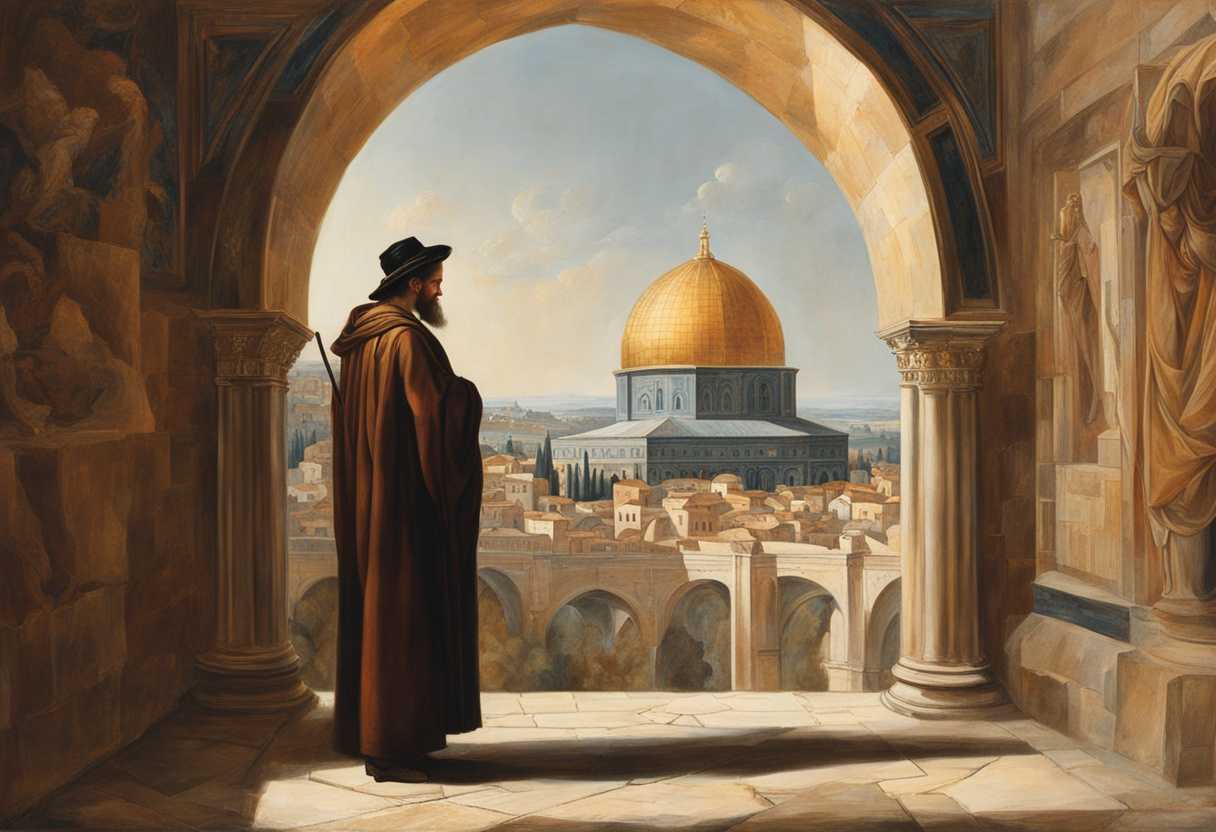
The True Meaning of Zechariah 2
The book of Zechariah was written by the prophet Zechariah, a Jewish priest who lived during the time of the return from the Babylonian exile. He was a contemporary of the prophet Haggai, and together they encouraged the people to rebuild the temple in Jerusalem. Zechariah receives a series of visions in this chapter that provide hope and encouragement to the people as they work to restore their nation. The visions depict God’s plan to protect and bless Jerusalem, as well as the future glory that awaits the city. We’ll see how these visions connect to other important biblical themes and events as we explore them.
Zechariah’s visions remind us that even in the midst of difficulty and uncertainty, God is at work, guiding and shaping the course of history according to His perfect plan. We meditate on these words, inspiring us to trust in God’s sovereign care and to play our part in the unfolding of His purposes.
Zechariah 2:1-5
Verse 1 of Zechariah 2 begins with the prophet Zechariah seeing a man with a measuring line in his hand, preparing to measure Jerusalem. This act of measuring indicates precision and intentional evaluation. Measuring in the Bible is often associated with judgment and restoration. Here, it symbolizes God’s watchful eye over His people and His plans for their future. It also signifies God’s desire for order and boundaries in His kingdom, as measurements are used to demarcate and protect what is within.
Moving to verse 2, the angel who was speaking with Zechariah approaches him to explain the purpose of the measuring. The angel informs Zechariah that Jerusalem will be a city without walls due to the multitude of people and animals within it. This declaration emphasizes the idea of abundance, growth, and God’s protection over the city. Walls in the ancient world were crucial for defense and security. For Jerusalem to be without walls signifies that God’s presence and power would be the ultimate protection for His people. This imagery transcends physical boundaries and speaks to the spiritual realm, where God’s presence is the ultimate defense against any threat. The angel proclaims in verse 3 that the Lord will be a “wall of fire” around Jerusalem and will be the glory within it. This statement reinforces the concept of God’s protective presence. The image of a wall of fire harks back to the Israelites’ journey through the wilderness, where God led them in a pillar of cloud by day and a pillar of fire by night (Exodus 13:21). This symbolizes not only protection but also purification. Fire is often associated with refining and purifying, suggesting that God’s presence will both defend and sanctify His people.
Verse 4 calls for Jerusalem to be fully inhabited and for the people to flee Babylon, indicating the fulfillment of God’s promise to bring His people back to their land after the exile. The call to leave Babylon echoes God’s repeated commands throughout the Bible for His people to come out of places of captivity and backsliding to dwell in His presence. Babylon symbolizes any form of spiritual bondage or sin that separates us from God. We are also called to turn away from worldly temptations and return to God’s presence, just as the Israelites were urged to leave Babylon.
Lastly, in verse 5, God promises to be a glory within Jerusalem, emphasizing that His presence will dwell among His people. This promise echoes God’s covenant with Israel throughout the Old Testament, where He promises to be their God and they His people. The presence of God’s glory indicates His favor, protection, and provision. It speaks to the eternal truth that God desires to abide with His people, leading them, blessing them, and revealing His glory to them. Zechariah 2:1-5 conveys powerful messages about God’s protection, provision, and presence among His people. The imagery of measuring, walls, fire, and glory all point to God’s sovereignty, faithfulness, and care for His beloved. This passage not only speaks to the historical context of post-exilic Jerusalem but also carries timeless truths about God’s constant watchfulness over His people and His enduring promises of restoration and presence. It serves as a reminder for us today to trust in God’s protection, seek His presence, and heed His call to come out of spiritual bondage into the fullness of His glory.
Zechariah 2:6-9
Verse 6 of Zechariah 2 states, “Come! Come! Flee from the land of the north,” declares the Lord, “for I have scattered you to the four winds of heaven,” declares the Lord. The prophet Zechariah is proclaiming a message from the Lord to the exiles who were scattered from the land of Judah to the north in this passage. The call to “flee from the land of the north” is a call to return to the land of Judah, signaling God’s desire for His people to come back to their homeland. This message carries both a physical and spiritual significance. Physically, it is a call for the exiles to return to Jerusalem and rebuild the temple after their Babylonian captivity. Spiritually, it symbolizes a call for repentance and restoration of the covenant relationship with God.
The scattering of the people to the “four winds of heaven” symbolizes the dispersion of the Israelites throughout different nations. This scattering was a result of their disobedience and idolatry, leading to their captivity in Babylon. However, God’s message through Zechariah is one of hope and restoration, encouraging the exiles not to remain in exile but to return to their true home. God promises in verse 7, “Deliver yourself, O Zion, who dwell with the daughter of Babylon.”” This is a call for the people of Zion, representing the faithful remnant of Israel, to separate themselves from the wickedness and idolatry of Babylon. The daughter of Babylon symbolizes the sinful and corrupt nature of the world that leads people away from God. The call to deliver oneself from Babylon is a call to live a life of holiness and obedience to God, distinct from the ways of the world.
God’s ultimate plan is for His people to be a holy nation, set apart for Him. This theme of separation from the world’s influences is echoed throughout the Bible. Believers in the New Testament are also called to be separate from the world and its values. For example, in Romans 12:2, Paul writes, “Do not conform to the pattern of this world, but be transformed by the renewing of your mind. Then you will be able to test and approve what God’s will is—his good, pleasing and perfect will.”
Verse 8 continues with God’s promise of protection and favor upon His people, saying, “For this is what the Lord Almighty says: ‘After the Glorious One has sent me against the nations that have plundered you—for whoever touches you touches the apple of his eye.’” Here, the “Glorious One” can be interpreted as the Messiah or as an angel representing God’s authority. The nations that have plundered Israel will face judgment for their actions, as God promises to defend His people who are precious to Him.
The phrase “whoever touches you touches the apple of his eye” emphasizes the special relationship God has with His chosen people. The people of Israel are precious and dear to God, just as the eye is a delicate and vital part of the body. This verse underscores God’s protective love for His people and the consequences for those who harm or mistreat them. Believers can find comfort and assurance in knowing that they are also precious in God’s sight. David prays in Psalm 17:8, “Keep me as the apple of your eye; hide me in the shadow of your wings.”” This verse echoes the sentiment of God’s protection and care for His people. Zechariah 2:6-9 conveys a message of restoration, separation from the world’s influences, and God’s protective love for His people. It reminds us of the importance of returning to God, living a holy life, and trusting in His unfailing promise to defend and bless those who belong to Him.
Zechariah 2:10-13
Several key sections in Zechariah 2:10-13 are essential for understanding the message of these verses. Let’s break it down step by step to unravel the depth of this passage.
Firstly, the verse begins with the directive to “Sing and rejoice, O daughter of Zion!” This call to rejoice is significant as it indicates a shift from mourning to celebration. The term “daughter of Zion” is often used in the Bible to refer symbolically to the people of Israel, particularly Jerusalem. This call to rejoice can be seen as a message of hope and restoration for the Israelites who have faced many trials and tribulations.
The verse then goes on to say, “For behold, I come and I will dwell in your midst, declares the Lord.” Here, God is reaffirming His presence among His people. This promise of God dwelling in their midst is reminiscent of the tabernacle in the Old Testament, where God’s presence dwelt among the Israelites. It signifies a renewed closeness between God and His people, emphasizing His faithfulness and the covenant relationship He has with them.
The next section states, “And many nations shall be joined to the Lord in that day, and shall be my people.” This prophecy is remarkable as it extends the promise of God’s salvation beyond the borders of Israel to include people from all nations. It foretells the coming of the Messiah, Jesus Christ, who would bring salvation not only to the Jews but also to the Gentiles. This universal aspect of salvation demonstrated by God’s desire for all nations to be joined to Him is a central theme in the New Testament and emphasizes God’s love for all people.
The verse concludes with the powerful declaration, “And I will dwell in your midst, and you shall know that the Lord of hosts has sent me to you.” This statement points to the unity of the triune God – the Father, the Son, and the Holy Spirit. It foreshadows the coming of Jesus Christ, who is sent by the Father to dwell among His people. Through Jesus, the ultimate manifestation of God’s presence and grace is revealed, fulfilling the prophecies of old and bringing salvation to all who believe in Him. Zechariah 2:10-13 conveys a message of joy, restoration, and universal salvation through the coming of the Messiah. It highlights God’s faithfulness to His covenant, His desire to dwell among His people, and His plan to extend salvation to all nations through Jesus Christ. These verses serve as a powerful reminder of God’s redemptive work throughout history and His invitation for all to partake in His kingdom.
After Zechariah 2
The prophet Zechariah had a vision of a man with a measuring line in his hand. The man was sent to measure Jerusalem, to see how wide and long it would be. An angel spoke to Zechariah as the man measured, telling him that Jerusalem would be a city without walls, for the Lord would be a wall of fire around it, and he would be its glory within.
The reverend closed the book and looked out at the congregation. “And so we see that the Lord has great plans for his people. Though they may face trials and tribulations, he will be their protector and their glory. The Lord will gather his scattered flock and bring them back to their homeland in the next chapter. The Lord’s promises never fail, so let us take heart.”

Reverend Michael Johnson is an experienced Church Minister with a profound expertise in spirituality and guidance. With a serene presence and a compassionate heart, he has faithfully served his congregation for over 20 years, leading them on a spiritual journey towards inner peace and enlightenment. Reverend Johnson’s extensive knowledge of religious philosophies and profound understanding of human nature have made him a trusted confidant and mentor to many, as he seamlessly weaves his profound wisdom into life teachings. Reverend Johnson’s calming demeanor and empathetic nature continue to uplift and heal souls, nurturing a sense of unity and tranquility within his community.