
In the Bible, seven years often symbolizes a period of completion or fulfillment. For instance, the Israelites were to celebrate the Year of Jubilee every 49 years (7×7), signifying liberation and restoration (Leviticus 25:8-10), while Jacob worked seven years for Rachel, marking a significant commitment and fulfillment in his relationship (Genesis 29:20).
Scripture
18 Jacob loved Rachel.
19 Laban said, “It is better that I give her to you than that I should give her to any other man; stay with me.”
20 So Jacob served seven years for Rachel, and they seemed to him but a few days because of the love he had for her.
21 Then Jacob said to Laban, “Give me my wife that I may go in to her, for my time is completed.”
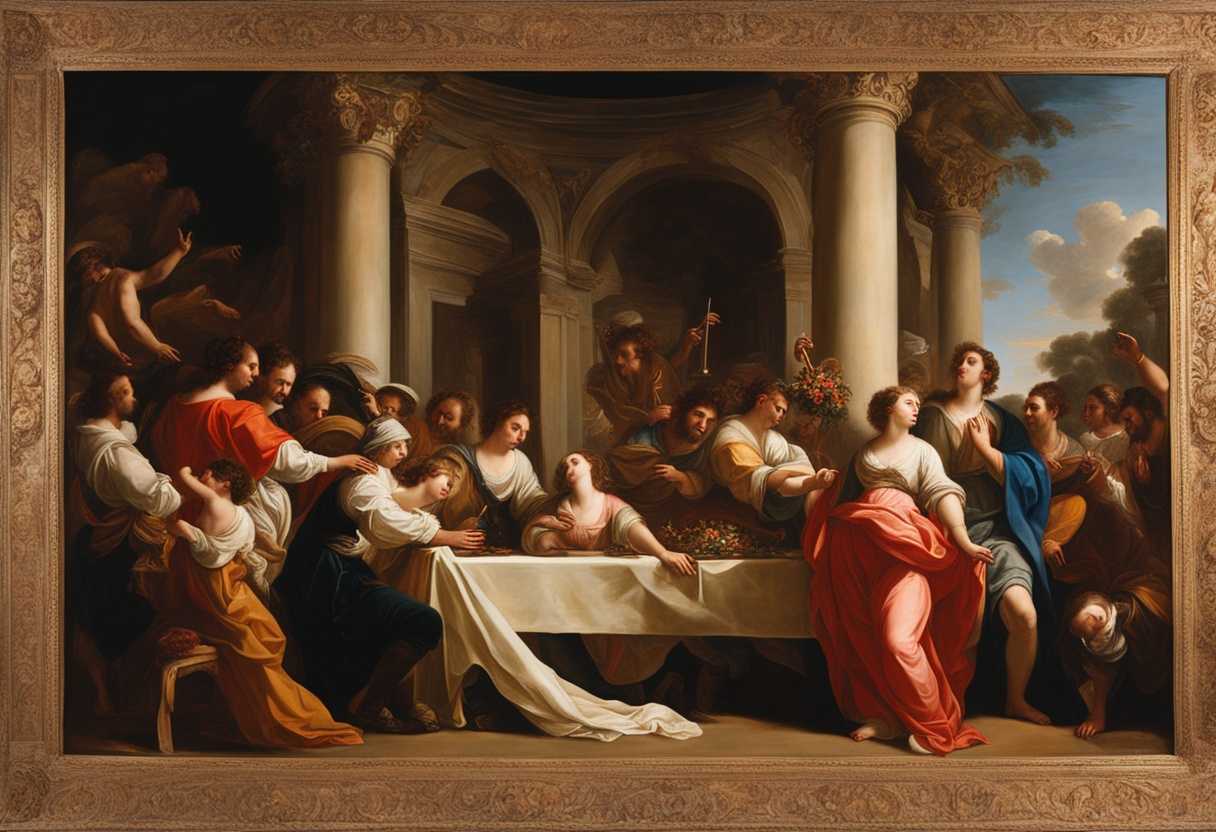
22 So Laban gathered together all the people of the place and made a feast.
23 But in the evening he took his daughter Leah and brought her to Jacob, and he went in to her.
24 Laban gave his female servant Bilhah to his daughter Rachel to be her servant.
25 And in the morning, behold, it was Leah! And Jacob said to Laban, “What is this you have done to me? Did I not serve with you for Rachel? Why then have you deceived me?”
26 Laban said, “It is not so done in our country, to give the younger before the firstborn.
27 Complete the week of this one, and we will give you the other also in return for the service which you shall serve with me for another seven years.”
28 Jacob did so, and completed her week. Then Laban gave him his daughter Rachel to be his wife.
29 Laban gave his female servant Bilhah to his daughter Rachel to be her servant.
30 So Jacob went in to Rachel also, and he loved Rachel more than Leah, and served Laban for another seven years.
Biblical Significance of Seven Years
The concept of seven years holds profound biblical significance, often representing a time of completion, fulfillment, and divine work. In Leviticus 25:8-10, the institution of the Year of Jubilee, which occurs every 49 years (7 times 7), encapsulates themes of restoration and freedom. It emphasizes God’s overarching plan for societal justice and renewal, involving the release of debts and the return of land to original owners. This underscores the cyclical nature of time in biblical theology, where seven is not merely a number but a divine rhythm reflecting God’s covenant faithfulness and the promise of new beginnings.
Additionally, seven years played a pivotal role in personal narratives, such as Jacob’s seven years of labor to win Rachel (Genesis 29:20), a period filled with anticipation, hard work, and emotional investment. This story illustrates the deep commitment and sacrifice inherent in love and relationships. Furthermore, the significance of seven extends beyond specific instances, symbolizing completeness in the biblical context, as seen in the creation narrative where God rests on the seventh day (Genesis 2:2-3). Collectively, these examples testify to the overarching theme of God’s divine order and the sacredness of certain time periods that lead to transformative outcomes, urging believers to recognize the spiritual significance of waiting and the expectancy that can accompany such seasons of life.
Continuing the exploration of the significance of seven years in the biblical narrative, we find its resonance in various prophetic and historical contexts that underscore the themes of divine timing and fulfillment. For instance, the period of seven years is evident in the prophetic symbolism found in the book of Daniel, where the prophecy of the Seventy Weeks (Daniel 9:24-27) is interpreted as a timeframe for the culmination of God’s redemptive work through the Anointed One. Here, seven years is part of a larger prophetic structure, illustrating the meticulous plan of God over history and His intent to bring about both judgment and restoration.
Moreover, the theme of seven years is echoed in the life of Israel, particularly in the wilderness experience following their exodus from Egypt. Though the Israelites wandered for forty years, the number seven emerges during periods of preparation and testing, such as the seven years of famine in Egypt during Joseph’s time (Genesis 41:30-30), which served as a divine warning and preparation for the subsequent years of abundance. This contextualization of seven years throughout Scripture encourages believers to perceive their own life events through the lens of God’s timing and purpose. Each seven-year segment can be seen as an opportunity for spiritual growth, renewal, and laying the groundwork for future blessings, emphasizing the belief that every waiting period carries meaning within God’s grand narrative of salvation and restoration.
The Concept of Completion and Wholeness
In biblical literature, the number seven often symbolizes completeness and perfection. This is evident in various contexts throughout the scriptures, where seven signifies the fulfillment of God’s plans and purposes. The idea of seven years together can represent a complete cycle of time, suggesting that a significant period has been reached where growth, development, and transformation have occurred. This completion can be seen as a divine orchestration, where the culmination of experiences over seven years leads to a new beginning or a fresh chapter in one’s spiritual journey.
The Importance of Covenant and Commitment
Seven years can also signify a period of covenant and commitment, particularly in relationships and agreements. In biblical narratives, the duration of seven years often marks a time of testing and proving loyalty, whether in marriage, service, or other forms of commitment. This timeframe can reflect the depth of a relationship, emphasizing the importance of steadfastness and faithfulness. The completion of seven years can symbolize the strengthening of bonds and the establishment of a deeper covenant, highlighting the biblical principle that enduring relationships require time, effort, and dedication.
The Cycle of Rest and Renewal
Another significant aspect of seven years in the Bible relates to the themes of rest and renewal. The concept of a sabbatical year, which occurs every seven years, emphasizes the importance of rest and rejuvenation for both the land and the people. This cycle encourages a rhythm of work and rest, allowing for reflection, restoration, and spiritual renewal. The idea of seven years together can thus represent a period of labor followed by a time of rest, underscoring the biblical principle that true growth and productivity are often accompanied by necessary pauses for reflection and renewal.
How to Embrace Spiritual Growth and Renewal in Faith
Embracing spiritual growth and renewal in your faith is a beautiful journey that requires intentionality and openness to God’s transformative work in your life. Start by carving out time for prayer and reflection, allowing yourself to be still in His presence; this is where you can hear His voice most clearly. Dive into Scripture daily, not just as a routine, but as a living conversation with God—let His words challenge and inspire you. Surround yourself with a community of believers who encourage and uplift you, sharing in both joys and struggles. Remember, spiritual growth isn’t always a straight path; it’s filled with seasons of doubt and clarity, joy and sorrow. Embrace each moment as an opportunity to deepen your relationship with Christ, trusting that He is continually shaping you into His image. As you take these steps, you’ll find that renewal often comes in the most unexpected ways, igniting a passion for your faith that spills over into every aspect of your life.
Bible References to Seven Years Significance:
Leviticus 25:1-7: 8 “You shall count seven weeks of years, seven times seven years, so that the time of the seven weeks of years shall give you forty-nine years.
2 “Speak to the people of Israel and say to them, When you come into the land that I give you, the land shall keep a Sabbath to the Lord.
3 For six years you shall sow your field, and for six years you shall prune your vineyard and gather in its fruits,
4 but in the seventh year there shall be a Sabbath of solemn rest for the land, a Sabbath to the Lord.
5 You shall not reap what grows of itself in your harvest, or gather the grapes of your undressed vine. It shall be a year of solemn rest for the land.
6 The Sabbath of the land shall provide food for you, for yourself and for your male and female slaves and for your hired worker and the sojourner who lives with you,
7 And for your livestock also, and for the wild animals in your land, all its yield shall be for food.
Deuteronomy 15:1-11: 1 “At the end of every seven years you shall grant a release.”
2 And this is the manner of the release: every creditor shall release what he has lent to his neighbor. He shall not exact it of his neighbor, his brother, because the Lord’s release has been proclaimed.
3 Of a foreigner you may exact it, but whatever of yours is with your brother your hand shall release.
4 But there will be no poor among you; for the Lord will bless you in the land that the Lord your God is giving you for an inheritance to possess—
5 if only you will strictly obey the voice of the Lord your God, being careful to do all this commandment that I command you today.
6 For the Lord your God will bless you, as he promised you, and you shall lend to many nations, but you shall not borrow, and you shall rule over many nations, but they shall not rule over you.
7 If among you, one of your brothers should become poor, in any of your towns within your land that the Lord your God is giving you, you shall not harden your heart or shut your hand against your poor brother,
8 but you shall open your hand to him and lend him sufficient for his need, whatever it may be.
9 Take care lest there be an unworthy thought in your heart and you say, ‘The seventh year, the year of release is near,’ and your eye look grudgingly on your poor brother, and you give him nothing, and he cry to the Lord against you, and you be guilty of sin.
10 You shall give to him freely, and your heart shall not be grudging when you give to him, because for this the Lord your God will bless you in all your work and in all that you undertake.
11 For there will never cease to be poor in the land. Therefore I command you, ‘You shall open wide your hand to your brother, to the needy and to the poor, in your land.’
Judges 6:1-10: 1 The people of Israel did what was evil in the sight of the Lord, and the Lord gave them into the hand of Midian seven years.
2 and the hand of Midian overpowered Israel, and because of Midian the people of Israel made for themselves the dens that are in the mountains and the caves and the strongholds.
3 For whenever the Israelites planted crops, the Midianites and the Amalekites and the people of the East would come up against them.
4 They would encamp against them and devour the produce of the land, as far as Gaza, and leave no sustenance in Israel and no sheep or ox or donkey.
5 For they would come up with their livestock and their tents; they would come like locusts in number—both they and their camels could not be counted—so that they laid waste the land as they came in.
6 And Israel was brought very low because of Midian. And the people of Israel cried out for help to the Lord.
7 When the people of Israel cried out to the Lord on account of the Midianites,
8 that the Lord sent a prophet to the people of Israel. And he said to them, “Thus says the Lord, the God of Israel: I led you up from Egypt and brought you out of the house of bondage.
9 And I delivered you from the hand of the Egyptians and from the hand of all who oppressed you, and drove them out before you and gave you their land.
10 And I said to you, ‘I am the Lord your God; you shall not fear the gods of the Amorites in whose land you dwell.’ But you have not obeyed my voice.”
2 Kings 8:1-6: 1 Now Elisha had said to the woman whose son he had restored to life, “Arise, and depart with your household, and sojourn wherever you can, for the Lord has called for a famine, and it will come upon the land for seven years.”
2 And the woman arose and did as the man of God had said. She went with her household and sojourned in the land of the Philistines seven years.
3 And at the end of the seven years, when the woman returned from the land of the Philistines, she went to appeal to the king for her house and her land.
4 Now the king was talking with Gehazi, the servant of the man of God, saying, “Tell me all the great things that Elisha has done.”
5 And while he was telling the king how Elisha had restored the dead to life, behold, the woman whose son he had restored to life appealed to the king for her house and her land. And Gehazi said, “My lord, O king, this is the woman, and this is her son whom Elisha restored to life.”
6 And when the king asked the woman, she told him. So the king appointed an official for her, saying, “Restore all that was hers, together with all the produce of the fields from the day that she left the land until now.”
2 Chronicles 36:20-21: 20 He took into exile in Babylon those who had escaped from the sword, and they became servants to him and to his sons until the establishment of the kingdom of Persia,
21 to fulfill the word of the Lord by the mouth of Jeremiah, until the land had enjoyed its Sabbaths. All the days that it lay desolate it kept Sabbath, to fulfill seventy years.
Jeremiah 34:8-17: 8 The word that came to Jeremiah from the Lord, after King Zedekiah had made a covenant with all the people in Jerusalem to make a proclamation of liberty to them.
9 that everyone should set free his Hebrew slaves, male and female, so that no one should enslave a Jew, his brother.
10 They had set free their male servants and female servants, according to the word of the Lord, and had made a covenant in their presence in the house of the Lord, to set them free.
11 But afterward they turned around and took back the male and female slaves they had set free, and brought them into subjection as slaves.
12 Therefore the word of the Lord came to Jeremiah from the Lord:
13 “Thus says the Lord, the God of Israel: I myself made a covenant with your fathers when I brought them out of the land of Egypt, out of the house of bondage, saying,”
14 ‘At the end of seven years each of you must set free the fellow Hebrew who has been sold to you and has served you six years; you must set him free from your service.’ But your fathers did not listen to me or incline their ears to me.
15 You recently repented and did what was right in my eyes by proclaiming liberty, each to his neighbor, and you made a covenant before me in the house that is called by my name,
16 But you recently turned and did what was right in my eyes by proclaiming liberty, each to his neighbor, and you made a covenant before me in the house that is called by my name,
17 “Therefore, thus says the Lord: You have not obeyed me by proclaiming liberty, every one to his brother and to his neighbor; behold, I proclaim to you liberty to the sword, to pestilence, and to famine, declares the Lord. I will make you a horror to all the kingdoms of the earth.”
Daniel 4:23-27: 23 And because the king saw a watcher, a holy one, coming down from heaven and saying, ‘Chop down the tree and destroy it, but leave the stump of its roots in the earth, bound with a band of iron and bronze, in the tender grass of the field, and let him be wet with the dew of heaven, and let his portion be with the beasts of the field, till seven periods of time pass over him,’
24 this is the interpretation, O king: It is a decree of the Most High, which has come upon my lord the king,
25 that you shall be driven from among men, and your dwelling shall be with the beasts of the field. And you shall be made to eat grass like an ox, and seven periods of time shall pass over you, until you know that the Most High rules the kingdom of men and gives it to whom he will.
26 And as it was commanded to leave the stump of the roots of the tree, your kingdom shall be confirmed for you from the time that you know that Heaven rules.
27 Therefore, O king, let my counsel be acceptable to you: break off your sins by practicing righteousness, and your iniquities by showing mercy to the oppressed, that there may perhaps be a lengthening of your prosperity.
Daniel 9:24-27: 24 “Seventy weeks are decreed about your people and your holy city, to finish the transgression, to put an end to sin, and to atone for iniquity, to bring in everlasting righteousness, to seal both vision and prophet, and to anoint a most holy place.”
25 Know therefore and understand that from the going out of the word to restore and build Jerusalem to the coming of an anointed one, a prince, there shall be seven weeks.
26 And after the sixty-two weeks, an anointed one shall be cut off and shall have nothing. And the people of the prince who is to come shall destroy the city and the sanctuary. Its end shall come with a flood, and to the end there shall be war. Desolations are decreed.
27 And he shall make a strong covenant with many for one week, and for half of the week he shall put an end to sacrifice and offering. And on the wing of abominations shall come one who makes desolate, until the decreed end is poured out on the desolator.
Revelation 11:1-3: 1 Then I was given a measuring rod like a staff, and I was told, “Rise and measure the temple of God and the altar and those who worship there,
2 but do not measure the court outside the temple; leave that out, for it is given over to the nations, and they will trample the holy city for forty-two months.
3 And I will grant authority to my two witnesses, and they will prophesy for 1,260 days, clothed in sackcloth.

Rev. François Dupont is a dedicated church minister with a wealth of experience in serving spiritual communities. With a calm and serene demeanor, he has been devoted to sharing the message of love, compassion, and tolerance for over two decades. Through his thoughtful sermons, compassionate counseling, and unwavering support, Rev. Dupont has touched the lives of countless individuals, allowing them to find solace and strength during difficult times. His serene presence and deep understanding of the human condition make him a trusted guide for those seeking spiritual nourishment and guidance.