
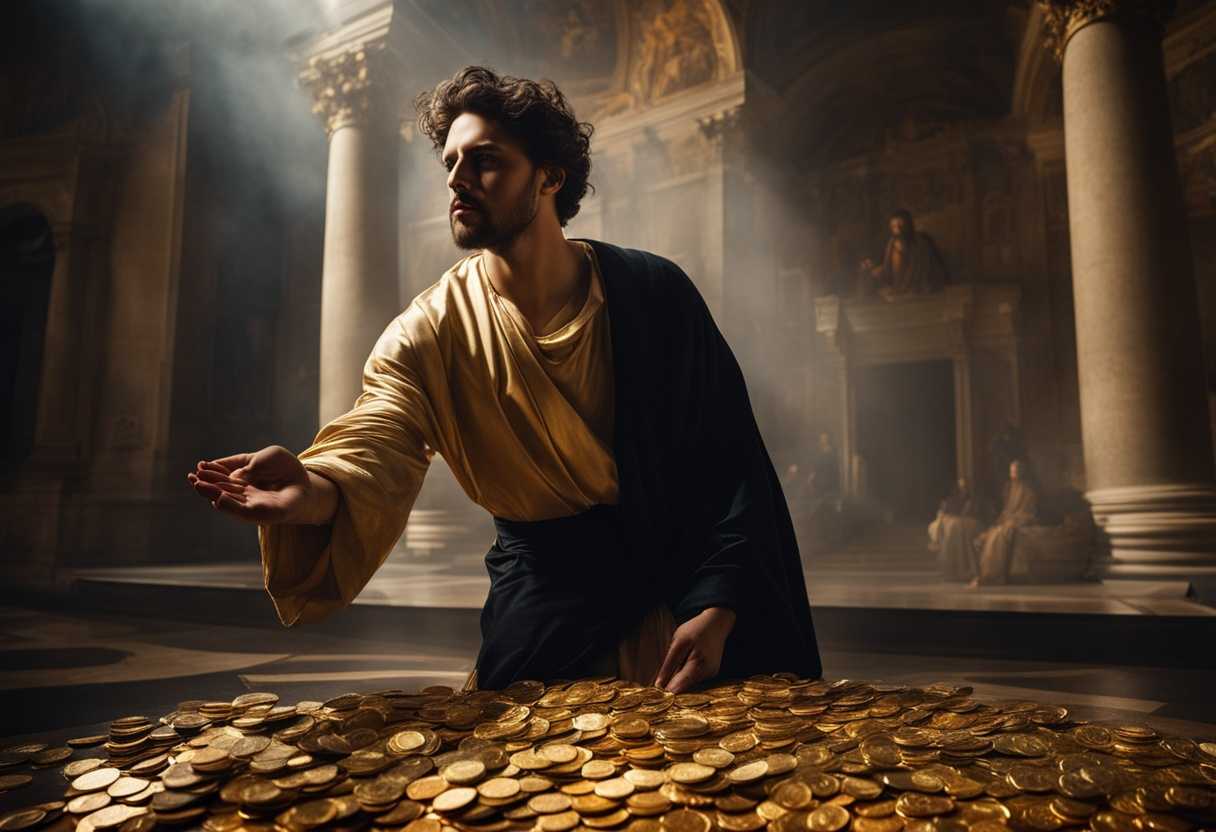
The rich young ruler, found in Matthew 19:16-22, refers to a wealthy young man who approached Jesus seeking eternal life but ultimately rejected the call to sell his possessions and follow Him. This story illustrates the challenges of prioritizing wealth and possessions over spiritual commitment and discipleship.
Scripture
16 And behold, a man came up to him, saying, “Teacher, what good deed must I do to have eternal life?”
17 And he said to him, “Why do you ask me about what is good? There is only one who is good. If you would enter life, keep the commandments.”
18 “You shall not murder, You shall not commit adultery, You shall not steal, You shall not bear false witness, honor your father and mother, and, You shall love your neighbor as yourself.”
19 Honor your father and mother, and, You shall love your neighbor as yourself.
20 The young man said to him, “All these I have kept. What do I still lack?”
21 Jesus said to him, “If you would be perfect, go, sell what you possess and give to the poor, and you will have treasure in heaven; and come, follow me.”
22 When the young man heard this he went away sorrowful, for he had great possessions.
23 And Jesus said to his disciples, “Truly, I say to you, only with difficulty will a rich person enter the kingdom of heaven.
24 Again I tell you, it is easier for a camel to go through the eye of a needle than for a rich person to enter the kingdom of God.
25 When the disciples heard this, they were greatly astonished, saying, “Who then can be saved?”
26 But Jesus looked at them and said, “With man this is impossible, but with God all things are possible.”
27 Then Peter said in reply, “See, we have left everything and followed you. What then will we have?”
28 Jesus said to them, “Truly, I say to you, in the new world, when the Son of Man will sit on his glorious throne, you who have followed me will also sit on twelve thrones, judging the twelve tribes of Israel.”
29 And everyone who has left houses or brothers or sisters or father or mother or children or lands, for my name’s sake, will receive a hundredfold and will inherit eternal life.
30 But many who are first will be last, and the last first.
Meaning of the Rich Young Ruler in the Bible
The story of the rich young ruler serves as a profound commentary on the relationship between wealth, identity, and spiritual commitment. When the young man in Matthew 19:16-22 approached Jesus, he was earnest and sincere, longing for eternal life. However, Jesus recognized that his attachment to his wealth posed a significant barrier to true discipleship. In verse 22, when the young man hears Jesus’ directive to sell his possessions and follow Him, he walks away “sorrowful” because he had great wealth. This moment paints a vivid picture of the tension between material abundance and spiritual urgency, highlighting how wealth can subtly ensnare one’s heart, diverting attention from the deeper, transformative relationship with God that Jesus offers.
In the broader context of biblical teaching, this narrative echoes the sentiments found in other scriptures that warn against the pitfalls of riches. For instance, 1 Timothy 6:10 states, “For the love of money is a root of all kinds of evil,” emphasizing that it is not wealth itself that is inherently problematic, but the love and prioritization of it above spiritual matters. Jesus concludes this interaction by remarking on the difficulty for a rich person to enter the Kingdom of Heaven (Matthew 19:24), underscoring the idea that reliance on material wealth can lead to a false sense of security and self-sufficiency. In essence, the rich young ruler’s story invites believers to reflect on their own attachments and comforts, urging a reassessment of priorities in pursuit of a life that is wholly devoted to following Christ.
The narrative of the rich young ruler juxtaposes material success with spiritual fulfillment, serving as an invitation to reflect upon the deeper implications of one’s priorities. This encounter illustrates a common theme throughout scripture: the idea that true wealth is not measured in material possessions, but in spiritual richness and relationship with God. In numerous parables, Jesus emphasizes the value of the heart over external conditions, suggesting that an abundance of possessions can often lead to spiritual poverty. The young ruler’s quest for eternal life aligns with a larger biblical motif—many individuals worldly success does not equate to divine favor or assurance of eternal life.
In addition, the rich young ruler’s struggle can be seen as a microcosm of a wider spiritual crisis faced by those who possess wealth. The narrative encourages believers to examine what holds dominion over their lives. This theme recurs in admonitions to prioritize the Kingdom of God above all else, as seen elsewhere in biblical literature. The call to sacrificial discipleship often runs counter to societal norms that equate worth with financial status or material security. By stepping away from comfort and pride in wealth, believers are invited into a deeper trust in God’s provision and a commitment to a lifestyle characterized by generosity, humility, and active faith. In this way, the story serves as a powerful reminder that the path to spiritual enlightenment may require letting go of earthly attachments that hinder one’s journey toward eternal life.
The Challenge of Materialism
The story of the rich young ruler serves as a profound commentary on the dangers of materialism and the attachment to wealth. It illustrates how the pursuit of riches can create barriers to spiritual growth and fulfillment. The young ruler, despite his adherence to moral laws, finds himself unable to part with his possessions, highlighting the struggle many face in prioritizing spiritual values over material wealth. This narrative encourages reflection on what it truly means to live a life of faith and the sacrifices that may be required to follow a spiritual path.
The Call to Discipleship
Another significant meaning of the rich young ruler’s story is the call to discipleship and the radical nature of following Jesus. The ruler’s encounter with Jesus emphasizes that true discipleship often requires a willingness to surrender personal ambitions, comforts, and securities. This story challenges believers to consider what they are willing to give up in order to fully embrace their faith and serve others. It underscores the idea that discipleship is not merely about following rules but involves a transformative commitment that can lead to a deeper relationship with God.
The Nature of Eternal Life
The interaction between Jesus and the rich young ruler also sheds light on the nature of eternal life and what it means to inherit the Kingdom of God. The ruler’s question about eternal life reveals a common human desire for assurance of salvation and fulfillment. Jesus’ response indicates that eternal life is not just a future promise but a present reality that involves living in accordance with God’s will. This narrative invites readers to explore the relationship between faith, actions, and the experience of eternal life, emphasizing that true fulfillment comes from aligning one’s life with divine principles rather than worldly success.
How to Align Wealth with Discipleship for Eternal Life
As you seek to align your wealth with your journey of discipleship, remember that true richness in life is not measured by material possessions but by the love and service we extend to others. Jesus teaches us in Matthew 6:19-21 that where our treasure is, there our hearts will be also. This means that our financial resources can be a powerful tool for advancing God’s kingdom when used wisely and generously. Consider setting aside a portion of your income for charitable giving, supporting your local church, or helping those in need. Reflect on how your spending habits reflect your values and priorities—are they in line with the teachings of Christ? By intentionally using your wealth to uplift others and spread the Gospel, you not only cultivate a heart of gratitude and humility but also invest in treasures that will last for eternity. Remember, it’s not about how much you have, but how you choose to use what you’ve been given that truly matters in your walk with Christ.
Bible References to the Rich Young Ruler:
Mark 10:17-31: 17 And as he was setting out on his journey, a man ran up and knelt before him and asked him, “Good Teacher, what must I do to inherit eternal life?”
18 And Jesus said to him, “Why do you call me good? No one is good except God alone.
19 You know the commandments: ‘Do not murder, Do not commit adultery, Do not steal, Do not bear false witness, Do not defraud, Honor your father and mother.’”
20 And he said to him, “Teacher, all these I have kept from my youth.”
21 And Jesus, looking at him, loved him, and said to him, “You lack one thing: go, sell all that you have and give to the poor, and you will have treasure in heaven; and come, follow me.”
22 Disheartened by the saying, he went away sorrowful, for he had great possessions.
23 And Jesus looked around and said to his disciples, “How difficult it will be for those who have wealth to enter the kingdom of God!”
24 And the disciples were amazed at his words. But Jesus said to them again, “Children, how difficult it is to enter the kingdom of God!
25 It is easier for a camel to go through the eye of a needle than for a rich person to enter the kingdom of God.
26 And they were exceedingly astonished, and said to him, “Then who can be saved?”
27 Jesus looked at them and said, “With man it is impossible, but not with God. For all things are possible with God.”
28 Peter began to say to him, “See, we have left everything and followed you.”
29 Jesus said, “Truly, I say to you, there is no one who has left house or brothers or sisters or mother or father or children or lands, for my sake and for the gospel,”
30 who will not receive a hundredfold now in this time, houses and brothers and sisters and mothers and children and lands, with persecutions, and in the age to come eternal life.
31 But many who are first will be last, and the last first.
Luke 18:18-30: 18 A ruler asked him, “Good Teacher, what must I do to inherit eternal life?”
19 And Jesus said to him, “Why do you call me good? No one is good except God alone.
20 You know the commandments: ‘Do not commit adultery, Do not murder, Do not steal, Do not bear false witness, Honor your father and mother.’”
21 And he said, “All these I have kept from my youth.”
22 When Jesus heard this, he said to him, “One thing you still lack. Sell all that you have and distribute to the poor, and you will have treasure in heaven; and come, follow me.”
23 But when he heard these things, he became very sad, for he was extremely rich.
24 Jesus, seeing that he had become sad, said, “How difficult it is for those who have wealth to enter the kingdom of God!
25 For it is easier for a camel to go through the eye of a needle than for a rich person to enter the kingdom of God.”
26 Those who heard it said, “Then who can be saved?”
27 But he said, “What is impossible with man is possible with God.”
28 And Peter said, “See, we have left our homes and followed you.”
29 And he said to them, “Truly, I say to you, there is no one who has left house or wife or brothers or parents or children, for the sake of the kingdom of God,
30 who will not receive many times more in this time, and in the age to come eternal life.”

Reverend Michael Johnson is an experienced Church Minister with a profound expertise in spirituality and guidance. With a serene presence and a compassionate heart, he has faithfully served his congregation for over 20 years, leading them on a spiritual journey towards inner peace and enlightenment. Reverend Johnson’s extensive knowledge of religious philosophies and profound understanding of human nature have made him a trusted confidant and mentor to many, as he seamlessly weaves his profound wisdom into life teachings. Reverend Johnson’s calming demeanor and empathetic nature continue to uplift and heal souls, nurturing a sense of unity and tranquility within his community.