
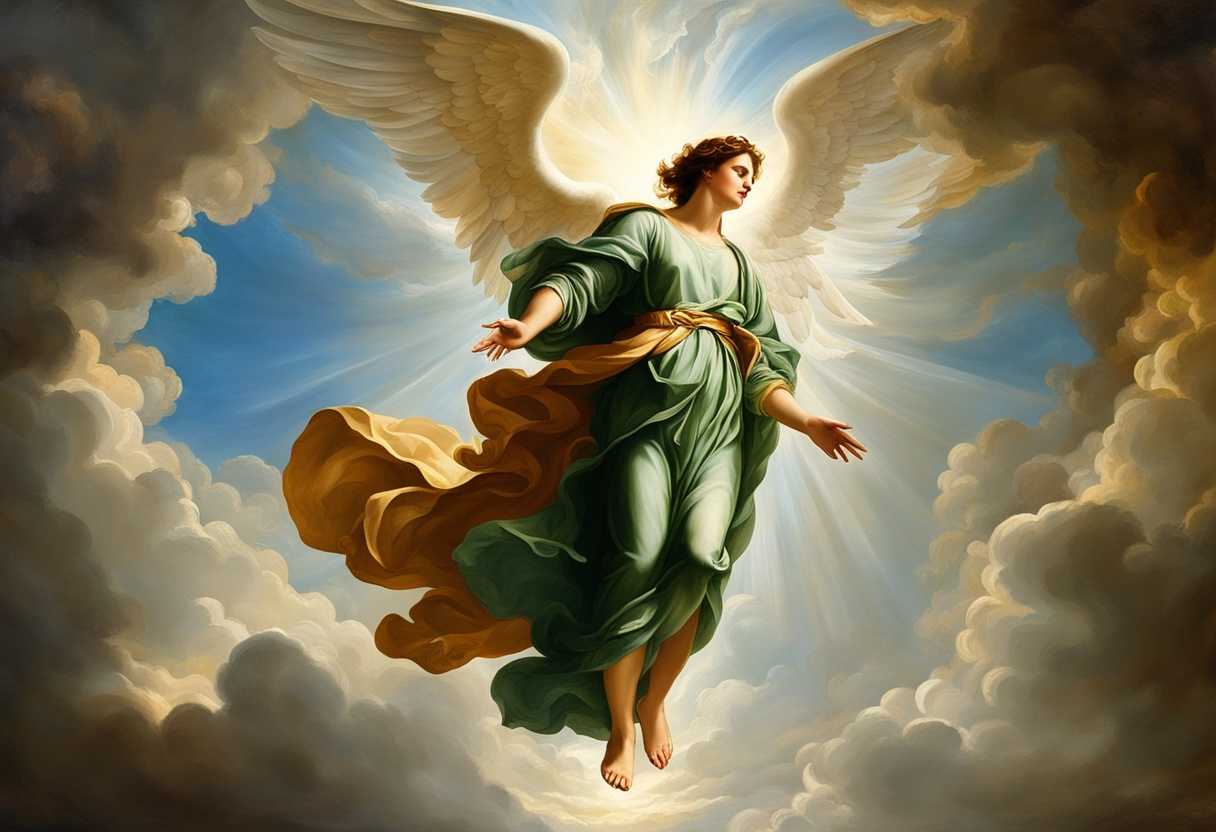
In the Bible, the name Rafael (or Raphael) means “God has healed” or “God heals.” He is one of the archangels mentioned in the Book of Tobit, where he plays a role in guiding and healing.
Scripture
16 And now deal with me as you will.”
17 And Raphael was sent to heal the two of them: to scale away the white films of Tobit’s eyes; to give Sarah the daughter of Raguel in marriage to Tobias the son of Tobit, and to bind Asmodeus the evil demon, because Tobias was entitled to possess her.
Tobit 3:16-17
Biblical Meaning of Rafael
The name Rafael, derived from the Hebrew “Rapha’el,” encapsulates the idea of divine healing and restoration, primarily illustrated in the Book of Tobit, which is considered part of the deuterocanonical texts by some Christian traditions. In Tobit 12:15, Raphael identifies himself as “one of the seven who stand ready and enter before the glory of the Lord.” This highlights both his celestial status and his role as a mediator between God and humanity. His involvement in the story—healing Tobit’s blindness and assisting Tobias in finding a wife—epitomizes the function of divine intervention in human life, emphasizing that God is actively engaged in the healing process of both physical ailments and emotional struggles.
Moreover, the broader biblical theme of healing is reinforced throughout scripture, particularly in the New Testament, where Jesus embodies the ultimate manifestation of God’s healing power. For example, in Matthew 9:35, it is noted that Jesus went through “all the towns and villages, teaching in their synagogues, proclaiming the good news of the kingdom and healing every disease and sickness.” This continuity between Raphael’s healing role and the ministry of Jesus suggests that God’s commitment to healing transcends time and is woven into the very fabric of the biblical narrative. Thus, the name Rafael embodies not only physical healing but also spiritual restoration, urging believers to trust in God’s merciful nature—an invitation to seek wholeness in every aspect of life.
In addition to the explicit mentions of Raphael’s healing abilities, his role can also be likened to those of other angelic figures throughout scripture. For instance, Michael, another archangel, is frequently cited as a protector and warrior in the face of evil. Their complementary roles illustrate a multifaceted divine strategy to maintain order and righteousness in the spiritual realm. Raphael’s healing focus contrasts yet complements Michael’s protective stance, indicating that healing and protection are vital components of God’s overarching plan for humanity. In a similar vein, the presence of angels often signifies moments of significant divine intervention, reminding believers of God’s ongoing involvement in the world around them.
Furthermore, the concept of healing within biblical texts extends beyond physical ailments to encompass emotional and spiritual restoration. The Old Testament is filled with examples of God’s desire to mend brokenness, as seen in the Psalms where cries for healing and restoration are fervently expressed. The prophets, too, spoke of a time when God would restore His people, emphasizing that true healing comes from a reconciled relationship with Him. This theme is carried into the New Testament, where Paul, in his letters, often addresses the need for inner healing and the transformative power of faith in Christ. By invoking the name Rafael, believers are reminded of the holistic nature of divine healing that encompasses body, mind, and spirit, affirming that God’s grace can restore every facet of the human experience.
Divine Healing and Guidance
The name Rafael, derived from the Hebrew “Rapha,” means “God has healed.” In the biblical context, this signifies the role of divine intervention in the healing process, both physically and spiritually. Rafael embodies the idea that God is a source of restoration and guidance, emphasizing the importance of faith in seeking healing and support during times of distress.
Messenger of God
Rafael is often recognized as an archangel, serving as a messenger of God. This role highlights the broader theme of divine communication and the importance of receiving guidance from the heavenly realm. The presence of Rafael in biblical narratives underscores the belief that God actively engages with humanity through messengers, providing wisdom and direction in life’s journey.
Protection and Support
In addition to healing and guidance, Rafael symbolizes protection and support. The archangel is often associated with safeguarding individuals on their journeys, both literal and metaphorical. This aspect of Rafael’s meaning reflects the broader biblical theme of God’s watchful care over His people, reassuring believers that they are not alone in their struggles and that divine assistance is always available.
How to Embrace Faith for Healing and Restoration
Embracing faith for healing and restoration is a deeply personal journey that invites us to lean into God’s promises, even when life feels overwhelming. Start by cultivating a daily practice of prayer and meditation, allowing yourself to be vulnerable before God, sharing your fears and hopes. Remember, healing often begins with surrender—acknowledging that we are not in control and trusting in God’s perfect timing. Surround yourself with a supportive community, whether through a church group or friends who uplift your spirit, as shared faith can be a powerful catalyst for restoration. Dive into Scripture, particularly passages that speak of God’s love and healing, such as Psalm 147:3, which reminds us that He heals the brokenhearted. Finally, be open to the ways God may work in your life, whether through miraculous change or gradual growth, and hold onto the belief that every step taken in faith brings you closer to wholeness.
Bible References to the Meaning of Rafael:
Tobit 5:4-12: 4 So he went out to look for a man to go with him to Media, someone who was acquainted with the way.
5 So he went out to look for a man to go with him to Media, someone who was acquainted with the way.
6 So he went out and found a young man standing among the brothers, and he asked him where he was from.
7 But Tobias said, “I will neither eat nor drink here until you have dealt with what needs to be done.”
8 So he said to him, “Go and bring him.” So he went and called him, and he said, “Young man, my father is calling for you.”
9 Then Tobias went out to look for a man to go with him to Media, someone who was acquainted with the way.
10 Then Tobias said to him, “Wait for me, young man, till I go in and tell my father, for I do need you to travel with me, and I will pay you.”
11 So he went out and found a young man who was one of our relatives, and he brought him to me. And he made a written agreement with him, that he would receive the silver when I die.
12 So he called him and asked, “Are you my son Tobit?” And he answered, “I am.”
Tobit 6:1-8: 1 As they proceeded on their way they came to the river Tigris, and they camped there.
2 And when the young man went down to wash, a fish leaped out of the river and would have swallowed him.
3 And the angel answered him, “Three days’ journey from here, you will find a man named Raguel, one of our relatives. He has a daughter named Sarah.
4 So the young man did as the angel commanded him and when they had roasted the fish, they ate it. Then they both continued on their way until they came near to Ecbatana.
5 So the young man did as the angel commanded him; when they had roasted the fish, they ate it. Then they both continued on their way until they came near to Ecbatana.
6 And the young man said to the angel, “Brother Azariah, of what use is the heart and the liver and the gallbladder of the fish?”
7 And he said to him, “Take hold of the fish.” So he took hold of the fish, and drew it to the land.
8 And the angel answered and said to him, “I will go with you, and I am the one who knows the way.”
Tobit 12:6-15: 6 Then they were both troubled, and fell upon their faces: for they feared.
7 It is good to keep close the secret of a king, but it is glorious to reveal the works of God.
8 Prayer is good when accompanied by fasting, almsgiving, and righteousness. A little with righteousness is better than much with wrongdoing. It is better to give alms than to treasure up gold.
9 For almsgiving delivers from death and keeps you from going into the darkness.
10 For almsgiving delivers from death and keeps you from going into the darkness.
11 And they were both troubled; and they fell upon their faces: for they feared.
12 “So now when you and Sarah prayed, it was I who brought and read the record of your prayer before the glory of the Lord, and likewise whenever you buried the dead.”
13 And when you prayed, it was I who brought the remembrance of your prayer before the Holy One; and when you buried the dead, I was with you.
14 And now, God sends me to heal you and your daughter-in-law Sarah.
15 I am Raphael, one of the seven holy angels who present the prayers of the saints and enter into the presence of the glory of the Holy One.”

Reverend Ogunlade is a seasoned Church Minister with over three decades of experience in guiding and nurturing congregations. With profound wisdom and a serene approach, Reverend Ogunlade has carried out various pastoral duties, including delivering uplifting sermons, conducting religious ceremonies, and offering sage counsel to individuals seeking spiritual guidance. Their commitment to fostering harmony and righteousness within their community is exemplified through their compassionate nature, making them a beloved and trusted figure among the congregation.