
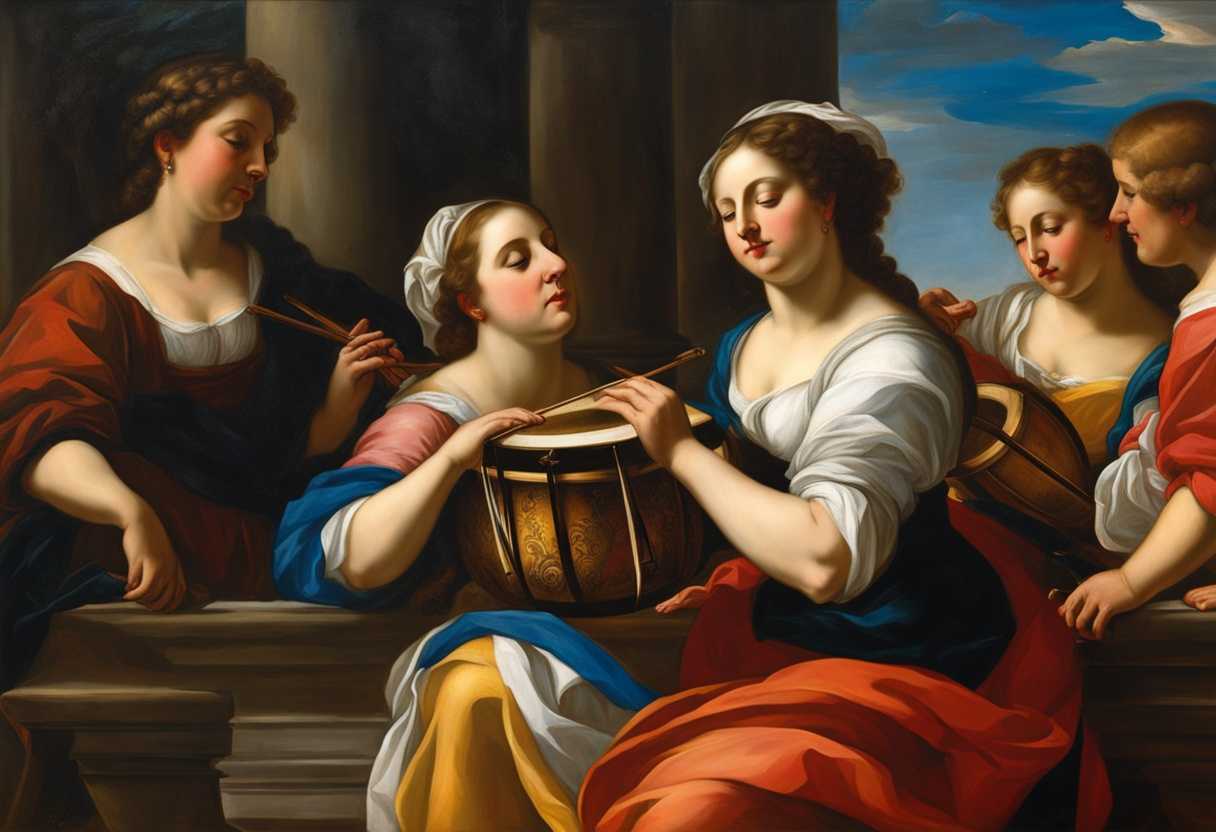
In the Bible, a timbrel is a type of percussion instrument similar to a tambourine, often associated with celebration and worship. It is mentioned in contexts of rejoicing and praising God, as seen in Exodus 15:20, where Miriam uses it to lead the women in song after the Israelites’ escape from Egypt.
Scripture
20 Then Miriam the prophetess, the sister of Aaron, took a tambourine in her hand, and all the women went out after her with tambourines and dancing.
21 And Miriam sang to them: “Sing to the Lord, for he has triumphed gloriously; the horse and his rider he has thrown into the sea.”
Meaning of Timbrel in the Bible
The timbrel, a percussion instrument akin to a tambourine, carries significant connotations of joy, celebration, and worship within the biblical context. It symbolizes the exuberance of worship and the communal expression of gratitude towards God. In Exodus 15:20-21, Miriam takes up the timbrel alongside other women, leading them in joyful song after God’s deliverance through the Red Sea. This act of celebration signifies not only personal gratitude but also collective affirmation of faith, as sound and rhythm are powerful conduits of spiritual expression. The timbrel thus serves as an instrument of communal unity in worship and a reminder of God’s mighty acts of salvation.
Moreover, the timbrel is associated with the theme of divine deliverance and the joy that follows liberation. Psalm 149:3 encourages the faithful to “praise His name with dancing,” highlighting the importance of vibrant worship practices that engage the body and spirit. The timbrel becomes a metaphor for the joyous response of God’s people to His goodness; it epitomizes the celebration that arises from deliverance and victory. In the broader context of biblical worship, the timbrel underscores the necessity of expressing joy and gratitude through various forms, affirming the belief that worship is not solely an internal act but is meant to be voiced and celebrated communally, resonating through song, dance, and the lively sounds of instruments.
In many other passages of Scripture, the timbrel serves as a symbol of worship and festivity, reinforcing the connection between music and celebration in the life of God’s people. For example, in the context of festivals and gatherings, the timbrel often accompanied significant events such as harvest celebrations and religious feasts. These occasions called for expressions of joy that were marked by instrumental music, singing, and dancing, all of which played a crucial role in fostering community spirit and devotion to God. Through these musical forms, the timbrel not only enhances communal worship but also acts as a reminder of God’s continuous providence and presence among His people, encouraging them to reflect His attributes through celebratory practices.
Additionally, the timbrel serves to remind believers of the deeper spiritual truths associated with worship and praise. It embodies the believer’s response to God’s favor and blessings, emphasizing how joy can act as a powerful tool for evoking gratitude and reinforcing faith. While the timbrel is often linked to spontaneous expressions of joy, it also signifies a disciplined approach to worship that invites participants to engage fully in honoring God. As it reverberates through the air, the sound of the timbrel transcends mere entertainment; it becomes a physical manifestation of the heart’s exuberance towards God, inviting a collective exaltation that reflects the joy of salvation and the hope of eternal communion with the Creator. This notion of worship, alive with sound and movement, reminds God’s people that their faith is dynamic and can be expressed in various exuberant forms.
Symbol of Joy and Celebration
The timbrel, often associated with joyous occasions, serves as a symbol of celebration in biblical contexts. It represents the exuberance of worship and the communal joy experienced during festivities. The use of the timbrel in celebrations highlights the importance of music and dance in expressing gratitude and reverence to God, reflecting a deep connection between the physical act of celebration and spiritual devotion.
Instrument of Praise
In the biblical narrative, the timbrel is frequently linked to acts of praise and worship. It is an instrument that enhances the worship experience, allowing individuals and communities to express their adoration for God. The sound of the timbrel can be seen as a call to worship, inviting people to join together in glorifying the divine. This underscores the role of music in spiritual life, emphasizing that praise can take many forms, including rhythmic and lively expressions.
Representation of Women’s Role in Worship
The timbrel is also significant in highlighting the role of women in biblical worship practices. Often associated with female figures in the scriptures, the timbrel symbolizes the active participation of women in communal worship and celebration. This representation serves to acknowledge the contributions of women in spiritual life, illustrating that their voices and expressions of faith are vital to the worship experience.
How to Enhance Your Faith Through Music and Worship
Enhancing your faith through music and worship can be a deeply enriching experience that draws you closer to God and strengthens your spiritual journey. Start by incorporating worship music into your daily routine—whether it’s listening to uplifting Christian songs during your commute or singing along in your living room. This not only sets a positive tone for your day but also allows you to meditate on the lyrics, which often reflect biblical truths and encourage a deeper understanding of God’s love. Additionally, participating in communal worship, whether at church or in small groups, fosters a sense of belonging and shared faith, reminding you that you are part of a larger body of believers. Don’t hesitate to explore different genres and styles of worship music; each can speak to your heart in unique ways. Ultimately, let the melodies and harmonies guide your prayers and reflections, creating a beautiful dialogue with God that enhances your faith and fills your spirit with joy.
Bible References to the Timbrel Meaning:
Judges 11:34-35: 34 Then Jephthah came to his home at Mizpah. And behold, his daughter came out to meet him with tambourines and with dances. She was his only child; besides her he had neither son nor daughter.
35 And as soon as he saw her, he tore his clothes and said, “Alas, my daughter! You have brought me very low, and you have become the cause of great trouble to me. For I have opened my mouth to the Lord, and I cannot take back my vow.”
1 Samuel 18:6-7: 6 As they were coming home, when David returned from striking down the Philistine, the women came out of all the cities of Israel, singing and dancing, to meet King Saul, with tambourines, with songs of joy, and with musical instruments.
7 And the women sang to one another as they celebrated, “Saul has struck down his thousands, and David his ten thousands.”
2 Samuel 6:5-6: 5 And David and all the house of Israel were making merry before the Lord, with songs and lyres and harps and tambourines and castanets and cymbals.
6 And when they came to the threshing floor of Nacon, Uzzah put out his hand to the ark of God and took hold of it, for the oxen stumbled.
Psalm 81:1-3: 1 Sing aloud to God our strength; shout for joy to the God of Jacob!
2 Raise a song; raise a shout,
at the new moon, at the full moon, on our feast day.
3 Blow the trumpet at the new moon, at the full moon, on our feast day.
Psalm 149:1-3: 1 Praise the Lord! Sing to the Lord a new song, his praise in the assembly of the godly!
2 Let Israel be glad in his Maker; let the children of Zion rejoice in their King!
3 Let them praise his name with dancing, making melody to him with tambourine and lyre!
Psalm 150:3-5: 3 Praise him with trumpet sound; praise him with lute and harp!
4 Praise him with the sound of the trumpet; praise him with the lute and harp!
5 Praise him with sounding cymbals; praise him with loud clashing cymbals!
Isaiah 5:11-12: 11 Woe to those who rise early in the morning, that they may run after strong drink, who tarry late into the evening as wine inflames them!
12 They have lyre and harp, tambourine and flute and wine at their feasts, but they do not regard the deeds of the Lord, or see the work of his hands.
Jeremiah 31:4-5: 4 Again I will build you, and you shall be built, O virgin Israel!
5 Again you shall plant vineyards on the mountains of Samaria; the planters shall plant and shall enjoy the fruit.

Reverend Ogunlade is a seasoned Church Minister with over three decades of experience in guiding and nurturing congregations. With profound wisdom and a serene approach, Reverend Ogunlade has carried out various pastoral duties, including delivering uplifting sermons, conducting religious ceremonies, and offering sage counsel to individuals seeking spiritual guidance. Their commitment to fostering harmony and righteousness within their community is exemplified through their compassionate nature, making them a beloved and trusted figure among the congregation.