
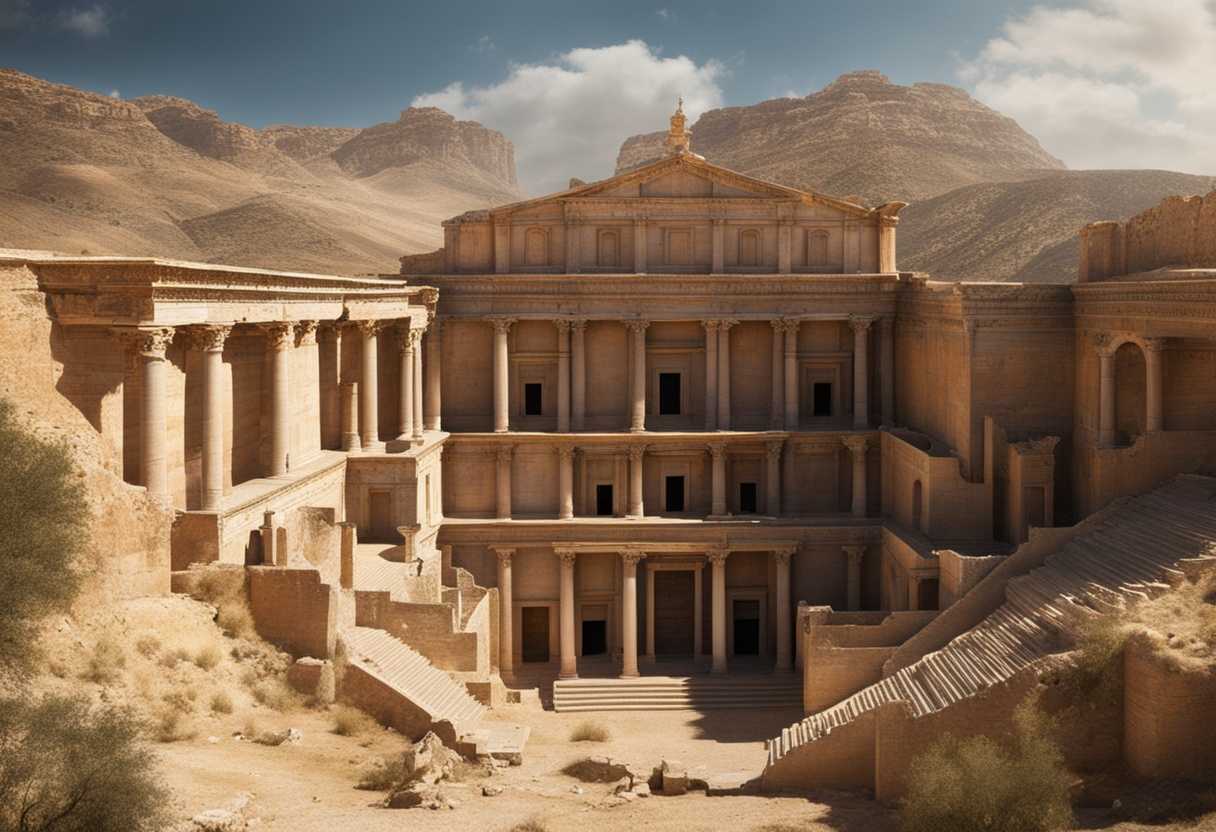
Rabbah is a biblical city often associated with the capital of the Ammonites, mentioned in the Old Testament, particularly in 2 Samuel 12:26-29. It is known for its connection to King David’s military campaigns and later referred to as Philadelphia during the Hellenistic period.
Scripture
11 (For only Og the king of Bashan was left of the remnant of the Rephaim. Behold, his bed was a bed of iron. Is it not in Rabbah of the Ammonites? Nine cubits was its length, and four cubits its breadth, according to the common cubit.)
12 all the kingdom of Og in Bashan, who reigned in Ashtaroth and in Edrei (he alone was left of the remnant of the Rephaim); these Moses had struck and driven out.
Definition of Rabbah in the Bible
Rabbah, as the capital city of the Ammonites, holds significant historical and theological importance within the biblical narrative. In 2 Samuel 12:26-29, we see King David’s military conquests against the city, which symbolize his broader ambitions and the establishment of Israel’s dominance over neighboring nations. This victory is not merely a military triumph but also represents the fulfillment of God’s promise to David regarding the expansion and fortification of Israel’s kingdom. The taking of Rabbah, which is mentioned in David’s campaigns, serves as a pivotal moment that illustrates God’s support for David’s leadership and his role in the unfolding divine plan for Israel.
Furthermore, Rabbah’s evolution into Philadelphia during the Hellenistic period emphasizes the city’s transition through history and culture. The renaming reflects the broader theme of identity transformation seen throughout biblical texts—where places and people undergo significant changes due to political, social, or spiritual influences. This theme is echoed in the prophecies of restoration found in books like Jeremiah, where cities and nations are called back to their original purpose in accordance with God’s will (Jeremiah 49:2). Thus, Rabbah represents both a geographical point of conflict and a symbol of God’s overarching narrative for restoration and kingdom expansion, serving as a microcosm of Israel’s journey throughout the Old Testament.
Rabbah, or Rabbath Ammon, is a city that has drawn considerable attention in the biblical framework, especially within the context of the Ammonite culture and its interactions with Israel. The mention of Rabbah in these texts often highlights the city’s strategic and symbolic role in the ongoing turbulence between Israel and its neighboring states. The geographic significance of Rabbah as a fortified city on the eastern banks of the Jordan served as a critical stronghold, safeguarding the Ammonites and often serving as a challenger to the Israelites’ territorial ambitions.
In addition to the military narrative surrounding Rabbah, the city also stands as an emblem of idolatry and the moral decline faced by the Israelites when they succumbed to the pernicious influences of surrounding nations. Throughout the prophetic writings, such themes underscore the warnings against adopting pagan practices, which were prevalent in Ammonite society. The city’s eventual downfall, as foretold in prophecy, thus serves as a cautionary tale regarding the consequences of straying from covenantal faithfulness. The complexities surrounding Rabbah’s identity throughout scripture encapsulate the broader struggles for sovereignty, spiritual fidelity, and divine judgment experienced by the ancient people of Israel, weaving together themes of conflict, culture, and redemption that resonate profoundly in biblical history.
Historical Significance of Rabbah
Rabbah, often identified with the ancient city of Rabbah Ammon, holds historical significance as a center of power in the region of Ammon. It was a prominent city during the time of the Israelites and played a crucial role in the geopolitical landscape of the ancient Near East. The city’s interactions with neighboring nations, including Israel, highlight the complexities of ancient alliances and conflicts, reflecting the broader themes of power dynamics and territorial disputes in biblical narratives.
Symbol of Divine Judgment
In biblical texts, Rabbah serves as a symbol of divine judgment and the consequences of sin. The city’s eventual conquest and destruction illustrate the themes of retribution and the fulfillment of prophetic warnings. This aspect of Rabbah emphasizes the moral and spiritual lessons conveyed through the rise and fall of cities, serving as a reminder of the importance of faithfulness to God and the repercussions of turning away from divine commandments.
Representation of Cultural Identity
Rabbah also represents the cultural identity of the Ammonites, showcasing the distinct customs, beliefs, and practices of this ancient people. The city’s mention in biblical accounts highlights the interactions between different cultures and the significance of maintaining one’s identity amidst external influences. This aspect underscores the broader theme of cultural preservation and the challenges faced by nations in the context of conquest and assimilation throughout biblical history.
How to Strengthen Your Faith Through Biblical Understanding
Strengthening your faith through biblical understanding is a deeply personal journey that invites you to engage with Scripture not just as a historical text, but as a living guide for your daily life. Start by setting aside time each day to read and reflect on the Bible, allowing its words to resonate within you. Consider keeping a journal to jot down insights, questions, and prayers that arise as you study. Surround yourself with a community of fellow believers who can encourage you and share their interpretations, as this fellowship can illuminate different perspectives and deepen your understanding. Remember, faith is not just about knowledge; it’s about relationship. Pray for wisdom and clarity as you read, and be open to how God might be speaking to you through His Word. As you immerse yourself in biblical teachings, you’ll find that your faith grows stronger, more resilient, and more vibrant, guiding you through life’s challenges with a renewed sense of purpose and hope.
Bible References to the City of Rabbah:
Joshua 13:24-25: 24 Moses gave an inheritance also to the tribe of Gad, to the people of Gad, according to their clans.
25 Their territory was Jazer, and all the cities of Gilead, and half the land of the Ammonites, to Aroer, which is east of Rabbah,
2 Samuel 11:1-2: 1 In the spring of the year, the time when kings go out to battle, David sent Joab, and his servants with him, and all Israel. And they ravaged the Ammonites and besieged Rabbah. But David remained at Jerusalem.
2 It happened, late one afternoon, when David arose from his couch and was walking on the roof of the king’s house, that he saw from the roof a woman bathing; and the woman was very beautiful.
2 Samuel 12:26-31: 26 Now Joab fought against Rabbah of the Ammonites and took the royal city.
27 And Joab sent messengers to David and said, “I have fought against Rabbah; moreover, I have taken the city of waters.
28 Now therefore gather the rest of the people together and encamp against the city and take it, lest I take the city and it be called by my name.
29 So David gathered all the people together and went to Rabbah and fought against it and took it.
30 And he took the crown of their king from his head. The weight of it was a talent of gold, and in it was a precious stone, and it was placed on David’s head. And he brought out the spoil of the city, a very great amount.
31 And he brought out the people who were in it and set them to labor with saws and iron picks and iron axes and made them toil at the brick kilns. And thus he did to all the cities of the Ammonites. Then David and all the people returned to Jerusalem.
1 Chronicles 20:1-3: 1 In the spring of the year, the time when kings go out to battle, Joab led out the army and ravaged the country of the Ammonites and came and besieged Rabbah. But David remained at Jerusalem. And Joab struck down Rabbah and overthrew it.
2 And David took the crown of their king from his head. He found that it weighed a talent of gold, and in it was a precious stone. And it was placed on David’s head. And he brought out the spoil of the city, a very great amount.
3 And he brought out the people who were in it and set them to labor with saws and iron picks and axes. And thus David did to all the cities of the Ammonites. Then David and all the people returned to Jerusalem.
Jeremiah 49:1-3: 1 Concerning the Ammonites. Thus says the Lord: “Has Israel no sons? Has he no heir? Why then has Milcom dispossessed Gad, and his people settled in its cities?
2 Therefore, behold, the days are coming, declares the Lord, when I will cause the battle cry to be heard against Rabbah of the Ammonites; it shall become a desolate mound, and its villages shall be burned with fire; then Israel shall dispossess those who dispossessed him, says the Lord.
3 Wail, O Heshbon, for Ai is laid waste! Cry out, O daughters of Rabbah! Put on sackcloth, lament, and run to and fro among the hedges! For Milcom shall go into exile, with his priests and his officials.
Ezekiel 21:18-20: 18 The word of the Lord came to me:
19 “And you, son of man, mark two ways for the sword of the king of Babylon to come. Both of them shall come from the same land. And make a signpost; make it at the head of the way to a city.
20 Mark a way for the sword to come to Rabbah of the Ammonites and to Judah, into Jerusalem the fortified.
Ezekiel 25:1-5: 1 The word of the Lord came to me:
2 “Son of man, set your face against the Ammonites and prophesy against them.
3 and say to the Ammonites, Hear the word of the Lord God: Thus says the Lord God, Because you said, ‘Aha!’ over my sanctuary when it was profaned, and over the land of Israel when it was made desolate, and over the house of Judah when they went into exile,
4 therefore, behold, I am handing you over to the people of the East for a possession, and they shall set their encampments among you and make their dwellings in your midst. They shall eat your fruit, and they shall drink your milk.
5 And I will make Rabbah a pasture for camels and Ammon a fold for flocks. Then you will know that I am the Lord.

Reverend Michael Johnson is an experienced Church Minister with a profound expertise in spirituality and guidance. With a serene presence and a compassionate heart, he has faithfully served his congregation for over 20 years, leading them on a spiritual journey towards inner peace and enlightenment. Reverend Johnson’s extensive knowledge of religious philosophies and profound understanding of human nature have made him a trusted confidant and mentor to many, as he seamlessly weaves his profound wisdom into life teachings. Reverend Johnson’s calming demeanor and empathetic nature continue to uplift and heal souls, nurturing a sense of unity and tranquility within his community.