
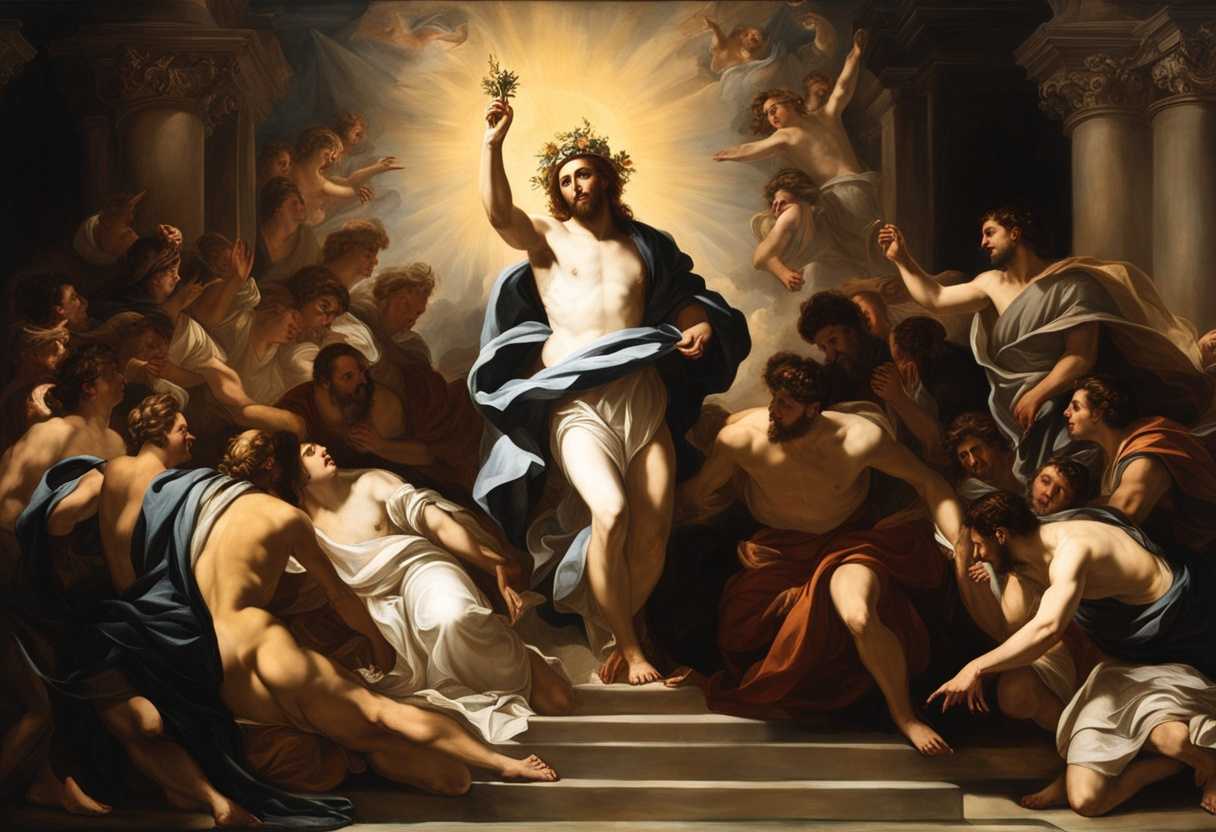
In the Bible, “sting” often refers to the pain or suffering caused by sin and death, particularly in 1 Corinthians 15:55, where it states, “Death, where is your sting?” This emphasizes the triumph over death attained through Christ’s resurrection, suggesting that the fear and consequences of death have been overcome.
Scripture
54 “When the perishable puts on the imperishable, and the mortal puts on immortality, then shall come to pass the saying that is written: ‘Death is swallowed up in victory.’”
55 “O death, where is your victory? O death, where is your sting?”
56 The sting of death is sin, and the power of sin is the law.
57 But thanks be to God, who gives us the victory through our Lord Jesus Christ.
Biblical Significance of “Sting”
The concept of “sting” in the Bible encapsulates the profound emotional and spiritual pain associated with sin and death, carrying a rich theological significance. In 1 Corinthians 15:55-57, the apostle Paul poses a rhetorical question regarding the “sting” of death, asserting that through Christ’s resurrection, believers gain victory over both sin and death. This notion illuminates the transformative power of the Gospel, suggesting that what once brought fear and despair—namely, mortality and the consequences of human transgression—has been rendered powerless. The sting of sin, characterized by guilt and separation from God, is alleviated through the grace extended by Christ’s sacrifice, which leads to eternal life.
Furthermore, the imagery of “sting” can also be understood in the context of life’s trials and tribulations. In Romans 8:38-39, Paul reassures believers that no hardship, including death itself, can separate them from the love of God in Christ Jesus. This scripting reinforces the notion that the sting associated with earthly suffering is mitigated by the assurance of divine love and eternal hope. The broader meaning, therefore, reflects a journey from despair to hope, where the faithful encounter pain but ultimately transcend it through the profound promise of redemption and everlasting life offered in Christ. This theological understanding invites believers to face the realities of life and death with courage, bolstered by the knowledge that the sting is temporary and that victory lies in their relationship with God.
The “sting” of sin and death signifies more than just the immediate feelings of sorrow or anguish; it also represents the deeper spiritual ramifications brought about by separation from God. This pervasive concept of “sting” is echoed throughout scripture, where rebellion against divine commandments results in a painful rupture in humanity’s relationship with the Creator. The Book of Isaiah, for instance, vividly illustrates this theme, as it discusses the consequences of sin as a heavy burden that weighs down the spirit and alienates humanity from God’s grace. Such descriptions resonate with believers, highlighting the emotional disquiet and torment associated with living apart from God’s will.
Moreover, the “sting” can be seen as a catalyst for repentance and growth in the believer’s life. In the prophetic literature, moments of pain often lead to restoration and renewal. For instance, in the Psalms, the psalmist often expresses feelings of distress and despair as they call out to God for help, experiencing the “sting” of their circumstances. Yet, through these laments, they often find solace in God’s mercy and a renewed sense of hope. This idea reinforces the understanding that while the sting of sin may lead to suffering, it can also prompt believers to turn back to God, seeking forgiveness and a deeper relationship with Him. Thus, the biblical interpretation of “sting” transcends mere affliction, serving as a pivotal point for transformation, redemption, and a fuller experience of divine love and grace.
The Sting of Sin and Death
In the biblical context, “sting” often symbolizes the painful consequences of sin and death. It represents the anguish and suffering that arise from separation from God due to sin. This sting serves as a reminder of the gravity of sin and its ultimate consequence—spiritual death. The imagery of a sting evokes feelings of discomfort and urgency, prompting believers to seek redemption and reconciliation with God.
The Sting of Suffering and Trials
Another broader meaning of “sting” in the Bible relates to the trials and sufferings that believers endure in their faith journey. These experiences can feel like a sting, causing pain and distress. However, they also serve a purpose in spiritual growth and character development. The sting of suffering can lead to perseverance, hope, and a deeper reliance on God, ultimately transforming pain into a source of strength and testimony.
The Sting of Spiritual Warfare
In the realm of spiritual warfare, “sting” can represent the attacks and temptations that believers face from the enemy. These stings are designed to lead individuals away from their faith and into despair. However, the Bible assures believers of victory over these stings through faith in Christ. Understanding this aspect of “sting” encourages believers to remain vigilant and steadfast, knowing that they are equipped to overcome the challenges posed by spiritual adversaries.
How to Embrace Faith and Overcome Sinful Struggles
Embracing faith and overcoming sinful struggles is a journey that requires both patience and perseverance, but it’s one that can lead to profound transformation. Start by cultivating a personal relationship with God through prayer and scripture; these practices not only deepen your understanding of His love and grace but also provide the strength to resist temptation. Remember, it’s okay to stumble—everyone does—but what matters is how you respond. When you fall, don’t let guilt keep you from God; instead, turn to Him in repentance, knowing that His mercy is always available. Surround yourself with a supportive community of fellow believers who can encourage you and hold you accountable. Lastly, focus on the fruits of the Spirit—love, joy, peace, and kindness—as you strive to reflect Christ in your daily life. By leaning into your faith and relying on God’s strength, you can navigate your struggles and emerge stronger, more resilient, and closer to Him.
Bible References to the Meaning of “Sting”:
Revelation 9:3-6: 3 Then from the smoke came locusts on the earth, and they were given power like the power of scorpions of the earth.
4 They were told not to harm the grass of the earth or any green plant or any tree, but only those people who do not have the seal of God on their foreheads.
5 They were allowed to torment them for five months, but not to kill them, and their torment was like the torment of a scorpion when it stings someone.
6 And in those days people will seek death and will not find it. They will long to die, but death will flee from them.
Hosea 13:14: 14 Shall I ransom them from the power of Sheol? Shall I redeem them from Death? O Death, where are your plagues? O Sheol, where is your sting? Compassion is hidden from my eyes.
Isaiah 11:8-9: 8 The nursing child shall play over the hole of the cobra, and the weaned child shall put his hand on the adder’s den.
9 They shall not hurt or destroy
in all my holy mountain;
for the earth shall be full of the knowledge of the Lord
as the waters cover the sea.
Psalm 91:13-16: 13 You will tread on the lion and the adder; the young lion and the serpent you will trample underfoot.
14 Because he holds fast to me in love, I will deliver him; I will protect him, because he knows my name.
15 When he calls to me, I will answer him; I will be with him in trouble; I will rescue him and honor him.
16 With long life I will satisfy him and show him my salvation.
Proverbs 23:31-32: 31 Do not look at wine when it is red, when it sparkles in the cup and goes down smoothly.
32 In the end it bites like a serpent and stings like an adder.
Numbers 21:6-9: 6 Then the Lord sent fiery serpents among the people, and they bit the people, so that many people of Israel died.
7 And the people came to Moses and said, “We have sinned, for we have spoken against the Lord and against you. Pray to the Lord, that he take away the serpents from us.” So Moses prayed for the people.
8 And the Lord said to Moses, “Make a fiery serpent and set it on a pole, and everyone who is bitten, when he sees it, shall live.”
9 So Moses made a bronze serpent and set it on a pole. And if a serpent bit anyone, he would look at the bronze serpent and live.
Deuteronomy 32:23-24: 23 “‘And I will heap disasters upon them;
I will spend my arrows on them;
24 they shall be wasted with hunger,
and devoured by plague
and poisonous pestilence;
I will send the teeth of beasts against them,
with the venom of things that crawl in the dust.
Amos 5:18-20: 18 Woe to you who desire the day of the Lord! Why would you have the day of the Lord? It is darkness, and not light,
19 It will be as though a man fled from a lion, and a bear met him, or went into the house and leaned his hand against the wall, and a serpent bit him.
20 Is not the day of the Lord darkness, and not light, and gloom with no brightness in it?
Jeremiah 8:17-19: 17 For behold, I am sending among you serpents,
adders that cannot be charmed,
and they shall bite you,
declares the Lord.
18 My joy is gone; grief is upon me; my heart is sick within me.
19 Behold, the cry of the daughter of my people from the length and breadth of the land: “Is the Lord not in Zion? Is her King not in her?”

Reverend Ogunlade is a seasoned Church Minister with over three decades of experience in guiding and nurturing congregations. With profound wisdom and a serene approach, Reverend Ogunlade has carried out various pastoral duties, including delivering uplifting sermons, conducting religious ceremonies, and offering sage counsel to individuals seeking spiritual guidance. Their commitment to fostering harmony and righteousness within their community is exemplified through their compassionate nature, making them a beloved and trusted figure among the congregation.