
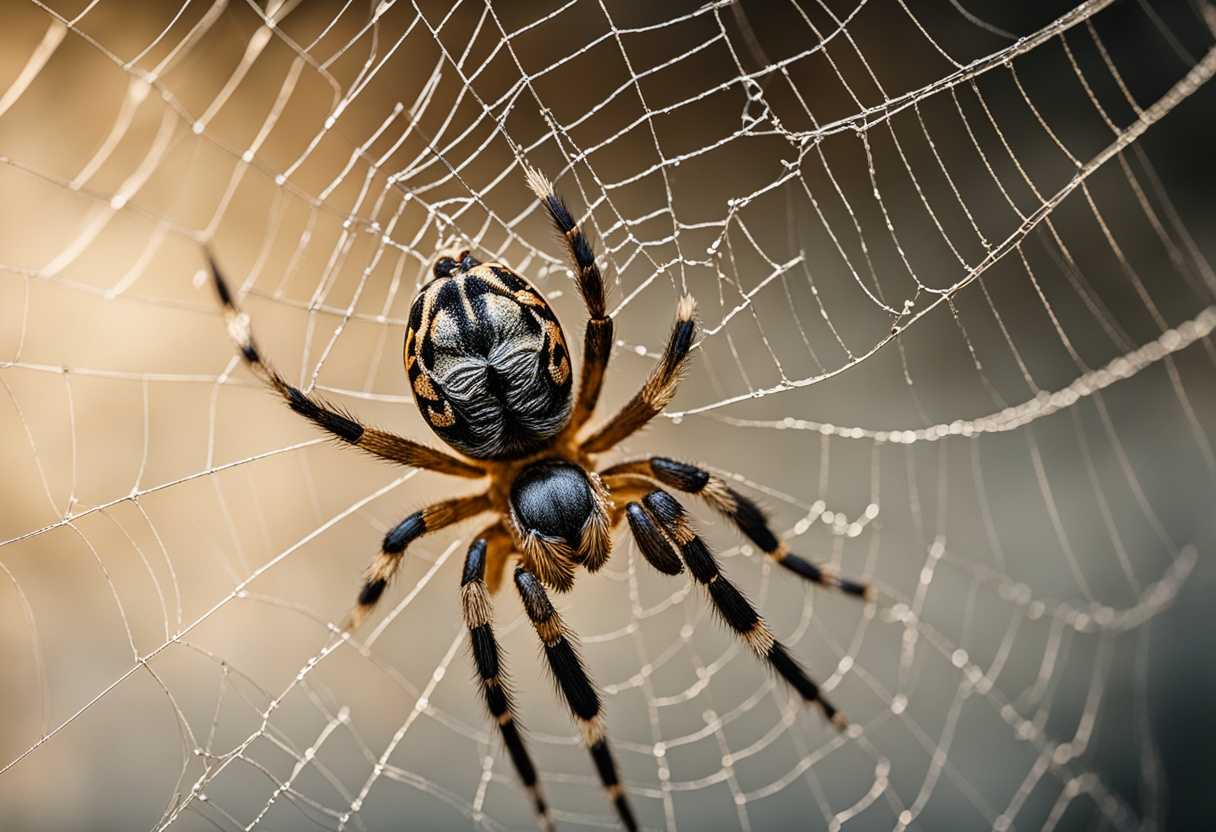
In the Bible, spiders are often associated with themes of entrapment and weakness. For example, Proverbs 30:28 mentions the spider as it skillfully weaves its web, highlighting both its industrious nature and its vulnerability, suggesting a caution against relying on insignificant things for security.
Scripture
13 Such are the paths of all who forget God; the hope of the godless shall perish.
14 His confidence is severed, and his trust is a spider’s web.
15 He leans against his house, but it does not stand; he lays hold of it, but it does not endure.
Biblical Significance of Spiders
The mention of spiders in the Bible, particularly in Proverbs 30:28, can be interpreted as a profound commentary on human vulnerability and the frail nature of worldly security. The verse states, “The spider taketh hold with her hands, and is in kings’ palaces,” which illustrates the spider’s remarkable ability to weave intricate webs, signifying both the industriousness of creation and the precariousness of its existence. In this context, the spider becomes a symbol of human attempts to establish control and build security—often through superficial or seemingly insignificant means—emphasizing that despite our endeavors, we remain susceptible to life’s vulnerabilities. This duality invites readers to reflect on their own lives and the false sense of security that can arise from temporary successes or material possessions.
Furthermore, spiders have been used as metaphors throughout scripture to highlight the transient nature of human efforts and the fallibility of relying on oneself. In Isaiah 59:5, the imagery of weaving spider’s webs is employed to depict futile works that can offer no true protection or salvation. This reinforces the broader biblical principle that true security comes not from human ingenuity, but from reliance on God, who is the ultimate source of strength and refuge. As such, the portrayal of spiders in the Bible serves as a reminder for believers to seek lasting security through faith rather than through the ephemeral constructs they might create, urging a deeper examination of where they place their trust and the foundations upon which they build their lives.
The biblical significance of spiders extends beyond mere imagery, serving as a poignant reminder of the complexities of human ambition and the ultimate futility of self-reliance. In multiple instances throughout scripture, the act of weaving—similar to the way a spider spins its web—can symbolize the projects and schemes people construct in hopes of achieving safety or success. This natural metaphor depicts how human efforts often lead to transient outcomes, echoing the sentiment that even the most carefully crafted plans can be vulnerable to external forces. The delicate nature of a spider’s web, which can easily be broken, reflects the fragility of human constructs when compared to divine providence.
Moreover, the appearance of spiders in biblical passages encourages a reevaluation of humility and perspective. The sheer capability of a spider to exist even in grand settings underscores the idea that greatness and worth do not always correlate with visibility or grandeur. Instead, it shines a light on the value of being industrious and resourceful in the face of adversity. This notion can translate into a spiritual framework where believers are encouraged to leverage their own strengths in collaboration with faith, understanding that their advancements are ultimately guided by a higher power. This amplifies the call for reliance on God’s will over personal ambition, prompting an introspection into one’s own life purpose and motivations. Ultimately, the spider’s web becomes an emblem of life’s intricate balance between strength and vulnerability, industry and futility, providing significant lessons on humility and dependence in the spiritual journey.
Symbol of Craftsmanship and Intricacy
In the Bible, spiders can be seen as symbols of craftsmanship and intricacy. Their ability to weave complex webs reflects the notion of creation and design. This can be interpreted as a reminder of the divine craftsmanship in the world, where every creature, including the spider, plays a role in the intricate tapestry of life. The meticulous nature of a spider’s web can also serve as a metaphor for the careful planning and execution of God’s purposes in the universe.
Representation of Vulnerability and Danger
Spiders can also symbolize vulnerability and danger. While they are often small and seemingly insignificant, their webs can ensnare unsuspecting prey, illustrating the potential for hidden threats in life. This serves as a cautionary reminder of the spiritual dangers that may lurk in the world, urging believers to remain vigilant and discerning in their faith. The presence of spiders in biblical texts can evoke a sense of awareness about the unseen challenges that one may face in their spiritual journey.
Metaphor for Human Endeavors
Additionally, spiders can represent human endeavors and the fragility of human efforts. Just as a spider’s web can be easily destroyed by a gust of wind or a careless movement, human plans and ambitions can be vulnerable to external forces. This metaphor can encourage humility and reliance on God, reminding individuals that while they may strive to build and create, ultimate success and stability come from divine guidance and support.
How to Embrace Creation and Divine Order as a Christian
Embracing creation and divine order as a Christian is a beautiful journey that invites us to see the world through the lens of God’s handiwork. Start by taking time each day to appreciate the wonders around you—whether it’s the intricate design of a flower, the vastness of the sky, or the simple joy of a shared meal with loved ones. Reflect on Genesis 1, where God declares His creation “good,” and let that inspire you to cultivate a sense of gratitude and stewardship for the earth. Engage in practices that honor creation, like spending time in nature, supporting sustainable initiatives, or volunteering for environmental causes. Remember, divine order is not just about the physical world; it also encompasses the relationships we nurture and the love we share. By aligning your actions with God’s purpose, you can contribute to a harmonious existence that reflects His glory, reminding yourself and others that we are all part of a greater design.
Bible References to the Significance of Spiders:
Isaiah 59:4-6: 4 No one enters suit justly;
no one goes to law honestly;
they rely on empty pleas, they speak lies;
they conceive mischief and give birth to iniquity.
5 They hatch adders’ eggs;
they weave the spider’s web;
he who eats their eggs dies,
and from one that is crushed a viper is hatched.
6 Their webs will not serve as clothing; men will not cover themselves with what they make. Their works are works of iniquity, and deeds of violence are in their hands.
Proverbs 30:24-28: 24 Four things on earth are small,
but they are exceedingly wise:
25 The ants are a people not strong,
yet they provide their food in the summer;
26 the rock badgers are a people not mighty, yet they make their homes in the cliffs;
27 The locusts have no king,
yet all of them march in rank;
28 the lizard you can take in your hands, yet it is in kings’ palaces.
Job 27:18-19: 18 He builds his house like a moth’s, like a booth that a watchman makes.
19 He goes to bed rich, but will do so no more; he opens his eyes, and his wealth is gone.

Reverend Michael Johnson is an experienced Church Minister with a profound expertise in spirituality and guidance. With a serene presence and a compassionate heart, he has faithfully served his congregation for over 20 years, leading them on a spiritual journey towards inner peace and enlightenment. Reverend Johnson’s extensive knowledge of religious philosophies and profound understanding of human nature have made him a trusted confidant and mentor to many, as he seamlessly weaves his profound wisdom into life teachings. Reverend Johnson’s calming demeanor and empathetic nature continue to uplift and heal souls, nurturing a sense of unity and tranquility within his community.