
In the Bible, a “dumb spirit” refers to a demon or evil spirit that causes an individual to be unable to speak. This term is mentioned in passages such as Mark 9:25-27, where Jesus expels the spirit, restoring the person’s ability to speak.
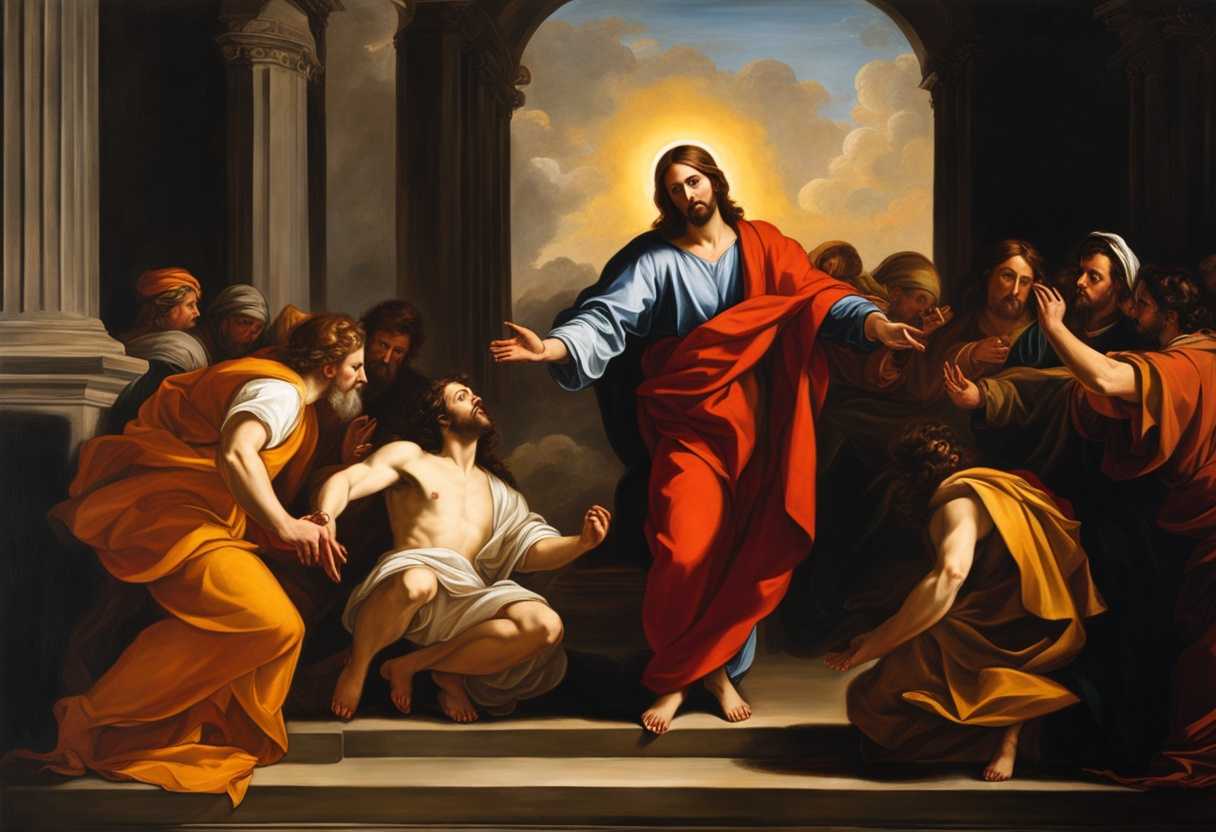
Scripture
And someone from the crowd answered him, “Teacher, I brought my son to you, for he has a spirit that makes him mute.
18 And whenever it seizes him, it throws him down, and he foams and grinds his teeth and becomes rigid. So I asked your disciples to cast it out, and they were not able.”
19 And he answered them, “O faithless generation, how long am I to be with you? How long am I to bear with you? Bring him to me.”
20 And they brought the boy to him. When the spirit saw him, immediately it convulsed the boy, and he fell on the ground and rolled about, foaming at the mouth.
21 And Jesus asked his father, “How long has this been happening to him?” And he said, “From childhood.
22 And it has often cast him into fire and into water, to destroy him. But if you can do anything, have compassion on us and help us.”
23 And Jesus said to him, “‘If you can’! All things are possible for one who believes.”
24 Immediately the father of the child cried out and said, “I believe; help my unbelief!”
25 And when Jesus saw that a crowd came running together, he rebuked the unclean spirit, saying to it, “You mute and deaf spirit, I command you, come out of him and never enter him again.”
26 But when Jesus saw that a crowd came running together, he rebuked the unclean spirit, saying to it, “You mute and deaf spirit, I command you, come out of him and never enter him again.”
27 But Jesus took him by the hand and lifted him up, and he arose.
28 And when he had entered the house, his disciples asked him privately, “Why could we not cast it out?”
29 And he said to them, “This kind cannot be driven out by anything but prayer.”
Meaning of Dumb Spirit in the Bible
The concept of a “dumb spirit” in the Bible transcends mere physical affliction to symbolize broader spiritual dynamics, particularly the struggle between good and evil, and the transformative power of faith. In Mark 9:25-27, we see Jesus confronted by a father whose son is afflicted by an unclean spirit that renders him mute. This narrative illustrates the holistic burden of spiritual oppression—not only does the dumb spirit inhibit verbal communication, which is crucial for expressing one’s needs and emotions, but it also signifies a broader paralysis of the soul. By casting out the dumb spirit, Jesus restores not only the boy’s physical ability to speak but also reaffirms his dignity and agency, a theme reflective of God’s intention for humanity to be in communion with Him and others.
Moreover, the dumb spirit embodies the idea of spiritual blindness or silence that can afflict individuals who are distanced from God. In Luke 11:14, Jesus performs an exorcism on a mute man, emphasizing the connection between spiritual oppression and the inability to proclaim God’s truths. The act of silencing the spirit serves as a metaphor for how evil can stifle one’s voice in faith and testimony. Thus, the eradication of such spirits signifies not just liberation from demonic influence but a call to believers to engage actively in speaking out against evil and glorifying God. This underscores the essential role of communication—both with God and within the faith community—as a means of grace and empowerment.
In the broader biblical context, the “dumb spirit” serves as a portrayal of the spiritual oppressions that inhibit individuals from experiencing fullness of life in Christ. While physical muteness is a tangible symptom, it represents a deeper spiritual condition where a person is rendered voiceless in their faith journey. This lack of voice not only affects personal worship and testimony but can also hinder the collective expression of faith within a community. The silent suffering of individuals under the influence of these spirits reminds us of the urgent need for spiritual healing and deliverance, as noted through various stories in scripture where Jesus not only heals but revives the capacity to share and testify about God’s goodness.
Additionally, instances of dumb spirits in the Bible can reflect the theme of spiritual warfare, illustrating the ongoing battle against forces that seek to silence truth and inhibit the Gospel’s proclamation. Such spiritual oppression often leads to isolation, as the afflicted may struggle to articulate their struggles and experiences, cutting them off from the support of their faith community. As seen in various accounts, when Jesus confronts these spirits, it highlights His authority over all spiritual realms, providing a model for believers to rely on divine strength in their own confrontations with doubt and fear. The resulting healing invites a renewed commitment to vocalize faith and declare the wonders of God, serving as a reminder that believers are called not to silence but to actively proclaim His message of hope, love, and redemption, ensuring that the voice of faith prevails amidst trials.
Spiritual Oppression and Silence
The term “dumb spirit” in the Bible often symbolizes a form of spiritual oppression that leads to silence or an inability to communicate. This can be interpreted as a representation of the broader struggle between good and evil, where the presence of such a spirit stifles the voice and expression of an individual. This silence can be seen as a metaphor for the spiritual battles that individuals face, where the inability to speak or express oneself can reflect a deeper spiritual bondage that hinders one’s relationship with God and others.
The Need for Deliverance
The concept of a dumb spirit also highlights the necessity for deliverance and healing within the spiritual context. It serves as a reminder of the power of faith and the authority of Jesus to cast out unclean spirits. This need for deliverance can be understood as a call for believers to seek liberation from any form of spiritual oppression that may inhibit their ability to fully engage in their faith and community. It emphasizes the importance of spiritual warfare and the role of prayer and faith in overcoming such challenges.
The Importance of Communication in Faith
Furthermore, the idea of a dumb spirit underscores the significance of communication in the life of faith. In many biblical narratives, the ability to speak and proclaim one’s faith is crucial for personal testimony and communal worship. The presence of a dumb spirit can thus be seen as a barrier to the expression of faith, highlighting the importance of vocalizing one’s beliefs and experiences. This aspect encourages believers to recognize the power of their words and the necessity of sharing their faith journey with others, fostering a community built on mutual encouragement and support.
How to Overcome Spiritual Oppression and Grow Stronger in Faith
Overcoming spiritual oppression can feel daunting, but remember that you are not alone in this journey; God is always by your side, ready to lift you up. Start by immersing yourself in prayer and scripture, as these are powerful tools that can help you combat negative thoughts and feelings. Surround yourself with a supportive community of fellow believers who can encourage you and pray with you during tough times. It’s also essential to practice gratitude, focusing on the blessings in your life rather than the burdens. As you cultivate a deeper relationship with God, you’ll find that your faith grows stronger, enabling you to face challenges with renewed strength and resilience. Remember, every step you take towards healing and growth is a testament to your faith, and God delights in your journey.
Bible References to Dumb Spirit Meaning:
Matthew 9:32-34: 32 As they were going away, behold, a demon-oppressed man who was mute was brought to him.
33 And when the demon had been cast out, the mute man spoke. And the crowds marveled, saying, “Never was anything like this seen in Israel.”
34 But the Pharisees said, “He casts out demons by the prince of demons.”
Matthew 12:22-28: 22 Then a demon-oppressed man who was blind and mute was brought to him, and he healed him, so that the man spoke and saw.
23 And all the people were amazed, and said, “Can this be the Son of David?”
24 But when the Pharisees heard it, they said, “It is only by Beelzebul, the prince of demons, that this man casts out demons.”
25 Knowing their thoughts, he said to them, “Every kingdom divided against itself is laid waste, and no city or house divided against itself will stand.
26 And if Satan casts out Satan, he is divided against himself. How then will his kingdom stand?
27 And if I cast out demons by Beelzebul, by whom do your sons cast them out? Therefore they will be your judges.
28 But if it is by the Spirit of God that I cast out demons, then the kingdom of God has come upon you.
Luke 11:14-20: 14 Now he was casting out a demon that was mute. When the demon had gone out, the mute man spoke, and the people marveled.
15 But some of them said, “He casts out demons by Beelzebul, the prince of demons,”
16 while others, to test him, kept seeking from him a sign from heaven.
17 But he, knowing their thoughts, said to them, “Every kingdom divided against itself is laid waste, and a divided household falls.
18 And if Satan also is divided against himself, how will his kingdom stand? For you say that I cast out demons by Beelzebul.
19 And if I cast out demons by Beelzebul, by whom do your sons cast them out? Therefore they will be your judges.
20 But if it is by the finger of God that I cast out demons, then the kingdom of God has come upon you.
Isaiah 35:5-6: 5 Then the eyes of the blind shall be opened, and the ears of the deaf unstopped;
6 Then shall the lame man leap like a deer, and the tongue of the mute sing for joy. For waters break forth in the wilderness, and streams in the desert.
Exodus 4:10-12: 10 But Moses said to the Lord, “Oh, my Lord, I am not eloquent, either in the past or since you have spoken to your servant, but I am slow of speech and of tongue.”
11 Then the Lord said to him, “Who has made man’s mouth? Who makes him mute, or deaf, or seeing, or blind? Is it not I, the Lord?
12 Now therefore go, and I will be with your mouth and teach you what you shall speak.
Psalm 38:13-15: 13 But I am like a deaf man; I do not hear, like a mute man who does not open his mouth.
14 But I am like a deaf man; I do not hear, like a mute man who does not open his mouth.
15 But for you, O Lord, do I wait; it is you, O Lord my God, who will answer.
Ezekiel 3:26-27: 26 And I will make your tongue cling to the roof of your mouth, so that you shall be mute and unable to reprove them, for they are a rebellious house.
27 But when I speak with you, I will open your mouth, and you shall say to them, ‘Thus says the Lord God.’ Whoever will hear, let him hear; and whoever will refuse to hear, let him refuse; for they are a rebellious house.
Zechariah 13:2-3: 2 “And on that day, declares the Lord of hosts, I will cut off the names of the idols from the land, so that they shall be remembered no more. And also I will remove from the land the prophets and the spirit of uncleanness.”
3 And if anyone again prophesies, his father and mother who bore him will say to him, ‘You shall not live, for you speak lies in the name of the Lord.’ And his father and mother who bore him shall pierce him through when he prophesies.

Rev. François Dupont is a dedicated church minister with a wealth of experience in serving spiritual communities. With a calm and serene demeanor, he has been devoted to sharing the message of love, compassion, and tolerance for over two decades. Through his thoughtful sermons, compassionate counseling, and unwavering support, Rev. Dupont has touched the lives of countless individuals, allowing them to find solace and strength during difficult times. His serene presence and deep understanding of the human condition make him a trusted guide for those seeking spiritual nourishment and guidance.