
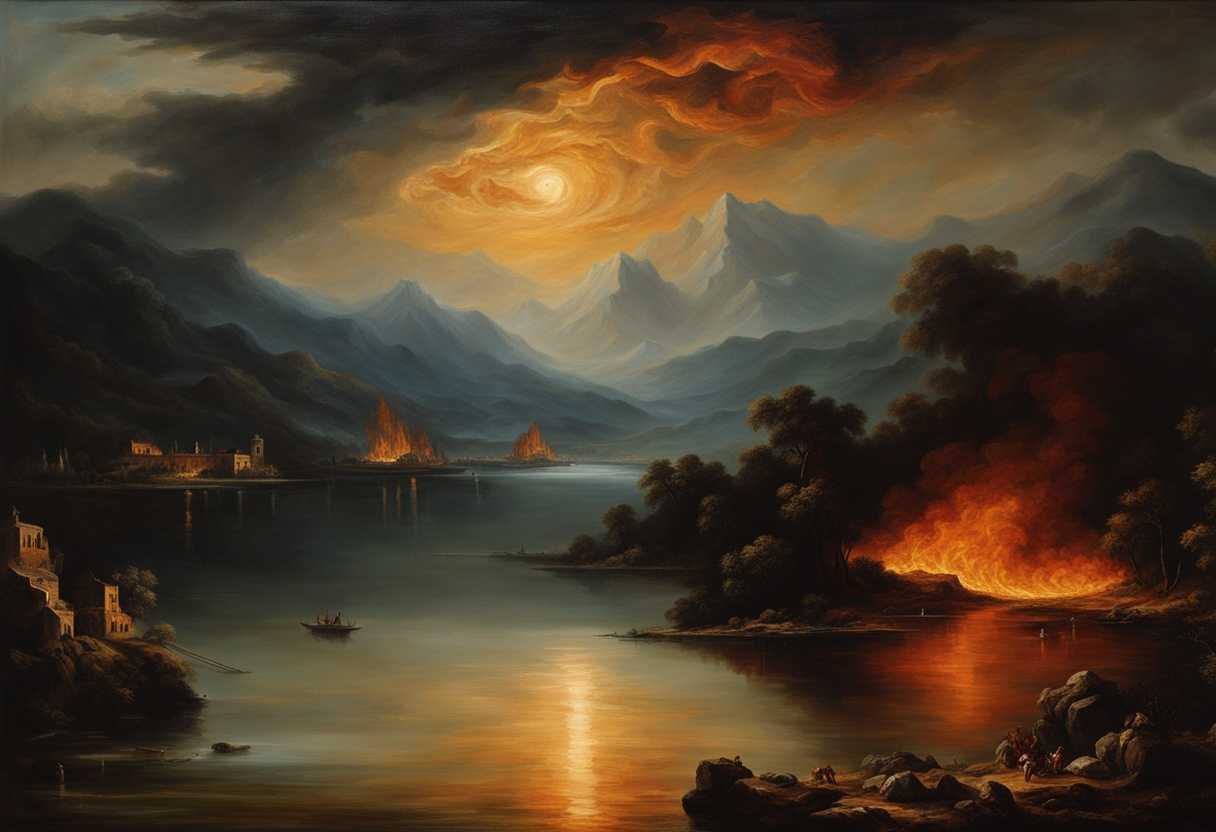
The lake of fire is described in the Bible, specifically in Revelation 20:14-15, as the final place of punishment for the devil, the beast, the false prophet, and those not found in the Book of Life. It symbolizes eternal separation from God and ultimate judgment for unrepentant sin.
Scripture
20 And the beast was captured, and with it the false prophet who in its presence had done the signs by which he deceived those who had received the mark of the beast and those who worshiped its image. These two were thrown alive into the lake of fire that burns with sulfur.
21 And the rest were slain by the sword that came from the mouth of him who was sitting on the horse, and all the birds were gorged with their flesh.
Meaning of the Lake of Fire in Scripture
The concept of the lake of fire, as articulated in Revelation 20:14-15, serves as a profound symbol of divine judgment and the ultimate consequence of rejecting God. It is described as the final destination for the devil, the beast, the false prophet, and those whose names are not found in the Book of Life. This imagery reflects the serious nature of sin and the gravity of spiritual rebellion against God. The lake of fire is not merely a physical place of torment, but rather a metaphysical state of existence that signifies total separation from the presence and love of God. This separation is underscored by various passages in the Bible that discuss the consequences of sin, such as Romans 6:23, which states, “For the wages of sin is death,” emphasizing both spiritual and eternal separation from the life-giving presence of God.
Furthermore, the lake of fire incorporates themes of justice and the fulfillment of God’s holiness. For instance, Hebrews 10:30 reminds believers that “vengeance belongs to me,” says the Lord, illustrating that God’s judgment is both righteous and inevitable. In contrast, those whose names are found in the Book of Life are promised eternal communion with God, signifying salvation and redemption through faith in Christ (Revelation 21:27). Thus, the lake of fire serves as a stark reminder of the consequences of a life lived apart from God, while simultaneously highlighting the grace and mercy available through repentance and acceptance of God’s salvation, as offered in John 3:16. In essence, the lake of fire encapsulates the ultimate reality of choice in the spiritual realm, presenting the dire ramifications for those who choose to reject divine love and righteousness.
Beyond the striking imagery found in Revelation, the lake of fire emerges in various theological considerations throughout the Bible, serving as a dramatic conclusion to the theme of divine retribution. The metaphysical implications of the lake of fire parallel Old Testament depictions of judgment, where imagery such as “Gehenna” surfaces as a place of destruction and divine wrath against unrepentant behaviors. Jesus often used this term to frame the realities of spiritual consequences, painting a vivid picture of the intentional disregard for God’s laws resulting in lasting repercussions. The association of Gehenna with burning refuse echoes the sentiment of the lake of fire, emphasizing a state where purity and righteousness cannot coexist with sin.
Moreover, the doctrine of everlasting punishment is interwoven in the teachings of several New Testament epistles, where the fate of the wicked is addressed with solemn gravity. In texts that reflect on final accountability, the notion of a conscious and eternal existence apart from God, characterized by torment, aligns with the characteristics of the lake of fire. These passages elucidate that eternal separation is not merely a metaphorical absence of God’s presence, but a tangible experience of the consequences of one’s choices throughout life. Such discussions reinforce the notion that the lake of fire represents the serious and irreversible nature of rejecting divine love and mercy, framing the narrative of human choice as pivotal in determining one’s eternal destiny. Through these teachings, the scripture appeals for reflection and repentance, reiterating God’s desire for salvation and reconciliation rather than judgment and separation.
Symbol of Final Judgment
The lake of fire serves as a powerful symbol of final judgment in biblical theology. It represents the ultimate consequence of sin and rebellion against God. In this context, it signifies the irrevocable separation from God’s presence and the eternal punishment that awaits those who reject divine grace. This imagery underscores the seriousness of moral choices and the reality of divine justice, emphasizing that there are eternal ramifications for one’s actions in life.
Representation of Spiritual Death
The lake of fire also embodies the concept of spiritual death. It is not merely a physical place but a state of existence characterized by the absence of life, hope, and communion with God. This notion highlights the spiritual consequences of sin, illustrating that those who find themselves in this state are eternally cut off from the source of life and love. The lake of fire thus serves as a stark reminder of the spiritual realities that accompany a life lived apart from God.
Contrast to Eternal Life
In the broader narrative of the Bible, the lake of fire stands in stark contrast to the promise of eternal life offered through faith and redemption. While the lake of fire represents the fate of the unrepentant, the concept of eternal life signifies the joy and fulfillment found in a relationship with God. This juxtaposition serves to motivate believers to pursue righteousness and to share the message of hope and salvation with others, reinforcing the importance of choosing a path that leads to life rather than destruction.
How to Embrace Faith and Foster Compassion in Christ
Embracing faith and fostering compassion in Christ is a beautiful journey that begins with a sincere heart and a willingness to grow. Start by immersing yourself in the Word of God; let the teachings of Jesus inspire you to see the world through His eyes. Remember, faith is not just a belief but an active trust in God’s goodness, which naturally spills over into how we treat others. Make it a daily practice to pray for those around you, especially those who challenge you, and seek opportunities to serve in your community. Acts of kindness, no matter how small, can be powerful expressions of Christ’s love. As you cultivate a compassionate spirit, you’ll find that your faith deepens, and you become a living testament to the grace that has been so freely given to you. Embrace this journey with an open heart, and watch how your life transforms in the light of Christ’s love.
Bible References to the Lake of Fire:
Revelation 20:10-15: 10 and the devil who had deceived them was thrown into the lake of fire and sulfur where the beast and the false prophet were, and they will be tormented day and night forever and ever.
Then I saw a great white throne and him who was seated on it. From his presence earth and sky fled away, and no place was found for them.
12 And I saw the dead, great and small, standing before the throne, and books were opened. Then another book was opened, which is the book of life. And the dead were judged by what was written in the books, according to what they had done.
13 And the sea gave up the dead who were in it, Death and Hades gave up the dead who were in them, and they were judged, each one of them, according to what they had done.
14 Then Death and Hades were thrown into the lake of fire. This is the second death, the lake of fire.
15 And if anyone’s name was not found written in the book of life, he was thrown into the lake of fire.
Revelation 21:7-8: 7 The one who conquers will have this heritage, and I will be his God and he will be my son.
8 But as for the cowardly, the faithless, the detestable, as for murderers, the sexually immoral, sorcerers, idolaters, and all liars, their portion will be in the lake that burns with fire and sulfur, which is the second death.”
Matthew 25:41-46: 41 “Then he will say to those on his left, ‘Depart from me, you cursed, into the eternal fire prepared for the devil and his angels.
42 For I was hungry and you gave me no food, I was thirsty and you gave me no drink,
43 I was a stranger and you did not welcome me, naked and you did not clothe me, sick and in prison and you did not visit me.
44 Then they also will answer, saying, ‘Lord, when did we see you hungry or thirsty or a stranger or naked or sick or in prison, and did not minister to you?’
45 Then he will answer them, saying, ‘Truly, I say to you, as you did not do it to one of the least of these, you did not do it to me.’
46 And these will go away into eternal punishment, but the righteous into eternal life.
Mark 9:43-48: 43 And if your hand causes you to sin, cut it off. It is better for you to enter life crippled than with two hands to go to hell, to the unquenchable fire.
44 ‘where their worm does not die and the fire is not quenched.’
45 And if your foot causes you to sin, cut it off. It is better for you to enter life lame than with two feet to be thrown into hell.
46 ‘where their worm does not die and the fire is not quenched.’
47 And if your eye causes you to sin, tear it out. It is better for you to enter the kingdom of God with one eye than with two eyes to be thrown into hell,
48 ‘where their worm does not die and the fire is not quenched.’
2 Thessalonians 1:6-10: 6 since indeed God considers it just to repay with affliction those who afflict you,
7 and to grant relief to you who are afflicted as well as to us, when the Lord Jesus is revealed from heaven with his mighty angels
8 in flaming fire, inflicting vengeance on those who do not know God and on those who do not obey the gospel of our Lord Jesus.
9 They will suffer the punishment of eternal destruction, away from the presence of the Lord and from the glory of his might,
10 when he comes on that day to be glorified in his saints, and to be marveled at among all who have believed, because our testimony to you was believed.
Jude 1:6-7: 6 And the angels who did not stay within their own position of authority, but left their proper dwelling, he has kept in eternal chains under gloomy darkness until the judgment of the great day.
7 just as Sodom and Gomorrah and the surrounding cities, which likewise indulged in sexual immorality and pursued unnatural desire, serve as an example by undergoing a punishment of eternal fire.
Daniel 7:9-11: 9 “As I looked, thrones were placed, and the Ancient of Days took his seat; his clothing was white as snow, and the hair of his head like pure wool; his throne was fiery flames; its wheels were burning fire.
10 A stream of fire issued and came out from before him; a thousand thousands served him, and ten thousand times ten thousand stood before him; the court sat in judgment, and the books were opened.
11 “I looked then because of the sound of the great words that the horn was speaking. And as I looked, the beast was killed, and its body destroyed and given over to be burned with fire.”
Isaiah 66:22-24: 22 “For as the new heavens and the new earth that I make shall remain before me, says the Lord, so shall your offspring and your name remain.”
23 From new moon to new moon, and from Sabbath to Sabbath, all flesh shall come to worship before me, declares the Lord.
24 “And they shall go out and look on the dead bodies of the men who have rebelled against me. For their worm shall not die, their fire shall not be quenched, and they shall be an abhorrence to all flesh.”

Rev. François Dupont is a dedicated church minister with a wealth of experience in serving spiritual communities. With a calm and serene demeanor, he has been devoted to sharing the message of love, compassion, and tolerance for over two decades. Through his thoughtful sermons, compassionate counseling, and unwavering support, Rev. Dupont has touched the lives of countless individuals, allowing them to find solace and strength during difficult times. His serene presence and deep understanding of the human condition make him a trusted guide for those seeking spiritual nourishment and guidance.