
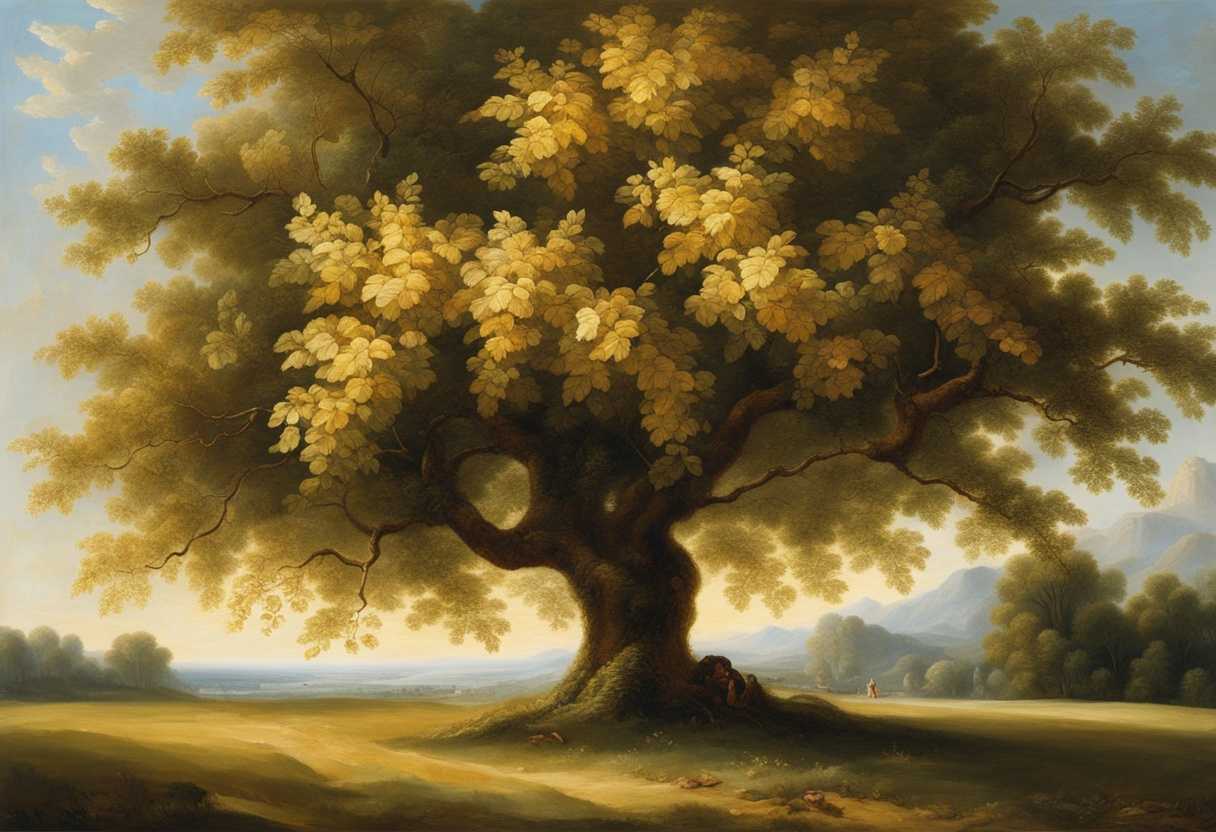
In the Bible, the mulberry tree is mentioned in 2 Samuel 5:23-24, where God instructs David to wait until he hears the sound of marching in the tops of the mulberry trees, signifying divine guidance in battle. The tree symbolizes God’s presence and the importance of following His direction in times of action.
Scripture
13 And the Philistines yet again made a raid in the valley.
14 And when David inquired of God, God said to him, “You shall not go up after them; go around and come against them opposite the balsam trees.
15 And when you hear the sound of marching in the tops of the balsam trees, then go out to battle, for God has gone out before you to strike down the army of the Philistines.
16 And David did as God commanded him, and they struck down the Philistine army from Gibeon to Gezer.
17 And the fame of David went out into all lands, and the Lord brought the fear of him upon all nations.
Biblical Significance of the Mulberry Tree
The mention of the mulberry tree in 2 Samuel 5:23-24 serves as a rich metaphor for divine guidance and timing. David, sensing a need for action against the Philistines, receives a crucial message from God: he should wait for a sign, specifically the sound of marching in the tops of the mulberry trees. This moment emphasizes the importance of spiritual attunement to God’s instructions before undertaking significant endeavors. In the biblical context, the mulberry tree embodies more than just a physical location — it symbolizes a place of connection with the divine and a reminder that success in our pursuits hinges on discerning God’s will.
Moreover, this episode exemplifies the broader theme seen throughout Scripture, where reliance upon divine timing and leadership is underscored. For instance, Proverbs 3:5-6 encourages believers to trust in the Lord and not lean on their own understanding, while Psalm 37:5 speaks of committing one’s way to God. The mulberry tree signifies a moment of transition for David, where faith and patience are pivotal, illustrating that true strength in leadership comes not from mere strategy but from an obedient relationship with God. Following God’s guidance, as demonstrated by David, leads to victorious outcomes, reminding believers of the necessity to remain responsive to the divine direction within life’s challenges.
Another notable dimension of the mulberry tree in biblical literature can be found in its connection to themes of perseverance and cultivation of faith. In the agrarian society of ancient Israel, the growth of trees, including the mulberry, often reflects the nurturing and patience required in spiritual growth and the development of one’s relationship with God. This notion reinforces the idea that just as a mulberry tree requires care and time to flourish, so too does the believer’s faith need continual attention and nourishment through prayer, reflection, and community.
Additionally, the mulberry tree can metaphorically illustrate the interplay of natural order and divine intervention. Just as the natural world often operates under established rhythms and cycles, God’s action often punctuates these patterns in ways that may seem unexpected yet are profoundly impactful. As we see in the narrative of David, the sound of the movement through the mulberry trees signals God’s unique involvement at a critical juncture, urging believers to be alert and receptive to the presence of divine influence in their lives. This speaks to a broader biblical principle: the acknowledgement that God works through the ordinary to manifest His will, highlighting how moments of clarity and decision can arise from seemingly mundane situations. Thus, the mulberry tree stands as a powerful emblem of faith, patience, and divine awareness as believers navigate the complexities of life.
Symbol of Divine Guidance
The mulberry tree in the Bible can be seen as a symbol of divine guidance. Its presence in biblical narratives often signifies moments when individuals seek direction from God. The act of consulting God before making decisions, as illustrated through the mulberry tree, emphasizes the importance of relying on divine wisdom rather than human understanding. This reflects a broader theme in scripture where believers are encouraged to seek God’s counsel in their lives.
Representation of Spiritual Growth
The mulberry tree can also represent spiritual growth and development. Trees in the Bible often symbolize life, stability, and nourishment. The mulberry tree, with its deep roots and ability to thrive in various conditions, serves as a metaphor for the believer’s journey of faith. Just as a tree grows and bears fruit over time, so too does a person’s faith mature through experiences, challenges, and reliance on God. This connection highlights the importance of nurturing one’s spiritual life to achieve a fruitful existence.
Connection to Community and Fellowship
Additionally, the mulberry tree can symbolize community and fellowship. Trees often provide shelter and sustenance, serving as gathering places for people. In biblical contexts, the mulberry tree may represent the importance of coming together in faith, sharing experiences, and supporting one another in the journey of life. This communal aspect underscores the biblical principle of unity among believers, fostering a sense of belonging and mutual encouragement within the faith community.
How to Embrace Divine Guidance for Spiritual Growth
Embracing divine guidance for spiritual growth is a beautiful journey that invites us to open our hearts and minds to the whispers of God in our daily lives. Start by cultivating a habit of prayer and meditation, creating sacred space where you can listen for His voice amidst the noise of the world. As you read Scripture, allow the words to resonate deeply within you, seeking not just knowledge but transformation. Surround yourself with a community of believers who inspire and challenge you, as iron sharpens iron. Remember, divine guidance often comes in unexpected ways—through a friend’s encouragement, a sermon that speaks to your heart, or even a quiet moment of reflection. Trust that God is always leading you, and be willing to step out in faith, knowing that each small act of obedience brings you closer to the person He created you to be. Embrace this journey with an open heart, and watch as your spiritual growth flourishes in ways you never imagined.
Bible References to the Mulberry Tree:
2 Samuel 5:22-25: 22 And the Philistines came up yet again and spread out in the Valley of Rephaim.
23 And when David inquired of the Lord, he said, “You shall not go up; go around to their rear, and come against them opposite the balsam trees.
24 And when you hear the sound of marching in the tops of the balsam trees, then rouse yourself, for then the Lord has gone out before you to strike down the army of the Philistines.
25 And David did as the Lord commanded him, and struck down the Philistines from Geba to Gezer.

Reverend Ogunlade is a seasoned Church Minister with over three decades of experience in guiding and nurturing congregations. With profound wisdom and a serene approach, Reverend Ogunlade has carried out various pastoral duties, including delivering uplifting sermons, conducting religious ceremonies, and offering sage counsel to individuals seeking spiritual guidance. Their commitment to fostering harmony and righteousness within their community is exemplified through their compassionate nature, making them a beloved and trusted figure among the congregation.