
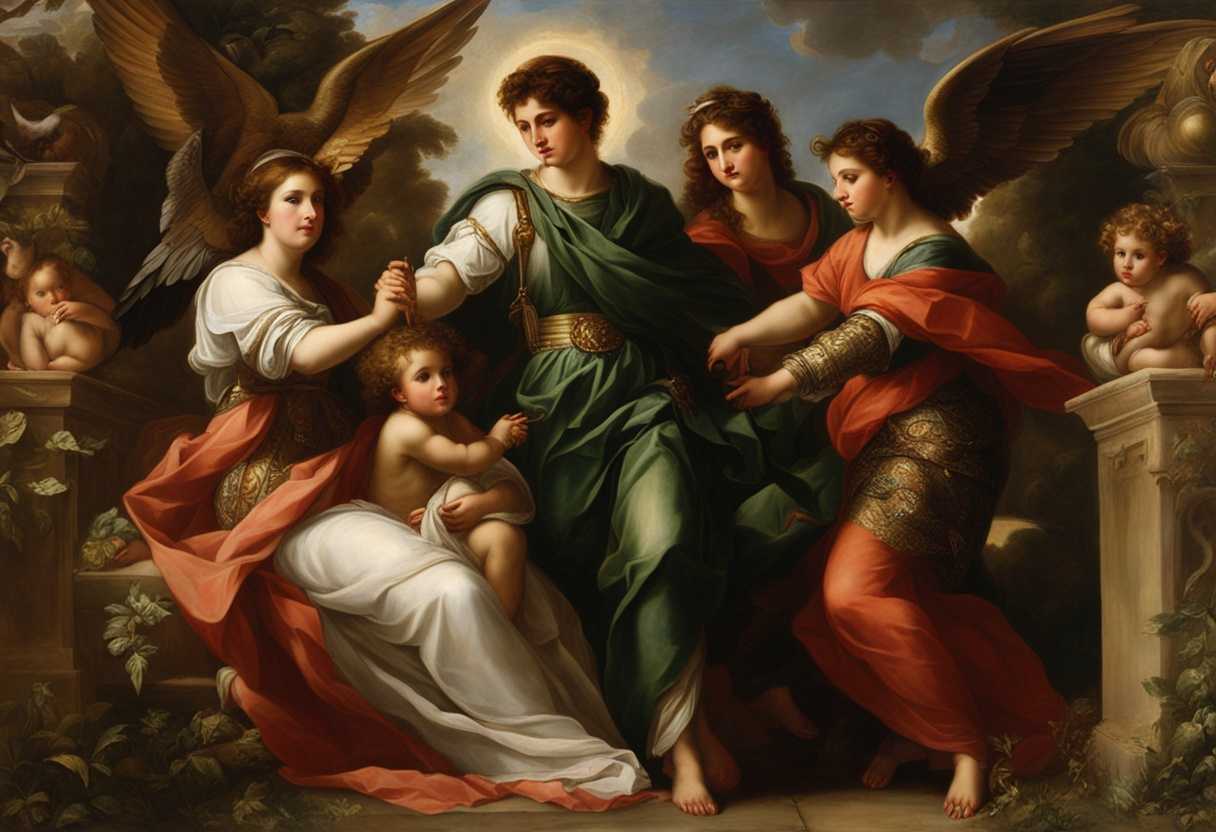
Tobit: Faith, Family, And Divine Intervention
The Book of Tobit is a fascinating deuterocanonical text that has been included in the biblical canons of the Catholic and Orthodox Christian traditions. Likely written in the 3rd or 2nd century BCE, the narrative takes place primarily in the ancient cities of Nineveh and Ecbatana, which were part of the Assyrian and Median empires at the time.
During the period when the book was composed, the political landscape was in flux, with the decline of the Seleucid Empire and the rise of Parthian power in the region. The once-mighty Assyrian Empire had fallen centuries earlier, leaving Nineveh in a state of disrepair, while Ecbatana, the capital of the Median Empire, had become an important center of trade and culture.
The characters in the Book of Tobit reflect the diversity of the region, with the protagonist Tobit and his family belonging to the Jewish diaspora, while other figures, such as Raguel and his family, represent the indigenous Median population. The narrative explores themes of piety, charity, and the importance of familial ties, providing a glimpse into the daily lives of Jews living under foreign rule.
The significance of the Book of Tobit within the Christian tradition lies in its portrayal of the pivotal role played by the archangel Raphael, who guides and protects the protagonists throughout their trials and tribulations. The book also emphasizes the value of good deeds and the power of prayer, themes that resonate with Christian teachings. While not part of the Hebrew Bible, the Book of Tobit is highly regarded in the Catholic and Orthodox traditions, offering a unique perspective on the experiences of the Jewish diaspora during a crucial period in ancient history.
The Author of Tobit
The book of Tobit is believed to have been written by the anonymous author who was possibly a devout Jew living in the Hellenistic period. The author was most likely familiar with Jewish customs, traditions, and scriptures, as evidenced by the rich detail and references within the text. It is thought that the author may have been a scribe or a scholar due to the theological and moral lessons that are present throughout the book.
The motivation behind the writing of the book of Tobit may have been to offer comfort, guidance, and inspiration to the Jewish community during a time of hardship and exile. The author uses the narrative of Tobit and his family to explore themes of faith, perseverance, obedience, and the providence of God in the lives of His people. Through Tobit’s experiences, the author seeks to encourage readers to remain faithful to God’s commandments and trust in His goodness, even in the midst of trials and suffering. It is likely that the author intended to strengthen the faith and identity of the Jewish community, emphasizing the importance of living a righteous life in accordance with God’s will.
Overview of Tobit
The Book of Tobit is a captivating tale found in the Old Testament Apocrypha. It follows the story of Tobit, a righteous Israelite living in Nineveh during the Assyrian exile. Despite the adversity he faces, Tobit remains steadfast in his devotion to God, even going so far as to risk his life to bury the dead, defying the king’s decree. This act of piety, however, leads to Tobit’s blindness, setting the stage for the trials and triumphs that follow. Tobit sends his son Tobias on a journey to retrieve money he had entrusted to a relative as the story unfolds. Along the way, Tobias encounters the archangel Raphael in disguise, who guides him and helps him overcome various challenges. Raphael’s divine intervention also allows Tobias to marry Sarah, who had been plagued by a demon that had killed her previous suitors. With Raphael’s guidance, Tobias successfully exorcises the demon and brings healing to Sarah.
The Book of Tobit is rich in themes of faith, prayer, and the importance of family. It emphasizes the power of prayer and almsgiving, as well as the significance of honoring one’s parents. The story also underscores the belief in the intercession of angels and the importance of trusting in God’s providence. Through Tobit’s example, readers are encouraged to remain steadfast in their faith, even in the midst of trials and tribulations. The Book of Tobit serves as a reminder of the importance of living a righteous life and trusting in God’s plan in the broader context of Christianity. It offers valuable lessons on the power of prayer, the rewards of obedience, and the presence of divine intervention in the lives of believers. While not included in the Protestant canon, the Book of Tobit is revered by the Catholic and Orthodox traditions for its spiritual insights and moral teachings, standing as a testament to the enduring faith of God’s people and the belief in His mercy and guidance.
Key themes of Tobit
Tobit is about Trust in God
The book of Tobit emphasizes the importance of trusting in God in times of difficulty and uncertainty. Tobit’s unwavering faith in God is evident throughout the story, even when faced with challenges such as blindness, financial struggles, and the loss of loved ones. Tobit’s trust in God is highlighted in Tobit 4:19, where he advises his son Tobias to “acknowledge God in all your ways, and he will direct your paths.” This theme is further reinforced in Tobit 12:6, where the angel Raphael reveals that Tobit’s acts of charity and righteousness have been seen by God and have not gone unnoticed. The book of Tobit serves as a reminder that placing our trust in God can lead to blessings and guidance in our lives, even in the midst of trials and tribulations.
Tobit is about Obedience
Tobit emphasizes the theme of obedience to God’s commandments and the importance of following His will. Tobit himself is portrayed as a righteous man who remains faithful to God despite facing various trials and challenges. In Tobit 4:5-6, Tobit instructs his son Tobias to follow the ways of the Lord and to do what is pleasing in His sight. This theme is further highlighted in Tobit 12:6, where the angel Raphael reveals that Tobit’s acts of charity and obedience have been seen by God and have brought blessings upon him. Through Tobit’s example, the book teaches the reader the significance of obedience to God’s laws and the rewards that come with living a life in accordance with His will.
Tobit is about Compassion
A key theme in the book of Tobit is compassion. Throughout the story, we see characters showing kindness and mercy towards others, even in difficult circumstances. Tobit himself is known for his acts of charity, such as burying the dead despite the danger it posed to him (Tobit 1:17-19). His son Tobias also demonstrates compassion by helping a stranger in need and showing hospitality (Tobit 2:2-3). The angel Raphael plays a significant role in the story, guiding Tobias and showing compassion towards him (Tobit 5:10-14). Ultimately, the book of Tobit teaches us the importance of showing compassion towards others, even when faced with challenges, and how acts of kindness can bring about blessings and redemption.
Tobit is about Integrity
At the heart of the book of Tobit is the theme of integrity. Tobit himself is portrayed as a man of unwavering integrity, who remains faithful to God’s commandments even in the face of adversity. Despite facing blindness, poverty, and ridicule, Tobit continues to trust in God and live a righteous life. His integrity is further highlighted in his commitment to burying the dead, providing for the poor, and remaining steadfast in his faith. Tobit’s integrity is contrasted with the deceitfulness of others, such as his wife’s dishonesty and the false accusations made against him. Through Tobit’s example, the book emphasizes the importance of living a life of honesty, righteousness, and faithfulness to God, as seen in Tobit 4:5-6, which advises to “do to no one what you yourself dislike.”
Important Verses in Tobit:
Tobit 1:3: 3 I Tobit have walked all the days of my life in the ways of truth and justice, and I did many almsdeeds to my brethren, and my nation, who came with me to Nineve, into the land of the Assyrians.
Tobit 2:1-2: And when I saw abundance of meat, I said to my son, Go and bring what poor man soever thou shalt find out of our brethren, who is mindful of the Lord; and, lo, I tarry for thee.
2 And when I saw abundance of meat, I said to my son, Go and bring what poor man soever thou shalt find out of our brethren, who is mindful of the Lord; and, lo, I tarry for thee.
Tobit 3:16-17: 16 And the prayer of both was heard before the majesty of the great God.
17 And Raphael was sent to heal them both, that is, to scale away the whiteness of Tobit’s eyes, and to give Sara the daughter of Raguel for a wife to Tobias the son of Tobit; and to bind Asmodeus the evil spirit; because she belonged to Tobias by right of inheritance.
Tobit 4:7-11: 7 Give alms of thy substance; and when thou givest alms, let not thine eye be envious, neither turn thy face from any poor, and the face of God shall not be turned away from thee.
8 And if thou hast abundance give alms accordingly: if thou have but a little, be not afraid to give according to that little:
9 For thou layest up a good treasure for thyself against the day of necessity.
10 For alms doth deliver from death, and shall purge away all sin.
11 For alms doth deliver from death, and shall purge away all sin.
Tobit 5:4-5: 4 And he said unto him, Seek me a man which may go with thee, while I yet live, and I will give him wages, and go and receive the money.
5 Then Tobias said unto him, Tarry for me, till I tell my father.
Tobit 6:6-8: 6 And when thou comest into the marriage chamber, thou shalt take the ashes of perfume, and shalt lay upon them some of the heart and liver of the fish, and shalt make a smoke with it:
7 And he said unto him, Touching the heart and the liver.
8 And the angel said unto him, To-day I shall abide with thee, and to-morrow I will shew thee.
Tobit 8:4-8: 4 And after that they were shut in together, Tobias rose out of the bed, and said, Sister, arise, and let us pray that God would have pity on us.
5 Then began Tobias to say, Blessed art thou, O God of our fathers, and blessed is thy holy and glorious name for ever; let the heavens bless thee, and all thy creatures.
6 Thou madest Adam, and gavest him Eve his wife for an helper and stay: of them came mankind: thou hast said, It is not good that man should be alone; let us make unto him an aid like unto himself.
7 And now, O Lord, I take not this my sister for lust, but uprightly: therefore mercifully ordain that we may become aged together.
8 And likewise also Achiacharus, the nephew of Tobit, was restored to him, and he made him keeper of his house, and all his substance, and all his cattle, and all his beasts.
Tobit 12:6-7: 6 Then he took them both apart, and said unto them, Bless God, praise him, and magnify him, and praise him for the things which he hath done unto you in the sight of all that live.
7 A good man will give for his son’s ransom.
Tobit 13:1-2: 1 Then Tobit wrote a prayer of rejoicing, and said, Blessed be God that liveth for ever, and blessed be his kingdom.
2 For he scourgeth, and hath mercy: he leadeth down to hell, and bringeth up again: neither is there any that can avoid his hand.

Reverend Michael Johnson is an experienced Church Minister with a profound expertise in spirituality and guidance. With a serene presence and a compassionate heart, he has faithfully served his congregation for over 20 years, leading them on a spiritual journey towards inner peace and enlightenment. Reverend Johnson’s extensive knowledge of religious philosophies and profound understanding of human nature have made him a trusted confidant and mentor to many, as he seamlessly weaves his profound wisdom into life teachings. Reverend Johnson’s calming demeanor and empathetic nature continue to uplift and heal souls, nurturing a sense of unity and tranquility within his community.