
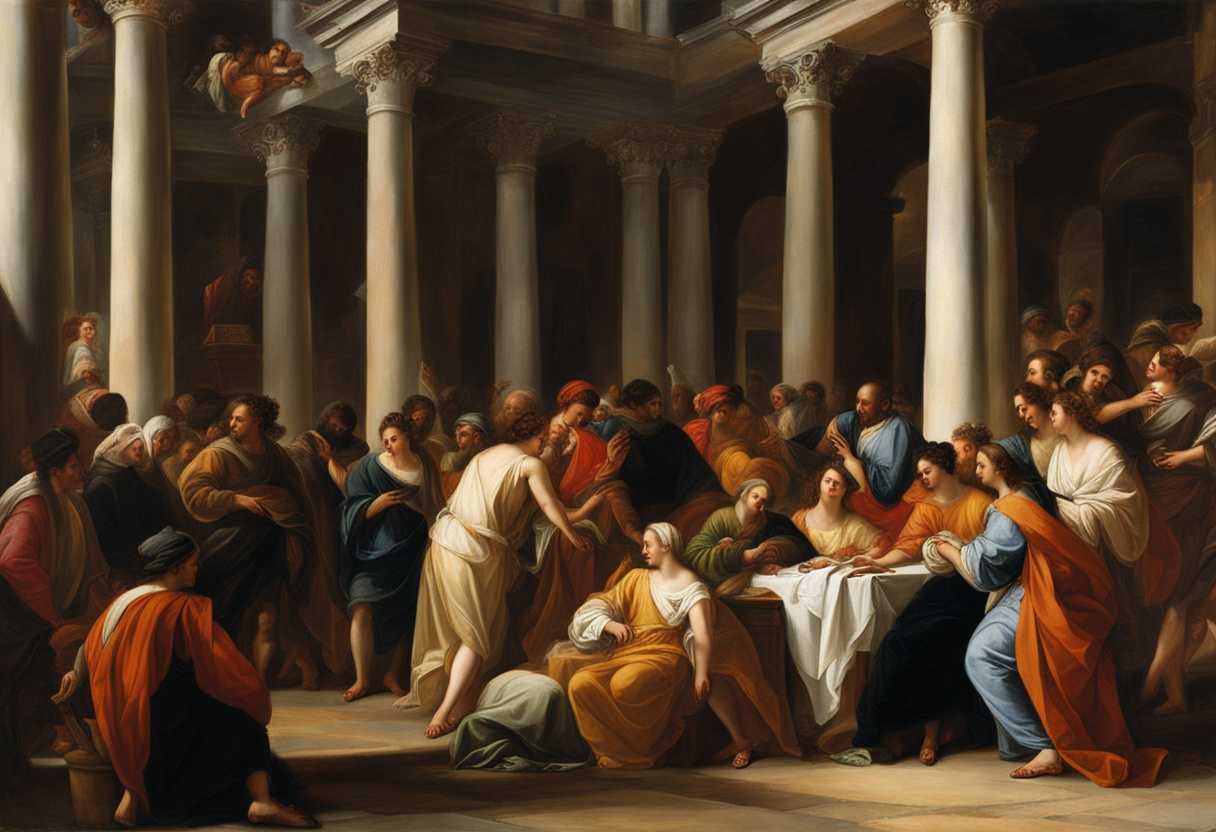
Wisdom: Proverbs: Practical Advice For Daily Living
The Book of Wisdom, also known as the Wisdom of Solomon, is a fascinating deuterocanonical work that was likely written in the 1st century BCE, during a tumultuous period in the Hellenistic world. Composed in the vibrant, cosmopolitan city of Alexandria, Egypt, the book reflects the diverse population and intellectual ferment of the time.
Alexandria was a hub of Hellenistic culture and learning, home to Greeks, Egyptians, and Jews all grappling with the ideas and philosophies of the ancient world. The political landscape was in flux, with the decline of the Ptolemaic Dynasty and the rise of the Roman Empire. This era was marked by power struggles, religious tensions, and philosophical debates – all of which are echoed in the themes and content of the Book of Wisdom.
The people of Alexandria were an intellectually curious group, wrestling with questions of morality, justice, and the divine. The book captures the concerns and perspectives of the Jewish community as they sought to reconcile their traditional beliefs with the dominant Hellenistic culture.
The significance of the Book of Wisdom within Christianity cannot be overstated. Its teachings on the nature of wisdom, the relationship between virtue and divine favor, and the triumph of the righteous have profoundly influenced Christian theology and ethics. The book’s views on the immortality of the soul and the resurrection of the body have also shaped Christian eschatology. Truly, the Book of Wisdom stands as a testament to the intellectual and spiritual richness of the Hellenistic world, leaving a lasting impact on the development of Christian thought and tradition.
The Author of Wisdom
The Book of Wisdom, also known as the Wisdom of Solomon, is traditionally attributed to King Solomon, the son of King David. Solomon is well-known in the Hebrew Bible for being one of the wisest men to have ever lived. He was beloved by God and known for his exceptional wisdom, as demonstrated by the famous story of him resolving a dispute between two women claiming to be the mother of the same child by suggesting to split the baby in half.
Solomon’s motivation for writing the Book of Wisdom likely stemmed from his desire to pass on his wisdom and knowledge to future generations. He wanted to educate and guide his people in understanding the ways of God and living a righteous life. The book is filled with insightful teachings, wise sayings, and reflections on the nature of wisdom, righteousness, and the importance of living a moral life.
Despite his wisdom, Solomon faced personal challenges and struggles in his own life. Despite his devout beginnings, towards the end of his life, Solomon’s excessive wealth, power, and many foreign wives led him astray from his faith. This inner turmoil and conflict likely influenced the themes of repentance, seeking forgiveness, and returning to God featured in the Book of Wisdom. King Solomon’s authorship of this book ultimately serves as a testament to his legacy as a wise king and a teacher of righteousness.
Overview of Wisdom
The Book of Wisdom, also known as the Wisdom of Solomon, is a remarkable work found in the Septuagint and the Vulgate. Often considered part of the wisdom literature in the Old Testament, it is attributed to the renowned King Solomon, renowned for his great wisdom. This book takes the form of a philosophical discourse, exploring profound themes such as the nature of wisdom, righteousness, and the immortality of the soul.
The structure of the Book of Wisdom can be divided into three main sections. The first part (chapters 1-6) emphasizes the importance of wisdom and righteousness, contrasting the paths of the righteous and the wicked, while also discussing the benefits of wisdom and the consequences of rejecting it. For instance, it reflects on the immortality of the soul and the rewards awaiting the righteous in the afterlife.
The second section (chapters 7-9) focuses on the personification of wisdom as a divine attribute, delving into the relationship between wisdom and God. It describes wisdom as a reflection of God’s glory and a source of understanding and virtue, culminating in a prayer where the author humbly asks God for the gift of wisdom to govern his people.
The third and final section (chapters 10-19) contains historical and theological reflections on the wisdom of God throughout the story of salvation. It highlights the role of wisdom in the Exodus narrative, the protection of the righteous, and the punishment of the wicked, recounting how wisdom guided and safeguarded the righteous figures of the Old Testament.
The Book of Wisdom holds significant importance in Christianity, as it provides insights into the nature of wisdom, righteousness, and the immortality of the soul. It also contains passages that resonate with themes found in the New Testament, such as the suffering of the righteous and the concept of wisdom as a divine attribute. This work serves as a valuable source of moral and spiritual teachings, emphasizing the crucial importance of seeking wisdom and living a righteous life in accordance with God’s will.
Key themes of Wisdom
Wisdom is about Integrity
For the book of Wisdom emphasizes the importance of integrity, portraying it as a valuable trait that leads to righteousness and wisdom. In Wisdom 1:1, it is stated that those with integrity have a pure soul and are guided by God’s spirit. The book highlights that integrity involves being honest, just, and upright in all aspects of life. In Wisdom 7:25-26, it is described as more beautiful than the sun and surpassing all the stars. The book also warns against the consequences of lacking integrity, stating that the unrighteous will face judgment and punishment. Ultimately, the book of Wisdom teaches that integrity is essential for a fulfilling and righteous life, leading to wisdom and favor from God.
Wisdom is about Compassion
A key theme in the book of Wisdom is compassion. The text emphasizes the importance of showing kindness and mercy towards others, especially the vulnerable and marginalized. In Wisdom 11:24-26, it is stated that God’s mercy extends to all creation, and in turn, humans are called to imitate this compassion in their interactions with one another. The book also highlights the idea that those who show compassion will themselves receive mercy (Wisdom 6:6). Ultimately, the message of compassion in the book of Wisdom serves as a reminder of the importance of empathy and care for one another, reflecting the divine love and mercy that God shows to all.
Wisdom is about Obedience
Wisdom, as depicted in the book of Wisdom, emphasizes the importance of obedience to God’s commandments. The text highlights that those who listen and follow God’s laws will be blessed with understanding and protection (Wisdom 7:27). It also warns against the consequences of disobedience, stating that those who reject wisdom and righteousness will face judgment (Wisdom 1:7). The book encourages readers to seek wisdom diligently, for it brings peace, joy, and eternal life to those who embrace it (Wisdom 8:17-18). Ultimately, the theme of obedience in the book of Wisdom serves as a reminder that following God’s ways leads to a fulfilling and righteous life.
Important Verses in Wisdom:
Wisdom 1:1: 1 The proverbs of Solomon the son of David, king of Israel;
Wisdom 1:13-14: 13 For God made not death: neither hath he pleasure in the destruction of the living.
14 For he created all things, that they might have their being: and the generations of the world were healthful; and there is no poison of destruction in them, nor the kingdom of death upon the earth:
Wisdom 2:23-24: 23 For God created man to be immortal, and made him to be an image of his own eternity.
24 But through envy of the devil came death into the world: and they that do hold of his side do find it.
Wisdom 3:1-3: 1 But the souls of the righteous are in the hand of God, and there shall no torment touch them.
2 In the sight of the unwise they seemed to die: and their departure is taken for misery,
3 And their passing away was thought an affliction,
Wisdom 3:7-9: 7 And in the time of their visitation they shall shine, and run to and fro like sparks among the stubble.
8 They shall judge the nations, and have dominion over the people, and their Lord shall reign for ever.
9 They that put their trust in him shall understand the truth: and such as be faithful in love shall abide with him: for grace and mercy is to his saints, and he hath care for his elect.
Wisdom 4:7-9: 7 But though the righteous be prevented with death, yet shall he be in rest.
8 For honourable age is not that which standeth in length of time, nor that is measured by number of years.
9 They that put their trust in him shall understand the truth: and such as be faithful in love shall abide with him: for grace and mercy is to his saints, and he hath care for his elect.
Wisdom 5:15-16: 15 But the righteous live for evermore; their reward also is with the Lord, and the care of them is with the most High.
16 Therefore shall they receive a glorious kingdom, and a beautiful crown from the Lord’s hand: for with his right hand shall he cover them, and with his arm shall he protect them.
Wisdom 6:12-16: 12 Wisdom is glorious, and never fadeth away: yea, she is easily seen of them that love her, and found of such as seek her.
13 For she is easy to be intreated, and to be seen of them that love her, and found of such as seek her.
14 For wisdom is better than rubies; and all the things that may be desired are not to be compared to it.
15 To think therefore upon her is perfection of wisdom: and whoso watcheth for her shall quickly be without care.
16 For she goeth about seeking such as are worthy of her, sheweth herself favourably unto them in the ways, and meeteth them in every thought.
Wisdom 7:22-30: 22 For wisdom is a defence, and money is a defence: but the excellency of knowledge is, that wisdom giveth life to them that have it.
23 For God created man to be immortal, and made him to be an image of his own eternity.
24 For wisdom is more moving than any motion: she passeth and goeth through all things by reason of her pureness.
25 For she is the breath of the power of God, and a pure influence flowing from the glory of the Almighty: therefore can no defiled thing fall into her.
26 For she is the brightness of the everlasting light, the unspotted mirror of the power of God, and the image of his goodness.
27 And being but one, she can do all things: and remaining in herself, she maketh all things new: and in all ages entering into holy souls, she maketh them friends of God, and prophets.
28 For God loveth none but him that dwelleth with wisdom.
29 For she is more beautiful than the sun, and above all the order of stars: being compared with the light, she is found before it.
30 For after this cometh night: but no evil shall have power to overcome wisdom.
Wisdom 8:7: 7 And if a man love righteousness her labours are virtues: for she teacheth temperance and prudence, justice and fortitude: which are such things, as men can have nothing more profitable in their life.
Wisdom 9:17-18: 17 And thy counsel who hath known, except thou give wisdom, and send thy Holy Spirit from above?
18 And so the paths of them that are in the earth cannot be found out.
Wisdom 11:24-26: 24 For thou lovest all the things that are, and abhorrest nothing which thou hast made: for never wouldest thou have made any thing, if thou hadst hated it.
25 And how could anything have endured, if thou hadst not willed it? or been preserved, if not called by thee?
For it was not an herb, but a compound of many drugs, and a confection that Healed all men.
Wisdom 13:1-9: 1 Surely vain are all men by nature, who are ignorant of God, and could not out of the good things that are seen know him that is: neither by considering the works did they acknowledge the workmaster;
2 But deemed either fire, or wind, or the swift air, or the circle of the stars, or the violent water, or the lights of heaven, to be the gods which govern the world.
3 With whose beauty if they being delighted took them to be gods; let them know how much better the Lord of them is: for the first author of beauty hath created them.
4 But if they were astonished at their power and virtue, let them understand by them how much mightier he is that made them.
5 For by the greatness and beauty of the creatures proportionably the maker of them is seen.
6 And yet these cannot plead their own cause, neither deliver themselves from war:
7 For being conversant in his works, they search him diligently, and believe their sight: because the things are beautiful that are seen.
8 But they are miserable, and their hope is among the dead; who are ascribed to the gods of the nations, which are made of wood and stone, and are overlaid with gold and silver, and they are likened to a stone that is hewn out of the mountain, without feeling or understanding.
9 For if they were able to know so much, that they could aim at the world, how did they not sooner find out the Lord thereof?
Wisdom 18:14-15: 14 For while all things were in quiet silence, and that night was in the midst of her swift course,
15 Thine Almighty word leaped down from heaven out of thy royal throne, as a fierce man of war into the midst of a land of destruction.

Reverend Michael Johnson is an experienced Church Minister with a profound expertise in spirituality and guidance. With a serene presence and a compassionate heart, he has faithfully served his congregation for over 20 years, leading them on a spiritual journey towards inner peace and enlightenment. Reverend Johnson’s extensive knowledge of religious philosophies and profound understanding of human nature have made him a trusted confidant and mentor to many, as he seamlessly weaves his profound wisdom into life teachings. Reverend Johnson’s calming demeanor and empathetic nature continue to uplift and heal souls, nurturing a sense of unity and tranquility within his community.