
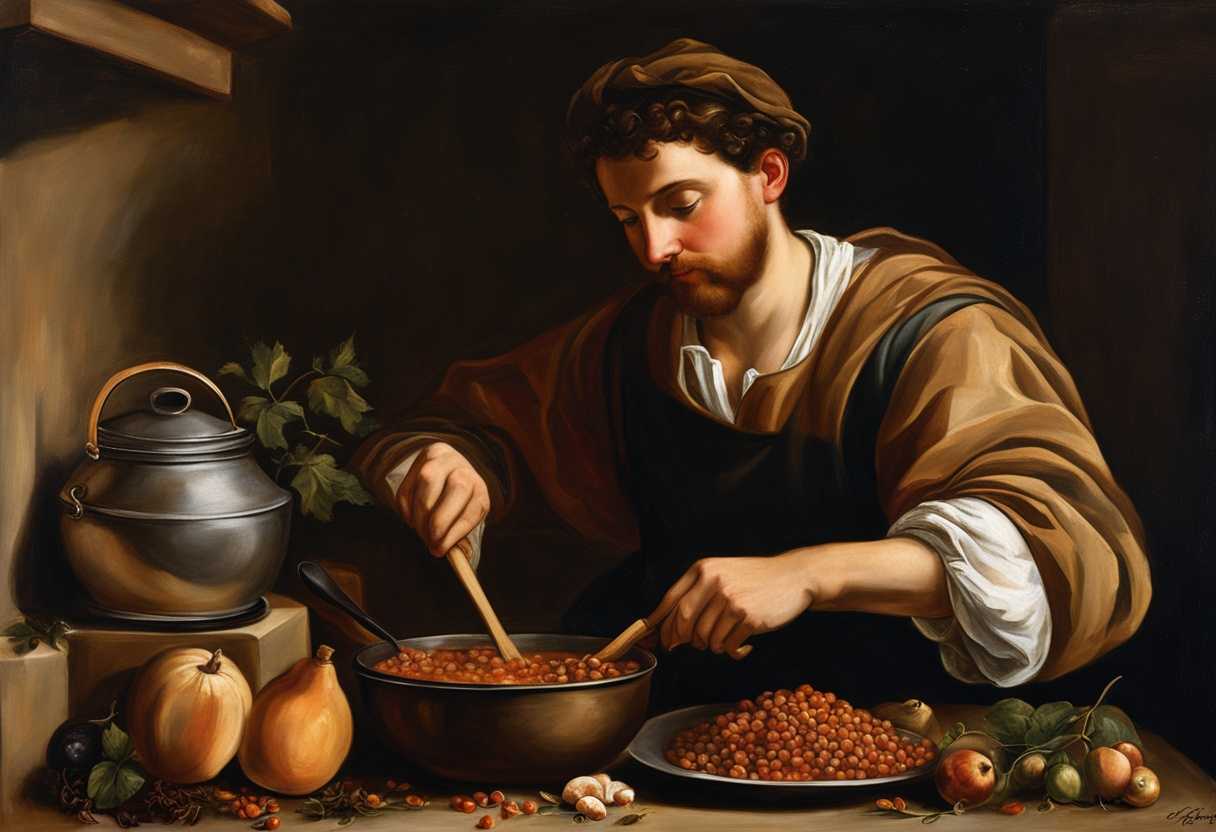
In the Bible, lentils are mentioned in the context of sustenance and survival, notably in Genesis 25:29-34, where Jacob prepares a lentil stew that leads to Esau selling his birthright. They symbolize basic nourishment and the human tendency to prioritize immediate needs over lasting blessings.
Scripture
29 Once when Jacob was cooking stew, Esau came in from the field, and he was exhausted.
30 And Esau said to Jacob, “Let me eat some of that red stew, for I am exhausted!” (Therefore his name was called Edom.)
31 Jacob said, “Sell me your birthright now.”
32 Esau said, “Behold, I am about to die; of what use is a birthright to me?”
33 Then Jacob said, “Swear to me now.” So he swore to him and sold his birthright to Jacob.
34 Then Jacob gave Esau bread and lentil stew, and he ate and drank and rose and went his way. So Esau despised his birthright.
Biblical Significance of Lentils
Lentils, as mentioned in Genesis 25:29-34, hold significant symbolic meaning in the biblical narrative beyond their simple nutritional value. The episode of Jacob cooking stew and Esau selling his birthright for a bowl of lentil soup underscores the theme of immediate gratification versus long-term welfare. Esau’s impulsive decision to trade his birthright—a symbol of his familial identity and divine promise—for a transient meal illustrates a fundamental human inclination towards prioritizing physical needs over spiritual inheritance. This encounter highlights the dangers of insatiable desires and the profound implications of choices made in moments of weakness. The lentils, thus, become emblematic of the fleeting nature of worldly pleasures compared to the eternal significance of one’s covenant with God.
Moreover, the symbolism of lentils extends into broader biblical teachings that encourage reliance on God for sustenance and the importance of valuing spiritual over temporal riches. In the New Testament, this theme resonates with passages such as Matthew 6:25-34, where Jesus teaches about God’s provision—emphasizing that life is more than food and that one should seek the Kingdom of God rather than be consumed by anxiety over material needs. Lentils, as a staple food in biblical times, serve as a reminder that while physical sustenance is necessary, it should not overshadow the pursuit of spiritual nourishment and divine promises that define our true identity and purpose. Thus, the narrative surrounding lentils invites readers to reflect on their values and motivations, encouraging a deeper understanding of what it means to live a life grounded in faith and divine promise.
In addition to their representation of immediate gratification versus lasting values, lentils also appear in biblical texts as symbols of humility and simplicity. The prominence of lentils in the diet of ancient peoples marks them as a food of the common folk. Unlike more luxurious items, lentils suggest a God who is present in the everyday lives of the less affluent, reminding believers that divine favor is not exclusively tied to wealth or status. This notion resonates with the overall biblical ethos that often elevates the humble while challenging the powerful. By choosing simple foods like lentils, biblical narratives reveal how God’s provision is accessible to everyone, regardless of social standing.
Furthermore, lentils can symbolize the dual nature of sustenance—both literal and spiritual. In various scriptural contexts, food serves not only as physical sustenance but also as a metaphor for spiritual nourishment. The consumption of lentils could lead one to consider the interconnectedness of bodily needs with spiritual fulfillment. Several passages call attention to the importance of spiritual ‘food’ or teachings, which promote understanding and growth in faith. Just as the body requires nourishment to thrive, the spirit seeks food in God’s word and guidance. In this way, lentils extend an invitation to reflect on the balance between sustaining the body and nurturing the soul, thus encouraging believers to seek holistic well-being that honors both physical needs and spiritual growth.
Symbol of Humility and Simplicity
Lentils, as a staple food, represent humility and the simplicity of life. In biblical times, they were a common food among the poorer classes, contrasting with more luxurious foods. This association with modesty serves as a reminder of the value of humility in one’s spiritual journey, emphasizing that true worth is not found in material abundance but in a humble heart and reliance on God.
Representation of Nourishment and Sustenance
Lentils are a source of nourishment, symbolizing God’s provision for His people. Throughout the Bible, food often signifies sustenance not only for the body but also for the soul. Lentils, being a nutritious legume, can be seen as a metaphor for the spiritual nourishment that comes from faith and obedience to God. This highlights the importance of seeking spiritual sustenance in one’s life, much like one would seek physical nourishment.
Connection to Covenant and Community
In various cultures, lentils have been used in communal meals and rituals, symbolizing unity and shared life. In the biblical context, food often plays a role in covenant relationships, where sharing a meal signifies fellowship and commitment. The act of sharing lentils can be viewed as a representation of the bonds of community and the importance of living in harmony with one another, reflecting the biblical call to love and support one another as part of the body of Christ.
How to Cultivate Humility and Trust in God’s Provision
Cultivating humility and trust in God’s provision is a beautiful journey that begins with recognizing our own limitations and the vastness of God’s grace. Start by reflecting on the moments in your life when you’ve felt overwhelmed or uncertain—these are often the times when God’s provision shines the brightest. Embrace a posture of gratitude, acknowledging that every good gift comes from Him (James 1:17). Spend time in prayer, asking God to help you release your need for control and to fill your heart with a deep trust in His plans, even when they differ from your own. Surround yourself with a community of believers who can encourage you and share their own stories of faith. Remember, humility is not thinking less of yourself, but thinking of yourself less; it’s about placing your trust in God’s goodness and timing, knowing that He cares for you deeply. As you practice these principles, you’ll find that your heart becomes more attuned to His voice, and your faith will grow stronger, allowing you to navigate life’s challenges with a peaceful spirit.
Bible References to the Significance of Lentils:
2 Samuel 17:27-29: 27 When David came to Mahanaim, Shobi the son of Nahash from Rabbah of the Ammonites, and Machir the son of Ammiel from Lo-debar, and Barzillai the Gileadite from Rogelim,
28 brought beds, basins, and earthen vessels, wheat, barley, flour, parched grain, beans and lentils,
29 honey, curds, sheep, and cheese from the herd, for David and the people with him to eat, for they said, “The people are hungry and weary and thirsty in the wilderness.”
2 Samuel 23:11-12: 11 And next to him was Shammah, the son of Agee the Hararite. The Philistines gathered together at Lehi, where there was a plot of ground full of lentils, and the men fled from the Philistines.
12 But he took his stand in the midst of the plot and defended it and struck down the Philistines, and the Lord worked a great victory.
Ezekiel 4:9-13: 9 “And you, take wheat and barley, beans and lentils, millet and emmer, and put them into a single vessel and make your bread from them.
10 And your food that you eat shall be by weight, twenty shekels a day; from day to day you shall eat it.
11 You shall drink water by measure, the sixth part of a hin; you shall drink at fixed times.
12 And you shall eat it as a barley cake, baking it in their sight on human dung.”
13 And the Lord said, “Thus shall the people of Israel eat their bread unclean, among the nations where I will drive them.”

Rev. François Dupont is a dedicated church minister with a wealth of experience in serving spiritual communities. With a calm and serene demeanor, he has been devoted to sharing the message of love, compassion, and tolerance for over two decades. Through his thoughtful sermons, compassionate counseling, and unwavering support, Rev. Dupont has touched the lives of countless individuals, allowing them to find solace and strength during difficult times. His serene presence and deep understanding of the human condition make him a trusted guide for those seeking spiritual nourishment and guidance.