
Silas, also known as Silvanus, is a key figure in the New Testament known for his role as a companion of the Apostle Paul during missionary journeys and as a leader in the early church. His significance lies in his contributions to the spread of the Gospel and his presence in important events, such as the imprisonment of Paul and his own dedication to the ministry, which reflects steadfast faith and partnership in advancing Christianity.
Scripture
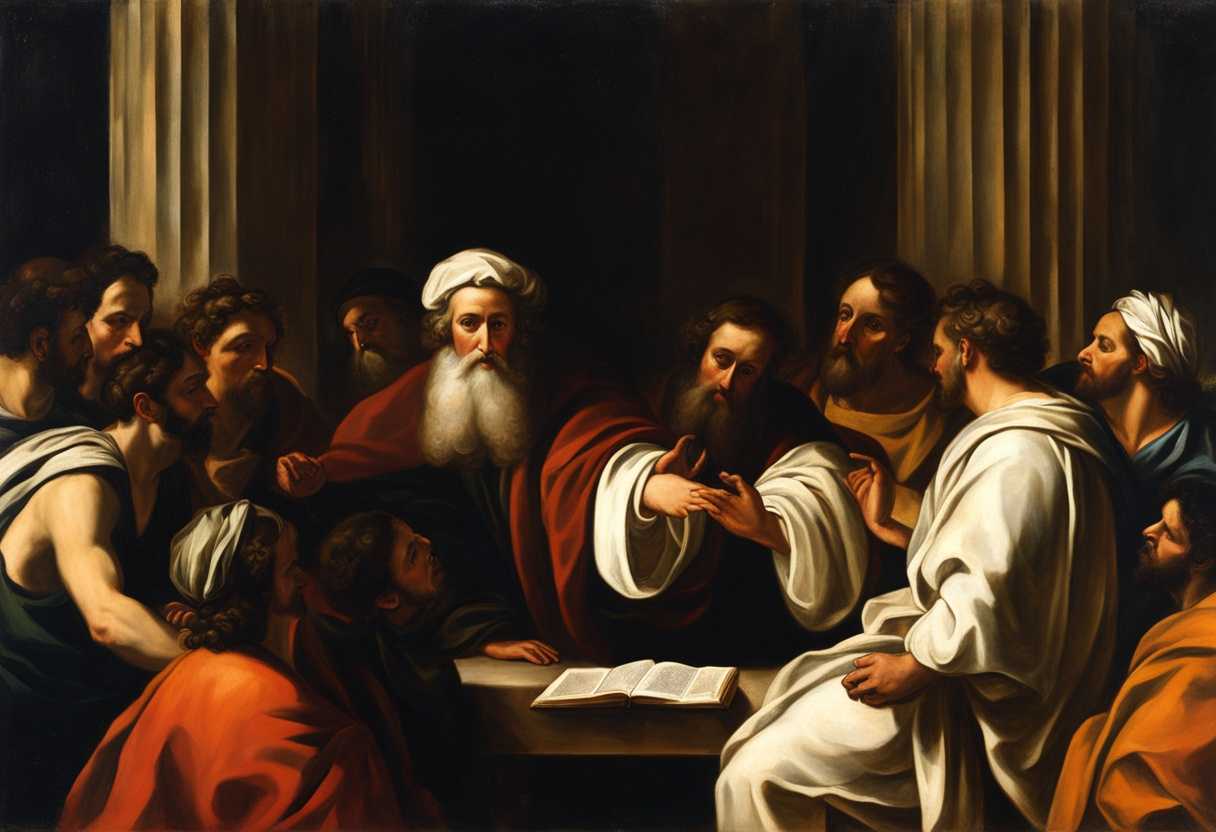
22 Then it seemed good to the apostles and the elders, with the whole church, to choose men from among them and send them to Antioch with Paul and Barnabas. They sent Judas called Barsabbas, and Silas, leading men among the brothers,
23 They sent this letter by them: “The apostles and the elders, your brothers, To the brothers who are of the Gentiles in Antioch and Syria and Cilicia, greetings.
24 Since we have heard that some persons have gone out from us and troubled you with words, unsettling your minds, although we gave them no instructions,
25 it has seemed good to us, having come to one accord, to choose men and send them to you with our beloved Barnabas and Paul,
26 men who have risked their lives for the name of our Lord Jesus Christ.
27 We have therefore sent Judas and Silas, who themselves will tell you the same things by word.
28 For it has seemed good to the Holy Spirit and to us to lay on you no greater burden than these requirements:
29 that you abstain from what has been sacrificed to idols, and from blood, and from what has been strangled, and from sexual immorality. If you keep yourselves from these, you will do well. Farewell.”
30 So when they were sent off, they went down to Antioch, and having gathered the congregation together, they delivered the letter.
31 And when they had read it, they rejoiced because of its encouragement.
32 And Judas and Silas, who were themselves prophets, encouraged and strengthened the brothers with many words.
33 And after they had spent some time, they were sent off in peace by the brothers to those who had sent them.
34 But it seemed good to Silas to remain there.
35 But Paul and Barnabas remained in Antioch, teaching and preaching the word of the Lord, with many others also.
Significance of Silas in the Bible
Silas, also referred to as Silvanus, is a pivotal figure in the New Testament, embodying the spirit of collaboration and perseverance essential to the early Christian movement. His significance is most notably highlighted in Acts 15-16, where he accompanies Paul on his second missionary journey after the Council of Jerusalem. This journey not only expands the reach of the Gospel but also represents the transition from a primarily Jewish audience to a wider Gentile mission, a key theme in Acts. Silas’s unwavering support during adversity, particularly during their imprisonment in Philippi (Acts 16:23-26), showcases his deep faith and resilience. Rather than succumbing to despair, Silas joins Paul in praying and singing hymns, which leads to a miraculous earthquake that frees them, emphasizing the power of faith and worship even amidst persecution.
Moreover, Silas’s dual role as both an evangelist and a letter carrier (1 Thessalonians 1:1) underlines his importance in early church leadership and communication. He was instrumental in transmitting Paul’s teachings, thus contributing to the establishment of Christian doctrine and community cohesion. His presence in Paul’s letters conveys mutual respect and trust, reflecting the collaborative spirit necessary for the fledgling church’s growth (2 Corinthians 1:19). Silas serves as a model for believers, illustrating that steadfastness in faith, even when faced with trials, is vital for the advancement of the Gospel. His legacy as a co-worker with Paul ultimately reinforces the message that Christian ministry thrives on partnership and collective faith.
Silas’s impact extends beyond his immediate contributions as an associate of Paul and an evangelist. He is a testament to the transformational power of the Gospel and the inclusivity that characterized the early church. By embracing his role within a broader mission, Silas plays a crucial part in bridging cultural divides, particularly in synagogues where both Jewish and Gentile believers congregated. His ability to share the faith in a diverse setting showcases the dynamic nature of early Christian evangelism, emphasizing that faith transcends cultural and ethnic barriers.
In addition to his missionary efforts, Silas’s contributions as a leader are further illustrated in his later epistolary involvements, where he is occasionally mentioned alongside Paul, signifying a strong partnership that fosters unity and resilience in the face of opposition. The bond they shared reflects the underlying network of support that was vital for encouraging the scattered Christian communities across the Roman Empire. Silas’s role in this network highlights the importance of trust and accountability in ministry, serving as an example for current generations of believers who seek to navigate their journeys of faith in community, particularly in helping each other withstand challenges and promote the Gospel’s transformative message. Thus, Silas emerges not only as a companion to Paul but also as an essential figure representing the collaborative spirit that was integral to the nascent church’s mission and growth.
A Model of Faithful Partnership
Silas serves as a prime example of faithful partnership in ministry. His collaboration with Paul highlights the importance of companionship in spreading the Gospel. Together, they faced trials and challenges, demonstrating that effective ministry often requires a supportive team. Silas’s unwavering commitment to the mission underscores the value of unity and shared purpose in the Christian faith.
A Symbol of Perseverance in Adversity
Silas’s experiences reflect the theme of perseverance in the face of adversity. His imprisonment alongside Paul illustrates the challenges early Christians faced for their beliefs. Silas’s ability to remain steadfast and continue praising God despite difficult circumstances serves as an inspiration for believers to maintain their faith during trials. His story encourages Christians to find strength in their faith, even when confronted with hardship.
An Instrument of Encouragement and Teaching
Silas played a significant role in the early church as a messenger and teacher. His involvement in the establishment of new congregations and his contributions to the letters sent to various communities highlight his importance in nurturing and encouraging believers. Silas’s presence in these formative years of the church emphasizes the need for strong leaders who can guide and support the faith of others, reinforcing the idea that teaching and encouragement are vital components of spiritual growth.
How to Strengthen Your Faith and Missionary Connections
Strengthening your faith and deepening your missionary connections is a beautiful journey that requires both intentionality and openness. Start by immersing yourself in prayer and scripture; these are the lifelines that connect you to God and His purpose for your life. Consider joining a small group or Bible study where you can share experiences and learn from others, fostering a sense of community that is vital for growth. Look for opportunities to serve, whether locally or globally, as these experiences not only expand your understanding of different cultures but also allow you to live out your faith in action. Remember, it’s about building relationships—both with God and with others—so be open to sharing your own story and listening to those around you. As you step out in faith, you’ll find that your connections will deepen, and your mission will become clearer, guiding you to make a meaningful impact in the world.
Bible References to Silas’s Role and Significance:
Acts 15:40-41: 40 but Paul chose Silas and departed, having been commended by the brothers to the grace of the Lord.
41 And he went through Syria and Cilicia, strengthening the churches.
Acts 16:19-34: 19 But when her owners saw that their hope of gain was gone, they seized Paul and Silas and dragged them into the marketplace before the rulers.
20 And when they had brought them to the magistrates, they said, “These men are Jews, and they are disturbing our city.
21 They advocate customs that are not lawful for us as Romans to accept or practice.”
22 The crowd joined in attacking them, and the magistrates tore the garments off them and gave orders to beat them with rods.
23 And when they had inflicted many blows upon them, they threw them into prison, ordering the jailer to keep them safely.
24 Having received this order, he put them into the inner prison and fastened their feet in the stocks.
25 About midnight Paul and Silas were praying and singing hymns to God, and the prisoners were listening to them,
26 and suddenly there was a great earthquake, so that the foundations of the prison were shaken.
27 When the jailer woke and saw that the prison doors were open, he drew his sword and was about to kill himself, supposing that the prisoners had escaped.
28 But Paul cried with a loud voice, “Do not harm yourself, for we are all here.”
29 And the jailer called for lights and rushed in, and trembling with fear he fell down before Paul and Silas.
30 Then he brought them out and said, “Sirs, what must I do to be saved?”
31 And they said, “Believe in the Lord Jesus, and you will be saved, you and your household.”
32 And they spoke the word of the Lord to him and to all who were in his house.
33 And he took them the same hour of the night and washed their wounds; and he was baptized at once, he and all his family.
34 Then he brought them up into his house and set food before them. And he rejoiced along with his entire household that he had believed in God.
Acts 17:1-9: 1 Now when they had passed through Amphipolis and Apollonia, they came to Thessalonica, where there was a synagogue of the Jews.
2 And Paul went in, as was his custom, and on three Sabbath days he reasoned with them from the Scriptures,
3 explaining and proving that it was necessary for the Christ to suffer and to rise from the dead, and saying, “This Jesus, whom I proclaim to you, is the Christ.”
4 And some of them were persuaded and joined Paul and Silas, as did a great many of the devout Greeks and not a few of the leading women.
5 But the Jews were jealous, and taking some wicked men of the rabble, they formed a mob, set the city in an uproar, and attacked the house of Jason, seeking to bring them out to the crowd.
6 And when they could not find them, they dragged Jason and some of the brothers before the city authorities, shouting, “These men who have turned the world upside down have come here also,
7 and Jason has received them, and they are all acting against the decrees of Caesar, saying that there is another king, Jesus.”
8 Now when they had passed through Amphipolis and Apollonia, they came to Thessalonica, where there was a synagogue of the Jews.
9 And when they had taken security from Jason and the rest, they let them go.
Acts 18:5-11: 5 When Silas and Timothy arrived from Macedonia, Paul was occupied with the word, testifying to the Jews that the Christ was Jesus.
6 And when they opposed and reviled him, he shook out his garments and said to them, “Your blood be on your own heads! I am innocent. From now on I will go to the Gentiles.”
7 And he left there and went to the house of a man named Titius Justus, a worshiper of God. His house was next door to the synagogue.
8 Crispus, the ruler of the synagogue, believed in the Lord, together with his entire household. And many of the Corinthians hearing Paul believed and were baptized.
9 And the Lord said to Paul one night in a vision, “Do not be afraid, but go on speaking and do not be silent,
10 for I am with you, and no one will attack you to harm you, for I have many in this city who are my people.
11 And he stayed a year and six months, teaching the word of God among them.
2 Corinthians 1:19-22: 19 For the Son of God, Jesus Christ, whom we proclaimed among you, Silvanus and Timothy and I, was not Yes and No, but in him it is always Yes.
20 For all the promises of God find their Yes in him. That is why it is through him that we utter our Amen to God for his glory.
21 And it is God who establishes us with you in Christ, and has anointed us,
22 and who has also put his seal on us and given us his Spirit in our hearts as a guarantee,
1 Thessalonians 1:1-10: 1 Paul, Silvanus, and Timothy, To the church of the Thessalonians in God the Father and the Lord Jesus Christ: Grace to you and peace.
2 We give thanks to God always for all of you, constantly mentioning you in our prayers,
3 remembering before our God and Father your work of faith and labor of love and steadfastness of hope in our Lord Jesus Christ.
4 For we know, brothers loved by God, that he has chosen you,
5 because our gospel came to you not only in word, but also in power and in the Holy Spirit and with full conviction.
6 And you became imitators of us and of the Lord, for you received the word in much affliction, with the joy of the Holy Spirit,
7 so that you became an example to all the believers in Macedonia and in Achaia.
8 For not only has the word of the Lord sounded forth from you in Macedonia and Achaia, but your faith in God has gone forth everywhere, so that we need not say anything.
9 For they themselves report concerning us the kind of reception we had among you, and how you turned to God from idols to serve the living and true God,
10 and to wait for his Son from heaven, whom he raised from the dead, Jesus who delivers us from the wrath to come.
2 Thessalonians 1:1-12: 1 Paul, Silvanus, and Timothy, To the church of the Thessalonians in God our Father and the Lord Jesus Christ:
2 Grace to you and peace from God our Father and the Lord Jesus Christ.
3 We ought always to give thanks to God for you, brothers, as is right, because your faith is growing abundantly, and the love of every one of you for one another is increasing.
4 Therefore we ourselves boast about you in the churches of God for your steadfastness and faith in all your persecutions and in the afflictions that you are enduring.
5 This is evidence of the righteous judgment of God, that you may be considered worthy of the kingdom of God, for which you are also suffering—
6 since indeed God considers it just to repay with affliction those who afflict you,
7 and to grant relief to you who are afflicted as well as to us, when the Lord Jesus is revealed from heaven with his mighty angels
8 in flaming fire, inflicting vengeance on those who do not know God and on those who do not obey the gospel of our Lord Jesus.
9 They will suffer the punishment of eternal destruction, away from the presence of the Lord and from the glory of his might,
10 when he comes on that day to be glorified in his saints, and to be marveled at among all who have believed, because our testimony to you was believed.
11 To this end we always pray for you, that our God may make you worthy of his calling and may fulfill every resolve for good and every work of faith by his power,
12 so that the name of our Lord Jesus may be glorified in you, and you in him, according to the grace of our God and the Lord Jesus Christ.
1 Peter 5:12-14: By Silvanus, a faithful brother as I regard him, I have written briefly to you, exhorting and declaring that this is the true grace of God. Stand firm in it.
She who is at Babylon, who is likewise chosen, sends you greetings, and so does Mark, my son.
14 Greet one another with the kiss of love. Peace to all of you who are in Christ.

Reverend Ogunlade is a seasoned Church Minister with over three decades of experience in guiding and nurturing congregations. With profound wisdom and a serene approach, Reverend Ogunlade has carried out various pastoral duties, including delivering uplifting sermons, conducting religious ceremonies, and offering sage counsel to individuals seeking spiritual guidance. Their commitment to fostering harmony and righteousness within their community is exemplified through their compassionate nature, making them a beloved and trusted figure among the congregation.