
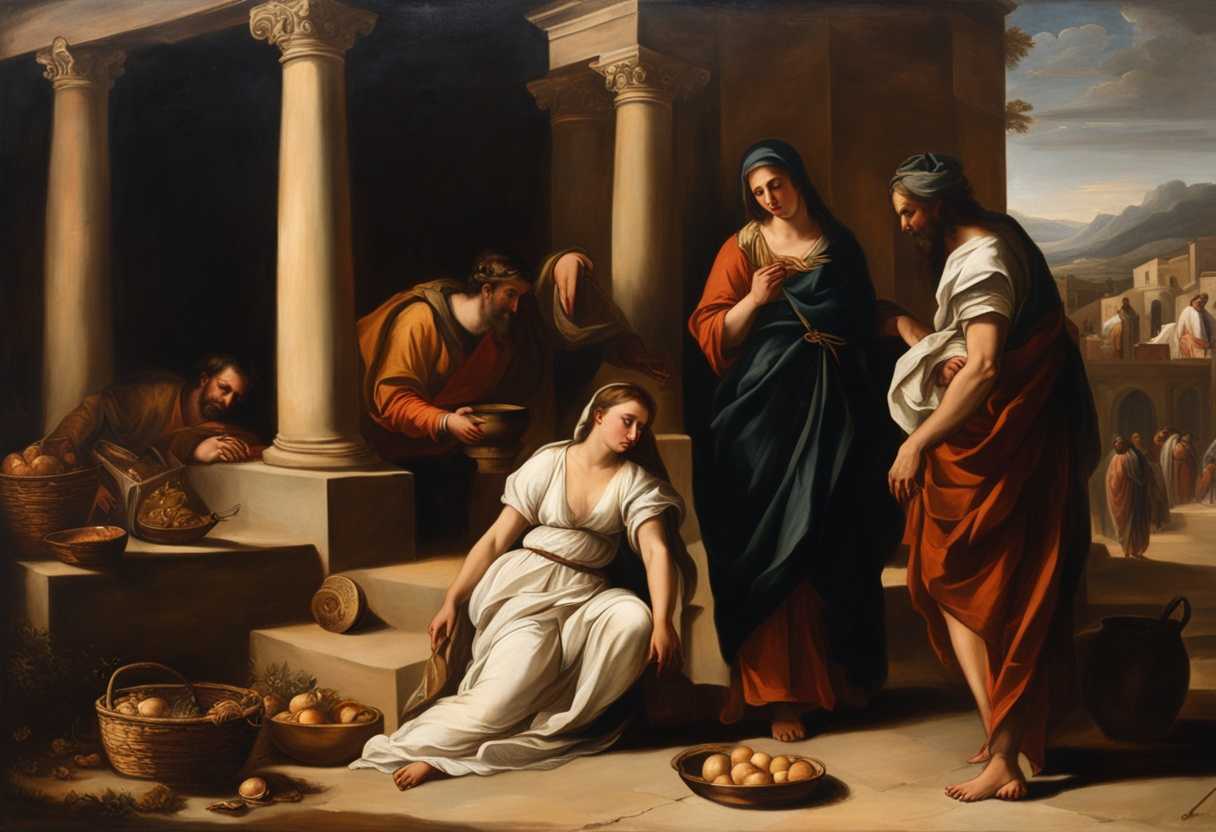
Zarephath, in the Bible, is a town located between Sidon and Tyre, known primarily as the place where the prophet Elijah was sent during a famine to meet a widow who provided him with food (1 Kings 17:9-24). The name Zarephath means “refinery” or “place of smelting,” symbolizing both physical and spiritual purification.
Scripture
8 Then the word of the Lord came to him,
9 “Arise, go to Zarephath, which belongs to Sidon, and dwell there. Behold, I have commanded a widow there to feed you.”
10 So he arose and went to Zarephath. And when he came to the gate of the city, behold, a widow was there gathering sticks. And he called to her and said, “Bring me a little water in a vessel, that I may drink.”
11 And as she was going to bring it, he called to her and said, “Bring me a morsel of bread in your hand.”
12 And she said, “As the Lord your God lives, I have nothing baked, only a handful of flour in a jar and a little oil in a jug. And now I am gathering a couple of sticks that I may go in and prepare it for myself and my son, that we may eat it and die.”
13 And Elijah said to her, “Do not fear; go and do as you have said. But first make me a little cake of it and bring it to me, and afterward make something for yourself and your son.
14 For thus says the Lord, the God of Israel, ‘The jar of flour shall not be spent, and the jug of oil shall not be empty, until the day that the Lord sends rain upon the earth.’”
15 She went and did as Elijah said. And she and he and her household ate for many days.
16 The jar of flour was not spent, neither did the jug of oil become empty, according to the word of the Lord that he spoke by Elijah.
17 After this the son of the woman, the mistress of the house, became ill. And his illness was so severe that there was no breath left in him.
18 And she said to Elijah, “What have you against me, O man of God? You have come to me to bring my sin to remembrance and to cause the death of my son!”
19 And he said to her, “Give me your son.” And he took him from her arms and carried him up into the upper chamber where he lodged, and laid him on his own bed.
20 Then he cried to the Lord, “O Lord my God, have you brought calamity even upon the widow with whom I sojourn, by killing her son?”
21 Then he stretched himself upon the child three times and cried to the Lord, “O Lord my God, let this child’s life come into him again.”
22 And the Lord listened to the voice of Elijah. And the life of the child came into him again, and he revived.
23 And Elijah took the child and brought him down from the upper chamber into the house and delivered him to his mother. And Elijah said, “See, your son lives.”
24 And the woman said to Elijah, “Now I know that you are a man of God, and that the word of the Lord in your mouth is truth.”
Meaning of Zarephath in the Bible
The significance of Zarephath in the Bible extends beyond its geographical presence, epitomizing concepts of divine provision, faith, and the transformative power of God amidst despair. As detailed in 1 Kings 17:9-24, Elijah’s journey to Zarephath during a time of severe drought led him to encounter a widow who, despite her precarious situation, was willing to share her meager resources. In this context, Zarephath represents a crucible of faith, where the widow, faced with the reality of starvation, was asked to trust in God’s provision. This encounter illustrates the biblical theme of God using the seemingly inadequate to accomplish His purposes, emphasizing that faith can lead to miraculous outcomes. When the widow obeyed Elijah’s instructions, her supply of flour and oil miraculously did not run out, symbolizing God’s abundance even in times of extreme scarcity (1 Kings 17:15-16).
Furthermore, the notion of Zarephath as a “place of smelting” carries deep spiritual connotations. Smelting involves a refining process that separates impurities from precious metals, symbolizing the trials that often lead to spiritual refinement and growth. The widow’s story culminates in a profound encounter with God through His miracle of life when her son falls ill and Elijah intercedes for him, bringing him back to life (1 Kings 17:17-24). This act reflects God’s power to transform despair into hope and emphasizes the importance of faith in God’s plans. Overall, Zarephath serves as a reminder that God can work through dire situations to refine our faith and provide sustenance, both physically and spiritually, inviting believers to trust in His provision amidst their trials.
In addition to its pivotal role in the narrative of Elijah and the widow, Zarephath contributes richly to the biblical theme of divine intervention in human distress. The strategic position of Zarephath, situated in Sidon, highlights the cross-cultural reach of God’s grace. The widow, a Gentile woman, is an embodiment of faith in an unexpected context — she represents how God’s mercy extends beyond Israel and invites an inclusive understanding of divine outreach. This encounter underscores the biblical message that God’s providence and miraculous acts can transcend social and ethnic boundaries, affirming that faith can flourish outside the established religious community.
Moreover, Zarephath’s connection to the challenge of faith is further evident in its name, which translates to “the place of smelting.” This metaphorical association invites believers to engage deeply with the idea of being refined through trials. Just as metal is purified through fire, so too are individuals often refined through their experiences of need and reliance on God. This process involves not merely enduring hardship but actively recognizing God’s hand in the midst of struggle. Through the widow’s encounter with Elijah, the experience of the miraculous provision becomes a catalyst for a renewed relationship with God, showcasing that adversity, rather than detracting from faith, can often serve to strengthen it. Ultimately, Zarephath becomes a symbol of hope and transformation, encouraging believers to trust in God’s ability to manifest His glory through their most challenging moments.
A Place of Divine Provision
Zarephath, located between Tyre and Sidon, symbolizes a location where God provides for His people in times of need. The story of the widow of Zarephath illustrates how God can sustain life through seemingly impossible circumstances. This theme of divine provision emphasizes the belief that faith can lead to miraculous outcomes, reinforcing the idea that God cares for those who trust in Him, even in dire situations.
A Symbol of Faith and Obedience
The narrative surrounding Zarephath also highlights the importance of faith and obedience. The widow’s willingness to share her last meal with the prophet Elijah, despite her own desperate situation, serves as a powerful example of selflessness and trust in God’s plan. This act of faith not only leads to her own sustenance but also demonstrates how obedience to God’s commands can result in blessings that extend beyond oneself.
A Foreshadowing of Redemption
Zarephath can also be seen as a foreshadowing of redemption and restoration. The miraculous healing of the widow’s son signifies hope and the power of God to bring life from death. This theme resonates throughout the Bible, pointing to the ultimate redemption found in Christ. The events at Zarephath serve as a precursor to the broader narrative of salvation, illustrating God’s desire to restore and redeem humanity.
How to Trust in God’s Providence Daily
Trusting in God’s providence daily is a journey that requires both intention and practice. Start each day by surrendering your plans and worries to Him in prayer, acknowledging that His understanding far surpasses our own. As you go about your day, remind yourself of the countless times God has provided for you in the past—those moments when you felt lost but later saw His hand guiding you. Embrace the small, everyday blessings, whether it’s a kind word from a friend or a moment of peace in nature, as reminders of His constant presence. When challenges arise, instead of succumbing to anxiety, lean into your faith by reciting scripture that speaks of His faithfulness, like Philippians 4:19, which assures us that He will meet all our needs. By cultivating a heart of gratitude and staying attuned to His voice, you’ll find that trusting in God’s providence becomes a natural part of your daily life, transforming your perspective and deepening your relationship with Him.
Bible References to Zarephath Meaning:
Luke 4:25-26: 25 But in truth, I tell you, there were many widows in Israel in the days of Elijah, when the heavens were shut up three years and six months, and a great famine came over all the land,
26 And Elijah was sent to none of them but only to Zarephath, in the land of Sidon, to a woman who was a widow.

Reverend Ogunlade is a seasoned Church Minister with over three decades of experience in guiding and nurturing congregations. With profound wisdom and a serene approach, Reverend Ogunlade has carried out various pastoral duties, including delivering uplifting sermons, conducting religious ceremonies, and offering sage counsel to individuals seeking spiritual guidance. Their commitment to fostering harmony and righteousness within their community is exemplified through their compassionate nature, making them a beloved and trusted figure among the congregation.