
In the Bible, “common” often refers to something that is general, ordinary, or shared among people, such as in Acts 2:44 where early Christians had all things in common. It can also denote something that is unclean or defiled, as seen in Leviticus, indicating a condition that is not holy or separate.
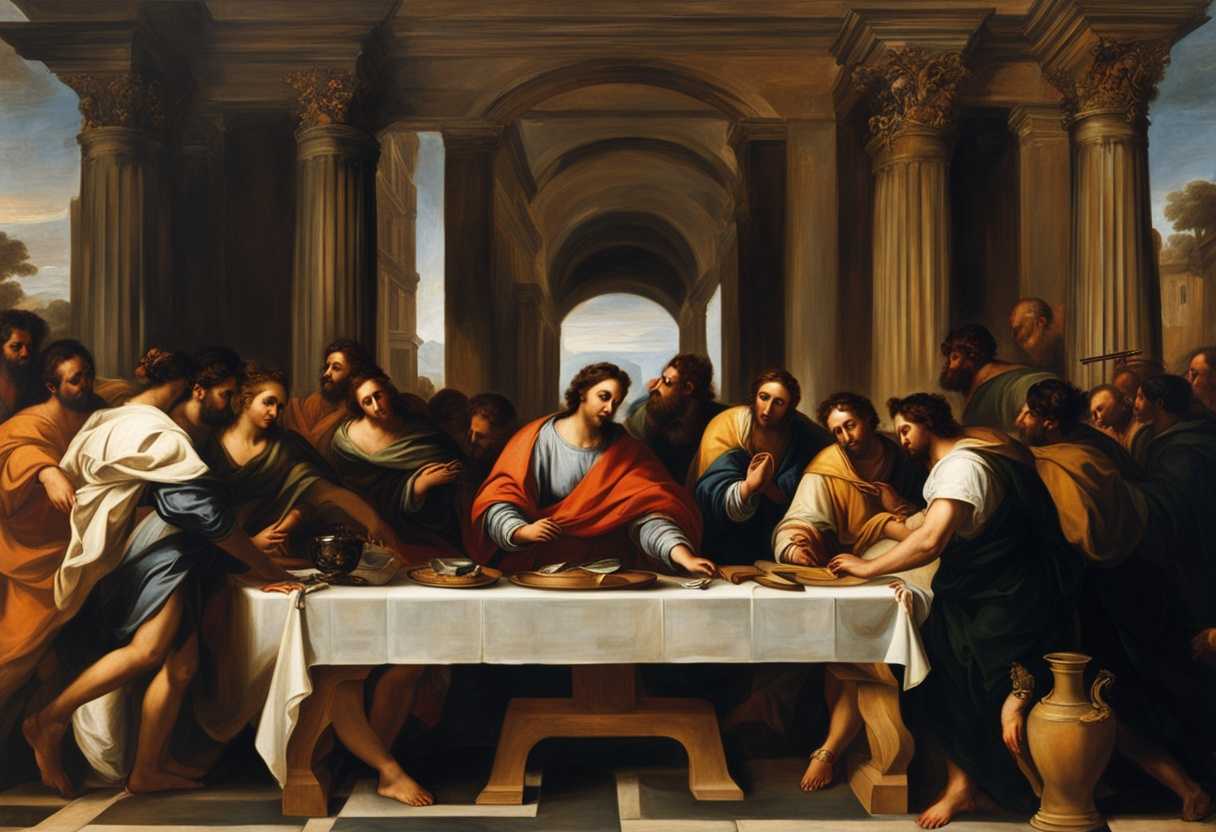
Scripture
9 The next day, as they were on their journey and approaching the city, Peter went up on the housetop about the sixth hour to pray.
10 And he became hungry and wanted something to eat, but while they were preparing it, he fell into a trance.
11 and saw the heavens opened and something like a great sheet descending, being let down by its four corners upon the earth.
12 In it were all kinds of four-footed animals and reptiles and birds of the air.
10 And there came a voice to him: “Rise, Peter; kill and eat.”
14 But Peter said, “By no means, Lord; for I have never eaten anything that is common or unclean.”
15 And the voice came to him again a second time, “What God has made clean, do not call common.”
19 And while Peter was pondering the vision, the Spirit said to him, “Behold, three men are looking for you.
Biblical Meaning of “Common” Explained
In the Bible, the term “common” carries multifaceted meanings that encompass both communal sharing and a state of defilement. The communal aspect of “common” is poignantly illustrated in Acts 2:44, where the early Christians are described as having “all things in common.” This reflects the radical generosity and unity among believers, emphasizing that their material possessions were shared without barriers. This spirit of togetherness highlights the early Church’s commitment to fostering a sense of belonging and mutual support, illustrating an ideal model for Christian community life where personal needs were considered secondary to the welfare of the whole.
Conversely, “common” can also denote a state of being unclean or ordinary in a ritual sense, as prescribed in Leviticus. The distinction between what is sacred and what is common is rooted in the concept of holiness in the Old Testament, which sets apart those things that are dedicated to God. For instance, in Leviticus 10:10, the priests are instructed to distinguish between the holy and the common, which underscores the importance of purity in approaching God. Thus, the term “common” serves as an essential theological contrast: on one hand, it encapsulates the ideal of shared human experience and community; on the other, it signifies the need for discernment in maintaining holiness and purity in one’s relationship with God. This dual understanding invites believers to navigate the tension between everyday life and sacred devotion, reminding them that while they live in a common world, they are called to reflect God’s holiness in their actions and interactions.
Another significant representation of the term “common” in the Bible can be seen through the lens of the early Church’s mission to reach out to those outside the Jewish community. In the New Testament, particularly in the context of Peter’s vision in Acts 10, the concept of “common” emerges in the challenging realization that God does not show favoritism. Here, Peter is confronted with a metaphorical and literal vision of animals deemed “common” and “unclean” by Jewish law, prompting a revelation that God’s grace extends beyond ethnic and ritual boundaries. This pivotal moment illustrates the shift from a narrowly defined understanding of the sacred versus the common to a more expansive view of inclusion and acceptance within the body of Christ. The message that Gentiles were not to be considered “common” or outside of God’s plan for salvation is a powerful reminder of how divine purposes often transcend human categories.
Furthermore, the notion of “common” can also extend to the gifts and callings within the Christian community. In 1 Corinthians 12, Paul speaks of the diversity of spiritual gifts, emphasizing that while there may be many members with different functions, each serves a common purpose – the edification of the body of Christ. Here, the emphasis shifts from merely a sharing of resources to a sharing of innate abilities designed for communal growth. This perspective encourages believers to recognize that while individuals may possess various gifts, their collective use serves the greater good. This understanding of “common” fosters unity amidst diversity, calling Christians to appreciate each other’s contributions in their collective pursuit of faith and mission. Thus, “common” becomes a rallying point for both inclusion and collaboration, driving home the essential truth that every believer, regardless of background or gifting, has a valuable role in fulfilling God’s design for humanity and His Church.
The Concept of Commonality in Community
In the Bible, the term “common” often refers to the shared experiences and resources within a community of believers. This sense of commonality emphasizes the importance of unity and fellowship among members of the faith. It highlights the idea that believers are called to support one another, sharing not only material possessions but also spiritual gifts and encouragement. This communal aspect fosters a sense of belonging and collective responsibility, reinforcing the notion that the body of Christ is made up of many parts, each contributing to the whole.
The Distinction Between Common and Sacred
Another significant meaning of “common” in the biblical context relates to the distinction between what is considered common and what is sacred. Certain items, practices, or people were designated as common, meaning they were ordinary or not set apart for divine purposes. This distinction is crucial in understanding the holiness of God and the call for His people to live in a way that reflects His purity. The concept serves as a reminder that while all creation is good, there are aspects of life that require reverence and separation from the ordinary to honor the divine.
Common Grace and Universal Provision
The idea of “common” also extends to the theological concept of common grace, which refers to the unmerited favor of God that is extended to all humanity, regardless of their faith. This grace manifests in various forms, such as the beauty of creation, the provision of basic needs, and the moral order present in society. It underscores the belief that God’s goodness is not limited to the elect but is available to all, reflecting His love and mercy. This broader understanding of common grace invites believers to recognize and appreciate the blessings that are universally bestowed, encouraging a spirit of gratitude and compassion towards others.
How to Embrace Universal Love as a Better Christian
Embracing universal love as a better Christian begins with recognizing that love is at the very heart of our faith; it is the essence of God’s nature and the commandment that Jesus emphasized above all else. To cultivate this love, start by opening your heart to everyone around you, regardless of their background, beliefs, or actions. This means actively seeking to understand and empathize with others, even those who may challenge or differ from you. Engage in acts of kindness, practice forgiveness, and extend grace, just as Christ did for us. Remember, universal love is not about condoning every action but about seeing the inherent worth in every person as a creation of God. As you strive to embody this love, you’ll find that it transforms not only your relationships but also deepens your connection with God, allowing you to reflect His light in a world that desperately needs it.
Bible References to the Meaning of “Common”:
Acts 11:1-10: 1 Now the apostles and the brothers who were throughout Judea heard that the Gentiles also had received the word of God.
2 So when Peter went up to Jerusalem, the circumcision party criticized him, saying,
3 saying, “You went to uncircumcised men and ate with them.”
4 But Peter began and explained it to them in order:
5 “I was in the city of Joppa praying, and in a trance I saw a vision, something like a great sheet descending, being let down from heaven by its four corners, and it came down to me.”
6 And when I had fixed my gaze on it and was observing it I saw the four-footed animals of the earth and the wild beasts and the crawling creatures and the birds of the air.
7 And I heard a voice saying to me, ‘Rise, Peter; kill and eat.’
8 But I said, ‘By no means, Lord; for nothing common or unclean has ever entered my mouth.’
9 But the voice answered a second time from heaven, ‘What God has made clean, do not call common.’
10 This happened three times, and all was drawn up again into heaven.
Romans 14:14-23: 14 I know and am persuaded in the Lord Jesus that nothing is unclean in itself, but it is unclean for anyone who thinks it unclean.
15 For if your brother is grieved by what you eat, you are no longer walking in love. By what you eat, do not destroy the one for whom Christ died.
16 So do not let what you regard as good be spoken of as evil.
17 For the kingdom of God is not a matter of eating and drinking but of righteousness and peace and joy in the Holy Spirit.
18 Whoever thus serves Christ is acceptable to God and approved by men.
19 So then let us pursue what makes for peace and for mutual upbuilding.
20 Do not, for the sake of food, destroy the work of God. Everything is indeed clean, but it is wrong for anyone to make another stumble by what he eats.
21 It is good not to eat meat or drink wine or do anything that causes your brother to stumble.
22 The faith that you have, keep between yourself and God. Blessed is the one who has no reason to pass judgment on himself for what he approves.
23 But whoever has doubts is condemned if he eats, because the eating is not from faith. For whatever does not proceed from faith is sin.
1 Corinthians 10:23-33: 23 “All things are lawful,” but not all things are helpful. “All things are lawful,” but not all things build up.
24 Let no one seek his own good, but the good of his neighbor.
25 Eat whatever is sold in the meat market without raising any question on the ground of conscience.
26 for “the earth is the Lord’s, and the fullness thereof.”
27 If one of the unbelievers invites you to dinner and you are disposed to go, eat whatever is set before you without raising any question on the ground of conscience.
28 But if someone says to you, “This has been offered in sacrifice,” then do not eat it, for the sake of the one who informed you, and for the sake of conscience—
29 I do not mean your conscience, but his. For why should my liberty be determined by someone else’s conscience?
30 If I partake with thankfulness, why am I denounced because of that for which I give thanks?
31 So, whether you eat or drink, or whatever you do, do all to the glory of God.
32 Give no offense to Jews or to Greeks or to the church of God,
33 just as I try to please everyone in everything I do, not seeking my own advantage, but that of many, that they may be saved.
Titus 1:15-16: 15 To the pure, all things are pure, but to the defiled and unbelieving, nothing is pure; but both their minds and their consciences are defiled.
16 They profess to know God, but they deny him by their works. They are detestable, disobedient, unfit for any good work.
Mark 7:14-23: 14 And he called the people to him again and said to them, “Hear me, all of you, and understand:
15 There is nothing outside a person that by going into him can defile him, but the things that come out of a person are what defile him.
16 If anyone has ears to hear, let him hear.”
17 And when he had entered the house and left the people, his disciples asked him about the parable.
18 And he said to them, “Then are you also without understanding? Do you not see that whatever goes into a person from outside cannot defile him,
19 since it enters not his heart but his stomach, and is expelled?” (Thus he declared all foods clean.)
20 And he said, “What comes out of a person is what defiles him.
21 For from within, out of the heart of man, come evil thoughts, sexual immorality, theft, murder, adultery,
22 coveting, wickedness, deceit, sensuality, envy, slander, pride, foolishness.
23 All these evil things come from within, and they defile a person.”
Matthew 15:10-20: 10 And he called the people to him and said to them, “Hear and understand:
11 it is not what goes into the mouth that defiles a person, but what comes out of the mouth; this defiles a person.
12 Then the disciples came and said to him, “Do you know that the Pharisees were offended when they heard this saying?”
13 He answered, “Every plant that my heavenly Father has not planted will be rooted up.
14 Let them alone; they are blind guides. And if the blind lead the blind, both will fall into a pit.
15 But Peter said to him, “Explain the parable to us.”
16 And he said, “Are you also still without understanding?
17 Do you not see that whatever goes into the mouth passes into the stomach and is expelled?
18 But what comes out of the mouth proceeds from the heart, and this defiles a person.
19 For out of the heart come evil thoughts, murder, adultery, sexual immorality, theft, false witness, slander.
20 These are what defile a person. But to eat with unwashed hands does not defile anyone.”
Leviticus 11:1-47: 1 And the Lord spoke to Moses and Aaron, saying to them,
2 “Speak to the people of Israel, saying, These are the living things that you may eat among all the animals that are on the earth.”
3 Whatever parts the hoof and is cloven-footed and chews the cud, among the animals, you may eat.
4 Nevertheless, among those that chew the cud or part the hoof, you shall not eat these: The camel, because it chews the cud but does not part the hoof, is unclean to you.
5 And the rock badger, because it chews the cud but does not part the hoof, is unclean to you.
6 And the hare, because it chews the cud but does not part the hoof, is unclean to you.
7 And the pig, because it parts the hoof and is cloven-footed but does not chew the cud, is unclean to you.
8 You shall not eat any of their flesh, and you shall not touch their carcasses; they are unclean to you.
9 “These you may eat, of all that are in the waters. Everything in the waters that has fins and scales, whether in the seas or in the rivers, you may eat.
10 But anything in the seas or the rivers that has not fins and scales, of the swarming creatures in the waters and of the living creatures that are in the waters, is detestable to you.
11 You shall regard them as detestable; you shall not eat any of their flesh, and you shall detest their carcasses.
12 Everything in the waters that has not fins and scales is detestable to you.
13 “And these you shall detest among the birds; they shall not be eaten; they are detestable: the eagle, the bearded vulture, the black vulture,
14 the kite, the falcon of any kind;
15 Every swarming thing that swarms on the ground is detestable; it shall not be eaten.
16 the ostrich, the nighthawk, the sea gull, the hawk according to its kind,
17 And the little owl and the cormorant and the short-eared owl,
18 the stork, the heron of any kind, the hoopoe, and the bat.
19 the stork, the heron of any kind, the hoopoe, and the bat.
20 “All winged insects that go on all fours are detestable to you.”
21 Yet among the winged insects that go on all fours you may eat those that have jointed legs above their feet, with which to hop on the ground.
22 Of them you may eat: the locust of any kind, the bald locust of any kind, the cricket of any kind, and the grasshopper of any kind.
23 But all other winged insects that have four feet are detestable to you.
24 “And by these you shall become unclean. Whoever touches their carcass shall be unclean until the evening,
25 And whoever carries any part of their carcass shall wash his clothes and be unclean until the evening.
26 Every animal that parts the hoof but is not cloven-footed or does not chew the cud is unclean to you. Everyone who touches them shall be unclean.
27 And among the animals that go on all fours, those that have a true hoof that is completely split open at the bottom, you shall regard as unclean.
28 But the swarming thing that crawls on the ground you shall not eat; they are detestable.
29 “And these are unclean to you among the swarming things that swarm on the ground: the mole rat, the mouse, the great lizard of any kind,
30 the gecko, the monitor lizard, the lizard, the sand lizard, and the chameleon.
31 These are unclean to you among all that swarm. Whoever touches them when they are dead shall be unclean until the evening.
32 And anything on which any of them falls when they are dead shall be unclean, whether it is an article of wood or a garment or a skin or a sack, any article that is used for any purpose. It must be put into water, and it shall be unclean until the evening; then it shall be clean.
33 And if any of them falls into any earthenware vessel, all that is in it shall be unclean, and you shall break it.
34 Any food in it that could be eaten, on which water comes, shall be unclean. And all drink that could be drunk from every such vessel shall be unclean.
35 And everything on which any part of their carcass falls shall be unclean. Whether oven or stove, it shall be broken in pieces. They are unclean and shall remain unclean for you.
36 Nevertheless, a spring or a cistern holding water shall be clean, but whoever touches a carcass in them shall be unclean.
37 If any part of their carcass falls upon any seed grain that is to be sown, it is clean,
38 But if water is put on the seed and any part of their carcass falls on it, it is unclean to you.
39 And if any animal which you may eat dies, whoever touches its carcass shall be unclean until the evening.
40 Whoever eats of its carcass shall wash his clothes and be unclean until the evening.
41 “Every swarming thing that swarms on the ground is detestable; it shall not be eaten.”
42 Whatever goes on its belly, and whatever goes on all fours, or whatever has many feet, any swarming thing that swarms on the ground, you shall not eat, for they are detestable.
43 You shall not make yourselves detestable with any swarming thing that swarms, and you shall not defile yourselves with them, and become unclean through them.
44 For I am the Lord your God. Consecrate yourselves therefore, and be holy, for I am holy. You shall not defile yourselves with any swarming thing that crawls on the ground.
45 For I am the Lord who brought you up out of the land of Egypt to be your God. You shall therefore be holy, for I am holy.”
46 This is the law about beast and bird and every living creature that moves through the waters and every creature that swarms on the ground,
47 to make a distinction between the unclean and the clean and between the living creature that may be eaten and the living creature that may not be eaten.
Deuteronomy 14:3-21: 3 You shall not eat any abomination.
4 These are the animals you may eat: the ox, the sheep, the goat,
5 the deer, the gazelle, the roebuck, the wild goat, the ibex, the antelope, and the mountain sheep.
6 And every beast that parts the hoof and has the hoof cloven in two and chews the cud, among the animals, you may eat.
7 Yet of those that chew the cud or have the hoof cloven you shall not eat these: the camel, the hare, and the rock badger, because they chew the cud but do not part the hoof, are unclean for you.
8 And the pig, because it parts the hoof and is cloven-footed but does not chew the cud, is unclean to you.
9 “These you may eat of all that are in the waters. Everything in the waters that has fins and scales, whether in the seas or in the rivers, you may eat.
10 but anything that does not have fins and scales you shall not eat; it is unclean for you.
11 You may eat all clean birds.
12 But these are the ones that you shall not eat: the eagle, the bearded vulture, the black vulture,
13 and the glede, the kite, the falcon, all kinds of hawks,
14 And every raven according to its kind,
15 the pig, because it parts the hoof and is cloven-footed but does not chew the cud, is unclean to you.
16 You shall not eat any abomination.
17 the little owl, the cormorant, the short-eared owl,
18 the stork, the heron of any kind, the hoopoe, and the bat.
19 “Every swarming thing that flies is unclean to you; they shall not be eaten.
20 You shall eat it, the clean bird, according to its kind, the clean animal, according to its kind, and everything that creeps on the ground, according to its kind.
21 “You shall not eat anything that has died naturally. You may give it to the sojourner who is within your towns, that he may eat it, or you may sell it to a foreigner. For you are a people holy to the Lord your God. “
Isaiah 52:11-12: 11 Depart, depart, go out from there;
touch no unclean thing;
go out from the midst of her; purify yourselves,
you who bear the vessels of the Lord.
12 For you shall not go out in haste, and you shall not go in flight, for the Lord will go before you, and the God of Israel will be your rear guard.
Ezekiel 22:26-31: 26 Her priests have done violence to my law and have profaned my holy things. They have made no distinction between the holy and the common, neither have they taught the difference between the unclean and the clean, and they have disregarded my Sabbaths, so that I am profaned among them.
27 Her princes in her midst are like wolves tearing the prey, shedding blood, destroying lives to get dishonest gain.
28 And her prophets have smeared whitewash for them, seeing false visions and divining lies for them, saying, ‘Thus says the Lord God,’ when the Lord has not spoken.
29 The people of the land have practiced extortion and committed robbery. They have oppressed the poor and needy, and have extorted from the sojourner without justice.
30 And I sought for a man among them who should build up the wall and stand in the breach before me for the land, that I should not destroy it, but I found none.
31 Therefore I have poured out my indignation upon them. I have consumed them with the fire of my wrath. I have returned their way upon their heads, declares the Lord God.
Haggai 2:10-14: 10 On the twenty-fourth day of the ninth month, in the second year of Darius, the word of the Lord came by Haggai the prophet,
11 “Thus says the Lord of hosts: Ask the priests about the law:
8 The silver is mine, and the gold is mine, declares the Lord of hosts.
13 Then Haggai said, “If someone who is unclean by contact with a dead body touches any of these, does it become unclean?” The priests answered and said, “It does become unclean.”
14 Then Haggai answered, “So is this people, and so is this nation before me, declares the Lord, and so is every work of their hands. And what they offer there is unclean.

Rev. François Dupont is a dedicated church minister with a wealth of experience in serving spiritual communities. With a calm and serene demeanor, he has been devoted to sharing the message of love, compassion, and tolerance for over two decades. Through his thoughtful sermons, compassionate counseling, and unwavering support, Rev. Dupont has touched the lives of countless individuals, allowing them to find solace and strength during difficult times. His serene presence and deep understanding of the human condition make him a trusted guide for those seeking spiritual nourishment and guidance.