
Author: Reverend Michael Johnson
-

What does Isaiah 22:1-4 really mean?
Isaiah 22:1-4 is about the impending judgment and sorrow that will befall Jerusalem due to their arrogance and refusal to repent, symbolized by the people’s focus on feasting and revelry while ignoring the signs of impending doom. 1 The oracle concerning the valley of vision. What do you mean that you have gone up, all…
-

What does Isaiah 22:15-19 really mean?
Isaiah 22:15-19 is about God’s displeasure with the people of Jerusalem for their arrogance and lack of repentance, symbolized by the dismissal of Shebna and the exaltation of Eliakim as a faithful steward, emphasizing the importance of humility and faithfulness in leadership. 15 Thus says the Lord God of hosts, “Come, go to this steward,…
-

What does Isaiah 22:15-18 really mean?
Isaiah 22:15-18 is about the downfall of Shebna, a proud and selfish official who was removed from his position of power and replaced by Eliakim, symbolizing God’s judgment on arrogance and his appointment of those who are faithful and responsible to carry out his will. 15 Thus says the Lord God of hosts, “Come, go…
-

What does Isaiah 24:1-3 really mean?
Isaiah 24:1-3 is about the impending judgement of God upon the earth for its disobedience and sin, leading to its complete desolation and devastation as a result of human transgressions. 1 Behold, the Lord will empty the earth and make it desolate, and he will twist its surface and scatter its inhabitants. 2 And it…
-
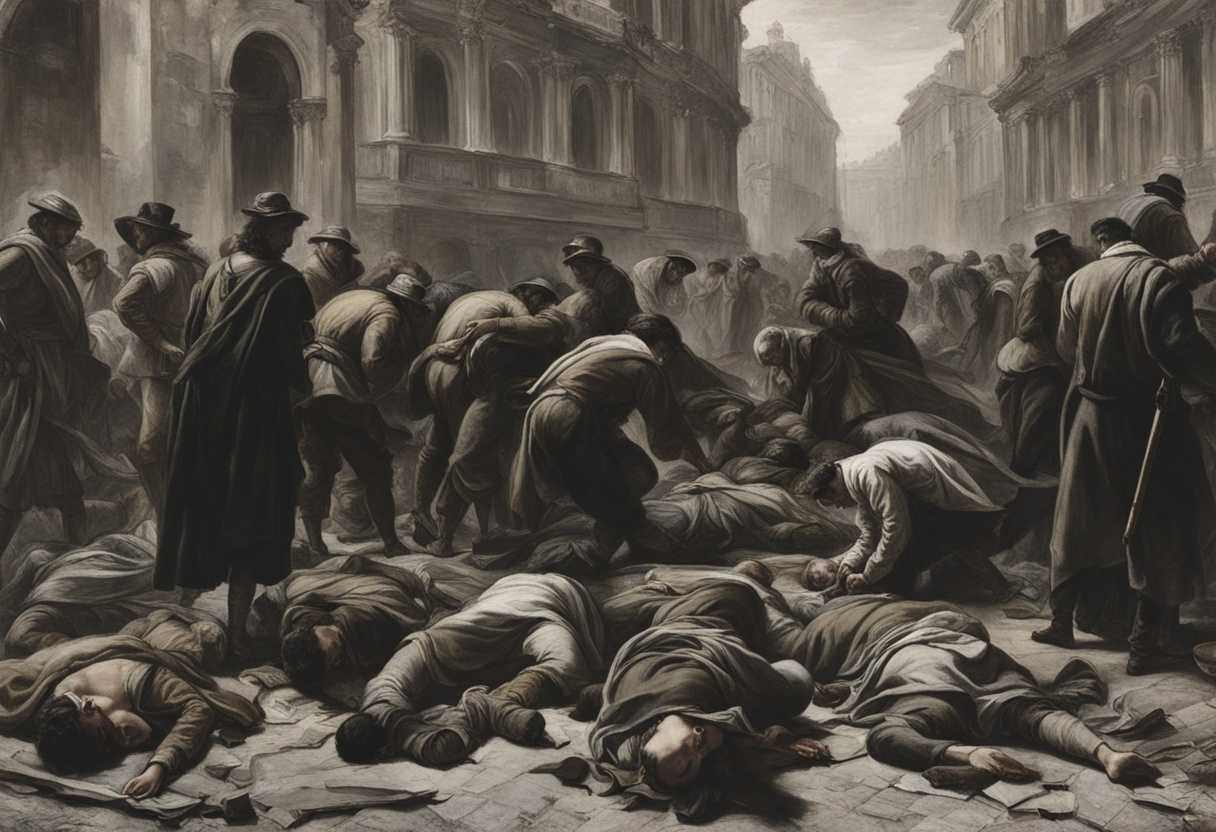
What does Lamentations 2:11 really mean?
Lamentations 2:11 is about the devastation and sorrow that befell Jerusalem due to its sins and disobedience towards God, resulting in the city’s desolation and the weeping of its inhabitants. 11 My eyes are spent with weeping; my stomach churns; my bile is poured out to the ground because of the destruction of the daughter…
-

What does Isaiah 23:10-14 really mean?
Isaiah 23:10-14 is about the downfall of Tyre, a powerful and prosperous city, as a consequence of their pride, oppressive practices, and reliance on wealth and material possessions instead of turning to God for guidance and protection. 10 Cross over your land like the Nile, O daughter of Tarshish; there is no restraint anymore. 11…
-

What does Deuteronomy 3:1-5 really mean?
Deuteronomy 3:1-5 is about Moses reflecting on the conquests of the Israelites under God’s guidance, highlighting the importance of obedience and steadfastness in carrying out God’s commands. 1 “Then we turned and went up the way to Bashan. And Og the king of Bashan came out against us, he and all his people, to battle…
-
What does Jeremiah 50:39 really mean?
Jeremiah 50:39 is about the divine judgment and punishment that will befall Babylon, symbolizing God’s power and righteousness in bringing justice to oppressive nations. 39 “Therefore wild beasts shall dwell with hyenas in Babylon, and ostriches shall dwell in her. She shall never again have people, nor be inhabited for all generations.” Setting the Scene…
-
What does Numbers 18:21-24 really mean?
Numbers 18:21-24 is about the Lord instructing the Levites to receive tithes from the people of Israel as a form of offering, symbolizing the importance of supporting and sustaining the priesthood and the sanctuary. 21 “To the Levites I have given every tithe in Israel for an inheritance, in return for their service that they…
-

What does Deuteronomy 3:12-17 really mean?
Deuteronomy 3:12-17 is about the division of land among the tribes of Israel after their victory over the Amorites, illustrating how God fulfills His promises and provides for His people. 12 all the kingdom of Og in Bashan, who reigned in Ashtaroth and in Edrei (he alone was left of the remnant of the Rephaim);…