
Numbers 18:21-24 is about the Lord instructing the Levites to receive tithes from the people of Israel as a form of offering, symbolizing the importance of supporting and sustaining the priesthood and the sanctuary.
21 “To the Levites I have given every tithe in Israel for an inheritance, in return for their service that they do, their service in the tent of meeting,
22 So the people of Israel shall no longer come near the tent of meeting, lest they bear sin and die.
23 But the Levites shall do the service of the tent of meeting, and they shall bear their iniquity. It shall be a perpetual statute throughout your generations, and among the people of Israel they shall have no inheritance.
24 For the tithe of the people of Israel, which they present as a contribution to the Lord, I have given to the Levites for an inheritance. Therefore I have said of them that they shall have no inheritance among the people of Israel.”
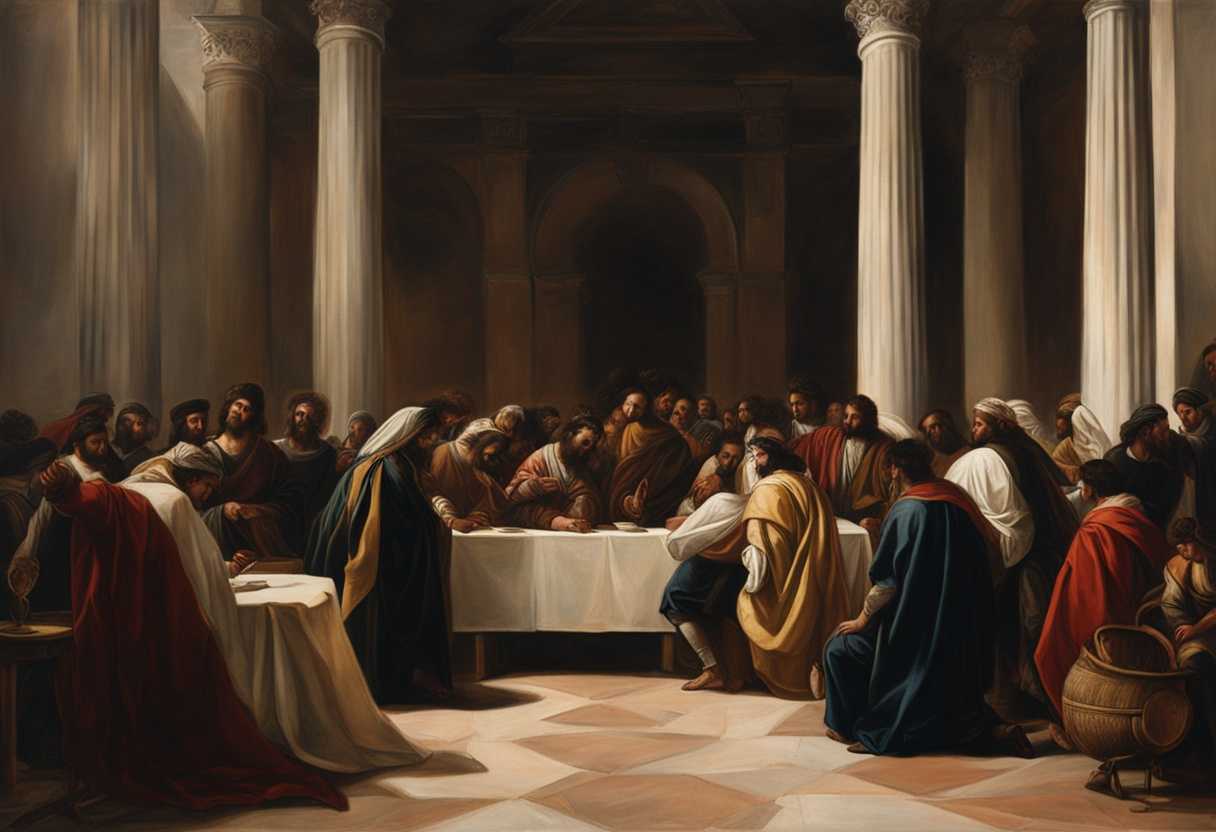
Setting the Scene for Numbers 18:21-24
In the scene described in Numbers 18:21-24, we find Moses and Aaron in the Tabernacle, the sacred tent where the Israelites worship and offer sacrifices to God. The Tabernacle is filled with the smell of burning incense and the sound of prayers being lifted up to the heavens. The golden altar, adorned with intricate engravings, stands in the center of the room, symbolizing the presence of God among His people.
Moses, the revered leader of the Israelites, is dressed in his priestly garments, a symbol of his authority and connection to God. Aaron, his brother and the high priest, stands beside him, ready to carry out the sacred duties assigned to him by God. The two brothers have been called to the Tabernacle to receive instructions from God regarding the offerings and tithes that the Israelites are to bring to support the priests and Levites who serve in the Tabernacle.
As Moses reads aloud the words of God, the room is filled with a sense of reverence and awe. The Israelites who have gathered outside the Tabernacle listen intently, knowing that these instructions are crucial for maintaining the spiritual well-being of the community. The scene is a powerful reminder of the importance of obedience and faithfulness in serving God and His people.
What is Numbers 18:21-24 about?
A moral and social responsibility is being emphasized in this verse. The concept of tithing here symbolizes not only a religious duty but also a societal obligation towards those who serve the community. God is highlighting the importance of acknowledging and supporting those who dedicate their lives to serving others by commanding the Israelites to give a tithe to the Levites for their service. This verse teaches us about the value of recognizing and compensating the efforts of individuals who work for the betterment of their community.
Have you ever thought about the significance of acknowledging the contribution of those who serve society? This verse prompts us to reflect on the idea of reciprocity and appreciation for those who assume roles of service and leadership. It challenges us to consider how we can support and uplift those who play crucial roles in our communities. So, next time you come across someone who selflessly serves others, take a moment to appreciate their efforts and consider how you can show your gratitude, just like the Israelites were instructed to give a tithe to the Levites.
Understanding what Numbers 18:21-24 really means
In the Book of Numbers, a significant text in the Old Testament, we find detailed accounts of the Israelites’ journey from Mount Sinai to the borders of the Promised Land. Among the various laws and regulations outlined in this book, we encounter Numbers 18:21-24, shedding light on the role of the Levites in Israelite society. The Levites, descendants of Levi, were set apart for sacred duties in the Tabernacle and later the Temple, serving as priests and caretakers of the holy space.
“I give to the Levites all the tithes in Israel as their inheritance.” This verse underscores the concept of tithing, a practice where a portion of one’s income or produce is set aside for religious purposes. The Levites, unlike the other tribes, did not receive a land inheritance but were sustained by the tithes offered by the people. This arrangement highlighted the importance of supporting those dedicated to spiritual service and maintaining the sacred space. Leviticus 27:30-33 further elaborates on the laws of tithing, emphasizing its significance in honoring God with one’s possessions.
“In return for the work they do while serving at the tent of meeting.” The duties of the Levites in the Tabernacle were crucial for the functioning of the religious rituals and ceremonies. This service parallels the New Testament concept of spiritual service, where believers are called to serve God and others selflessly. Paul, in 1 Corinthians 9:13-14, draws a connection between the support of those in spiritual service and the blessings that flow from such support.
“The Israelites must not go near the tent of meeting, or they will bear the consequences of their sin and will die.” This stern warning highlights the holiness of the Tabernacle and the need for mediators between a holy God and sinful humanity. Hebrews 9:6-7 delves into the role of the high priest in the Holy of Holies, emphasizing the reverence and purity required in approaching God. The Levites bore the responsibility of maintaining the sanctity of the Tabernacle and were accountable for any transgressions committed in its service.
“It is the Levites who are to do the work at the tent of meeting and bear the responsibility for any offenses they commit against it.” This verse underscores the weight of responsibility on spiritual leaders and the importance of accountability in their service. James 3:1 warns that teachers will face stricter judgment, highlighting the need for integrity and humility in leadership roles. The enduring nature of these ordinances serves as a reminder of the timeless principles of faithfulness, service, and accountability in spiritual leadership.
In contemporary Christian life, the principles outlined in Numbers 18:21-24 hold relevance. Supporting those dedicated to spiritual service, practicing faithful tithing, and upholding accountability in leadership are vital for fostering a thriving spiritual community. Malachi 3:10 promises blessings for those who honor God with their tithes, reflecting the principle of generosity and trust in divine provision. By reflecting on these biblical teachings and applying them in our lives, we can contribute to the flourishing of our spiritual communities and the growth of God’s kingdom.
How can we honor God with our firstfruits?
One way we can honor God with our firstfruits is by recognizing that He is the source of all our blessings and provisions. We acknowledge His sovereignty and faithfulness in providing for us by giving Him the first and best of what we have. This act of giving our firstfruits demonstrates our trust in God and our gratitude for His provision.
Additionally, giving our firstfruits to God also reflects our obedience to His commandments. It is a way for us to show our commitment to following His will and instructions for our lives. We show that He holds a central place in our hearts and lives by prioritizing giving to God before anything else. Honoring God with our firstfruits is a tangible way to express our love, gratitude, and obedience to Him. It is a way to acknowledge His goodness and provision in our lives and to trust in His continued faithfulness.
Application
Dear reader, it’s time to honor and give back to God for all the blessings we’ve received. Let’s show our appreciation by supporting our church and those in need, just as God supports us. This act of giving not only shows gratitude but also signifies our trust in God’s constant provision. So, will you step up and join hands in this virtuous cycle of giving and receiving?

Reverend Michael Johnson is an experienced Church Minister with a profound expertise in spirituality and guidance. With a serene presence and a compassionate heart, he has faithfully served his congregation for over 20 years, leading them on a spiritual journey towards inner peace and enlightenment. Reverend Johnson’s extensive knowledge of religious philosophies and profound understanding of human nature have made him a trusted confidant and mentor to many, as he seamlessly weaves his profound wisdom into life teachings. Reverend Johnson’s calming demeanor and empathetic nature continue to uplift and heal souls, nurturing a sense of unity and tranquility within his community.