
Leviticus 27:30-33 is about the importance of tithing and offering a tenth of one’s income or produce to the Lord as a way of honoring Him and acknowledging His provision in our lives.
30 Every tithe of the land, whether of the seed of the land or of the fruit of the trees, is the Lord’s; it is holy to the Lord.
31 If a man wishes to redeem some of his tithe, he shall add a fifth to it.
32 And every tithe of herds and flocks, every tenth animal of all that pass under the herdsman’s staff, shall be holy to the Lord.
33 “He shall not differentiate between good and bad, neither shall he make a substitute for it; and if he does substitute for it, then both it and the substitute shall be holy; it shall not be redeemed.”
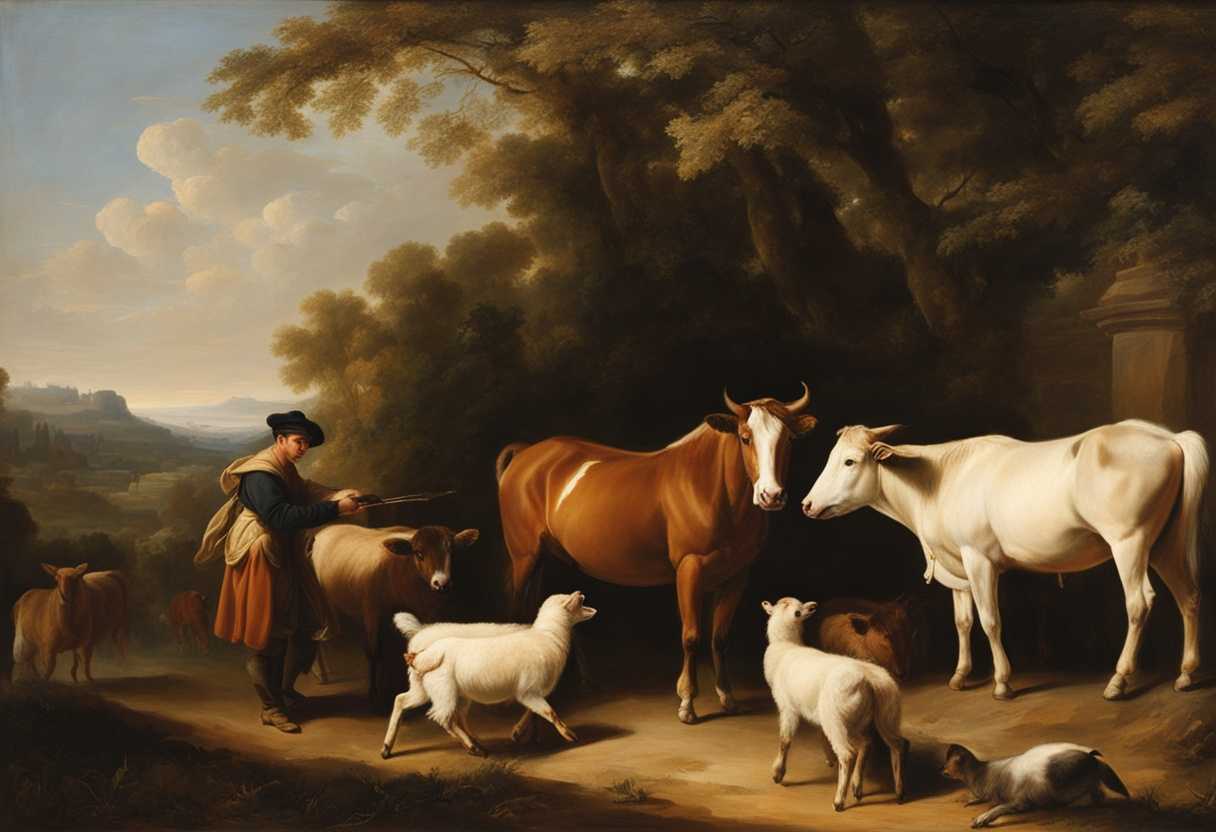
Setting the Scene for Leviticus 27:30-33
In the ancient land of Israel, under the scorching sun, a group of farmers and shepherds have gathered in a vast open field. The community has come together to fulfill their religious obligations as outlined in the book of Leviticus. Among them are farmers with baskets of ripe fruits and grains, and shepherds with their flocks of sheep and goats. The air is filled with the sounds of bleating animals and the chatter of people as they prepare for the ritual.
As the group settles down, a priest stands before them, holding a scroll containing the laws of Leviticus. He begins to read aloud from Leviticus 27:30-33, reminding the people of their duty to tithe a tenth of their produce to the Lord. The farmers nod in understanding, knowing that this tithe is a way of showing gratitude for the blessings they have received. The shepherds too, acknowledge the importance of giving back a portion of their herds to the divine.
Surrounded by the golden fields and grazing animals, the community joins together in prayer and thanksgiving, acknowledging the abundance that has been provided to them. The scene is one of unity and reverence, as the people come together to honor the ancient laws and traditions that have guided their ancestors for generations.
What is Leviticus 27:30-33 about?
The Lord instructs the Israelites in Leviticus 27:30-33 to give a tithe, which means setting aside a tenth of their crops and animals as an offering to Him. This act of giving was a way for the people to demonstrate their gratitude and trust in God’s provision. They acknowledged that all they had belonged to God and that He was the ultimate source of their blessings by giving a portion of their harvest.
Have you ever thought about the significance of giving back a portion of what you have received? It’s a way of recognizing that everything we have is a gift from God and that we are called to be good stewards of His blessings. Just like the Israelites were instructed to give a tithe of their crops and animals, we are also called to give generously and with a grateful heart. When we give back to God, we are not only supporting the work of the church and those in need but also growing in our own faith and trust in Him.
So, consider these verses as a reminder to be mindful of how you use the resources and blessings that God has entrusted to you. Reflect on how you can honor God with your giving and how you can cultivate a spirit of generosity in your own life. May we also be faithful in giving back to the Lord with joyful and willing hearts, just as the Israelites were in giving a tithe.
Understanding what Leviticus 27:30-33 really means
Leviticus 27:30-33 delves into the ancient laws of tithing, emphasizing the obligation to offer a tenth of one’s agricultural produce and livestock to the Lord. This directive is part of the Levitical code, a comprehensive set of regulations designed for the Israelites. The passage underscores the sacred nature of tithing, highlighting that a portion of all land produce is consecrated to God, symbolizing our acknowledgment that everything ultimately belongs to Him. Furthermore, it stresses the requirement to tithe livestock, reinforcing the principle of giving back to God from all forms of increase.
In Malachi 3:10, we encounter a reaffirmation of the significance of tithing, with a promise of abundant blessings for those who faithfully adhere to this practice. This verse underscores the reciprocal nature of giving, where our offerings to God result in His overflowing blessings upon us. Similarly, 2 Corinthians 9:7 from the New Testament emphasizes the importance of giving willingly and joyfully, reflecting the attitude with which our offerings should be presented to God.
The relevance of tithing extends beyond ancient agricultural practices to encompass various aspects of modern life, including income, time, and talents. By embracing the principle of tithing, individuals cultivate a spirit of generosity and deepen their trust in God’s provision. Tithing serves as a tangible expression of stewardship, reminding us of our responsibility to manage and share the resources entrusted to us by God.
Imagine a farmer facing a challenging year with meager harvests, yet faithfully setting aside a tenth of his produce for the church. His act of faith not only supports the community but also serves as a testament to his unwavering trust in God’s provision. As time unfolds, he witnesses unexpected blessings, reinforcing the truth that giving back to God yields both spiritual fulfillment and sometimes tangible rewards.
In conclusion, the practice of tithing, as elucidated in Leviticus 27:30-33, transcends time, imparting valuable lessons on faith, stewardship, and generosity. By honoring God with a portion of our resources, we acknowledge His sovereignty and express gratitude for His abundant blessings. This enduring practice encourages us to rely on God’s provision and to contribute to the well-being of our communities through our giving.
Do we regularly give back to God from our abundance?
Leviticus emphasizes that giving back to God is a fundamental part of honoring Him and acknowledging His provision. Through giving a portion of our abundance, we are demonstrating our faith and gratitude towards Him. It is a way of recognizing that all we have comes from God and therefore, we are returning a portion of what He has blessed us with.
Regularly giving back to God from our abundance can also be seen as a form of worship. It is a way of prioritizing our relationship with Him above material possessions. We show our trust in God’s providence and sovereignty over our lives by giving back. It is an act of obedience and faith that strengthens our connection with Him and allows us to experience the joy of generosity and giving.
Application
Are you ready to apply the timeless wisdom of Leviticus 27:30-33 to your modern life? Take a moment to ponder: are you honoring your blessings by giving back a portion to the greater good, much like balancing the demands of work and family? Let this commandment inspire you to embrace stewardship and generosity in all aspects of your life. Will you choose to be a faithful steward of your resources, contributing to the growth of something greater than yourself?

Reverend Michael Johnson is an experienced Church Minister with a profound expertise in spirituality and guidance. With a serene presence and a compassionate heart, he has faithfully served his congregation for over 20 years, leading them on a spiritual journey towards inner peace and enlightenment. Reverend Johnson’s extensive knowledge of religious philosophies and profound understanding of human nature have made him a trusted confidant and mentor to many, as he seamlessly weaves his profound wisdom into life teachings. Reverend Johnson’s calming demeanor and empathetic nature continue to uplift and heal souls, nurturing a sense of unity and tranquility within his community.