
Author: Reverend Michael Johnson
-

What does Luke 13:15-16 really mean?
Luke 13:15-16 is about Jesus rebuking the religious leaders for their legalistic interpretation of the Sabbath law, emphasizing the importance of showing compassion and mercy towards others over strict adherence to rules and rituals. 15 Then the Lord answered him, “You hypocrites! Does not each of you on the Sabbath untie his ox or his…
-

What does Ezekiel 21:25-27 really mean?
Ezekiel 21:25-27 is about the downfall of the corrupt leadership in Judah, symbolized by the shifting of the crown from one unworthy ruler to another until the true ruler, representing God’s righteous judgment, emerges. 25 And you, O profane wicked one, prince of Israel, whose day has come, the time of your final punishment, 26…
-

What does Psalms 105:6-11 really mean?
Psalms 105:6-11 is about God’s faithfulness and his covenant with his chosen people, highlighting the importance of remembering and praising His miraculous works throughout history. 6 O offspring of Abraham, his servant, children of Jacob, his chosen ones! 7 He is the Lord our God; his judgments are in all the earth. 8 He remembers…
-
What does Matthew 25:10-12 really mean?
Matthew 25:10-12 is about the importance of being prepared and vigilant in anticipation of the second coming of Christ, emphasizing the need for believers to be ready at all times for this event as depicted in the parable of the ten virgins. 10 And while they were going to buy, the bridegroom came, and those…
-

What does Deuteronomy 6:14-15 really mean?
Deuteronomy 6:14-15 is about warning against the temptation to follow other gods and instead emphasizing the importance of wholehearted devotion to the one true God, recognizing His jealousy for our exclusive love and worship. 14 You shall not go after other gods, the gods of the peoples who are around you— 15 for the Lord…
-

What does Exodus 6:14-27 really mean?
Exodus 6:14-27 is about the genealogy of Moses and Aaron, highlighting the lineage of the leaders chosen by God to deliver the Israelites from bondage in Egypt. 14 These are the heads of their fathers’ houses: the sons of Reuben, the firstborn of Israel: Hanoch, Pallu, Hezron, and Carmi; these are the clans of Reuben.…
-
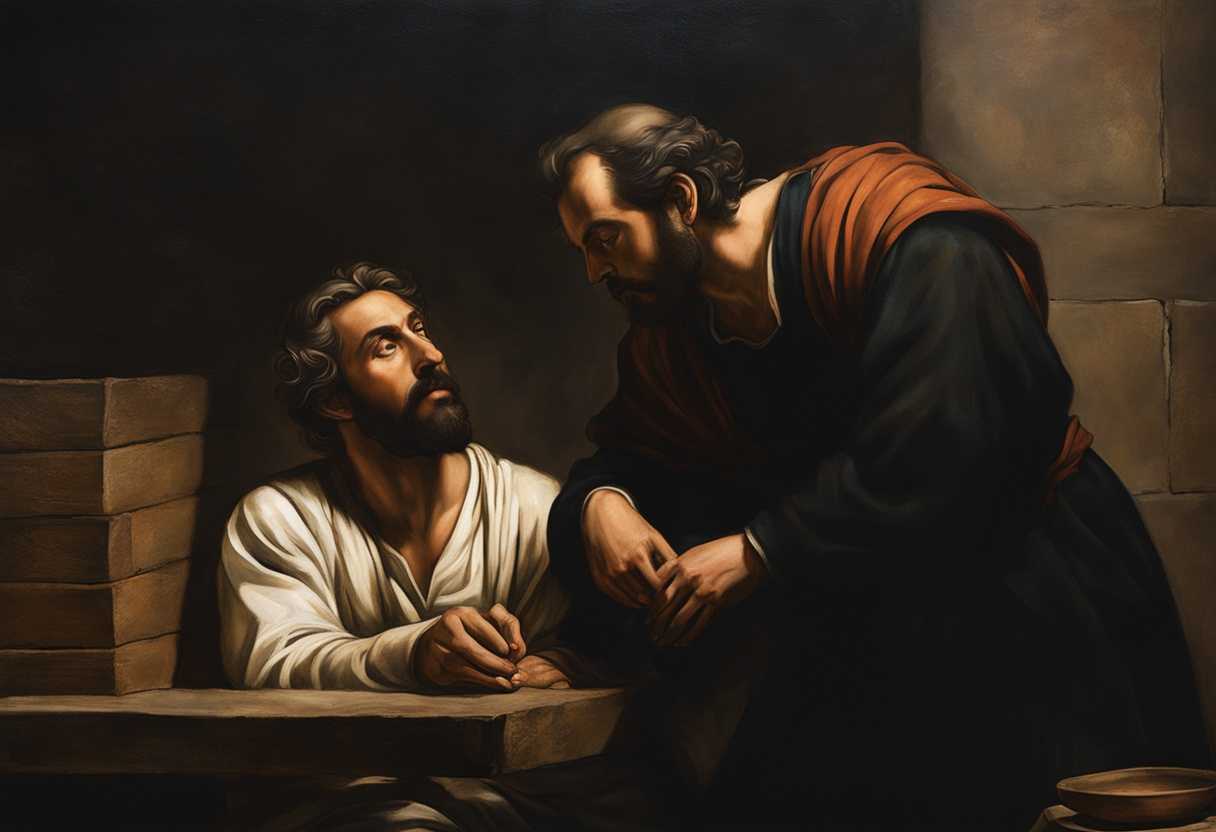
What does Acts 16:26-30 really mean?
Acts 16:26-30 is about the power of faith and prayer to bring about miraculous interventions in times of trouble, demonstrating God’s sovereignty and the importance of spiritual guidance in making life-altering decisions. 26 and suddenly there was a great earthquake, so that the foundations of the prison were shaken. 27 When the jailer woke and…
-

What does 2 Kings 24:8-16 really mean?
2 Kings 24:8-16 is about the downfall of King Jehoiachin of Judah due to his evil deeds and disobedience to God, leading to the ultimate punishment of him and his people by the Babylonian king Nebuchadnezzar, as a consequence of their persistent unfaithfulness and sinfulness. 8 Jehoiachin was eighteen years old when he became king,…
-

What does 2 Kings 17:29-33 really mean?
2 Kings 17:29-33 is about how the people of Samaria adopted the practices of the nations they were resettled among, leading them astray from worshipping the one true God. 29 But every nation still made gods of its own and put them in the shrines of the high places that the Samaritans had made, every…
-

What does Deuteronomy 1:16-17 really mean?
Deuteronomy 1:16-17 is about the importance of impartiality in delivering justice, emphasizing that judgment should be fair and free from partiality or bias towards any individual, regardless of their social status. 16 And I charged your judges at that time, ‘Hear the cases between your brothers, and judge righteously between a man and his brother…