
Category: Leviticus
-

What does Leviticus 19:35-36 really mean?
Leviticus 19:35-36 is about emphasizing the importance of honesty and fairness in all dealings, as being just and truthful reflects the nature of God and builds a community based on integrity and trust. 35 You shall do no wrong in judgment, in measures of length or weight or quantity. 36 You shall have just balances,…
-

What does Leviticus 26:14-20 really mean?
Leviticus 26:14-20 is about the consequences of disobeying God’s commandments, emphasizing that failure to adhere to His laws will result in suffering, destruction, and being disciplined to turn back to Him. 14 “But if you will not listen to me and will not do all these commandments, 15 if you spurn my statutes, and if…
-

What does Leviticus 26:20 really mean?
Leviticus 26:20 is about the consequences of disobedience to God’s commandments, where He promises to send curses and calamities to those who reject His laws. 20 Then your strength shall be spent in vain, for your land shall not yield its increase, and the trees of the land shall not yield their fruit. Setting the…
-

What does Leviticus 2:1-3 really mean?
Leviticus 2:1-3 is about the proper procedure for offering a grain offering to the Lord, emphasizing that it must be made with finely ground flour, oil, and frankincense, symbolizing the purity and quality of the offering presented to God. 1 “When anyone brings a grain offering as an offering to the Lord, his offering shall…
-

What does Leviticus 22:3-9 really mean?
Leviticus 22:3-9 is about emphasizing the importance of maintaining holiness and purity in offering sacrifices to the Lord, highlighting the significance of offering one’s best without blemish as a reflection of one’s devotion and respect for God. 3 Say to them, ‘If any one of all your offspring throughout your generations approaches the holy things…
-

What does Leviticus 24:23 really mean?
Leviticus 24:23 is about the principle of justice being applied equally to both native Israelites and foreigners living among them, emphasizing the importance of fairness and equality before the law. 23 So Moses spoke to the people of Israel, and they brought out of the camp the one who had cursed and stoned him with…
-

What does Leviticus 3:1-5 really mean?
Leviticus 3:1-5 is about the specific instructions for offering a peace offering to the Lord, emphasizing the voluntary and intentional nature of the offering as well as the symbolism of peace and reconciliation with God. 1 “If his offering is a sacrifice of peace offering, if he offers an animal from the herd, male or…
-

What does Leviticus 8:10-13 really mean?
Leviticus 8:10-13 is about Aaron and his sons being anointed with oil and consecrated to serve as priests before the Lord, symbolizing their set-apartness and sanctification for their sacred duties. 10 And Moses took the anointing oil and anointed the tabernacle and all that was in it, and consecrated them. 11 And he sprinkled some…
-
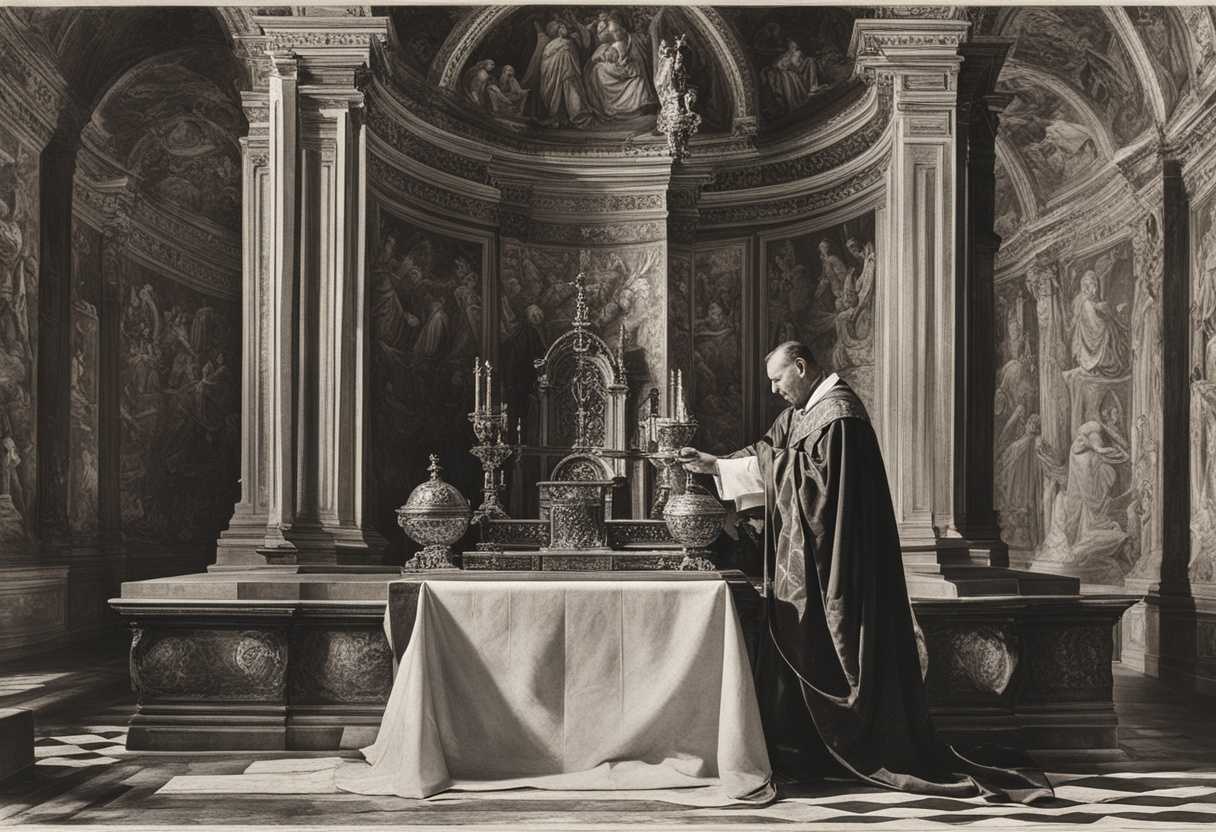
What does Leviticus 4:7 really mean?
Leviticus 4:7 is about the process of offering a sin offering for unintentional sins committed by the anointed priest to atone for his guilt before the Lord. 7 And the priest shall put some of the blood on the horns of the altar of fragrant incense before the Lord that is in the tent of…
-
What does Leviticus 22:21 really mean?
Leviticus 22:21 is about presenting sacrifices to the Lord without any blemish or defect, reflecting the importance of offering our best to God in worship and devotion. 21 And when anyone offers a sacrifice of peace offerings to the Lord to fulfill a vow or as a freewill offering from the herd or from the…