
Category: Leviticus
-

What does Leviticus 13:29-37 really mean?
Leviticus 13:29-37 is about the detailed guidelines given by God to the people of Israel regarding the identification and management of skin diseases, emphasizing the importance of distinguishing between various forms of ailments to prevent the spread of infection and maintain purity. 29 “When a man or woman has a disease on the head or…
-

What does Leviticus 14:10-20 really mean?
Leviticus 14:10-20 is about the purification ritual for a healed leper, symbolizing the restoration and cleansing of one’s spiritual impurities through faith and obedience to God’s laws. 10 “And on the eighth day he shall take two male lambs without blemish, and one ewe lamb a year old without blemish, and a grain offering of…
-
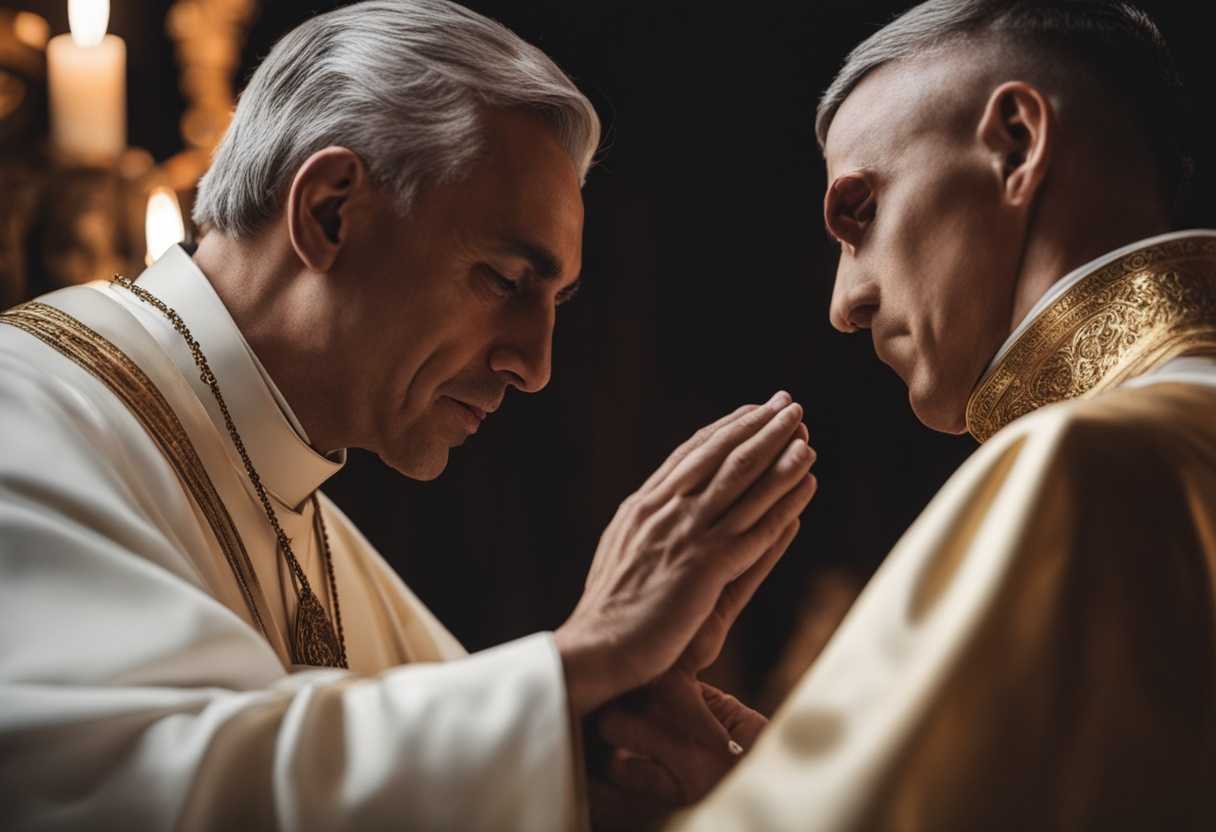
What does Leviticus 14:17 really mean?
Leviticus 14:17 is about the ritual of using the blood of a sacrificed bird to cleanse a person from a skin disease, symbolizing purification and restoration of spiritual well-being through sacrifice and atonement. 17 And of the rest of the oil that is in the priest’s hand he shall put on the head of him…
-

What does Leviticus 17:1-9 really mean?
Leviticus 17:1-9 is about the importance of offering animal sacrifices only at the designated tabernacle as a means of honoring God and avoiding spiritual defilement through idolatry or blood consumption. 7 So they shall no more sacrifice their sacrifices to goat demons, after whom they whore. This shall be a statute forever for them throughout…
-

What does Leviticus 18:24-30 really mean?
Leviticus 18:24-30 is about God’s warning to the Israelites to not follow the detestable practices of the nations before them, emphasizing purity and obedience in order to avoid being defiled and separated from Him. 24 “Do not make yourselves unclean by any of these things, for by all these the nations I am driving out…
-

What does Leviticus 19:19-22 really mean?
Leviticus 19:19-22 is about God’s command for the Israelites to maintain purity and not mix different kinds of animals, fabrics, or crops, emphasizing the importance of preserving the boundaries and order that God has set in place. 19 “You shall keep my statutes. You shall not let your cattle breed with a different kind. You…
-

What does Leviticus 20:6-8 really mean?
Leviticus 20:6-8 is about the importance of being dedicated to God alone, avoiding practices of divination and witchcraft, and following God’s laws to maintain holiness and purity. 6 “If a person turns to mediums and necromancers, whoring after them, I will set my face against that person and will cut him off from among his…
-

What does Leviticus 23:33-36 really mean?
Leviticus 23:33-36 is about the observance of the Feast of Tabernacles, a reminder to the Israelites of their time in the wilderness and a symbol of God’s provision and presence among His people. 33 And the Lord spoke to Moses, saying, 34 Speak to the people of Israel, saying, On the fifteenth day of this…
-

What does Leviticus 26:21-26 really mean?
Leviticus 26:21-26 is about the consequences of disobedience to God’s commandments, including plagues, wild animals, and the sword that will come upon those who reject God’s covenant. 21 “Then if you walk contrary to me and will not listen to me, I will continue striking you, sevenfold for your sins.” 22 And I will let…
-

What does Leviticus 5:7-13 really mean?
Leviticus 5:7-13 is about the regulations for a person who cannot afford the standard offering of a lamb, allowing for the substitution of two turtledoves or two pigeons as an acceptable sacrifice in order to make atonement for their sin before the Lord. 7 “But if he cannot afford a lamb, then he shall bring…