
Category: Definitions
-

What the Bible Says About Escheweth: Understanding Its Meaning
In the Bible, “escheweth” means to deliberately avoid or shun something, particularly evil or wrongdoing. It indicates a strong moral stance against certain behaviors or influences, as seen in passages like Job 1:1, where Job is described as one who “escheweth evil.” Scripture 1 There was a man in the land of Uz whose name…
-
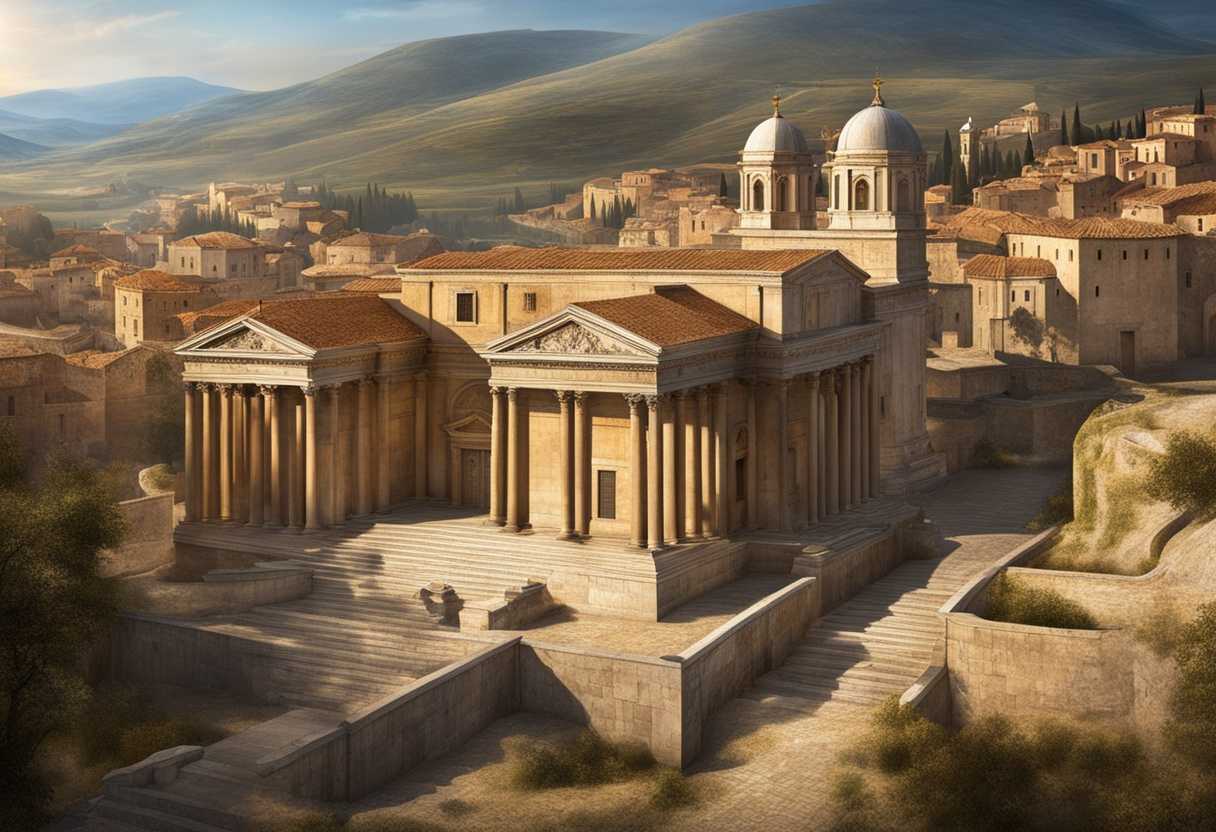
What the Bible Says About the Meaning of Gibeon
In the Bible, Gibeon refers to a city of the Hivites, known for its strategic location and as a center of worship. It is significant for its inhabitants’ deception of the Israelites leading to a treaty, and it later became a refuge for the Ark of the Covenant (Joshua 9; 2 Samuel 6:4). Scripture 3…
-

What the Bible Says About the Meaning of Gates
In the Bible, “gate” often signifies a point of entry or exit, symbolizing access or transition, such as in Proverbs 8:34, which describes wisdom as waiting at the gates. It can also represent places of judgment or authority, as seen in cities where elders would gather at the gates to make decisions (Ruth 4:1). Scripture…
-

What the Bible Says About the Meaning of Palestine
In the Bible, “Palestine” generally refers to the geographical region known as the Promised Land or Canaan, encompassing areas that are significant in biblical history, such as Israel and Judah. The term itself derives from “Philistia,” which refers to the land of the Philistines, a group living on the coastal regions during biblical times. Scripture…
-

What the Bible Says About the Meaning of the Word “Hire”
In the Bible, “hire” refers to the payment given to workers for their labor, typically reflecting a contractual agreement for employment (Matthew 20:1-7). It symbolizes the exchange of labor for monetary compensation and emphasizes the importance of fair treatment in work relationships. Scripture 13 “You shall not oppress your neighbor or rob him. The wages…
-

What the Bible Says About Tarsus: Its Meaning and Significance
In the Bible, Tarsus is a city in Cilicia mentioned as the birthplace of the Apostle Paul (Acts 22:3). It is noted for its cultural and educational significance in the ancient world, being a center of learning and philosophy. Scripture 11 And the Lord said to him, “Rise and go to the street called Straight,…
-

What the Bible Says About Meaning Lost in Translation
“Lost in translation” suggests that the meaning or nuances of scripture may be obscured or altered when interpreted from one language or context to another. In the Bible, this concept aligns with the idea that different translations can lead to varying understandings of God’s message, emphasizing the need for careful and contextual interpretation to grasp…
-

What the Bible Says About the Meaning of Islands
In the Bible, islands often symbolize distant lands and the reach of God’s sovereignty, as seen in passages like Isaiah 42:4 and Revelation 21:1. They can represent places of refuge, judgment, or the gathering of nations, reflecting God’s plans for salvation and judgment across the earth. Scripture 10 Sing to the Lord a new song,…
-

What the Bible Says About the Needy: Understanding Its Meaning
In the Bible, “needy” refers to those who are impoverished, vulnerable, or lacking basic resources, often highlighting their dependence on God and the responsibility of others to provide for them (Proverbs 19:17, Psalm 72:12-14). It calls for compassion and generosity towards such individuals, reflecting God’s care for the marginalized. Scripture 7 If among you, one…
-

What the Bible Says About the Holy Land: A Definition and Exploration
In the Bible, the Holy Land refers to the geographical area of ancient Canaan, which includes present-day Israel and Palestine, and is considered sacred due to its association with key biblical events and the presence of God’s covenant with the Israelites. It is often seen as a place of divine promise, worship, and revelation throughout…