
Category: Definitions
-

What the Bible Says About the Water Gate: Understanding Its Significance
In the Bible, the Water Gate is one of the entrances to Jerusalem mentioned in Nehemiah 3:26-27, where it is associated with the restoration and rebuilding of the city’s walls post-exile. It is significant as a symbol of purification and the reading of God’s Word, as water often represents spiritual cleansing and renewal. Scripture 1…
-

What the Bible Says About the Meaning of Greek Terms
The Greek words in the Bible, particularly in the New Testament, often carry deep theological meanings and nuances that reflect the culture, philosophy, and spiritual concepts of the time. Understanding these words, such as “agape” (love) and “kerygma” (proclamation), is essential for grasping the biblical text’s full intent and implications. Scripture 1 In the beginning…
-
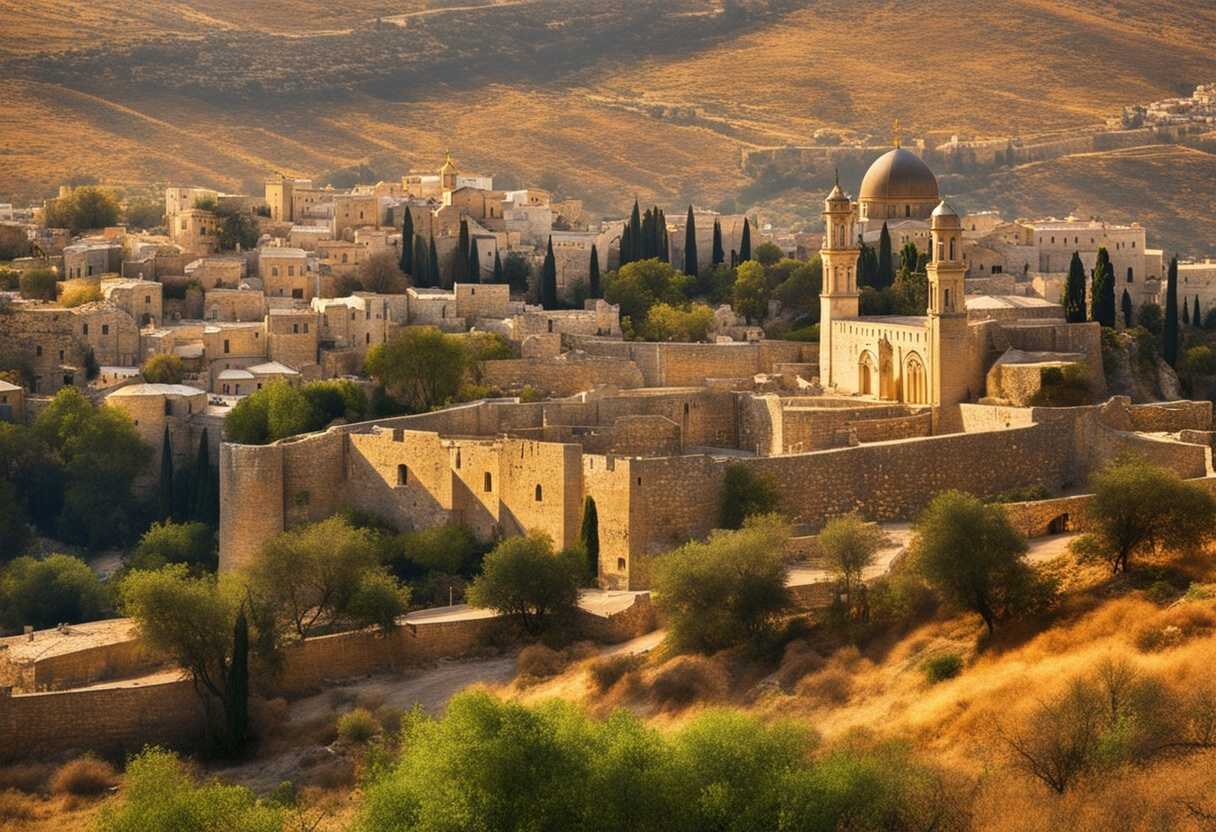
What the Bible Says About the Hebrew Meaning of Hebron
In Hebrew, Hebron (חֶבְרוֹן) means “friend” or “association.” It is often associated with a city in the southern part of ancient Judah, significant in biblical history as the burial site of the patriarchs Abraham, Isaac, and Jacob. Scripture 18 So Abram moved his tent and came and settled by the oaks of Mamre, which are…
-

What the Bible Says About Understanding Lists and Their Meaning
In the Bible, lists often serve as a tool for organizing information, conveying genealogies, or highlighting significant events and teachings. They can emphasize the importance of lineage, the fulfillment of God’s promises, or the roles of individuals within God’s plan. Scripture 1 In the beginning, God created the heavens and the earth. 2 The earth…
-

What the Bible Says About Ceremony: Definitions and Significance
In the Bible, a ceremony often refers to a formal religious act or ritual performed to signify an important event or covenant, such as the ordination of priests (Exodus 29) or the rituals surrounding sacrifices (Leviticus). These ceremonies are intended to honor God, mark a significant milestone, or express communal faith. Scripture 1 The Lord…
-

What the Bible Says About the Meaning of Oil in Proverbs 21:17
In Proverbs 21:17, “oil” symbolizes abundance and prosperity, often associated with joy and blessing. The verse contrasts the pursuit of pleasure with the consequences of extravagance, implying that a life focused solely on indulgence may lead to poverty. Scripture 22 The Lord said to Moses, 23 “Take the finest spices: of liquid myrrh 500 shekels,…
-

What the Bible Says About “By the Skin of Your Teeth”
The phrase “by the skin of your teeth” comes from Job 19:20, where Job describes his desperate condition, implying that he is clinging to life by the thinnest margin. Biblically, it signifies a close escape from danger or a narrow survival against overwhelming odds. Scripture 20 My bones stick to my skin and to my…
-

What the Bible Says About the Meaning of Rhapsody
The term “rhapsody” does not appear in the Bible, nor does it have a specific biblical definition. Generally, it is associated with an ecstatic expression of feeling or enthusiasm, which can relate to praise or worship found throughout the scriptures, particularly in passages of psalms or hymns celebrating God’s glory. Scripture 1 Praise the Lord!…
-

“What the Bible Says: Knock and You Will Find”
The phrase “Seek and you shall find” is derived from Matthew 7:7 in the New Testament, suggesting that earnest pursuit of truth, divine guidance, or spiritual fulfillment will yield results. It encourages believers to actively look for understanding and support, assuring them that their efforts will not be in vain. Scripture 7 “Ask, and it…
-

What the Bible Says About Supplanting: Understanding Its Meaning
In the Bible, “supplant” refers to the act of taking the place of another, often by deceit or through cunning means. This is exemplified in the story of Jacob, who supplanted his brother Esau by obtaining his birthright and blessing (Genesis 25:29-34; Genesis 27). Scripture 19 These are the generations of Isaac, Abraham’s son: Abraham…