
Category: Places and Locations
-

What the Bible Says About Smyrna: Understanding Its Meaning and Significance
Smyrna, mentioned in the Book of Revelation, is one of the seven churches of Asia Minor and represents a community facing persecution and suffering for their faith. The name “Smyrna” is derived from the word for myrrh, a substance used for burial, symbolizing the church’s trials and the idea of spiritual richness emerging from suffering.…
-

“What the Bible Says About the East”
In the Bible, “East” often symbolizes new beginnings or divine revelation, as it is the direction from which the sun rises. It is also associated with the Garden of Eden’s location and, in some contexts, represents areas of exile or separation from God’s favor. Scripture 8 And the Lord God planted a garden in Eden,…
-

What the Bible Says About En Gedi: Its Meaning and Significance
En Gedi, mentioned in the Bible, is a lush oasis located near the Dead Sea, known for its abundant water and wildlife. It serves as a refuge in biblical narratives, particularly for David during his flight from Saul (1 Samuel 24). Scripture 29 And David went up from there and lived in the strongholds of…
-

What the Bible Says About the Meaning of Magdala
Magdala, or Magdalan, is a small fishing village on the Sea of Galilee mentioned in the New Testament, notably as the hometown of Mary Magdalene (Luke 8:2). The name Magdala itself means “tower” in Aramaic, symbolizing a place of significance or prominence in the region. Scripture 39 And after sending away the crowds, he got…
-

What the Bible Says About Seir: Understanding Its Meaning and Significance
In the Bible, Seir refers to a mountainous region inhabited by the descendants of Esau, known as the Edomites (Genesis 36:8-9). It is often associated with rugged terrain and is mentioned in various contexts, including its geographic significance and its relationship to Israel. Scripture 6 and the Horites in their hill country of Seir as…
-
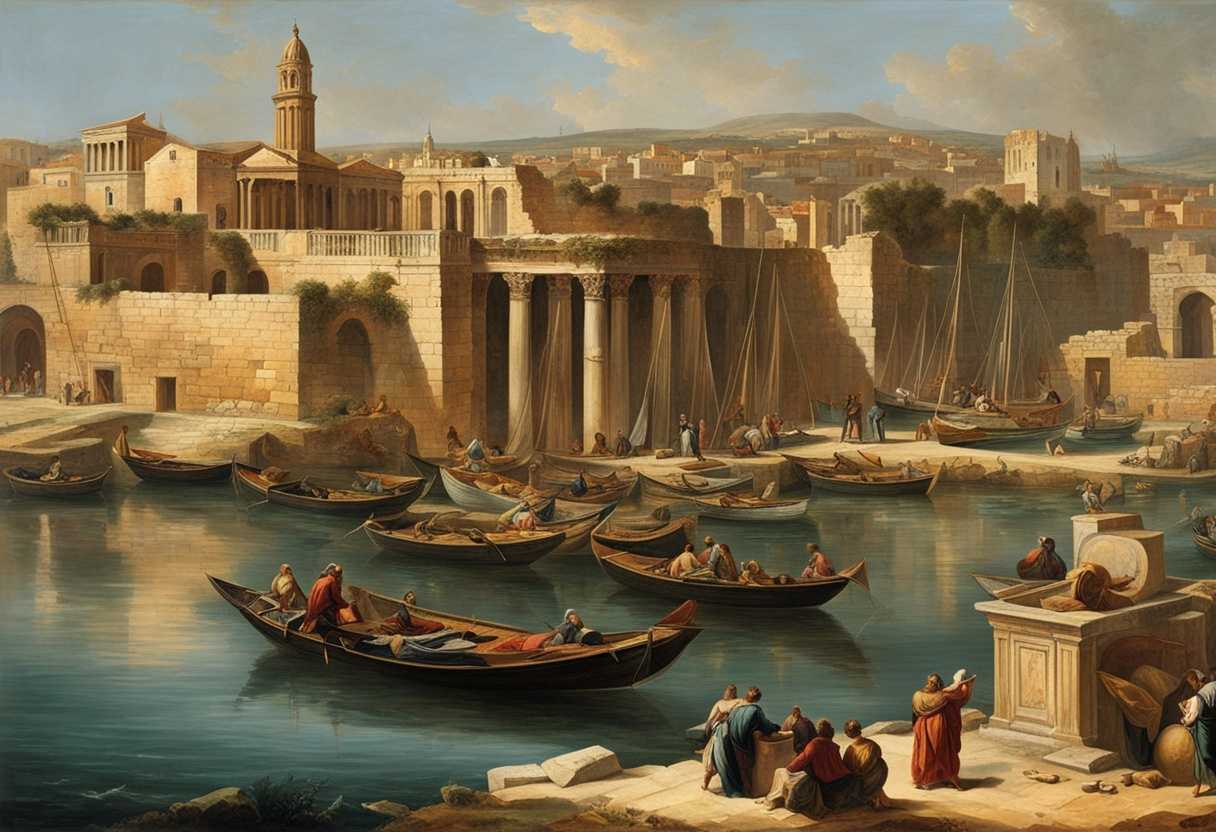
What the Bible Says About the Meaning of Tyrus
Tyrus, or Tyre, in the Bible refers to a prominent ancient Phoenician city known for its wealth, trade, and harbor. It symbolizes pride and self-sufficiency, often associated with the judgment and prophecy of destruction due to its idolatry and opposition to God’s people (Ezekiel 26). Scripture 1 In the eleventh year, on the first day…
-

What the Bible Says About the City Gate: Definition and Significance
In the Bible, city gates symbolize places of legal and communal decision-making, often serving as venues for elders to gather, discuss important matters, and administer justice (Deuteronomy 16:18; Proverbs 31:23). They also represent security and protection for the inhabitants, as well as the entry and exit points for travelers and commerce (Nehemiah 3:1-32). Scripture 1…
-

What the Bible Says About the Meaning of East in the Hebrew Scriptures
In the Hebrew Bible, “East” often symbolizes beginnings or places of origin, as it is associated with the rising sun. Additionally, it can denote a direction of significance in journeys or migrations, often linked to God’s promises and blessings, as seen in references to the “East” in relation to the Garden of Eden and the…
-
What the Bible Says About the Canaanites: Understanding Their Meaning and Significance
In the Bible, the Canaanites are the ancient inhabitants of the land of Canaan, which God promised to the Israelites. They are often depicted as a people engaged in practices considered sinful by biblical standards, leading to their eventual conquest by the Israelites as commanded by God. Scripture 15 Canaan fathered Sidon his firstborn and…
-
What the Bible Says About Ethiopia: Meaning and Significance
In the Bible, Ethiopia is often referenced as a region located south of Egypt, known for its ancient civilization and rich resources. It is associated with the descendants of Cush, and appears in various contexts, including the story of the Ethiopian eunuch in Acts 8:26-40, symbolizing the spread of the Gospel beyond Israel. Scripture 10…